- At December 21, 2005
- By Jeannine Gailey
- In Blog
 1
1

Back in the cold, rainy, dark Northwest, from my sojourn into the sunny and darn cold, snowy Midwest. Why don’t I or any of my family live in say, Hawaii or Arizona? Seriously people. Christmas is so much Christmass-ier with a warm sandy beach.
The most interesting new news in my inbox during my time away? I’m now booked to read poetry and speak on panels at a sci-fi convention in Washington in February called RadCon. My book’s artist, Michaela, got me into it. Who knows – maybe I will find the lost demographic of sci-fi-comic-book-poetry geeks. At least it’ll be a different kind of audience. And I can collect more cool sci-fi art for my office walls.
Plenty of fascinating blogging on the whys and wherefores of journal publication going on while I was gone at Seth’s blog, Eduardo’s, A.D.’s, and Kristy’s, among others…but since I’m getting ready to go back to my low-residency MFA program after a semester off, and am feeling all trepidatious about that – with a year and 10K to go – and since I’ve been getting e-mails from potential low-res MFA students asking what it’s all about, I thought I’d blog about that.
Why attend an MFA program, especially one you have to pay for? Well, I’m married and can’t move right now, and don’t want to attend the local university, so I was stuck with the (usually expensive – from 3-6 K per semester, including food and housing) low-residency option. Also, I had already done a regular, paid-for-by-the-university, on-campus MA program at University of Cincinnati. I mean, I like my life right now, I just wanted to add more poetry to it, so the low-residency option was the right one for me at the time. I applied to several low-res programs, and took the one closest to me, rather than the one that offered, say, the most scholarship money or had the best literary magazine – a decision which, at the time, was done because of my health – I needed to stay close to doctors that knew me. It ended up being a good decision, I think – the convenience of not having to shlep stuff on a plane across country twice a year AND the program I chose having an excellent faculty (if some wobbly administration over the last year) are two reasons why.
So what good has the MFA program done? Can an MFA program make you a better poet? More connected? More published?
I can say that for me, yes, the MFA program (mainly because of one-on-one work with two great poets) did make me a better writer. That’s obviously subjective. But, non-subjectively, I have written twice as many poems every semester I was in school compared to the same time periods I was not in school. Also, non-subjectively, I had about twice the acceptance rate from journals per semester since I started going to school. As per the journal publication discussions at the aforementioned blogs, that increase doesn’t neccessarily mean an increase in quality, but perhaps an increase in awareness of how other people read my work – maybe.
Since I started the MFA program, I also had a chapbook published, and a book manuscript accepted for publication. But those things aren’t guaranteed – I think I’m the only poetry student in my program that happened to so far. Did those things happen because I’m in an MFA program? I was submitting to chapbook and book publishers before I started the MFA, so maybe it was coincidence. Hard to say. Did the MFA program make me think harder and more critically about my manuscript? Absolutely yes, but I still felt I needed to seek advice from people outside the program to come up with the final versions of the chapbook and book.
Community – yes, the MFA program does provide community – in the case of my program, the two ten day residencies plus e-mail list contact with faculty and students. I’ve met great poets, got to hang out at some fun parties, and made some friends. But I would say the community it provided has been of equal or less importance to that of say, attending local readings, workshops and lectures, going to conferences, or, say, blogging.
Maybe the MFA gives people more confidence about their work. It’s one thing for my circle of friends at the local workshop to say nice things about a poem, and another thing for a couple of nationally renowned poets to say the same. (No offense to my local workshop friends, who are all destined to be nationally renowned, of course 😉 But I did feel that what I was writing was okay to write, and that I should write more of that, and even take more risks in what I was doing, push the envelope further. Useful stuff? You bet. Does this happen in every MFA program? I don’t know. Some friends in other low-res programs (and even my own) had the opposite happen with their advisors – they were actively discouraged – so that can happen too. A good fit between advisor/mentor and student is really important. And I’m not sure I would have known, without meeting them, which poets would make the best mentors for me. It’s not necessarily the poets you might think.
The workshops at the MFA program are hit or miss, like many workshops – sometimes you get great and useful feedback, sometimes absolute zero. Very dependent on your group and workshop leader. The readings are fun, the lectures occassionally dull but usually very helpful, the socializing (2 am cajunized tater tot marathons, anyone? Fireside singing of old Tom Petty songs?) exhausting but usually what I’m gladdest I spent time doing. Ten days of eight AM to 2 AM scheduling is hard physically. Bring vitamins and then, more vitamins.
For me, doing the MFA was a way to keep myself from throwing myself back into full-time work and ignoring my creative writing (pretty much a pattern of mine – I even worked full-time at a nine-to-five at AT&T during my MA program, NOT something I’d recommend) and to give myself a chance to see if I could succeed at this poetry thing. This may sound crazy, but I think until you put yourself into a position where you are reading and writing and thinking about poetry every single day, you aren’t really giving yourself the best chance to succeed. So I said, for two years, I’m going to do that. If it all came to nothing, I could always go back to what I’d done before, or maybe the same thing but spending more time reading and writing. Nothing to lose except time off the career ladder and some money.
Anyway, now I’m off to buy a Charlie Brown-sized Christmas tree, cards, and perhaps some celebratory cookies. Anyone have any good New Year’s resolutions set out yet? Mine is to spend less time in doctor’s offices, and more time doing fun stuff.
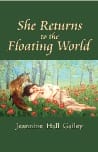
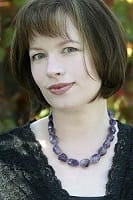 Jeannine Hall Gailey served as the second Poet Laureate of Redmond, Washington and the author of Becoming the Villainess, She Returns to the Floating World, Unexplained Fevers, The Robot Scientist’s Daughter, and winner of the Moon City Press Book Prize and SFPA’s Elgin Award, Field Guide to the End of the World. Her latest, Flare, Corona from BOA Editions, was a finalist for the Washington State Book Award. She’s also the author of PR for Poets, a Guidebook to Publicity and Marketing. Her work has been featured on NPR’s The Writer’s Almanac, Verse Daily and The Year’s Best Fantasy and Horror. Her poems have appeared in The American Poetry Review, Poetry, and JAMA.






robos
牙醫,植牙,假牙|矯正|牙周病,牙醫診所、植牙,紋身,刺青,創業,批發,TATTOO,皮膚科,痘痘,雷射、脈衝光、除斑,中醫,腫瘤,腎臟病,僵直性脊椎炎,飛梭雷射,肉毒桿菌,玻尿酸,痘痘,脈衝光,醫美,毛孔粗大,醫學美容,seo,關鍵字行銷,關鍵字、自然排序,網路行銷,關鍵字、自然排序,關鍵字行銷、seo,關鍵字廣告,網路行銷,seo,關鍵字行銷,關鍵字廣告,關鍵字,自然排序,部落格行銷,網路行銷,網路爆紅,牛舌餅,婚紗,台中婚紗。