Personality and Poetry, Hummingbirds and Goldfinches and Butterflies, Surviving Root Canals, and Melancholy Seasons
- At May 18, 2026
- By Jeannine Gailey
- In Blog
 3
3


Admiral Butterfly
Personality and Poetry
Hello my friends! I survived my Novocain-less root canal thanks to some serious drugs that knocked me out for a day or two this week. Later in the week we had our poetry group meeting, and one of the things we talked about was personality types, and I was surprised to find many of the group had very different personality types than me. Do you think that personality type affects our poetry, or what kind of poet we become? If I’m achievement-oriented and extroverted, that already makes me a little different than a lot of poets. I told the group I probably would have stayed in corporate life—or followed my original plan of becoming a doctor—if my health hadn’t interfered at various points in my life. My health has necessitated a dampening of my natural ambition and love of social activity, no time more than during the pandemic in the last few years. But a lot of writers were required to spend a lot of time indoors because of health troubles—maybe even a majority of them? Maybe we become artists and writers because our energies have been bent into a different shape than “normal” people, because of lots of time spent alone having to entertain ourselves. Fate shapes us in ways we can’t really anticipate—like marrying a certain person or being born into a certain family shapes us in ways we can’t anticipate. Money also exerts more pressure than we like to admit—being born without it certainly places barriers in the way to art, and being born with it makes it easier to go to a top university or not spend hours on the corporate ladder if we don’t feel like it.
Anyway, just something I’m thinking about. Also, the first butterfly sighting of the season!

Rufous at Fuchsia
Songbirds, Sorrow, Springtime
It is spring but it has felt more like winter this week, with highs in the early fifties and lots of rain and wind. And maybe it’s the root canal talking, but I’ve struggled with feeling a little more melancholy lately too. Have the little things in life felt a little harder lately for you? It’s not just the relentless bad news or worry for my family members—or I can’t say it’s just those things.
-

- Rufous at fuchsia

-

- Rufous at Coral Bells

-

- Goldfinch with metal bird

I tend to take pictures of beautiful birds and flowers because I want to remember the things in life that make life joyful, to appreciate the small things. It’s why I garden, too, though I’m not a natural gardener by any means. I generally am in good spirits in the spring—it’s my birthday season, and a lot of happy moments have happened in the spring for me. But this spring has felt a little different. Melancholy, sorrow, even depression aren’t necessarily things to be squashed down, ignored, or fixed—different seasons of life are going to involve more of those feelings than others. Maybe I’m in one of those seasons now. Things aren’t going easily, I haven’t had a ton of good news to share, I’m struggling. I worry about those in my life who are going through hard times. I worry about finances. (With “The Economist” announcing “Employment Apocalypse!” on its front cover, and paying $6 a gallon for gas, who wouldn’t be?) And although I’m generally an upbeat person (I think,) I can say that the weight of the world—I’m feeling it. Philosophers like Kafka and Kierkegaard bring me more solace in these seasons than some more upbeat personalities. Yes, friends, natural beauty, even a small thing like a bouquet of peonies or a peach shortcake can bring a day a moment of joy.
I promised a review of Juliana Spahr’s Ars Poetica, which, as the title promises, is a lot of poems about poetry—kind of a slim volume, not that many poems, and an unexpected large chunk of prose in the middle, talking about attending antifascist rallies where violence breaks out, being threatened by the ex of a friend with gun violence at her workplace and consequently going to the shooting range and thinking about a bulletproof vest—probably the most interesting part of the book. Juliana is seven years older than me but still in my age group (Gen X), started blogging and such around the same time I did, lived a large part of her life in Ohio (which I also did), and she’s a feminist who struggles with what that means. She also has some privileges—a lot of famous writer friends and a steady paying fancy academic job—that I don’t have, which she makes pretty clear in her acknowledgements, all ten pages of them (!). Is it worth reading? Probably. Is the best book of poetry I read in the last year? Absolutely not. (I would give it to Martha Silano’s Terminal Surreal, such a searing book about dying of ALS, or Lesley Wheeler’s Mycocosmic, such an intensely intelligent meditation on mushrooms and death. I think the people that choose the Pulitzer Prize are probably picking friends from their own cohort of academics, not reading too far outside their comfort zones, and boy, do they love poems about poetry. (Remember Diane Seuss’ frank: sonnets also had a lot of poetry talk, though her style is pretty different than Spahr’s.) I absolutely adored Marie Howe’s Pulitzer winning New and Selected Poems, which had a totally different flavor, which won the year before, so I guess it just varies by year. If I was a judge, I would have probably fought for a different book, but no one has asked me yet, LOL.
In the meantime, I have a residency coming up where hopefully I can get some of my writing enthusiasm and magic back. What do you consider important residency packing? Sunscreen? Inspiring reading material? Special pens? Snacks? Comfy clothing? Leave me your tips in the comments!
Wishing you a great spring week.
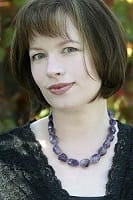 Jeannine Hall Gailey served as the second Poet Laureate of Redmond, Washington and the author of Becoming the Villainess, She Returns to the Floating World, Unexplained Fevers, The Robot Scientist’s Daughter, and winner of the Moon City Press Book Prize and SFPA’s Elgin Award, Field Guide to the End of the World. Her latest, Flare, Corona from BOA Editions, was a finalist for the Washington State Book Award. She’s also the author of PR for Poets, a Guidebook to Publicity and Marketing. Her work has been featured on NPR’s The Writer’s Almanac, Verse Daily and The Year’s Best Fantasy and Horror. Her poems have appeared in The American Poetry Review, Poetry, and JAMA.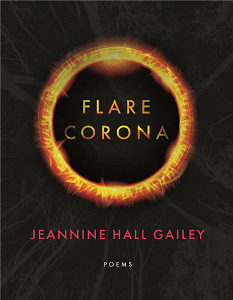




Lesley Wheeler
THANK YOU for the shout-out! And while I like Spahr’s work and will be happy to read the latest (I haven’t yet), I agree about Martha’s book seeming especially deserving. No poet would ever be in complete agreement with top picks every year, and it’s generally a good thing that tastes vary, but I wish we saw more diversity among the presses that boost writers to the fancy short lists.
Poetry Blog Digest 2026, Week 20 – Via Negativa
[…] Jeannine Hall Gailey, Personality and Poetry, Hummingbirds and Goldfinches and Butterflies, Surviving Root Canals, and Mel… […]
Getting dirty for poetry – LESLEY WHEELER
[…] also grateful to Jeannine Hall Gailey for boosting Mycocosmic in a recent blog post about which books win the laurels (particularly welcome given today’s news about prize-winning books and stories that depend on […]