First Swallowtail Butterflies, Lavender Festivals, Poetry, Money, and Rejection
- At July 20, 2026
- By Jeannine Gailey
- In Blog
 0
0

 First Swallowtail Butterflies and Lavender Festivals

This week was my first chance to photograph a Tiger Swallowtail butterfly in my garden—once on a lilac, the other on a pink salvia—a little late in the season for first butterflies, but maybe not? This weekend was also the first weekend of the Annual Lavender Festival in Woodinville at JB Grower’s Farm—they had vendors, lavender lemonade, beekeeping demonstrations, even ice cream—super fun! I am very lucky to live where I do. We did have a heck of a storm this week (which shut down the Seattle airport!) and one day of wildfire smoke, but generally our weather and smoke weren’t as bad as the rest of the country. (We’re supposed to have the Canadian smoke hit starting tomorrow, plus a heat wave over 90 for multiple days – boo!) In the meantime, Glenn and I got out as much as we could and enjoyed midsummer lavender, especially at sunset, when Mt Rainier is shining. We also celebrated my husband’s birthday with my little brother a little belatedly. It’s always nice to have family visit to celebrate.
-

- Me, polka dots, lavender farm

-

- Multi-colored lavender

-

- Glenn and I at sunset, Lavender Festival


 Poetry, Money, and Rejection

I met with a group of poets this week and we talked about poetry publishing, rejection, the money situation (where it costs more to get published than it ever pays to be published, given submission fees etc.) We talked about what kinds of jobs we did to keep from the unfortunate situation the main character of The Adjunct found herself in—homeless, starving, turning to prostitution (see last week’s blog post for review). I talked a little bit about entrepreneurial poets—like those who run weekend courses on their own, or offer editing services, or run online generating courses. Most writers—including fiction and non-fiction writers, not just poets do not earn a living from their advances or royalties. They make money teaching, or fees from readings and conferences, or selling their rights to Hollywood, or running conferences – but not from their books. (Also, a reminder: if you like a writer’s work, please buy their books when you can!) I myself should be better and smarter at making money than I am after all these years. Sometimes the limits are my health (sometimes keeping me from opportunities) and energy and even gumption (how dare I put myself out there? Who do I think I am?)
I also watched the original movie Fame, in which many young people experience rejection in a multitude of arts in the early 80s in a very melodramatic way that probably was edgy for its day (dare I say the tv show was better than the movie?) One character is told if she can’t take rejection, don’t be a dancer, and proceeds to almost throw herself under a subway bus. Dancing might be the one art form with more rejection than poetry—and a shorter lifespan, as injuries, pregnancies, and just life (too short? too tall? too busty? etc.) can put you out of the game by 25 or 30. Fortunately, poetry has no such short lifespan, though poets may find the game a little easier when they’re young (and if they’re hip and attractive, even easier)! But all poets, even the great ones, face a LOT of rejection, and at 53, sometimes I feel that I’ve had enough. But I persist, possibly delusionally optimistic. Succeeding at being any kind of artist involves surviving rejection and not letting it put a permanent “NO!” stamp in your heart or head.
So in the week ahead, if you’re facing too much smoke and heat and you’re feeling discouraged, give yourself a break. Remember every artist, even the best artists, feel defeated sometimes, feel like giving up, definitely have trouble paying the rent. Remember that “success” – whatever that means to you—often results from persisting and trying to ignore the big “no” to get to the big “yes.”
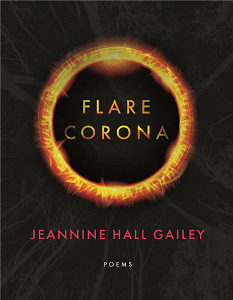
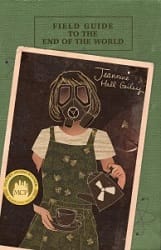
 Jeannine Hall Gailey served as the second Poet Laureate of Redmond, Washington and the author of Becoming the Villainess, She Returns to the Floating World, Unexplained Fevers, The Robot Scientist’s Daughter, and winner of the Moon City Press Book Prize and SFPA’s Elgin Award, Field Guide to the End of the World. Her latest, Flare, Corona from BOA Editions, was a finalist for the Washington State Book Award. She’s also the author of PR for Poets, a Guidebook to Publicity and Marketing. Her work has been featured on NPR’s The Writer’s Almanac, Verse Daily and The Year’s Best Fantasy and Horror. Her poems have appeared in The American Poetry Review, Poetry, and JAMA.