Believing the Fairy Tale – Jobs After the MFA
- At September 22, 2014
- By Jeannine Gailey
- In Blog
 1
1

There have been a LOT of articles around lately about the difficulty of acquiring work after your MFA. As if those students needed more to panic about, what with student loan debt, record high unemployment rates, shrinking tenure job pools, etc. Here is a link to just one of them from the Chronicle of Higher Education: https://www.insidehighered.com/blogs/just-visiting/potential-mfa-students-there-are-no-academic-jobs
Here’s another one, at my local alternative paper, The Stranger, about making ends meet while studying – FYI, in case you’re wondering about my way to doing that, I spent my MA in full-time work as a manager at AT&T, and my MFA doing freelance tech writing: http://www.thestranger.com/seattle/how-i-supported-myself-while-getting-a-graduate-degree-in-poetry/Content?oid=20607991
So, I’m not telling MFA students (or recently graduated MFA-ers) to believe any fairy tales. Adjuncting does pay less than most fast food jobs, and you’ll work a lot harder – and those are, by some estimates, about 75 percent of the teaching work force at universities right now. One of my friends posted that the job pool for tenure-track jobs had shrunk so much since getting his pHd that he’s thinking of opening a food truck. That got me thinking: what are other jobs that MFA grads can get to pay off those student loans in a tight academic job market?
If you’re read my blog for any length of time, you know I’ve had a variety of jobs. I have a BS in biology, so I worked temp jobs in labs, for instance. I also ran a high-end perfume and makeup store for a while. I worked a dozen years as a technical writer and then as a tech writing manager, and also tried my hand at advertising copyediting, copywriting, PR, and various freelance-type gigs. I worked as an adjunct professor for MFA students for several years at National University. Freelance journalism, which I also did, is a shrinking field, which I kept in mind (and kept off the following list for that reason.) It used to be a good way to make a living for a writer, though!
So here are my suggestions, despairing MFA students!
–Go for the Mad Men approach. Advertising copywriting had to my one of my all-time favorite jobs. I lucked into a temp job copyediting at a cool slick Seattle advertising company, and they hired me as a part-time copywriter as soon as I had proven competent at writing as well as editing. This was fun work – I got to write about going on fancy train dinners, Microsoft stuff, some sports team rigamarole. I liked it, it paid well, the people I worked with were fun, and the company atmosphere was light and energetic.
–If you’re even a little geeky, consider technical writing. It is definitely where the money is. I made more money in this field than any other. I’m not a high-end coder, either, but I knew enough code to get by – a little XML, a little Visual Basic and ASP, a bunch of HTML. This kind of work will not only pay well, it is usually accompanied by excellent benefits. I loved working with smart programmers and engineers (my dad and my husband are both engineers, which attests to the fact that I get along quite well with that type) and I loved being paid well for relatively non-taxing work. Managing teams of tech writers, web designers and dev-types was a bit more strenuous, required a lot of hours and travel, so if you’re not up for that, be warned.
–If you’re an energetic cheerleader type, consider PR. I found it a bit exhausting (you can probably tell that by the way I write about trying to do PR for poetry books) but if you have the right personality type and a go-getting attitude, it can be fun work. You get invited out to drinks and parties a lot. You may or may not wind up with some cool swag. I’ll also just say here, apropos of nothing, a lot of the people in PR are young, very attractive and wear very short skirts. No judgement, just an observation. A newer version of this may be “social media consultant.” I’m not young enough to have had this job, and also, they may have a less-miniskirt oriented dress code.
–Teaching outside of the college arena. Some of my friends from my MA and MFA programs became high-school teachers. The ones that do it seem to love it, as the pay’s not terrible, they have a love of teaching kids, and they like having the summers off. Some of my friends are ESL teachers. They also really love the kids. Some of my friends took off for foreign countries to teach English overseas, which enabled them to visit some weird places and have lots of good stories to write later on. There are opportunities outside of slaving away for pennies as an adjunct, or fighting the fight for the several tenure track jobs that may or may not be pulled after they’ve collected several thousand CVs.
–Grant-writing. No personal experience with this one, but have several friends who have found this to pay well, be personally fulfilling, and use their writing skills! You can do this for non-profit foundations, which is nice if you have a “helping out the world” mentality!
So, you can point your spouse, parents, etc at this post when they ask what you’re going to do with a graduate English or creative writing degree. Of course, these are just a few of your possibilities; I also know English and CW grads who are programmers, engineers, doctors, life coaches, HR workers, nurses, chefs, and poet laureates of states.
Of course, I am still clinging to the dream: winning a Pulitzer prize, having several job offers of part-time low-residency MFA work, getting $10,000 a reading. Hey, it could happen. I still do believe in fairy tales, but I also believe in the bottom line. So don’t wait for the dream, prepare yourself while you’re still in school for a good job that uses your skill set!
This is my pumpkin coach. It’s my ticket out of here!
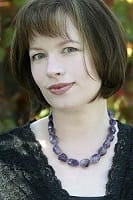 Jeannine Hall Gailey served as the second Poet Laureate of Redmond, Washington and the author of Becoming the Villainess, She Returns to the Floating World, Unexplained Fevers, The Robot Scientist’s Daughter, and winner of the Moon City Press Book Prize and SFPA’s Elgin Award, Field Guide to the End of the World. Her latest, Flare, Corona from BOA Editions, was a finalist for the Washington State Book Award. She’s also the author of PR for Poets, a Guidebook to Publicity and Marketing. Her work has been featured on NPR’s The Writer’s Almanac, Verse Daily and The Year’s Best Fantasy and Horror. Her poems have appeared in The American Poetry Review, Poetry, and JAMA.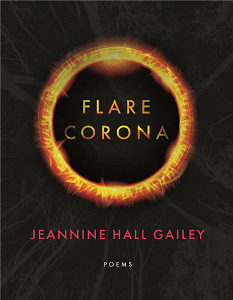




Jan Priddy
Thank you Jeannine, for a good list of jobs that actually benefit from the experience gained with and MFA.
I never believed the fairy tale that my MFA would help me find work. I have work. I worked full time throughout acquiring my MFA, which I wouldn’t recommend to anyone, but which worked for me. I have never regarded education as job training, but as a means of personal development. I completed the MFA purely for myself, not to gain or develop job skills.
As a high school teacher I work with students for many more hours than I would teaching at a university, and for less pay than if I were in a college-level tenure track position. (And no one at my school cares whether I am published.) But I earn substantially more than I would as an adjunct anywhere, and that’s something I already knew before pursuing the MFA.
Therefore, I didn’t think the MFA would help me get a job, and I didn’t think it would make me a writer. I was already a published writer before entering the program. I hoped I would get to know other writers and that I would become a better writer, and that’s what happened.
A writer I know recommended that beginning writers “marry money” and that’s advice I wasn’t considering. Historically, writers have generally been of two sorts—rich or otherwise employed.
My choice? I have a day job. I write at 5am every day. That habit predates Naomi Shihab Nye telling her workshop students at The Flight of the Mind about her personal writing schedule. I wasn’t even in her workshop, but my room mates abruptly changing their minds about my early-morning habits and want to know how early I could I wake them?
I write for myself. I submit only occasionally. I thought by my age I would have three books and that hasn’t happened, but I still write and I am undiscouraged about publication. The writing matters, at least to me.