A Change in Mindset: A Visit to Seattle Art Museum, A Friend from Out of Town, New Year’s New Hair
- At January 18, 2026
- By Jeannine Gailey
- In Blog
 1
1

 A Change in Mindset

Ah, January 2026—so far, not a month many of us will look back on fondly. This past week I did everything I could to get myself back into a better headspace. I changed my hair (back to auburn—the color I was born with!) I visited the Seattle Art Museum to fill my head with beauty instead of the awful state of things on the news, to wake up my inspiration. And I had a visit from an old friend from high school, who kindly brought me some Korean sunscreens from Paris (far superior to American ones—safer and more effective—in case you’re traveling to Paris or Seoul in the near future). We went out to lunch then enjoyed the sunshine at Meydenbauer Park. On top of the news of fascism’s rise in America and a new trend in “MAGA hating white liberal women”—as reported by the New York Times (I didn’t need that headline, since they showed their love by shooting one of us in the face in the last ten days, and course blamed US for that problem)—I also had some new bad news about the health of a family member, which is always hard. ICE was also doing some random raids at my local Redmond Target and McDonalds. At least the Seattle Seahawks seem to be on the path to the Superbowl, a little something to cheer about.

Takashi Murakami’s Flower Globe
The Seattle Art Museum
I hadn’t been to the Seattle Art Museum in a while, so I had a pleasant surprise in some new art and installations there. I became a member again a month or so ago with the idea that maybe I could spend some more time looking at art and less time worrying about the state of the world, my health, my loved ones’ health…well, being with art is good for my emotional and mental health.
An installation of happy little clouds in the entryway ceiling made for a cheerful entrance on a gray January day. Then, a new acquisition is right at the ticket takers—a Takashi Murakami 3-D piece called Flower Globe. The featured exhibit was Impressionism: Farm to Table, which included great pieces—The Gleaners by Lhermitte, a haystack by Monet, a wonderful flowering apple scene by Sisley. But even more delightful was finding two new recent on-loan pieces in a lonely room on the fourth floor —The Chess Game by John Singer Sargent and The Water Lily Pond by Monet. No one even knew they were there, and they’re both amazing. Also a surprise—a giant wolf in cedar sculpture was a standout in the Animal Intelligence installation. Anyway, besides the horrible knot of traffic coming and going from downtown Seattle, it was a delightful visit, and I felt uplifted. (Here’s a link to see some good images from the Impressionist Show, which closed today.) I was underwhelmed by this art museum when I first moved here 20 years ago—I was hoping for a museum closer to Chicago’s, or San Francisco’s, art museums—but I think the place is improving. We have so much tech money in this area, but there are still too few billionaire/millionaire’s willing to loan or donate their art to our museum. If we had more support for the arts out here, it would certainly help lift the entire city, in my opinion. We can’t all simply be coding slaves to Amazon, Microsoft, or airplane builders at Boeing—we need to build art into the next generation’s sensibility as much as computer science. We need symphonies, and ballet, and visual art of all types, and yes, poetry.
-

- Happy Clouds

-

- Cedar Wolf sculpture

-

- Monet’s Lily Pond

-

- The Chess Game by Sargent


Glenn, me, and Emily
Friend Visit Alert!
We had a visit from an old high school and college friend, Emily, who was kind enough to carry some Korean sunscreen with her from a trip to Paris to us here in Seattle. We caught up over a delicious lunch at all gluten-free, upscale Mexican restaurant Cantina Monarca (and I got to talk to the chef!) and then walked around in rare January sunshine at Meydenbauer Beach Park, which overlooks Lake Washington, before going home to dinner and enjoyed reminiscing about old times while watching the first couple of episodes of Only Murders in the Building (I’d forgotten how good those first few episodes were!) Emily was (as always) bright and energetic, and it was fun remembering old times. It’s funny how spending time with friends from—oh, thirty years ago—and it’s like no time has passed at all. Another good reset for our brains, too—spending time with friends is definitely something I want to do more, not less, of in 2026. It’s good not to take our friendships for granted, and I’m trying harder not to isolate myself so much (a holdover probably from the pandemic that I haven’t quite gotten over yet).
-
- Glenn, me, and Emily and so much sunlight!
-

- Emily and I at Cantina Monarca

-

- Glenn and I in a sunbeam


Me in the sun at Lake Washington
In Hard Times, How Do We Stay Resilient?
Emily asked me a question while she was here that made me think about how we allow ourselves to respond to hard times. How do you do it? Good question! I think I made a joke about “what are my other options,” but the real question behind the question is, how do you stay resilient in the face of pain, loss, stress, etc. Which is a question we all have to wrestle with. I wrote a poem (in my book Flare, Corona,) whose title is something like “In a Plague Year, We Are Tired of the Word Resilience.” But the truth is, we choose how to respond to tragedies large and small, pandemics, friends and family with tough medical diagnoses, our own health struggles, relationships that are lost (through death or through just growing apart), money troubles, divorces, and yes, nightmares of politics. I have never been one to be all-bright optimist—which you probably know if you read my books—or a “hide your head in the sand” denial-embracer. But I’m not really a pessimist at the core, either. Things like music, visual art, writing, books, friendships, and even something as small as enjoying a sunny day in January or changing hair colors—can give us a wider perspective, a chance to remove our focus from ourselves, and remember what it is we are living for. What we fight for.
 When I volunteered with dying children and later, dying heart patients, in my teens and early twenties, and then again when I was diagnosed with terminal liver cancer—one thing I learned was that you have to give your body—your spirit—a reason to live. It can’t just be all chemo appointments and medication regimens and even therapy or yoga—those things don’t give you enough of a reward to stay in the fight, if you will. If you have a passion—if something really gives you joy—I recommend you give yourself more time and energy to spend on that, whether it’s making a perfect Basque cheesecake or painting a 3-D daisy globe that will sell for millions. How do we get through? By helping others, by feeling love for an animal, other humans, even plants, by creating something worthwhile, by feeling that we have a real purpose. Maybe we dress up and drink a glass of champagne and dance, or we visit a new city, or we meet new people or attend a football game or an opera—we give ourselves a reason to live, to hope, to experience new things. Wishing you all resilience in the face of 2026.
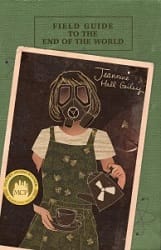
 Jeannine Hall Gailey served as the second Poet Laureate of Redmond, Washington and the author of Becoming the Villainess, She Returns to the Floating World, Unexplained Fevers, The Robot Scientist’s Daughter, and winner of the Moon City Press Book Prize and SFPA’s Elgin Award, Field Guide to the End of the World. Her latest, Flare, Corona from BOA Editions, was a finalist for the Washington State Book Award. She’s also the author of PR for Poets, a Guidebook to Publicity and Marketing. Her work has been featured on NPR’s The Writer’s Almanac, Verse Daily and The Year’s Best Fantasy and Horror. Her poems have appeared in The American Poetry Review, Poetry, and JAMA.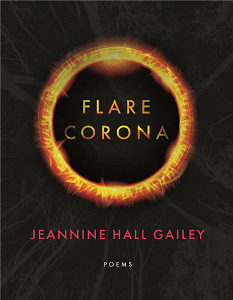







Poetry Blog Digest 2026, Week 3 – Via Negativa
[…] Jeannine Hall Gailey, A Change in Mindset: A Visit to Seattle Art Museum, A Friend from Out of Town, New Year’s New Hair […]