Post Holiday Plans

Hope you all had a wonderful holiday, that Santa brought you everything you wanted, and that you all ready to ring in 2012, which I am thinking of, surprisingly, not as an apocalyptic year, but a year of positive changes. I hope. You know, less asteroids, more realizing our potential and stuff.
We still haven’t taken down our Christmas decorations. We’re actually trying to extend Christmas this year, making a long holiday out of it – yesterday I went to a coffee shop downtown (the oldest one in Seattle – Cafe Allegro, which is a super cute find near the U of Washington, in case you’re looking for a good coffee shop in the area) to meet two out-of-town friends for back-to-back post-Christmas coffee dates. The barista asked me if it was my birthday, because he said people kept coming in with presents for me! Ha! Anyway, I had a wonderful time catching up with these friends, and reminding me again how important it is to spend time with the people you care about – it’s tremendously encouraging!
And as far as poetry news: If you’re at all interested in the Japanese form of haibun, go check out Aimee Nezhukumatathil’s excellent article on Poets.org:
http://www.poets.org/viewmedia.php/prmMID/22712
and here’s the whole haibun from me that she refers to in the article: http://haibuntoday.blogspot.com/2008/04/jeannine-hall-gailey-rescuing-seiryu.html
So what are your plans for 2012? Explosions and Atwood-style dystopia? Or a future so bright…?
Christmas Celebrations with Friends
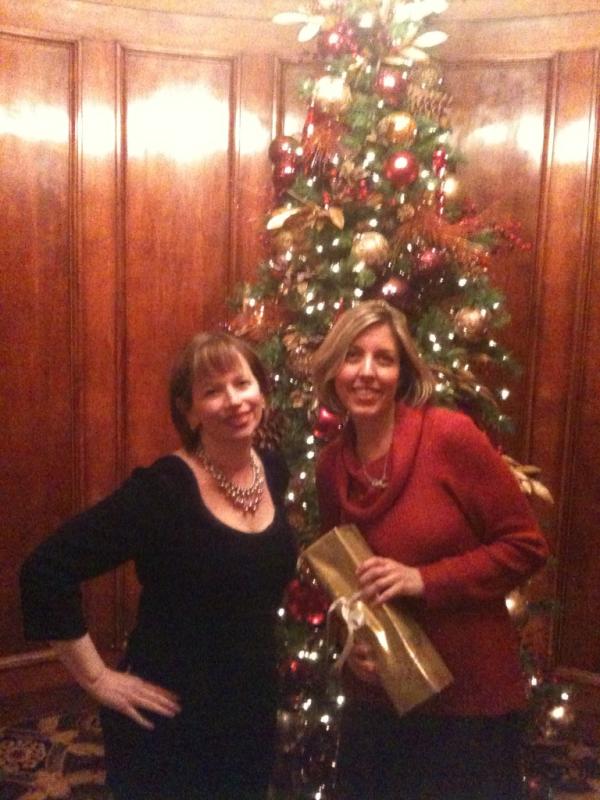 I believe I have mentioned this is my Christmas of celebrating friends. Tuesday night I went down to the beautifully decorated Sorrento Hotel to see Kelli and enjoy the holiday atmosphere at the lovely fireside bar, where some lovely people were waiting in line to catch one of the comfy couches or tables and get a bite to eat and a cocktail. Friendly Seattleites? Yes! Especially when the sun shines so much during December. We had about three people offer to take our picture for us. Here is one of the results by the Sorrento’s Christmas tree!
Tonight my artist friend Michaela is coming over for dinner, so we’re really excited – Glenn is making osso bucco (which we decided after Thanksgiving will be our official holiday dinner dish!) I just really appreciate having wonderful friends to visit with. Feeling grateful grateful grateful! And hopefully I will squeeze in two more visits with farther-away friends before the end of the year.
And check this out: a lovely poem by Mary Agner about Ada Lovelace, dedicated to me! And it starts out with a robot scientist’s daughter! Love love love – here it is up at Stone Telling: Lovelace Noctures
Our presents have all arrived safely with our families in Ohio and Tennessee, thankfully, so I can stop worrying. Now we just have to rest and relax (and me, try to get over this pleurisy! Six weeks they said it can take! Stupid lung lining inflammations!) – well, I have to write a little on a new project I’m working on and do some editing for Eye to the Telescope, but mostly rest and relax. There is sun outside today – reminding us of longer days ahead – and something that smells delicious baking in the kitchen…Lots of things for me to be grateful for! So Merry Christmas so all who celebrate, also Merry Solstice, and Merry Chanukah! Merry days of cookies and television specials to all!
Grateful Holidays, Lit Mag considerations, doors opening…
This year, I am celebrating my holidays in Seattle, far away from my family, but happily, close to many of my friends, and I’m excited about squeezing in dinner and coffee dates, as many as possible, around Christmas. I am feeling unbelievably grateful for my wonderful, eccentric group of friends.
I don’t want to say too much about anything specific yet, but I have the feeling lately that after a few years of banging hard on doors and not getting anything but bruised knuckles, that when I knock on doors these days they’re sort of…opening on their own. Maybe it’s just foolish end-of-year optimism…or maybe my luck (writing-wise anyway) is changing…
My new e-reader has been a bunch of fun to play around with, but I’m hoping that more lit mags will get on the e-reader bandwagon – wouldn’t it be great to be able to travel with new issues of your favorite lit mags on your Kindle or Nook? The lit mag really would lend itself to this kind of reading, with a bit of poetry or fiction or essay on the go. I can’t see reading a great many novels on the e-reader – still prefer paper books for that – but research and reading bits and pieces of things works fantastically on the Kindle Fire. Are many literary magazine editors considering creating maybe slightly cheaper versions of their magazines for e-readers? Let me know in the comments!
Thanks to Jessica Goodfellow for nominating this little blog for a Liebster award, which I am also grateful for! All the blogs she nominated I follow and and admire, actually!
Unexpected Enthusiasm Edition: The Kindle Fire
Surprise! I love my e-reader!
Yesterday, I had a rheumatology appointment. It took three and a half hours for me to get in and out of that dreary, constantly-under-construction UW medical building. Yes, if you want to suck the will to live out of a person, I’m afraid the hospital environment does a great job!
But, knowing I was going to be trapped in a waiting room for hours, I unwrapped an early Christmas present from my parents: The Kindle Fire. I knew there were going to be practical advantages to having an e-reader, though I’m a born-and-bred book lover (my grandmother and I recently bonded over our mutual unwillingness to get rid of old books.) But what I didn’t expect?
How much I’d love it!
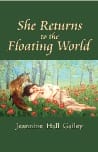
The picture quality is beautiful. I tried streaming a couple of things, including the classic movie “Christmas in Connecticut” (Another unexpected Christmas movie that’s a sharp critique of the expectations of working women to be both domestic goddess and shrewd moneymaker) – and it looked better – better – than my television. The sound quality was better than my laptop’s speaker system. And Glenn downloaded the Kindle version of She Returns to the Floating World – and it looked exactly right! Line breaks preserved, everything. The only downside was that with the Kindle version, you don’t get to see the full impact of the beautiful color cover of Rene Lynch’s art work (it’s there, but smaller, and in black and white.) Still, it was much better than I had expected after all the hullaballoo about how troublesome poetry was on e-readers. And definitely I’m giving credit to the Kitsune Books editors (thanks guys) for taking their time and doing it right with the e-reader conversion – a troublesome, time-consuming process. Now, I’m really looking forward to reading this anthology on my new toy!
The screen was easy to read. The only thing I’m finding difficult is getting the much-discussed free access to many classic works (I haven’t figured out where to find those yet, and Amazon – for some unknown reason – doesn’t make it easy to access free content.)
There’s also a way to access your music on the “cloud,” which I haven’t done yet, and since the Fire is color, it might be a good way to read magazines as well – I haven’t tried it yet. You can stream free content if you sign up for Amazon Prime, I believe – some television, some movies, some books and music – but you can’t download it for non-wi-fi times.
Anyway, as someone who loves book and hated – HATED – learning to use her smart phone (which I’m still in the process of doing, if you want to know the truth) – the Kindle Fire is easy to use, beautiful, and just plain exciting for anyone who travels a lot (or is stuck in waiting rooms a lot.)
And don’t be afraid to read poetry on it! The screen even flips so you can read long lines. I’m excited to be able to bring more poetry with me wherever I go!
A Kirkland Reading and a Holiday Special!
Jeannine Hall Gailey and Joannie Stangeland Read at Kirkland’s Park Place Books
Wednesday December 14 at 7 PM
I’m kind of nervous about this reading with Joannie Stangeland tomorrow night at Kirkland’s Park Place Books, partially because it’s the holidays and maybe everyone is too busy to show up at a poetry reading and also because the East side’s readings are sometimes less well-attended than downtown Seattle readings…but Joannie is a doll and a really fun reader with a brand new book and if you haven’t seen me read from She Returns to the Floating World yet, you should come out!
And, for all your holiday gift-giving needs (and, note the previous post on poetry economics!):
Super special! Get my first book, Becoming the Villainess, and my second book, She Returns to the Floating World, both signed to the person of your choice, for only $21!! I’ll include some special holiday swag too!
And if you pick up a copy of my new book, She Returns to the Floating World, for the full price of $12 (including shipping right now during the holidays,) not only will you get the cool swag and signature, you will also get this cool new magnet thing (some may differ slightly from this one, but will include some part of the book cover) that my husband Glenn has made: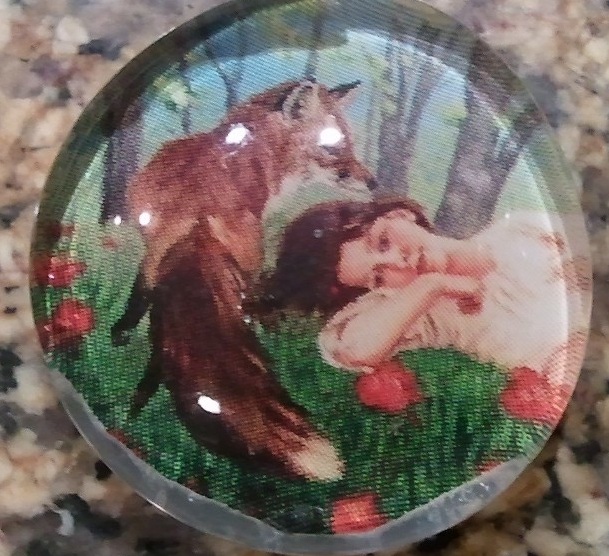
Send an e-mail to me at jeannine dot gailey at live dot com to take advantage of either offer! Only available through December. I take Paypal and checks! 🙂 Support your local poets!
The Economics of Poetry
On jobs for poetry MFAs, typical poetry payment, etc:
http://nymag.com/news/intelligencer/topic/poetry-2011-12/
You know what my delusional take from this article was when I first read it? “Oh, I’m not that far away from Jane Hirshfield in sales…” Yes, that’s right. I told you it was delusional.
Hat tip to the PF and Jessica Goodfellow for that cheery link…
Journals that pay for poetry:
http://www.thereviewreview.net/publishing-tips/show-me-literary-magazines-pay
Hat tip to January O’Neil for that link. Once, one of my poetry mentors, Pattiann Rogers, told me she almost exclusively submitted to journals that paid. It was such a simple and direct statement, so full of Midwestern common sense. If only I could follow it. But I do admit, my heart does swell a little bit when I get a little check for anything having to do with poetry. It shouldn’t matter, maybe, but it does.
Yes, the holidays are a crazy time – I try to stay on budget, and usually fail fairly spectacularly (and in my defense, I have a huge family!) Is it financially crazy to be a poet? It is crazy to give poetry as a gift at Christmastime? Is it crazy to try to live a creative life? I think it’s not. Among the most valuable things in my life: my friends, my family, and poetry. If I ever come into money, the first thing I will do with it is start a small poetry press. I’ve been wanting to do it for years, but the last couple of years have been tough financially (hopefully that will turn around in 2012!) That is what would give me joy: to put more poetry in the universe. So, maybe that is crazy.
I live far away from my family (and my husband’s,) so this time of year, I’m all about celebrating with my adopted family – my friends! I’m so excited about the next couple of weeks and getting together and celebrating…oh, and I’m reading with Joannie Stangeland at Park Place Books on Wednesday night, so if you’re going to be around Kirkland, WA on Wednesday night, stop by! She’s phenomenal and I’ll be in a holiday celebrating mood!
Poets Versus Illness, Good News for Mary Agner, and the holidays continue…
Good news for fellow science-poetry-writer Mary A. Agner: her new book, The Scientific Method, is out. Here is a pic at her blog, lovely! Congrats Mary! Just in time for Christmas!
http://www.pantoum.org/entries/2011/12/06.shtml
I wrote a long blog post after reading Rae Armantrout’s essays on her cancer and my own long experience with health issues, and I put it up on my PAI-1 deficiency blog. It’s called Poets Versus Illness: How to Be Your Own Superheroine. It’s kind of long, and personal, and details some of the things I think are crucial to think about when you’re sick and tips I’ve gleaned on how to manage your own health care. I’m putting the link here in case you are interested in that kind of thing.
Yes, missing a reading at Seattle Arts & Lectures tonight I really wanted to go to – Terrence Hayes, who is a great reader. So blech to that. Still having some trouble breathing with the pleurisy, so, you know, rest, fluids, new inhalers, etc. The endless ice fog here in Seattle is not helping things. If only I could beam some Napa weather up here for the holidays. Also found out I’m still having trouble keeping up the b12 even with monthly shots. Guess we’re going to twice a month. Now, if only I could get shots of sunshine…
Interviews, reviews, the next manuscript, and holiday thankfulness
First, some poetry miscellany:
For a long time I have harbored an affection for the magazine Fourteen Hills. It has the best readings, and the editors are always lovely. Here, the poetry editor Sandra Wassilie interviews me about She Returns to the Floating World:
http://14hills.net/node/376
One of my final book reviews of the year is up at Rattle, this one of Brian Spears’ A Witness in Exile:
http://rattle.com/blog/2011/12/a-witness-in-exile-by-brian-spears/
Yesterday was spent at the doctor’s office, getting chest x-rays, blood tests, etc. They were checking for the dreaded pneumonia, what with all our “ice fog” and “Air advisories” and “ten degrees below normal” weather out here in the Northwest, well, it wouldn’t be too much of a surprise. But, yay, no pneumonia! Just pleurisy, which is painful and requires more rest than I’d like, but nothing inconvenient like getting stuck in the hospital (as long as I don’t overdo it.)
The good news is that though I am forced to appreciate the holiday season from afar – no malls, no outdoor hikes to cut down a tree, etc – it has helped me get some work done, on Eye to the Telescope’s third issue, for example – oh, I hate sending rejections – and doing some serious revision and organization work on my fairy-tale themed third MS. You know how you have a book manuscript you think is finished and then you’re all, wait, am I sure that’s how it should be organized, and maybe it should have another section, and what about this poem that I’m pretty sure belongs in the book, etc…I’m also contemplating an essay on approaching illness and the medical system called “How to be your own superheroine.” I read Rae Armantrout’s recent essay series on her discovery that she had a rare cancer and I thought “I wish I could write like that.” She is a stone cold brave lady in the face of danger, that’s for sure.
Buying Guide – Poetry in 2011
List of 2011 Books that Make Great Holiday Gifts:
It’s always tough putting together a good shopping list for the year’s books – so many good books to remember, it seems, come out every year! And remember to ask Santa for a subscription to your favorite literary magazine – I recommend a smaller magazine, such as Crab Creek Review, 32 Poems, or another independently funded journal.
Lucky Fish by Aimee Nezhukumatathil – Likable, funny narrators and subtle wordplay make Aimee’s book a standout.
The Book of Men by Dorianne Laux – I think this exploration of Dorianne’s interest in the male of the species – and her new nods to pop culture, like “Superman” and “Cher” – make this Dorianne’s most interesting collection yet!
And Yet They Were Happy by Helen Philips – Though this isn’t technically poetry – more like little flash fictions collected into a sort of hip, experimental novel – the voice here is heartbreaking, moving, funny…everything I want my poetry books to be! You won’t be sorry you read it.
A New Red by Lana Ayers – New spin on an old tail/tale here – (ok, couldn’t resist the joke) – Lana’s passionate, sharp voices will haunt you.
Hide Behind Me – Jason Mott – Superheroes with a twist in this moving collection about the heroism of the every day.
I Stand Here Shredding Documents – Kristin Berkey Abbott – http://www.amazon.com/I-Stand-Here-Shredding-Documents/dp/1599247534/ref=sr_1_fkmr1_1?ie=UTF8&qid=1322609589&sr=8-1-fkmr1 – I have to say, I love a good poem about work, especially by women. This manuscript delves into the spirit and the workaday world with intuition and heart.
Elizabeth Austen’s Every Dress a Decision – Humorous poems about relationships with men are balanced with some sharp reveries on family.
Joannie Stangeland’s Into the Rumoured Spring – Well, I haven’t read this one yet, but generally Joannie’s meditations of nature, the spirit, and life are gentle reminders to celebrate the moment.
Martha Silano’s The Little Office of the Immaculate Conception – Martha is a clever wordplay artist, and her poems on motherhood are immediately relatable and thoughtful. Not to mention science poems, my favorite!
Amanda Auchter’s The Glass Crib – Moving poems on the nature of family and the body.
Maya Zellar’s Rust Fish – Full of affectionate portraits of her Northwest home, Zellar portrays a working-class youth with warm realism.
The Poetry Gymnasium: 94 Poetry Exercises – Tom C. Hunley – Which poet – whether they teach or not – hasn’t needed more poetry exercises, with convenient examples right there?
Books I’ve reviewed and recommend:
Dana Levin’s Sky Burial – http://therumpus.net/2011/03/you-may-say-fist-you-may-say-teeth/
Brian Spears’ A Witness in Exile – (forthcoming)
Steve Fellner’s The Weary World Rejoices – (forthcoming)
Christine Deavel’s Woodnote – http://therumpus.net/2011/10/a-mark-of-the-naive/
Erika Meitner’s Makeshift Instructions for Beautiful Girls – http://www.barnowlreview.com/reviews/meitner%20deux.html
For your future self: Check out books coming out in 2012 by Kathleen Flenniken and Annette Spaulding-Convey. Terrific, clever, moving…I’ve read early versions of these manuscripts and loved them!! And of course, Eduardo Corral’s Yale Younger Poets winner. (I remember reading his MS…mmm…maybe eight years ago (?) and loving it. Eight years of work did not make the manuscript weaker.) Automatically going on my “to teach” list of books.
For my future self: I would love a publisher to swoop up manuscripts by a few excellent poets – namely, Natasha K. Moni, Jeff Walt, and Karen Weyant. Are you listening, publishers? Seriously, these are some great manuscripts!
And finally, my inevitable plea, because one of my favorite holiday activities is watching my Amazon ranks (just kidding): for the comic book loving teen or college student, Becoming the Villainess; for the woman in transition, J-pop lover or folk-tale fanatic, She Returns to the Floating World. A lovely holiday gift for me? A nice review on Amazon or Goodreads!
Reading Report – Rigoberto Gonzalez "Black Blossoms" at Open Books
We braved the cold (and air advisory — cough cough – dang asthma!) to see the gracious Rigoberto Gonzalez read from his new book, Black Blossoms, at Open Books tonight. Eduardo had told me I would love it, and I did. It’s full of passion, violence, and a kind of gorgeous, stark imagery.
Here is a sample of his work, the poem “Girl With No Hands.” (By coincidence, I have a poem by the same name in She Returns to the Floating World, based on the Japanese variant of the same fairy tale.)
The Girl With No Hands
by Rigoberto González
Your father asked for more than a polka–dot tie, a self–portrait in Crayola or cinnamon
snickerdoodles flat as candle stubs on baking sheets. He grabbed you by the wrists
and severed your hands to wear on his key chain like a pair of lucky rabbit’s feet.
What is so fortunate about a rabbit hopping about the prairie with a missing limb?
What if all four of its legs had been clipped? It eats only as far as it can stretch
it’s neck, and then rolls itself on its back to perforate its starved belly with the blades
of its ribs. When the hunter returns, the rabbit will have its revenge, looking like
the amputated foot of its diabetic mother wearing that familiar bunny slipper.
Your father seized your hands, not out of malice, but greed —his wish to match
Midas and pocket the small golds of his kingdom — Rolex, wedding bands, crucifix,
and the precious treasure of your rings, which, little princess, will never leave
your fingers because Papi breaks no promises. He never abandoned you either,
always here when you come across your hairbrush, perched on the bristles
like a nesting pecker. Resolute, you age with ingenuity, learning to eat
right off the branch, nibbling apple, apricot, and pear without separating fruit
from stem. This is how you heard about the clever rabbit, from the hunter’s son
who made love to you pressing his fists to the small of his back. He locked you
against the tree trunk and your shoulders splintered the bark. What a miracle
of an instrument, the piano that’s played with elbows and knees and four clumsy
heels that for all their random reaching make the sweetest rhythms. Your bodies
danced each afternoon in the grove while your mother sewed the mysterious
tears in your dresses. You forgave your mother’s inactivity that night when Papi
struck down your wrists with a cleaver, the mirror of the metal like a window
to a furnace, the shadow puppet butterfly emancipated finally. Who knew
chopped bone could sing? Maybe chicken doesn’t utter a note at its beheading
because its mother hen isn’t near to cluck a frenzied requiem, Your mother
squealed as fiercely as a sow and your stumps looked like the blooded snouts
of swine. But all that rage escapes you now as you unleash the power of the hand
your father left intact, and with it grip your lover tighter into you. So this
is delectable defiance, Miss Rabbit — it must have been female to claim
the last word. You, girl, with no hands, can produce another pair and more:
legs, torso, head, and a bear trap of a jaw to bite the hands that feed her.
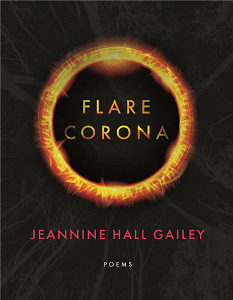
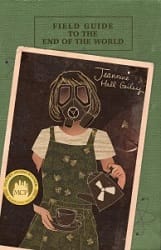
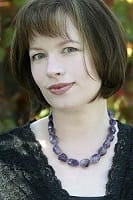 Jeannine Hall Gailey served as the second Poet Laureate of Redmond, Washington and the author of Becoming the Villainess, She Returns to the Floating World, Unexplained Fevers, The Robot Scientist’s Daughter, and winner of the Moon City Press Book Prize and SFPA’s Elgin Award, Field Guide to the End of the World. Her latest, Flare, Corona from BOA Editions, was a finalist for the Washington State Book Award. She’s also the author of PR for Poets, a Guidebook to Publicity and Marketing. Her work has been featured on NPR’s The Writer’s Almanac, Verse Daily and The Year’s Best Fantasy and Horror. Her poems have appeared in The American Poetry Review, Poetry, and JAMA.