A few nice surprises for the end of November…

Today I had a few nice surprises…
The first was receiving in the mail a copy of Tom C. Hunley’s The Poetry Gymnasium, a book of 95 class exercises for poetry. I was honored to have my poem “Cinderella, at the Car Dealership” included in the “Literary Retellings” exercise section, of course, but the whole book is a lot of fun. I may even use it to help me generate more poems myself this next month!
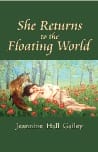
The next was reading Mary A. Agner’s lovely blog review of She Returns to the Floating World (scroll down to “reading”) – Mary’s a really astute reader and a great poet herself, particularly science and fairy-tale poetry.
And the third was seeing my poems up with Saeed Jones at the Ishaan Literary Review’s very first issue:
http://ishaanliteraryreview.com/?page_id=158#adviceleft
I met Saeed in Tom C. Hunley’s class when I went to visit Western Kentucky U in, I think, 2006. I thought “what a bright and extraordinary poet” when he read his exercise poem in class. A bright and shiny star to watch.
Happy End of November Every One!
Bookshelf downsizing project, a new book manuscript seed, and more!
Hello Holiday-overloaded readers! Hope you all had a fabulous Thanksgiving!
I have been alerted that perhaps I will be receiving this year one of those fancy gadgets on which you read books as one of my Christmas presents this year. This has caused me to think about which books from my overflowing and groaning bookcases I can retire – ie take to Half-Price Books or donate. (Glenn, by the way, is always cheerful about having to move fewer boxes of books. We have moved about thirteen times in the last thirteen years, and most of the contents of the moves, since we have little furniture, is, sad to say, heavy boxes of books.) Dictionaries and thesaurus for sure – heavy, hard to move, and easy to access remotely. All my old paperback Shakespeare, since the classics are easy to access via the reader-gadgets (don’t know which one I’m getting yet.) What else? Can I let go of other paperback classics, my Austen and Tolstoy and etc? How about old college textbooks? Other books – like my colored Fairy Books, signed poetry books, etc – are valuable to me as reminders, as keepsakes. Often my research books – on nuclear power, Japanese culture, feminism in comic books, annotated collections of folk tales – take up a lot of space, but I find myself going back to them, so I’m keeping most of those.
Do those of you who have already made the leap to the dark side of e-readers have any advice on what to get rid of? I have to say, I’m kind of excited to see what my own book looks like on a real e-reader.
Over the weekend, I finally gathered up all the poems I’ve written in the last year or so, the ones that don’t belong in the two finished yet unpublished manuscripts I have, and so, this means…starting a new book manuscript. Really, since the number of poems is only in the teens, it’s only the beginnings, a sprout, a small shoot from a little seed. I can’t really see the vision of the manuscript yet. It seems more lighthearted than my other books, for now, anyway, about getting over old loves, moving from state to state, and examining cultural icons (well that, at least, is familiar territory.) I’m worried because the poems don’t seem that…angsty. Not deep enough, maybe. Is that a thing to be anxious about, I wonder?
PS Thinking about Christmas shopping lists? I promise to do a longer list of books I recommend from 2011 soon…but until then, consider picking up a copy of She Returns to the Floating World, from the publisher, from Amazon, from Powells, or from local Seattle legend Open Books…it’s suitable for husbands, little brothers, friends who love Hayao Miyazaki, and others! 🙂 You can also order it directly from me, signed, and of course, with a little swag surprise for the holidays…https://webbish6.com/orderform.htm
Things I Am Thankful For This Year
Happy Thanksgiving to you all! I slept late this morning and let my husband do most of the holiday cooking today, as I am still (still!) having this off-and-on flu virus wrestling match. I have a stack of magazines and books to read, calls to family already made, and generally, though the weather outside is frightful (40-degree hard rain with wind for a week, anyone?) am feeling warm and fuzzy.
Things I am thankful for this year:
–Friends and family. My family is, mostly, too far away to visit easily, but I’ve enjoyed using Skype to stay in touch, as well as e-mail, IM and other technological inventions. My friends here in Seattle, the artists, the writers, who continually inspire me and challenge me to do more and better, who remind me that spending time working on creative stuff isn’t wasted time…
–Being back in Washington State. The friends, the readings of all kinds, the library systems, the bookstores…everything except, possibly, the weather.
–The lovely publisher of my second book, Kitsune Books, who has done so much to make my experience with She Returns to the Floating World a happy one. Including putting me up for the Florida Publishing Book Awards, which ended up landing me this fancy sticker for my book cover: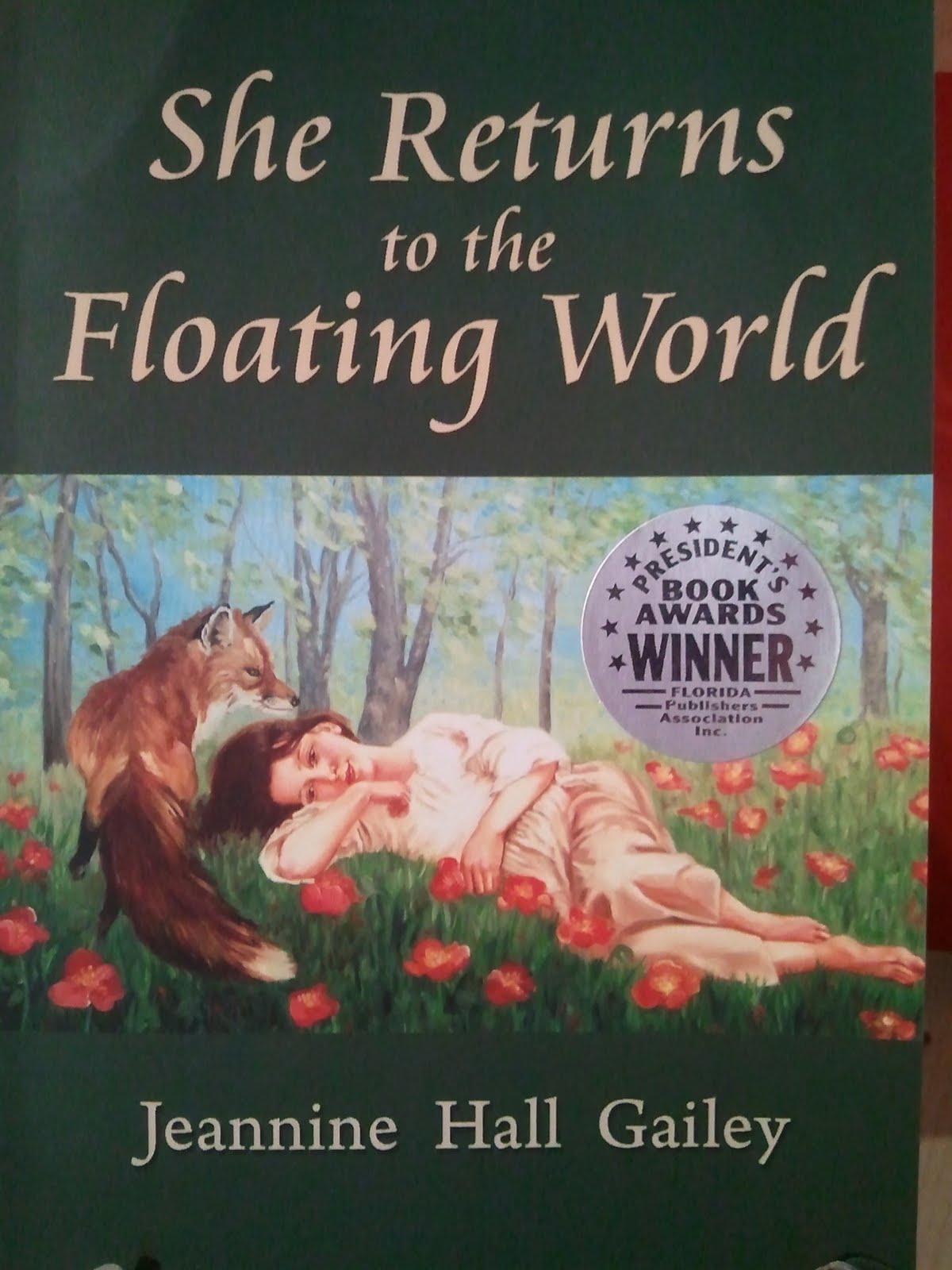
–My wonderful husband, creating a beautiful Thanksgiving menu for me (sans wheat, onions, or poultry…) and generally being super supportive during a tough year.
–Poetry publishers in general who care about writers, especially those who don’t charge fees; literary magazines that still pay for poetry (thank you, Crab Orchard Review, Hollins Critic, Indiana Review, and etc… it makes poets feel so thankful to get those little checks!) and readers who let writers know they’ve connected with your work. Thank you to all the hard-working volunteers out there in the literary world, adjuncts, editors, reading series leaders…
–Yes, I have some anxieties: about work (finding it,) money (same,) where my life/career is going, the ongoing health excitement that forced me to curb my travel plans for readings this fall…but I am am looking to the future with hope, with gratitude, and faith.
Upcoming: Christmas book shopping lists, my great book downsizing project (painful!) and embarking on yet another poetry book manuscript (madness??)
How To Get Your Book Reviewed
I have been reviewing books, independently, for a long time now. Occasionally (not often) I even get paid for it. So I thought perhaps I have some tips to share for people who are wondering what the best strategies are for getting their books reviewed.
First, I’ll start by telling you a little about how my reviewing life works.
Some book reviews are assigned, and I don’t get any say in what I review in that case. This is usually the case for reviews I get paid for. Sometimes, a place I review for will offer me a list of books they have on hand to see if I’m interested in reviewing any of them. And sometimes I will pitch a review idea to a journal, magazine, or blog.
I usually don’t review books by close friends, students or mentors anywhere but on my blog because of conflict of interest. I think that might be an industry standard, but the rules can bend occasionally.
If I’m actively reviewing, I usually get upwards of 40-50 books a year sent to me to review, and that’s on top of what I buy myself or am assigned. Some years I’ve received over 100. On average, in a good year, I review one or two books a month. So, to do the math: most books I’m sent do not get a review. And I’m pretty conscientious, I think, for a reviewer; I’m not out there re-selling your review copies on ebay; alas, though, I have heard of this practice. I genuinely try to read everything I’m sent, and try at least one pitch for each book. (Most pitches, like most poems, are rejected, FYI.) If I don’t like a book, I usually pass it on to another reviewer, or decline to review it (there’s enough negativity out there already – why give space – and mental energy – to a book I don’t like?)
Getting a review out, even of a book I really like, is much harder now than it was five years ago. There are fewer places publishing reviews, fewer places giving as much space as they used to, fewer places paying for reviews. So the reality is, you probably need to work a little harder as a writer to get your book some attention. If you have a publisher that is sending out review copies for you, that’s fantastic! It could be an unlimited number. That would be great! But probably not. Hence, a few tips:
- Target your review copies. Maybe you’ll end up reviewed at the New York Times Review of Books, or Poetry Magazine. It’s possible. But you’ll probably get more return on your investment if you target either literary journals that have liked your work in the past or reviewers who have mentioned liking either you work or work you think is similar to what you are doing. For instance, if you’re writing feminist superhero poetry, I’m probably a great reviewer for you to target. But how would you know that unless you read some of my work? Sometimes reading the actual poetry of the person doing the reviews is a great way to get insight into the reviewer’s aesthetic.
- Write a personal note. I get tons of review copies with no note. I usually can’t remember whether I requested a copy because the time between the request and actually getting a copy of the book could be months. So, make sure you put a little slip of paper in there that says: “Hi there! Remember when you said you’d be interested in my series of triolets on the Old West at the Old West Poetry Conference? Well, now it’s out, and I’d sure appreciate your take on the book!” Or something like that. By the way, this was the number one tip that reviewers posted when I asked this question on Facebook. You’d be surprised how few people (or publishers) put in a personal note.
- Follow up. I know it’s embarrassing, like putting yourself up for a rejection, but honestly? I think if more people followed up with just an e-mail after sending me their books, I would probably be more likely to give their book a serious read. And not just following up, but…
- Follow up with a few suggestions of which literary journals might be interested in a review! This is a key step that few people take. This puts all the work in the lap of the reviewer, and did I mention reviewers are usually working in their spare time for no pay? So, anything you can do to make placing your review easier, you should do. Do a little reconnaissance – write to a few editors to see if they might be open to a review. Then, mention those editors and the names of their journals to your targeted reviewer. Voila! Literary matchmaking!
- Make it as easy as possible for reviewers to “get” your book. Include a press kit. Write a quick summary in your personal note. Reviewer Julie Brooks Barbour posted on my Facebook query: “Jeannine, I review books based on the narrative structure, of what threads the book together. If the narrative is unclear to me, I probably won’t review it.” This again comes down to targeting your reviewers and doing more than just sending a copy of your book with nothing else.
- After your follow up…Don’t expect anything, don’t hold grudges, and be sure to try a reviewer again with your next book because…things happen. I might love someone’s first book, but not connect with someone’s second. I might be unable to successfully pitch a review of your book to anyone. I might get overloaded and burned out and take a short break from reviewing. I would say the success rate from a good targeted book mailing might be 20 percent. If you hold a grudge against a reviewer for not reviewing one of your books, or a journal for not running a review, that means you’ve lost a potential review or review venue for your next venture, and that would be a shame. (Because you’re writing more than one book, right? You’re in for the long haul…)
And last, but not least…
- Write a few reviews yourself! I am likely to google everyone I review, because hey, I like to do a little research on the folks I’m writing about, and if I see that an author has been reviewing books, I’m probably going to feel like they deserve a review themselves. If I’m putting a lot of volunteer labor into reviewing, and I’m a writer myself who could be writing poems or doing paid work, then I probably want to review authors who are also doing some work putting positive energy back into the literary universe. God bless all the editors working for free in their spare time, reviewers who pour their souls into trying to create some kind of intelligent discourse about books, even if it’s just on Amazon or Goodreads, publishers who put their own income into marketing the books they produce. This comes down to Karma, Karma, Karma.
Do you reviewers out there have any more tips I’ve forgotten?
Your New Thanksgiving Traditions When You’re Far From Family…and Coming Up: Tips to Get Your Book Reviewed!
Thursday Notes: A New Review, a Friend’s Debut, and More!
Thank you to Barn Owl Review and reviewer Julie Brooks Barbour for this new review of She Returns to the Floating World! Here’s the link to the review:
http://www.barnowlreview.com/reviews/gailey.html
And don’t forget to vote before the 20th in the Goodreads Choice Awards for Poetry for my little book if you get a chance! I’m hoping to make it to the finals! (And vote for Sandra Beasley in the food category for “Don’t Kill the Birthday Girl!)

|
I was also so pleased to get in the mail Carol Lynn Stevenson Grellas‘ new book, Epistemology of an Odd Girl. (Isn’t that a great title?) This book from March Street Press bursts with scenes from everyday life, but also great poems like “In the Spirit of the Apocalypse” and “The True Story of Rapunzel.” This from “Candy Addict:” “Don’t they all suffer withdrawals?”/ (Yes, but not all care for mint cigarettes./ Sometimes we use Cyberkinetics.)”
Still fighting the flu, but feel a bit more mentally capable the last couple of days, so I was able to get some work done (and even a little writing!) Weather forecast for snow (snow!! in the Northwest!) tomorrow….
Vote Vote Vote! Like a baby Stoat! Goodreads Poetry Book of the Year Semifinals!
Dear readers, this is the time when I beg for your vote!
Because of your write-in votes, She Returns to the Floating World is now in the Goodreads semifinal round for Best Book of Poetry of the Year!
I would very much appreciate it if you would go to this link and vote in the semi-final round for my book! The five finalists are chosen on November 20th!
http://www.goodreads.com/award/choice/2011#56614-Best-Poetry
I have some stiff competition (particularly from friends and mentors Aimee Nezhukumatathil and Dorianne Laux.) It’s a good year for poetry books. If selected, I promise not to raise poetry taxes!
A new interview up at California Journal of Poetics, and More Weekend Excitement
The wonderful Gina Barnard (a very talented poet in her own right) interviewed me for the California Journal of Poetics, and it’s up at their site now:
http://www.californiapoetics.org/interviews/1655/an-interview-with-jeannine-hall-gailey
I get to talk about other books that influenced She Returns to the Floating World, my obsession with women turning into animals, and my childhood in Oak Ridge. There’s also a little shout-out to Kathleen Flenniken’s new upcoming book, Plume.
In other exciting news, I finally succumbed in the fourth week to whatever weird cold/virus/upper respiratory thing I’ve been fighting – I came home shaking and feverish yesterday and determined to put a hold on my crazy whirlwind of social activities until I am all the way better. (It doesn’t help that it’s mid-forties and stormy outside, the recipe for my asthma to act up. I know, cold rain, what a shocker in the NW! In California, they’re still wearing skirts and sandals…ah well…)
This means a weekend curled up, finally finishing at least one of my book reviews, starting Murakami’s thousand-page super cool opus IQ84, and deciding whether the last Harry Potter movie was better or worse than the book. And sleeping. And lots of hot drinks. (Is it weird that I end up writing a lot of my book reviews while I am sick and feverish? Then I end up using words like “gimlet-eyed” and “splenetic” and wondering later…who wrote that?)
I’ve also been trying to come up with a last line for a poem. It turned out to be much harder than I thought. Everything I’ve come up with seems harsh, trite, too easy…Sometimes I tool around with last lines even after I publish a poem. Last lines are hard!
I also want to thank the lovely magazine Hollins Critic, as I just got my contributor copies for October’s issue, and a nice little check. I so appreciate magazines that still actually pay their content providers!! Thank you, Hollins Critic! My little poem, “Holiday Redux,” is on the last page, if you’re interested, and the issue also contains a good review of WA State book award winner Frances McCue’s book, The Bled.
Useful links: Success After the MFA, Organizing a book manuscript, tips for submitting to journals
You know I have a special interest in how to organize poetry manuscripts (I’ve run a couple of workshops on it, do manuscript consultations, and pretty much always have a friend’s MS in hand (or my own) to think about how it could be organized. There weren’t a lot of helpful articles out there just a few years ago, but lately there has have been a few articles published. This latest is my Erika Meitner on her experiences reading the slush piles and the “mix-tape” versus “project” book manuscript organization strategies – read it here. I very much write on my obsessions, so I’ll write 100 poems on one subject, then another…for instance, I’ve been writing a series on Oak Ridge, Tennessee, another series on fairy tales, etc. If you look at my books, they’re really the result of sifting down the pile of poems I’ve written around a certain subject or set of subjects.
I’m also very interested in how MFA programs prepare their graduates for the post-graduation environment – especially these days, when teaching jobs (and jobs in general) are few and far between. How do we earn a living? How do we define “success” for post-MFA grads? This article from the Chronicle of Higher Education discusses whether success means publishing a book, getting a tenure-track teaching job, winning grants or awards….read it here.
I know for me, I didn’t necessarily have “getting a teaching job” as a goal after my MFA, but I was definitely interested in publishing a book and in working somehow with literary magazines. Hmm, now that I’ve done those things, I notice my goals shift and change over time. Do you think that most MFA programs do a good job of preparing graduates for the realities of life after MFA? How do you define success as a writer?
And last, for any readers just starting out sending to literary magazines, Bob from Writer’s Market has a good bunch of tips here. My two best tips are: read the magazine and read the submission guidelines closely.
There has also been some controversy around reading fees and contest fees at literary magazines and publishers. Necessary evil or unacceptable? You can’t get it online, but the latest Poets & Writers has an article talking about the issue.
http://www.pw.org/content/novemberdecember_2011
My very first book award, a reading report, poetry in translation…
Woke up to a little good news this morning…my book She Returns to the Floating World won a Silver Medal in the 2011 Florida Publishers Association Book Awards. (Thanks Kitsune Books for the nomination! You can read about all the FPA winners here.) Though it is Silver, it is my very first book award, so I am excited, especially as I have felt, well, a little discouraged lately in the poetry arena. Thanks Florida!
The theme of my weekend was poetry in translation, as I went down Friday night to listen to wonderful translator/poets read their work at the Wave Books Translation event at the Henry Art Gallery. My favorite reader was Whiting Award winner Don Mee Choi, who read a beautiful Snow White-inspired work she had translated in Korean. She worked on an anthology of Korean women poets that I’m going to have to look up and buy, I think!
The theme continued at a reading on Saturday…Really enjoyed the Day of the Dead reading at the Lake City Library with other wonderful readers including Judith Roche, John Burgess, Carolyne Wright, Chris Jarmick and host Raul Sanchez. Several poets read their work in both English and Spanish, and it was lovely to think about the sound of poetry and how it translates through language (and what doesn’t.)
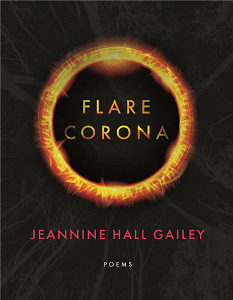
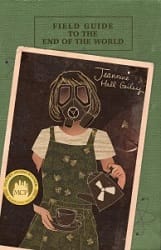
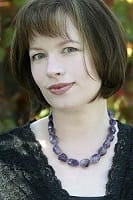 Jeannine Hall Gailey served as the second Poet Laureate of Redmond, Washington and the author of Becoming the Villainess, She Returns to the Floating World, Unexplained Fevers, The Robot Scientist’s Daughter, and winner of the Moon City Press Book Prize and SFPA’s Elgin Award, Field Guide to the End of the World. Her latest, Flare, Corona from BOA Editions, was a finalist for the Washington State Book Award. She’s also the author of PR for Poets, a Guidebook to Publicity and Marketing. Her work has been featured on NPR’s The Writer’s Almanac, Verse Daily and The Year’s Best Fantasy and Horror. Her poems have appeared in The American Poetry Review, Poetry, and JAMA.