Guilty Secrets: The Introvert/Extrovert Writer’s Dilemma
- At October 11, 2011
- By Jeannine Gailey
 5
5

I wonder, is this something every writer experiences? I only write during times when I spend a lot of time alone. But, if I go out every night, that is where all my energy goes – out the door. I want to start writing something new. I also like seeing my friends, I like seeing other writers read their work. I genuinely enjoy all these experiences. One of my favorite things to do in the whole world – more than movies or ice cream – is meet new people and talk about poetry.
Geek Girl Con – When Poets and Geeks Collide
- At October 08, 2011
- By Jeannine Gailey
- 4
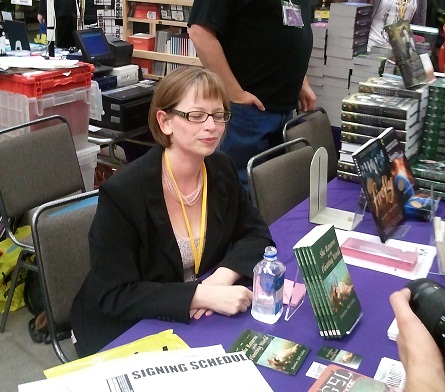 We had unexpectedly beautiful weather for today’s appearances at Geek Girl Con. The sun shone, the temperature went all the way up to 64 degrees (it’s been in the fifties and rainy) and Mt Rainier came out and greeted us as we drove into the city.
Geek Girl Con was a lot of fun. I did a signing, sold a couple of books, the presentation went well, and I found a couple of really cool things – like Ada’s Bookstore and Tracy who runs the charmingly named Geektastic Pentameter. I also got to meet Wonder Woman comic writer Gail Simone, who was quoted in my first book’s poem “Women in Refrigerators.” The crowd was friendly, the conference was sold out and they were turning people away by noon, and in general people seemed to have a really good time. And now the University Bookstore carries both my books (in case you’re in Seattle looking for them..)
My real purpose in going to cons (this is my fourth) is to help bring poetry to audiences that might not know that there is poetry out there that might appeal to them. Call it “poetry evangelism.” And I like it! The intersection where poet meets geek!
Here are my funny stories – one person told me they really liked my costume (a black jacket, a pink sequin shirt, jeans, and pink Uggs.) Now, a lot of people dressed up as Leia, anime characters, etc…but I was only dressed as a poet!
The other funny story is when a gentleman taking video of the conference came up to me as I was doing my signing and asked if I was comic book and television writer (from such series as Buffy the Vampire Slayer and Firefly) Jane Espenson. This led me to realize 1. no one ever knows what writers look like and 2. I could claim to be a famous other writer person and no one would know! But when I admitted I was “just a poet” and told the videographer who I was, he decided to go ahead and film something from me about the conference anyway, which I did a hilariously bad job with. Glenn got a shot of this and you can see the camera in the picture above.
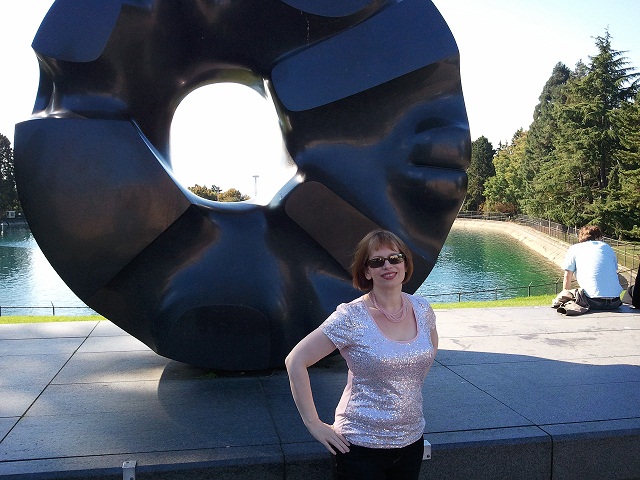
Then we snuck out to enjoy some of the sights of downtown Seattle in the sun. This is me at the famous “Black Hole Sun” and Glenn across the street at the Asian Art Museum: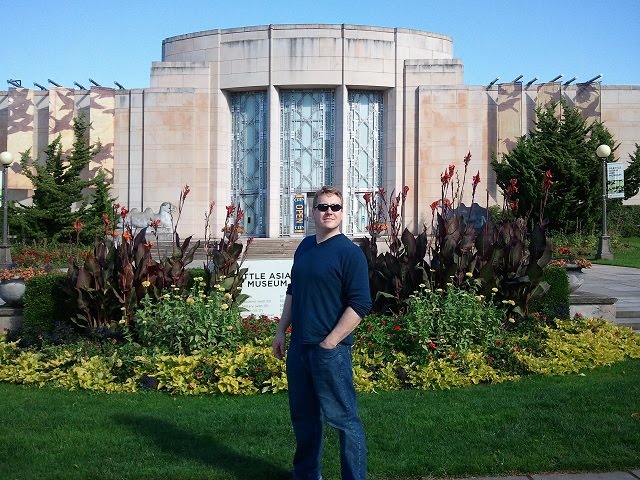
Geek Girl Con Appearance Saturday, My Review of Christine Deavel’s Woodnote, and Inspiration…
- At October 07, 2011
- By Jeannine Gailey
- 1
If you want to catch me at Seattle’s very first Geek Girl Con at the Seattle Center tomorrow, here is my schedule:
–Book signing and hanging out at the University Bookstore booth from noon-1:00 PM (Media Signing Schedule Here. PS I’ll be near former Buffy writer Jane Espenson! Eeeee!)
–Presentation on “Superheroines in Poetry” at 5 PM at the NW Rooms: Fidalgo (full Saturday presentation schedule here. There are a lot of fun sessions!)
My review of Christine Deavel’s Woodnote is up at The Rumpus.
Seattle poet Elizabeth Austen’s “Advice to a Young Poet” is up at the Hugo House blog here.
In other news, I got a rejection and an acceptance yesterday, which means my poetry spreadsheet is looking too thin. Need to send out some work. It’s the perfect weather for it – grey, meandering cold with petulant rain spells. I also had a wonderful package from a poet in Japan which included a Tanka journal in both Japanese and English and a collection of folk tales called “Uepekere of Chitose: Thirteen Stories from the Land of the Ainu.” Fantastic!
Dorianne Laux at SAL, Poet’s Market 2012, and Mari L’Esperance
- At October 06, 2011
- By Jeannine Gailey
- 1
Had a wonderful time at the SAL reception and Dorianne Laux reading/Q&A last night. It was cold and rainy as heck – one of those “classic Seattle weather” days – but I had a lot of fun. I saw some old friends, as well as my Crab Creek Review pals – and Dorianne read really well. Also, I met a friend I had made from the twitter “poetparty” – that’s social media for you!
So I’m finally getting around to talking about Poet’s Market 2012. I’ve got two articles in there, one about how and when to target a micropress, and another about how and why to put out a chapbook. But besides that, I think this is the most well-organized and helpful version of Poet’s Market I’ve seen, so kudos to the book’s editor, Robert Lee Brewer. There are 150 incredibly useful pages of advice and interviews before you even get to the market listings, from”must-know-before-you-start-sending-out-your-work” articles in there like “How to build a press kit” – something I wish I had read for my first book – as well as articles on craft, like a prose poetry essay by Nin Andrews and an article on formal poetry by Annie Finch. Collin Kelly talks about blogging and tweeting, Diane Lockward talks about how to get your poetry into the hands of readers. I used to sit for hours with Poet’s Market circling and marking good-looking journals when I first became a poet, and it’s still a good resource for those of us who like old-school market listings on paper. (I know we can always check a web site, but it’s nice to have these compiled in one handy place.)
I also wanted to talk a little a little bit about Mari L’Esperance’s book from 2008, The Darkened Temple, which won the Prairie Schooner book prize a few years back. Mari loves Japanese folklore and landscapes and these tropes show up throughout her book. From “The Bush-Warbler Laments to the Woodcutter:”
“You will say a grand house once stood
in a forest clearing. Then: nothing but birdcalls.
Longing itself is nothing but the heart’s empty spaces.”
A little good news – first book award nom, Northwest Bookfest, poems after readings
- At October 03, 2011
- By Jeannine Gailey
- 6
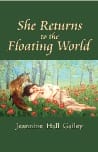
 Yes, after a somewhat discouraging reading yesterday at Northwest Bookfest, I was feeling a little down and tired, but then I found out She Returns to the Floating World is up for its very first award! It’s one of three finalists up for the Florida Publisher’s Association President’s Award for Poetry.
http://www.kitsunebooks.com/assets/11-10-FPA-Newsletter.pdf
I’m very excited, because if I win, I get a sticker. Stickers are really fun!
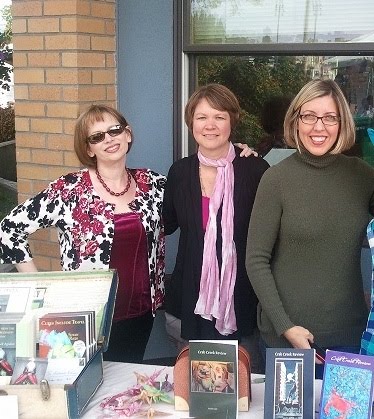
It was wonderful to see and read with my friends yesterday, who all did a great job, but the crowd seemed a little…muted…and I didn’t sell any books. Which always makes me feel a little depressed. Glenn took a video of the reading but it didn’t turn out. We did avoid the rain, though, and I got to see the beautiful latest issue of Crab Creek Review (2011 Volume 1,) which has two mini-reviews in it that I wrote of Dorianne Laux’s Book of Men and Suzanne Frischkorn’s Girl on a Bridge. Here are some of the editors at work yesterday (pictured: me, Annette Spaulding-Convy, Kelli Russell Agodon.)
So I came home feeling tired (three readings in seven days will really knock you out – or at least, it knocks someone like me out) and a bit discouraged but weirdly, I got into bed and wrote a new poem – the first new poem in a while that I’ve been happy with. Then I found out this crazy FPA award news. We poets have to try to stay zen throughout the whole book launch process, but it’s more of a high/low situation. Sometimes, to use a California metaphor, I only see the smog in the sunset, and other times, I see an egret lifting in the last light.
Next post: I promise not to be so self-absorbed. I’m going to talk about the New Poet’s Market, Mari L’Esperance’s beautiful book, and more!
Update: Oh, and I just found this too – a new review of She Returns to the Floating World is up at Midwest Book Review! Check “The Poetry Shelf!”
Northwest Bookfest, Christine Deavel’s reading, and the funny thing about book sales
- At October 01, 2011
- By Jeannine Gailey
- 1
For those who missed my other two readings, and especially those on the East side of Seattle, here’s your chance! Tomorrow (Sunday) I’ll be reading – along with Kelli Russell Agodon, Elizabeth Austen, and Susan Rich – at Kirkland’s Northwest Bookfest at 2 PM. And after that, I’m not talking in public again for a whole seven days, when I’m doing a presentation on superheroes and poetry at Geek Girl Con…no rest for the wicked. Or the villainess.
Tonight I got a chance to attend Christine Deavel’s reading from her book Woodnote. She had an art exhibit in the background and a piano player accompanying her, and just read her poems – no inter-poem chatter, no introductions. Just another variation on how to perform poetry! And this week will also have a visit by the wonderful Dorianne Laux to Seattle for a reading Wednesday, which should be a lot of fun.
Just wanted to make a quick observation about book sales. So, at most readings, I sell a handful of books – at a really successful reading, it might be ten or fifteen. A funny thing that happens when I read – my Amazon rankings tend to go up afterward…which might mean people are going home, and later buying the book? Or is it just coincidence? And what’s really funny with the second book is, I think my first book is still outselling my second! Weird, right? Anybody else experienced this?
I just watched some scary dinosaur CGI animals try to eat some teenagers on television. That’s good background for practicing poetry, right?
Reading Report from Hugo House, Even More Readings, and Thoughts on Performance
Sorry I didn’t post this earlier – I didn’t get home from last night’s reading (four readers plus open mike – whew!) until 11:30, and then I ate dinner and collapsed. We didn’t get any pics last night (low lighting meant blurry photos and our video was shaky and blurry as well- sorry!) but it was a packed house at Hugo House’s Cheap Wine and Poetry night – about eighty people and extra spilling out into hallways and porch…definitely a reading series worth visiting! The crowd was friendly, slightly tipsy, and raucous. I met and got to chat with lots of great folks. And I sold some books, always a welcome thing.
This reading made me realize I really had been away for a couple of years – this reading series became so vibrant while I was in CA! The Richard Hugo House in Seattle has been undergoing a series of personnel changes, as well, so I’m getting to know new people. I didn’t recognize many people in the audience, either, so I was really grateful for my handful of friends who came. Sometimes I take for granted that I know all the poets in Seattle, but you know what? I don’t! It’s a big town full of folks I’ve never met!
I hadn’t met any of my fellow readers before, though one (Elizabeth Colen) was even a fellow Steel Toe Books author! The three other readers were all interesting, gifted female writers (hence, the “Ladies’ Night” theme event) each with a different style of performance – one quiet and shy reading straight out of her book, another a performance-oriented poet who had everything memorized and mesmerized the crowd in her fishnets. I think I’m somewhere in the middle, though I confessed to someone last night I think I would be a lot more comfortable at readings if I could just put a potted plant in front of my face as I read. I think the combination of vulnerability of reading your own work and the physical performance aspects of trying to be interesting/entertaining to an audience can be really challenging. I like reading but afterward I always feel like I’ve just gone twelve rounds with a boxing robot.
This reading made me think about the choices we make about how to present out poems – how performance can both enhance – and distract from – our poetry. Hearing a poem is so different from reading it on the page, and I try now to be aware of that, to slow down my naturally frenetic speech patterns, to try to make space for applause, a laugh, an offhand comment to connect with an audience. I also thought it was interesting that the other readers had been publishers, reading series hosts, editors, teachers and in other ways were connecting with their communities – something I think is really important! That probably explains the large crowd, come to think of it.
Now I have to get ready for Sunday’s reading at the new Northwest Bookfest in Kirkland, with friends Kelli Russell Agodon, Elizabeth Austen, and Susan Rich. It looks like it’s going to be a great time, I just have to get my energy back up! (Plus I have to catch up on writing work – a job application needs to be turned in, a poetry contest entry (or two) needs to be sent out, poems in general have been languishing from lack of attention! Promoting a new book tends to eat up all the extra time and energy in your life if you let it…I need to be sure to set aside as much writing time as promoting time…) Hope to see you Sunday or sometime soon!
Fiction by Poets, Best of the Net, and more Readings!
The news doesn’t stop! Just like me – go go go!
I’ll be reading this Thursday night at Hugo House in Seattle as part of the “Cheap Wine and Poetry” series, a Ladies Night with some great local writers (including another Steel Toe author…) 7 PM. Be there, baby!
Thanks to Redheaded Stepchild for nominating my poem, “A True Princess Bruises,” for Best of the Net! Awesome! It’s kind of a little spin on the Princess and the Pea fairy tale…and belongs in the fairy-tale-body-image manuscript I’ve been working on, along with my robot scientist’s daughter manuscript…that’s right – two more manuscripts! I keep myself busy, right?
And, my very first piece of fiction, “How Not To Be A Robot Scientist’s Daughter,” is up at Fiction Southeast, along with champions of fiction like Joyce Carol Oates, Aimee Bender and Robert Olen Butler and fellow poet-fictionist Oliver de la Paz!
Reading Report from Open Books

 Me with John and Christine of Open Books before the reading…Super-awesome girls at the reading – aren’t they a sexy bunch? (Pictured: Carol Levin, Joannie Stangeland, Lana Ayers, Kathleen Flenniken, Annette Spaulding-Convy, Kelli Russell Agodon, Jeannine Hall Gailey in sequins)
Although I had to navigate a variety of almost-disasters – a windstorm knocked out power to a lot of Seattle, then knocked a gigantic-bed-sized patio umbrella from the top of our apartment building into our parking space three stories below – where we had fortunately not parked our car, by some strange luck – Obama’s visit to Seattle snarled traffic all over town (and he didn’t even stop by Open Books! The shame!) – traffic accidents shut down two of the major highways and bridges, including the bridges that allow us over the water to Seattle – and so, after an hour and ten minutes in traffic for the usually twenty minute drive to Open Books, we finally arrived. A lovely if modest crowd also braved the windstorm and crazed traffic, we started just slightly late, and Glenn even successfully videotaped the whole thing (we’ll post it on YouTube.) I even got some gorgeous flowers a friend had delivered to the store – what a sweetie! – and got to take another friend out for birthday gelato afterward when the sun came out. So, all’s well that ends well.
Open Books continues to be a delightful, friendly place to read. So glad it’s where my first Seattle reading was held! (And you can still stop in and get your copy of She Returns to the Floating World…) Now to crash into bed…
Update: The whole reading is now available on YouTube, so you can see it yourself!
Looking for some fun this weekend? Poetry-type fun?
If you’re looking for poetry-type action this weekend in Seattle, well, you’re in luck.
Open Books. 3 PM Sunday Sunday Sunday. Origami cranes! Japanese candy! Monster Trucks!
Well…maybe no monster trucks. But I will be doing my first Seattle reading of my new book, She Returns to the Floating World. I’m nervous. I’m picking poems, some of which I’m reading out loud for the first time.
Here’s one of them, inspired by Hayao Miyazaki’s Howl’s Moving Castle. Hope to see you there!
Love Story (with Fire Demon and Tengu)
Maybe in this version you are a bird, and I have become an old woman. Maybe you ate a falling star. It’s hard to love someone in a castle—they always feel distant. I will open a flower shop and learn to speak German, take to wearing ruffled dresses and straw hats. You’d like to pin me down, but you could tell my feet weren’t touching the ground. I called your name over and over, but you couldn’t hear me above the din of the bombers. It was like movies of wartime Japan. I looked up and there were planes bulging with smoke.
The blue sky kept getting darker –
sometimes, I thought,
with your shadow.
In the end, I have a dog in my arms and a scarecrow for a friend, but I never make it to Kansas. The field is wet and stormy, I kiss three men goodnight for their magic. The door to your childhood is opening for me. It allows me passage into a brick wall, my fists full of shiny black feathers, the shell of an egg, the howl of cold wind against a mountain. Don’t worry, your heart is in good hands. Let me keep it a little longer; its blue glow illuminates everything.
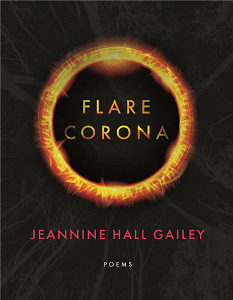
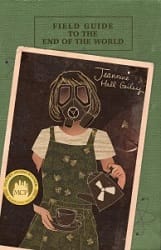
 Jeannine Hall Gailey served as the second Poet Laureate of Redmond, Washington and the author of Becoming the Villainess, She Returns to the Floating World, Unexplained Fevers, The Robot Scientist’s Daughter, and winner of the Moon City Press Book Prize and SFPA’s Elgin Award, Field Guide to the End of the World. Her latest, Flare, Corona from BOA Editions, was a finalist for the Washington State Book Award. She’s also the author of PR for Poets, a Guidebook to Publicity and Marketing. Her work has been featured on NPR’s The Writer’s Almanac, Verse Daily and The Year’s Best Fantasy and Horror. Her poems have appeared in The American Poetry Review, Poetry, and JAMA.