Tuesday Confessions about the End of Summer

 Since the last time I posted, I’ve hosted a party at my apartment and went to a summer concert in the zoo. A social whirl, and it was the hottest weekend (of course!) of the entire year! Sorry, those who came, that it wasn’t a pool party – and that I lack an ice vodka bar!
Here’s a pic of me doing my best Sylvia Plath impression pre-party. Not the suicide part, the part where she rocked being a domestic-goddess-type-in-cocktail-dresses. (Glenn is actually the talented sushi-and-cupcake maker. I’m just appearing in frame.) My favorite thing about the party is that I got to see my artist friends and poet friends and fiction-writer friends all in one place. I wish that happened more often!
We also saw Aimee Mann at the Seattle zoo which was fun, as it had settled down to a comfortable 77-with-breeze by the time we arrived at the zoo, and we enjoyed the meerkats and ocelot cub and other beasties pre-concert. Aimee Mann is a consummate performer – I’ve seen her a bunch of times in a bunch of different venues. She always wears the same kind of outfit – what I call a “cool poet” look – skinny jeans, cool jacket, knee-high boots, and black glasses – and gets up, performs, chats in between songs a bit, and thanks the audience. She’s professional, laid-back, lacking the drama that might usually be attached to pop stars (or poets.) I wish I could pull that off at my own readings. No big whoop, no drama, just get up, perform, thank everyone, get off stage. Note to self.
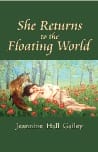
In poetry news, my book She Returns to the Floating World is now available for $3.50 on Kindle. An e-book! That Kitsune Books is a progressive publisher. I don’t have a Kindle myself, so if you pick it up and see it, let me know how it looks!
Interview with Publisher and Author Anne Petty
I was really excited, as one of my final summer interview series, to get a chance to pose some questions to the editor and publisher of my second book of poetry, She Returns to the Floating World, Anne Petty of Kitsune Books. I hope you all have enjoyed reading the series – I’ve really enjoyed sitting down with some of my favorite people and writers.
Anne Petty writes dark fantasy/horror cross-over fiction, has published three books of literary criticism, and many essays on mythology/folklore, J.R.R. Tolkien, and the craft of writing. She is also a published poet and owns Kitsune Books, which publishes literary fiction, poetry, memoir, and literary commentary.
Anne Petty blogs at http://AnnePetty.blogspot.com/ and her website is www.annepetty.com.
On Twitter: http://twitter.com/KitsuneBooks
On Facebook: www.facebook.com/pages/Kitsune-Books/185884136898
Jeannine: First of all, why did you decide to start Kitsune Books? What do you think makes your press different than other small presses? I think it’s very interesting how you tackle fiction, non-fiction, and poetry, for instance!
Anne Petty: I have met many talented writers whose work is amazing but doesn’t fit into the commercial mainstream mold. I wanted to create an outlet for those types of works – excellent content that’s slightly “off the beaten path” – and publish them in well-designed books so that the total package becomes a work of art. We relish the give and take of working directly with the authors and artists who create our books, something that’s often missing with larger publishers.
JHG: What would you like to see more of from poets in your submission pile? What would you like to see less of?
AP: My associate editor Lynn and I are always looking for the writer’s voice that “sings” to us, that effortlessly pulls us in from the first few pages. That voice can occur in fiction, poetry, lyrical memoir, or clearly argued literary criticism. I know instantly when I hear it, especially in poetry. I guess it’s a kind of magic where the poet’s obvious skill and facility with language supports but doesn’t override the personal connection of what’s in the poet’s heart and mind. One thing that still irks me is that we keep getting submissions of good material that’s only chapbook length – the Submissions page of our website clearly states that we’re looking for longer, book-length collections. I hate having to tell a poet that we’re interested in their work, but only if they add more and resubmit. Not long ago I had to reject a submission from a New York writer whose visceral, surreal poetry knocked me out and left my jaw hanging. Her collection was about half the length we normally accept, so I practically begged her to write more and try us again later. I hope she does!
JHG: I don’t know if I ever told you this, but part of the reason I decided to send Kitsune Books my manuscript was the twitter feed, which discussed editorial policies as well as anime, Japanese pop music and tea. I felt I had a better handle of the editorial tastes and mind-set and felt better about sending my work because of that. How do you think a small publisher can benefit from social media such as twitter, blogs, Facebook, etc?
AP: Social media marketing can turn into a huge energy vampire if you let it. Not good when your staff is small and overworked to begin with. On the other hand, you ignore it at your peril. Some of us enjoy being online every day, connecting with people in the writing and publishing business, and in that sense I think social media has been a boon to small presses. It provides us with a presence and a voice that would be difficult to generate without the Internet. As you say, making a personal connection with people in your field is one of the beauties of social media. Besides our website, Kitsune Books has a presence on Facebook, Blogspot, WordPress, Twitter, and LinkedIn. I have the most fun on Twitter. I do the Twitter feed for Kitsune and am highly entertained by sharing things that pop up during the day, writing related or not, and seeing how readers respond. I think it’s the immediacy of Twitter I like most.
JHG: You are a writer as well as a publisher. Don’t you have a new critical anthology and a new novel out? Can you tell us a little about those projects?
AP: My writer’s hat comes in two colors – academically oriented material on mythology and Tolkien, and horror/dark fantasy fiction. Last month I was gratified to finally get the hardback edition of Light Beyond All Shadow (Fairleigh-Dickinson Univ. Press), which contains my long essay on light and dark iconography in J.R.R. Tolkien’s works. That anthology has been in the works for several years, with the Tolkien Estate copyright gateway guardians and the university’s change in publication distributors being some major hurdles. I’d given up on ever seeing that essay in print, but finally everything came together and here it is!
On the fiction front, the second novel in my Wandjina series came out August 5, 2011. The first book of the series was Thin Line Between, and this second one is titled Shaman’s Blood. The series got its impetus from the Australian Dreamtime myths and legends I’d studied as a doctoral student with a focus in Mythology/Folklore. Wandjina are part of the Dreamtime pantheon of creation entities associated with rain and wind. The modern-day setting for the series came from my first job out of college – lab assistant in a haunted museum housed in what used to be the old city jail in Tallahassee. Great stuff for an over-active imagination! I’ve always had a taste for the dark side. The very first horror books I read as a child were Bram Stoker’s Dracula, Mary Shelley’s Frankenstein, and the Collected Works of Edgar Allen Poe. Those three books kicked my nine-year-old brain off the rails and into the dark woods of the psyche where it still wanders around and seems to have set up permanent camp.
JHG: Any new books at Kitsune you’re particularly excited about?
AP: Well, I’ll have to list our whole lineup for 2012 in that case! We have another Mythological Dimensions lit-crit volume (focusing on Neil Gaiman this time); award-winner Jesse Millner’s second poetry collection; riveting war poetry from Iraq/Afghanistan vet Jon Shutt; a lyrical “water-color” collection from poet Rachel Dacus; another great middle-grades mystery from K.E.M. Johnston; literary fiction from short story master Paul Graham; and George Drury Smith’s challenging experimental novel, The slant hug o’ time. This last author I must draw extra attention to, because George is the iconic founder of Beyond Baroque Foundation in Venice, CA and editorial guru of The Argonaut newspaper for many years. George is a commanding voice in experimental, avant-garde writing, and I think his novel (scheduled for September 2012) will blow some minds. I’m incredibly thrilled to have him on our roster of authors.
Bonus question: What are you afraid of in real life? Politicians and clowns (not mutually exclusive)
Escape into Life, Disappointment and Longing, Scientist’s Daughters and Poetry
Well, the job I interviewed for this Monday had already been filled in the five days since I had been contacted about it, so that was a bit of a disappointment. I have to admit, the sudden longing for this particular job surprised me in its force. At least now I have an up-to-date portfolio, resume, and sample links.
In other sad news, Booktour.com is shutting down. I admit to never fully utilizing its capacities, but it seemed like a really great place for authors and for people who like to know who is reading in their town on a given date, so that’s too bad.
In positive news, Escape Into Life is featuring a few of my poems today – a couple from my “Robot Scientist’s Daughter” manuscript, one from She Returns to the Floating World, and a brand new poem! Check it out! http://www.escapeintolife.com/poetry/jeannine-hall-gailey/
A poet’s progress: I have been dabbling in fiction writing lately. Do all poets take a flight into other genres at some point? Of course, I have worked as a technical writer, a journalist, a copy editor, and am still an active book reviewer, but as far as “creative” writing, in the years since I started really studying writing, I had stuck to poetry. And now I appreciate what trying out another form, another genre, can do for your ideas about poetry. What can poems do that stories cannot? What can prose offer that poetry cannot?
Tracy K. Smith’s story about writing Life on Mars had a few familiar aspects: she was born a year before me, her father was a scientist (an optical engineer who worked on the Hubble telescope instead of a robotics engineer) and she takes aspects of mythology and science and applies them to autobiography in some interesting ways. It made me think about women poets whose fathers were scientists, including: Rachel Dacus, whose “rocket kids” blog was named after her adventures as the daughter of an actual rocket scientist; Margaret Atwood, who was the daughter of a biologist; Louise Gluck, whose father invented the X-acto knife you might have worked with in science lab or art classes. And Tracy K. Smith. And me. Are there more? Is there something about being a scientist’s daughter that drives us into poetry?
It’s The Little Things
Dear readers, is it possibly the end of August already? How is fall already peeking around the corner when we’ve barely had any sunlight all summer? Oh well. I’m ready to go back to my sweaters.
I had a couple of little things happen that lightened my spirit this week amid all the weird bad news. I had a call about a possible job (my adjunct work temporarily halted when my fall class was canceled) – a job that sounds perfect for me – and I’m doing a little interview on Monday. A little contract work might mean I can more easily afford luxuries like paying my student loans or traveling a bit for readings for my book. I have to admit I feel a wild surge of hope.
And yesterday I finally got to visit Open Books – Seattle’s poetry-only bookstore – and left with an armful of wonderful new books which I am very excited to read. But I seeing my new book on the shelf of a real-life store was even more exciting:


Have I suddenly become like one of those new moms who can’t stop posting pics of their new baby? Well, so be it. Did I mention I’m going to be doing a reading on September the 25th at Open Books, too? The fall lineup of readers looks terrific – the week before I read, Marvin Bell will be there, Christine Deavel will be reading the week after, my friend Joannie Stangeland will be reading from her new book shortly thereafter AND one of my writing superheroines, Dana Levin, will be reading there in November as well. It’s going to be a fun fall for poetry.
So, we welcome fall in, exchanging sunscreen for fireplaces, light colors for dark.
Hope is a Thing with Feathers
In these kinds of times, when the news blares about violence, riots in cities like Vancouver and London famed for their kind and gentle citizens, about ski trips up and down the Dow, about real people having their jobs and houses taken away from them…
This is when we cling to a foolish hope. A thing with feathers.
As writers, we already cling to foolish hopes. Hopes that someone, somewhere will read our words, that they will connect with them, that our words will go out into the world and do something bigger and better than we can do ourselves with our physical bodies. Poets, especially, are considered foolish. (Erasmus had a book, In Praise of Folly, that I just love, which talks about foolishness of various kinds.) We cling to the hope that our poems might earn us enough to buy us a pair of shoes, a dinner out, or at least cover our postage costs and various fees.
We hope that the people we love find happiness, that our jobs might lead to better things for ourselves and our families, that our bodies will not betray us. We strive every day when we wake up to enter the day with hope. And that is good work.
Hope keeps us aware that kindness is what holds humanity together; selfishness tears us apart. In times like these, we must hope more than the situation might seem to warrant. We must write with hope, and love with hope, we must have hope for our world, and the people in it. We must push ourselves to have hope. Let us glue the feathers on if we must.
Happy for You: A Few Pieces of Good News for Friends
I have said in the past that when friends of mine get good news, it is almost as good as getting it myself. These writers are both very talented and so I am proud to announce:
–Karen J. Weyant just won the Main Street Rag Chapbook Contest with her collection, Wearing Heels in the Rust Belt. (http://thescrapperpoet.wordpress.com/2011/08/03/wearing-heels-in-the-rust-belt/) Go congratulate her!
–Rachel Dacus has just signed on with Kitsune Books (whom you may know from such books as, I don’t know, She Returns to the Floating World) to publish her third full-length poetry collection, Gods of Water and Air. I’m so pleased to have Rachel as a fellow Kitsune! And look for an upcoming short interview with her here on the subject! For now, go congratulate her at her blog: http://dacusrocket.blogspot.com/2011/08/big-news.html
And a quick shout out to Justin Evans for his kind words here (http://justinevanspoetry.blogspot.com/2011/07/out-on-limb.html) about She Returns to the Floating World, here. Have you gotten your copy yet?
And Oliver de la Paz is featured today on Poetry Daily, here.
A good week for my friends. If you have more good news, please leave some info about it in the comments! Giant hugs and cupcakes to all!
Summer arrives in Seattle at Last, In-Laws, and The Journal issue 35.1
Cautiously, I announce: as of today, August 1, summer has finally arrived in Seattle! The sun is shining, the mountains (Rainier and Baker) are out, and the flowers (roses, lavender, sunflowers) are blooming. Happy Monday, the weather shouts, and in accord, I apply for a job and send in a poetry submission. I’ve started two new books (The Imperfectionists and The Pale King ) in hope that they will inspire me into some long-form writing.
I am in that frenzied cleaning mode that happens right before a visit from the in-laws, and they arrive early tomorrow morning. Glenn is making a chocolate ricotta cheesecake for them in advance. It’s tougher with my ankle trouble to do stuff like laundry and anything that requires balancing on one foot, but I think we’ve got our little apartment looking respectable.
I am also sneaking in a quick coffee meeting with haiku-expert Deborah P Kolodji, in town for the haiku conference, probably at Espresso Vivace, my coffee-snob husband’s downtown coffee shop of choice, in case you were wondering where to go for the best espresso downtown.
I had to make a quick mention of the beautiful issue of The Journal Spring/Summer 2011, which arrived in the mail, with a gorgeous and appropriately cheerful painting on the cover of a bluebird, which contains some wonderful poems. You can sneak a peek at the TOC and some of the contents (including my poem, “The Robot Scientist’s Daughter [one of us]“) are available online here. C.J. Sage and Martha Collins also have some fantastic work in the issue.
The first two official reviews of She Returns to the Floating World, a Podcast, and Feeling Grateful
Yesterday, I was so excited to see The California Journal of Poetics had a review of She Returns to the Floating World. It was written by a poet whose work I admire very much, Gina Barnard, and she’s obviously an intelligent and thoughtful reviewer as well. (And I know how hard it is to write those reviews! So I doubly appreciate it!) It was my first official review!
Then this morning, I looked at The Rumpus and saw the second official review, this time written by Jessie Carty. I am feeling overwhelmed and grateful!
And J.P. Dancing Bear has posted the podcast of our radio interview from Wednesday night. Here it is:
http://outofourminds.posterous.com/out-of-our-minds-wjp-dancing-bear-guest-jeann
I am also brimming with happy poetry news for a few of my friends, who have not been able to post up their good news on blogs yet, but I’m looking forward to helping them celebrate soon!
So, the economy may be going to hell, the apocalyptic weather may be keeping us in a rainy netherworld while the rest of the country bakes in 100+ heat, but still these little good things give us hope, keep us going, remind us someone is listening, someone is reading, despite, despite.
Radio Shows, Rain, and Renumeration
 Back in Seattle, the sky cloudy and the temps hovering in the sixties, you might imagine that our 80+ degree drive home from Port Townsend on Sunday had all been hallucination. But to prove that the sun does actually shine here once in a while, here’s a picture from the Sequim lavender fields (about a 45 minute drive from Port Townsend, FYI, for you future tourists.)
I would be remiss if I didn’t mention that I’ll be on the radio tonight in California (so those of you near Cupertino, be sure to tune in.) I posted a link to the podcast as the interview will be up later for the rest of you!
Jeannine Hall Gailey will be interviewed (and do a reading from her new book, She Returns to the Floating World ) on JP Dancing Bear’s radio show Out of Our Minds on 91.5 in Cupertino, CA, from 8-9 PM Pacific time on Wednesday, July 27th. Podcast will be available afterwards at http://outofourminds.posterous.com/.
By the way, if you go to that site now, check out Dana Levin’s interview on Sky Burial from two weeks ago. Pretty great! JP Dancing Bear asks great questions. I hope I can come up with coherent answers!
I was thinking a little bit about our economy, on our drive home, seeing so many shuttered storefronts in Port Townsend, Sequim, and the surrounding small towns. This is the worst economic time I have ever lived through. Trying to make a living as any kind of writer in this era of closed bookstores and publishing revolution is tenuous at best, especially with academic jobs being cut left and right and states and the Federal government slashing arts funding.
On the other hand, I have been celebrating the good news of writer friends (a book taken here, a chapbook contest there) and have been so grateful for everyone who has bought a copy of my new book. I won’t stop writing because I am worried about paying student loans and balancing my checkbook. I won’t stop enjoying the occasional sunny day just because we’re having a frigid rain-filled summer.
Interview with Christine Deavel, Co-Owner of Open Books and author of Woodnote
Christine Deavel was raised in North Manchester, Indiana, and graduated from Indiana University and the University of Iowa. She is co-owner of Open Books: A Poem Emporium and lives in Seattle, Washington; her first book, Woodnote, is debuting from Bear Star Press in September.
Jeannine Hall Gailey: As someone who has been on both sides of the poetry bookshelf – as both a writer and someone who co-runs an all-poetry bookstore (Open Books in Seattle) – what kind of insight could you share about what puts a book into a reader’s hand? How do we poets connect with poetry buyers? I know one of the reasons I love Open Books is because of the generous insights and opinions of what you guys are currently reading, and you’ve helped me find a lot of new poets to love.
Christine Deavel: Let me put on my bookseller hat for this answer: If a poet’s goal is to get a book placed in bookstores, it helps mightily to understand how the book business works. In fact, before agreeing to let a publisher take on a manuscript, a writer would be well served to know how that book will be announced, advertised, and distributed to the trade. In other words, how would a bookstore learn about and order the book? Will the press be working to get the book reviewed? Will the press send information directly to bookstores? What is the press’s minimum order requirement for the store to receive a trade discount? Will the book be at a wholesaler? How does the press handle sales for author events? The more that poets know about the publishing/bookselling world, the better they can support their work through bookstore sales.
JHG: Christine, your new book, Woodnote, is unusual in its physical shape – and in the shape of the poems themselves, which range from typical lyric shorter poems to long pieces that incorporate paragraphs of prose and fragments – and I like that you sort of went outside of the usual range of what people typically think of as poetry. Could you talk a little bit about how (and why) you pushed the physical boundaries of the book, and of the poem’s shape?
CD: We have a quotation from the Polish poet Anna Swir up on the wall at the bookstore — “Every poem has the right to ask for a new poetics.” That’s what happened for me in the writing of the pieces that are in “Woodnote.” The material taught me how to shape it. The book’s publisher, Beth Spencer, suggested the square book to accommodate the long lines in several of the poems. I’m grateful that she was willing to give the work that space.
JHG: How do you think working in a poetry-only bookstore has influenced you as a writer? Besides getting to be around books all day, you get a perspective on the business-side of poetry that many of us rarely encounter. Do you think this has made you more adventurous in what you write and what you look for in a publisher?
CD: I have been incredibly lucky to have so many poetry readers in my life day in and day out. Not just readers of poetry, but lovers of poetry. And of all sorts of poetry. They have taught me an incalculable amount — introduced me to new writers, helped me articulate my thoughts about poetry, and broadened my understanding of it. What I read always affects what I write. I firmly believe that books talk to books. I’m extremely grateful not just to be surrounded by books but to be visited by ambassadors for those books. I do think I’ve become more open as a reader than I was as, say, a (too young) MFA student. I’m much more willing to venture into poems that I might not necessarily find to my taste or that might bewilder me. I don’t need to be reassured when I read the way I once did. I’d rather find vitality and risk — and that can be found in any aesthetic.
JHG: Okay, since I’ve got you in here as an interviewee, what books are you looking forward to this fall? Have you read anything lately that you got really excited about and would recommend checking out?
CD: I’ll start with a recent read — New Directions just published “Light, Grass, and Letter in April” by the recently deceased Danish poet Inger Christensen. She was a writer of remarkable clarity and depth, innovative yet grounded. Her volume “Alphabet,” which follows the Fibonacci sequence, is also a stunner. Coming up from Wave Books is a new translation of the Russian/Chuvash poet Gennady Aygi — another of my faves; a powerful, haunting voice. Copper Canyon will be bringing out “The Book of Hours,” a new collection by American poet Marianne Boruch, a writer with acute vision — and an unflinching eye. Those are just a few of the goodies on the shelf and coming this fall!
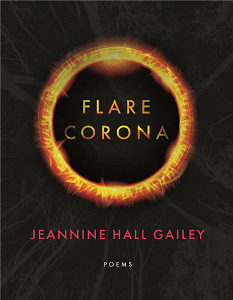
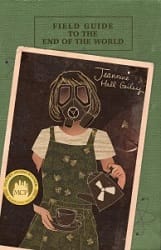
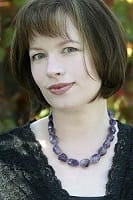 Jeannine Hall Gailey served as the second Poet Laureate of Redmond, Washington and the author of Becoming the Villainess, She Returns to the Floating World, Unexplained Fevers, The Robot Scientist’s Daughter, and winner of the Moon City Press Book Prize and SFPA’s Elgin Award, Field Guide to the End of the World. Her latest, Flare, Corona from BOA Editions, was a finalist for the Washington State Book Award. She’s also the author of PR for Poets, a Guidebook to Publicity and Marketing. Her work has been featured on NPR’s The Writer’s Almanac, Verse Daily and The Year’s Best Fantasy and Horror. Her poems have appeared in The American Poetry Review, Poetry, and JAMA.