A couple of things – news around the net, children being born. etc…

The first order of business is to say welcome to the new baby boy my older brother Chuck and his wife Melinda just brought into the world! Congrats! It’s been 20 years since my last nephew was born, so it is nice to have another baby in the family. (No pic – or even name – yet!)
I’ve been in, I admit, a bit of a tizzy since the new book came out. I’ve woken up in a panic at 4:30 in the morning every day for a week or two. I have dreams that involve, I’m ashamed to say, Amazon rankings. Yes, having a book can make you crazy, I think I remember that from the first time, but it’s been so long I’d forgotten. It’s like being in love – or, yes, having a new baby – you can’t eat, you can’t sleep, you just want to be around the new book all the time. It’s all a bit surreal, and I need to focus on my next projects to keep me sane and grounded. Always more writing to be done, that’s the truth. (And thanks to everyone who has been buying the book – I really appreciate it and hope you like it! And to those of you who have said nice things about it on Amazon and Goodreads. And those of you who have listened to me ramble on. Many thanks to all of you!)
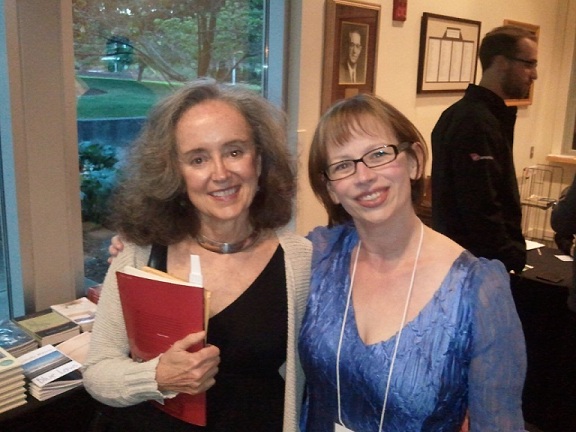
Thanks so much to Kelli for her “Thankful Thursday” post on me and She Returns to the Floating World, she is definitely a friend to be thankful for! And who else would pose with me in my dime-store tiaras?
Interview with Diane K. Martin
Links:
http://dianekmartin.blogspot.
http://www.13ways.org/poets/

Jeannine Hall Gailey: How did you promote your book this time around? How was it different than if it had been published a few years earlier (impact of social media, etc?)
Diane K. Martin: Well, there’s no doubt that Facebook, Twitter, Goodreads, etc. offer PR opportunities, but there’s a lot of pressure, too, to be on top of all that. I have had to put a lot of effort into looking for a job this year, so I can’t spend 100% of my time at promotion. Also people get pissed off. There’s a thin line between doing right for your book and totally turning people off. And sometimes there are diminishing returns. Someone convinced me to start a Goodreads competition for ten people to win — and maybe review — your book. That was expensive! And what happened? A lot of people marked it “to read.”
JHG: How has the poetry world changed since you started out (proliferation of MFAs, etc) and has that impacted you as a writer?
DKM: Well, the world has changed, not just the poetry world. When I did my Master’s at San Francisco State (there weren’t many MFAs then or I didn’t know of them) I submitted a typed thesis (not to mention typing all papers). I envy those doing MFAs today, especially low-residence ones like Warren Wilson, though I haven’t been in an economic position to do them. I envy the ability to develop relationships with major writers and thinkers. Some of that is possible to do by attending conferences, but you don’t necessarily develop deep friendships.
JHG: How do you see the online world impacting poetry?
DKM: I think it’s wonderful to be friends with people, to develop connections not limited by geography. I loved going to Virginia Center for Creative Arts and meeting, in real life, Eduardo Corral, who was already a friend from the blogosphere. I think I would be crazy by now, crazy and totally depressed and isolated, if it weren’t for the Internet — email and blogs and Facebook and the like. It’s changed everything! Even being able to read a journal online before submitting and, now, more recently, submitting manuscripts online. This is all good, as far as I’m concerned.
JHG: What advice would you give your younger self?
DKM: I wish I had known how important it was to connect, to meet and greet, to let people know who you are, etc. The problem is, I’m sure I wouldn’t have done anything any differently. I’m fairly introverted. Get a glass of wine in me, and I can talk to people, though I’m not necessarily a wise and considered conversation.
JHG: How has your life changed since the book came out? Are you working on another collection?
DKM: I have an entirely new collection making the rounds of publishers and competitions right now. For more than a decade, I had been circulating Conjugated Visits — under different titles — and asking people to read it and give me advice — because it was always a finalist, never a winner. And I kept adding poems, removing poems, re-ordering the poems, and getting more mixed up about the book rather than clearer. In 2004, at Squaw, Bob Hass advised me to just get the first book out, just get it published under any model. Then I’d showed him a poem I wrote about Stradivari and talked about my dozen or so poems written in the voices of Picasso’s women. And he said to fix my sights on the second book, which sounded like it was “about” art and women. In 2008, I went to VCCA, and while CV had still not been published, I started pulling the 2nd book together. When Dream Horse Press took CV in 2009, I removed the poem “Hue and Cry,” which had won the Erskine J. Poetry Prize from Smartish Pace, to put in the second book and to use Hue and Cry as the new book title.
That’s pretty much where I am now. I’m still doing readings, promoting the first book, but I didn’t win a book prize, you know. There was never an overwhelming reception from the world at large. Individual people told me they loved the book, which was very gratifying. But I’d be lying if I didn’t say I was ready to move on from Conjugated Visits and the poems in it. They’ve been with me a long time!
Hue and Cry is a quirky book; the poems involve ideas about art, creativity, imagination, and perception itself. But I’m excited by it and hope others will be too.
Interview at Fringe Magazine, Sandy Longhorn’s kind words about the book, and more news!
Fringe Magazine today features an interview with me by Rachel Dacus (a very good interviewer, by the way) so you may want to go over and read it! You can learn all about inspiration, revision processes, video game heroines, paper books and the zombie apocalypse, and more!
Did I mention my book is available now on Amazon? No longer just pre-order, but actually available? Yes, it is! Go buy a copy! I’m watching that “Hot 100 New Books in Poetry” list these days…
Sandy Longhorn promises that my book will inspire you to write poems! Well, sort of. Check out her kind words about She Returns to the Floating World.
A brief trip to Oregon and Kelli’s big news
I am back from a two-and-a-half day quick trip down to Forest Grove, Oregon, to see some old friends – my former advisers, old friends (among them, writers Michelle Bitting, Felicity Shoulders, Rusty Childers, Lisa Galloway, Leslie What, and a host of others,) and it was fun to meet some of the new students too. Patricia Smith was there – one of my favorite practitioners of persona poetry – and the guy that wrote “The Financial Lives of the Poets” which I happened to pick up at an airport one time – and I got to see Kwame Dawes read. That was fun. Bonnie Jo Campbell gave me a tattoo at a wine bar. I’d explain that last sentence, but because I am super geeky, you probably already know it was temporary.

I also saw four white egrets – a bird I thought I had left behind in California, but that I was happy to see this far north – a tree with wild turkeys on all its branches – and I had my first ever experience with someone stealing gas out of my car. (Forest Grove is, besides being a cute little college town, a huge meth center full of tweakers. I remember walking past a police shootout at a meth bust one time on the way to class some seven or eight years ago.)
And now, for Kelli’s big news. Her second book, Letters from the Emily Dickinson Room , which I had the pleasure of reading when it was still in manuscript form, has just won the Foreward Magazine Gold Book of the Year Award. Go over to Facebook or her blog and congratulate her!
Exciting Deliveries, Interview in Womens Quarterly Conversation, Guest Blog Post and Seeing Old Friends
 Yes, this is the first little author copy batch of She Returns to the Floating World that showed up in my mailbox! I have to admit that other pictures may have been taken, including one that may or may not have included a pink rhinestone tiara. However, I am not posting that picture. I will, however, post a picture in which my cat Shakespeare shamelessly flirts with the camera next to my box of books.
And I’m very pleased to post a link to the very interesting interview series at Women’s Quarterly Conversations, which just interviewed me (and also features writers like Katie Farris, Anne Waldman and Patricia Fargnoli.) Here’s the link: http://womensquarterlyconversation.wordpress.com/2011/06/20/profiles-in-poetics-jeannine-hall-gailey/
Then read the interviews with the other writers, because they are super smart-sounding!
Because I am everywhere all at once these days, I’ve also got a guest blog post up at the magazine Trachodon’s blog on giving a reading!
I’m going to see some friends from my MFA program this week, and I’m looking forward to catching up with them. Yay for seeing old friends.
Interview with Marie Gauthier on Poetry and Marketing, Plus a Few Extra Things
I’m happy today to feature Marie Gauthier in today’s Summer Interview Feature. Marie Gauthier is the author of the chapbook, Hunger All Inside (Finishing Line Press, 2009). She works for Tupelo Press and co-curates the Collected Poets Series.
Her Publications: A View from the Potholes <http://mariegauthier.wordpress.com> & Hunger All Inside <http://mariegauthier.wordpress.com/ihunger-all-insidei/>
Jeannine Hall Gailey: Dear Marie, as well as being an accomplished poet, you have curated a reading series, worked in a bookstore, and currently work as the Director of Sales and Marketing at Tupelo Press. What do you think you’ve learned as a poet from these experiences?
Marie Gauthier: How very difficult it can be to sell a book of poetry. At full price. To strangers. You can’t take poor sales to heart. But all things being equal (quality of the work etc), I’ve noted that the poets whose books sell regularly tend to be active members of some sort of poetry community. Translation: poets who take joy in all aspects of poetry, who are interested in other poets and other poems beyond their own, who seek out ways to be involved. Theirs is not a passive love of poetry.
JHG: What do you think the average poet could stand to learn about marketing their own work? What are the top mistakes you’ve seen people make in trying to get their poetry chapbooks and books more attention?
MG: We all know the over-marketers, the ones who try too hard, whose every post on Facebook and Twitter is “me me me” and “my book.” They think they’re doing the right thing, getting the word out, but all they’re really doing is fatiguing their friends and would-be audience into hiding or ignoring their posts. Instead of building relationships and creating conversations, they’re using social media as billboards. Everyone expects a certain amount of self-promotion — and I welcome learning what’s going on with my friends and their work, what I can do to support them — but there’s a balance you need to find. As in most things in life, you should be giving as much, if not more, than you receive.
But there’s also the opposite mistake, too: being too shy to promote yourself at all. I understand that. It’s so much easier to promote other poets because your own ego and feelings aren’t involved, you can simply give yourself over to your love of that poet’s work. But you’re publishing a book! That’s awesome! People want to know about it, and it’s up to you to step up and spread the word. And don’t spend all your review copy capital by giving away free copies to family and friends. Give them a cut rate if you like, but allow them to acknowledge the hard work you’ve put into your art by paying you, or your publisher, for it.
JHG: I noticed Tupelo takes some unique approaches to marketing, like study guides for books to help attract college faculty to teach books. What have you found to be most effective, outside of the usual PR-kit-and-review-copy blitz?
MG: Well, I have to say that review copies are still really important. Reviews can be long in coming, but attention builds on itself, one review leads to another as more readers find your work. So you should be judicious and realistic, but still send as many review copies as you can. And every poet should have their own PR kit and keep an updated list of local media — don’t forget about the local media.
You have to take the long view. Poetry sales and prose sales are different animals. A poetry book doesn’t “age” on the bookstore (virtual or actual) shelf at the same accelerated pace as a prose book. I don’t think I’m an especially innovative marketer, but we try to make use of all the available avenues in a welcoming and friendly manner. Consistency is important. We send out newsletters and such to our e-subscriber list, but some of our poets have their own e-mailing lists and send out their own publicity. These always result in sales bumps.
The internet has made marketing easy, low-cost, and prevalent, so it’s the personal touch that matters. Don’t be a mass-marketer.
JHG: Any trends in poetry sales you’d like to talk about? Any new things we should be aware of as we send out our manuscripts?
MG: As I said, I think the personal approach is important. So when you think about readings, think about salons. Book parties. Sometimes people can be intimidated by the idea of a poetry reading, but will attend something less formal and more their idea of fun.
As for the second part of your question, I wish. Like the rest of the world, I have a full-length manuscript that I’m sending out very selectively. But like all submissions, there are no easy ins; it’s all about matching the right work with the right home. Nothing new there.
JHG: How about you? Do you have any new plans or work you want to share?
MG: Thanks for asking, and thank you for the interview; this was fun. I hope folks glean something of use from it.
I have high hopes for my MS, which is still under consideration at a couple spots, and poems are forthcoming in Cave Wall, The Common, and Other Poetry. New work is slow in coming at the moment, but I’ve tentatively started a new series dealing with the recent death of my mother. Hence the slow in coming. As Joan Didion noted in The Year of Magical Thinking, the bereft have a horror of self-pity.
Thanks, Jeannine!
JHG: Thanks to you Marie!
Father’s Day Poems
Interesting how fathers show up in poems. Kelli Agodon’s second book, Letters from the Emily Dickinson Room, has several great poems about fathers in it (here’s a link to one of them.) Spencer Reece has a poem about his father who worked at Oak Ridge (!! – Just like my “Robot Scientist’s Daughter” series) in the latest issue of Poetry. Spencer Reece, are we long-lost twins?
She Returns to the Floating World does dwell on my relationships with guys – mostly my brothers and husband, but it has a few poems where my father turns up as well. (My new manuscript, “The Robot Scientist’s Daughter” is really a tribute to my father.)
So here is a poem for Father’s Day from my new book:
Chaos Theory
Elbow-deep in the guts of tomatoes,
I hunted genes, pulling strand from strand.
DNA patterns bloomed like frost.
Ordering chaos was my father’s talisman;
he hated imprecision, how in language
the word is never exactly the thing itself.
He told us about the garden of the janitor
at the Fernald Superfund site, where mutations
burgeoned in the soil like fractal branchings.
The dahlias and tomatoes he showed to my father,
doubling and tripling in size and variety,
magentas, pinks and reds so bright they blinded,
churning offspring gigantic and marvelous
from that ground sick with uranium.
The janitor smiled proudly. My father nodded,
unable to translate for him the meaning
of all this unnatural beauty.
In his mind he watched the man’s DNA
unraveling, patching itself together again
with wobbling sentry enzymes.
When my father brought this story home,
he never mentioned the janitor’s
slow death from radiation poisoning,
only those roses, those tomatoes.
Happy Father’s Day. Love, Jeannine
The Journal’s New Issue and the First full-length review for She Returns to the Floating World
One of my favorite literary magazines, The Journal, has revamped its web site and posted its new Spring/Summer 2011 issue, which includes several poems by yours truly. Click here to check out my poem “The Robot Scientist’s Daughter: One of Us.” Other poets in this fantastic-looking issue include C.J. Sage, Martha Collins, and fellow Seattle-ite Amy Shrader. I love their new layout!
Had to post this little bit of news: Click here to read Kristin Berkey-Abbott’s thoughtful full-length review of She Returns to the Floating World on her blog. Thanks, Kristin!
June Gloom, Art is Good for the Soul, Book Ranks, AmWriting, Book Launch Approaching
Yes, though most of June has been an undifferentiated mass of grey skies and chilled, sixty-ish weather in the Great Pacific Northwest, the day after another lunar eclipse, the sun shines down out of blue skies on us. It makes me feel optimistic. Plus, yesterday I had blueberries, and we all know they are a superpowered fruit! (And I may have had a couple of recent poetry acceptances – after some small flurry of rejections – from lit mags with initials COR and APR to cheer me up as well!)
Today I am going downtown to meet up with awesome artist Deborah in her studio. I may also make a quick trip to check out the new exhibits up at Roq La Rue (since our bridge to downtown will be closed all weekend…)
I thought you all might enjoy this longish lyrical essay on the pitfalls of saying: I am writing.
Mary Biddinger made me aware of this new evil Amazon thing: tracking Hot New Poetry Releases. My new book is right now, at this second, #61. Now we authors can torture ourselves not only with overall rank, but how our book is ranking with other hot new books! Oh, the humanity! (Did I mention today was the first day my new book has a rank?)
Kristy Bowen joins the discussion of book poetry contests started a few weeks ago on HuffPost. She points out, quite rightly, that getting it to some independent presses without being friends with right clique is even less likely than winning a poetry book contest. Thank goodness for independent presses that look outside their own circles for likely talent! Like my presses (Thank You, Steel Toe Books and Kitsune Books, for taking a chance on me!) This is what I would say to poets trying to get their books published: I think you have to try all the avenues to know which avenue is the right one for you.
Interview with Collin Kelley: Poets Using Social Media
Today I’m interviewing social media expert, poet, and fiction author Collin Kelly. Collin Kelley is the author of the novel Conquering Venus and the forthcoming Remain in Light. His poetry collections include Better To Travel, Slow To Burn and After the Poison. I discovered Collin’s poetry first, when he wrote some charming persona poems in the voices of some of my most beloved characters. (I believe we share a love of such pop icons as Wonder Woman, Buffy, and Twin Peaks, among others…)
Links: collinkelley.com; facebook.com/collinkelley; twitter.com/collinkelley
Q&A
Jeannine Hall Gailey: Thanks for doing this Collin! I’ve been an admirer of your work for some time (it doesn’t hurt that we watch the same television shows and both write persona poetry!) and really admire the way you were an early adopter of mediums (tools?) like Twitter and Facebook to promote your own work. Could you talk a little bit about how you got started?
Collin Kelley: I started blogging back in 2003 just as blogs were becoming all the rage. This was before MySpace, Facebook and Twitter. I had a static website before that, but once I started blogging all the traffic started going there, so I dumped the site and made my Modern Confessional blog my main “hub” on the Internet. I was an early adopter of MySpace, Facebook and Twitter, and they all felt like a natural progression from blogging. The blog is still there and updated regularly but Facebook and Twitter are really where I interact the most these days. It doesn’t hurt that I’m a big computer nerd and Internet addict either.
JHG: What has been the most effective way, do you think, for your own books (poetry and fiction) to get the word out? Do you notice a sales bump from online reviews, blog tours, twitters?
CK: I think a good recent example is when I posted the sample chapters from my forthcoming novel, Remain in Light. I posted the pages at Scribd. (another great site for writers to share their work) and then linked it around to Facebook, Twitter, Goodreads and my blog. In 24 hours, more than 100 people had read the chapters and since then hundreds more have read them. Social media drove readers to the chapters and will, hopefully, make for good sales when the book is out later this year. Since I’m poor, most of my promotion for the previous novel and poetry collection was online. Without social media, there wouldn’t have been nearly as many readers or sales.
JHG: What advice would you give a nervous poet new to new media about getting on-board with Twitter, blogs and Facebook?
CK: Don’t be frightened of it and start slowly. I guest lecture and lead classes now on social media for writers and the most asked question is “What do I do once I’m on Twitter and Facebook?” I highly recommend setting up a Facebook page for your book, so that you can be more direct in your promotion and sales, but you don’t want to “hard sell” your book. The goal is to build community, so help other writers promote their books, find topics that relate to your books and interests, post funny YouTube clips – you’re selling yourself as much as the book and readers want to get to know authors, so let them into your world a bit. If you go on Facebook and just say over and over again, “Buy My Book,” it’s going to turn people off. The same applies to Twitter. If you want more followers on Twitter, become a source for good links and information, re-tweet links and information from your followers, and let your interests and personality shine through. Cultivating and building community on social media sites takes time, so work on it daily, but don’t go crazy. Time management is the key. Spend a half hour each day updating your social media then get on with the actual writing.
JHG: Just out of curiousity: poetry blogs – over or not over, and why you think so.
CK: I don’t think poetry blogs are through just yet, but you’ll notice more and more that poets are setting up their blog posts to link on Facebook and Twitter. That helps drive more traffic. I’ve seen a big drop in traffic at my blog over the last year, while the number of people following me and engaging at Facebook and Twitter continues to soar. There are some great poetry bloggers out there – C. Dale Young, Nic Sebastian, Kelli Russell Agodon, January O’Neil, Charles Jensen, Jessie Carty, Barbara Jane Reyes and a certain Jeannine Hall Gailey all come to mind. There is always going to be a place on the web for more in depth writing and niche interests, so blogs will survive because of that. But faster and quicker ways to communicate, like Facebook, Twitter and whatever is being dreamed up by some teenager in his dorm room right now, are where the action is now.
JHG: You and Deb Ager have been running the “Poet Party” on Sundays on Twitter. How did that come together, and what do you think it’s accomplishing? I really love to see the connections between poets that might not have met otherwise, and getting advice on things (Like Facebook pages for a new book!) in 140 characters or less is kind of fun!
CK: Deb created the #poetparty (just follow the hashtag, as they say in Twitter-speak) last fall and it took off quickly. She asked me to co-host early on and we’ve built a solid following on Sunday nights. Introducing poets to each other, sharing links for submissions, contests and poetry online is the real success of the #poetparty. While the event only lasts an hour (9 to 10 p.m. ET), we’ve noticed that poets continue to comment and share info throughout the week using the hashtag. It’s taken on a life of its own. It’s a very supportive group of poets who show up every Sunday night and we welcome poets of all stripes to join us. I also think the #poetparty is proof-positive that you can have active discussion, debate and community building on Twitter in real-time.
JHG: Any other new media advice or news we poets should know?
CK: If you aren’t on Goodreads, get there. The site continues to grow and grow and it’s such a great way to interact with authors and readers. It’s like Facebook in a way, but totally devoted to writing and literature, and not quite as intensive. There are great groups to join where you can discuss favorite books, post reviews and promote your own book when it’s released. I find myself spending more and more time there.
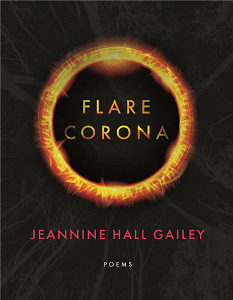
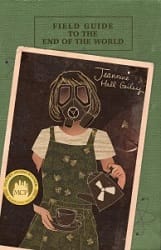
 Jeannine Hall Gailey served as the second Poet Laureate of Redmond, Washington and the author of Becoming the Villainess, She Returns to the Floating World, Unexplained Fevers, The Robot Scientist’s Daughter, and winner of the Moon City Press Book Prize and SFPA’s Elgin Award, Field Guide to the End of the World. Her latest, Flare, Corona from BOA Editions, was a finalist for the Washington State Book Award. She’s also the author of PR for Poets, a Guidebook to Publicity and Marketing. Her work has been featured on NPR’s The Writer’s Almanac, Verse Daily and The Year’s Best Fantasy and Horror. Her poems have appeared in The American Poetry Review, Poetry, and JAMA.