Things I’d Wish I’d Known When I Was a Younger Writer

I was inspired by Susan Rich’s blog post of advice for young writers and Jim Berhle’s more humorous but equally valid post here. So I thought I’d pass on the things I wish I’d known earlier to you all. Please post your own tips you wish you’d known earlier in the comments!
–Be assertive about seeking out what you need – information, mentorship, etc. When I was in my early twenties, I was waiting for someone to tell me I was good and to tell me what to do to “make it” as a writer. But you know what? No one did. I wish I had known to go out and do more on my own. I got myself a copy of Poet’s Market when I was 19 and read every word in it and read magazines like Writer’s Digest, but other than that, I was clueless when I started out. Even when I signed up with my MA, no one really discussed stuff like how to send out work, how to get grants or fellowships, or how getting a teaching job happened. It was like this was all secret code, and you had to be a member of a secret society to get it. No one is going to hand you everything at the beginning, no matter how good a writer you might be, how nice a person, etc. If you don’t know how to write a cover letter, ask someone more experienced to show you one of their examples. If you admire a poet, write to them, tell them what they have meant to you and ask for advice or help. (You’d be surprised how many of them will respond, even if not all of them do.) If your professors haven’t really paid attention to your work, ask to meet with them after class and talk about your work and their suggestions. Or find a writing group nearby and start meeting with them. I didn’t write for a few years after my MA, because of a lack of encouragement and that feeling of being outside of a closed system, and I regret that lost time now. Don’t wait for someone to tell you you’re good enough. Go out and find the mentoring you need. Sometimes that’s not going to be grad school. It might be a local community group. The Bainbridge Island poetry group I’ve been going to for eight or nine years (or ten or eleven?) now has been much more important to my writing life than either of my graduate degrees, and that is a fact.
–You will probably not regret sacrifices you make for your writing. I had so much anxiety about the money situation. I still do. I grew up in a household with two parents who had grown up in horrible poverty, who had gotten college educations so that they could do better, and they did, but money was still always tight for us growing up. As an adult, I’ve always felt a bit behind the eight ball financially – and money for things like, say, a poetry class or a writer’s conference can seem like frivolous waste. But it is not. Spend in line with your values. You may regret buying that used car, or that house (darn Virginia money pit! Never buy a house with a well! Sorry, had a Richmond house-ownership flashback there) but you won’t regret meeting a writer you’ve always admired or learning more about the craft you really want to excel at. You will not get rich being a poet, in fact, you will probably lose money doing it, if I’m any indication. But it just might be worth it.
–Get involved. Volunteering for literary magazines and organizations gives you an inside view of how things work in the poetry world, and the perspective can do a lot for you as a writer. Those rejections – when you’re the one writing them, you learn that not every poem that gets rejected is a failure, so the writer can’t think of it that way – sometimes the poems just don’t fit a theme or they’ve already accepted a poem about crème brulee and apocalypse or the editor is in the mood for one kind of poetry versus another that day. Fund raising for literary organizations also makes you aware of the limits of audience, and the limits of interest in literature among the general populace, but also how just a few lovers of literature can make a difference. The best thing volunteering does is that it puts you in touch with other volunteers, people who value the same things you do, who believe enough in what they’re doing to do it for free.
–Be curious. The best thing I did early in my writing career was volunteer as a literary magazine reviewer for NewPages.com. They sent me literary magazines of various sorts, some new and some revered gray ladies, and every month I got a new batch, read them, and tried to point out what was unique and interesting about each. If you could force every new poet to do this, I would, because it opened up a whole new world of publishing to me. I also started writing book reviews and that keeps me reading all the time – reading poets I wouldn’t otherwise read, or find, on my own. This is the best way to find out what is going on in the contemporary poetry world – what are the people around you publishing, and why, and how?
Five Favorite Books Feature, Poetry Month, April can feel like the cruelest month
To celebrate National Poetry Month, Deb Ager of 32 Poems is featuring poets talking about five of their favorite poetry books a day every day in April. Here is the calendar:
http://www.32poems.com/blog/2286/national-poetry-month-celebration-2
My list of five books will be up on April 22nd if you’re interested. And you should be!
Is April the cruelest month?
I celebrated National Poetry Month by reading Eliot’s “The Waste Land” out loud last night to Glenn. Say what you want about Eliot, and I do, but the man could write. Then I celebrated by waking up at 2 AM with an anaphylaxis attack. I don’t think it was a result of reading The Waste Land, so let’s not blame Eliot for that. The doctors don’t know why I keep having these; I’ve restricted my diet to about fifteen “safe” foods, I’m on double-doses of antihistimines and such, but still, I just wake up covered in hives and shaking and other unpleasantness. Chronic idiopathic anaphylaxis, urticaria, and angioedema is what they call it so far. Usually a dose or two of extra Benadryl suffices (I’ve stopped going to the hospital every time; now I just call the allergist’s office and he talks me through whether or not my symptoms are under control and what else I need to take.) Still, it’s pretty exhausting, and this is the first day of class for my National Advanced Poetry class as well, which is always a whirlwind of questions and introductions and “do I really need to buy these books of poetry?” It’s funny how much MFA students of poetry hate to buy poetry.
Besides the odd allergic reactions I’m still out of commission on the walking front because of repeated injuries to my right ankle. I’d say I’m unlucky with ankles but at this point – two years of being on and off of crutches, despite religious physical therapy and that kind of thing – it goes beyond that. I really want to be walking again by my birthday at the end of the month. I’m planning to go out to look at the tulip fields in Skagit by April 30, something I really missed when I lived in California (though I did live by the rununculus fields in Carlsbad, so there were compensations.) So think good thoughts for me. Walking by my birthday! It’s a mantra!
I’ve been trying to remain fairly cheerful, through the horrible disasters and wars in the news, through the physical trials and tribulations, through rejections, through trying to set up readings for the new book and applying for grants and jobs. I really have accomplished quite a bit in the last few weeks (wrote two reviews, did a bunch of poetry subs, worked on promoting the new book, judged a high school poetry contest set of poems, did a grant proposal, etc.) so maybe my restricted walking has helped me find more time for work! Plus it has been cold and raining even more than usual here in Seattle, a postponement of the slightly sunnier April weather I’ve been hoping for – I’m always grateful to see the thermometer above 50 degrees these days!
So, readers, let’s think of cheerful April things to not only promote poetry, but promote the people and the things in the world around us that are good. Write a note to someone you love, a thank you to a former teacher who made a difference. Write a review of a book you’ve loved. Subscribe to a journal you’ve always admired. We can do what we can do, and that is enough.
April Poetry Month Giveaway and More
 Yes, I’m taking part in April Big Old Poetry Giveaway! Thanks for asking and to Kelli for organizing it. I’ll be drawing a winner out of a hat on May 1, so leave a comment on this post (with contact information, including a working e-mail address) and you’ll be entered for a chance to win one of these books!
I’m giving away a copy of:
 My first collection, Becoming the Villainess. Pop icons, Wonder Woman before she changed costumes, mythology, and more!
 Anna Rabinowitz’s Present Tense
Apocalypse, Political Screed, Religion, History…She’s got it all wrapped up in this Omnidawn collection.
So, besides April being National Poetry Month, it is also the beginning of the class I teach at National University, the month of Seattle’s Sakura-Con and NorWesCon, (which of course include chances to get together with out-of-town friends for fun!) and various other cons in Seattle. There is literally a reading almost every day somewhere in Seattle (check out this calendar) I’m also going to be judging some local high school poetry contests (because, the children are our future, etc.) Did I mention a birthday at the end of the month as well? And I’d love to get a chance to go look at the tulips in Skagit…it’s time for at least one clone!
Why I Write About Japan, Part II with Links
My Little Brother Learns Japanese
—For Mike, Watashi wa otouto ga daisuki desu.
In college, he learns to read
right to left,
practicing with Manga,
learns Kanji picture-words:
how the word for heart
can also mean indigo blue.
He learns to conjugate
verbs with no future,
and reads poetry that does not
begin with “I.”
He learns about weather reports
of sakura zensen,
the advance of cherry-blossom fronts
and finds that falling blossoms
can also mean dead soldiers.
He knows the word for bird
by its feet, and knows
a village connects hands to trees.
Little brother is a student,
and older sister
is a woman going to the city.
He learns in Japanese fairy tales
that siblings, not spouses,
are often saviors;
the older sister brings the dead brother
back to life
over and over again.
Continued from my previous post. My little brother minored in Japanese during his study of computer science at a Cincinnati Jesuit university called Xavier University, and it was here he encountered a wonderful, enthusiastic professor named Dr. Ayako Ogawa. My brother would tell stories of how she talked about the time she kept a pet raccoon (maybe a tanuki, or a Japanese variation on the raccoon that in English translates to “raccoon dog”) or how she would spend a class explaining how to do a tea ceremony correctly or the importance of handwriting to the Japanese written language. Like my high school European History teacher who would give us excerpts of books like “Sugar and Power,” photocopy 15th century versions of “Little Red Cap,” and discuss Machiavelli’s The Prince and “Dress for Success” in the same lecture, Dr. Ayako strove to communicate to her students more than just the language; she brought in art, story, traditions like flower arrangement, all aspects of Japanese culture that might help illuminate her world for an American student. She would eventually become a family friend and we would follow her stories of adventure (even now, she is an enthusiastic traveler.) Dr. Ayako graciously read versions of “She Returns to the Floating World” and forwarded them to her husband and children as well, to get their feedback. She’s written her own book too! Here’s a brief profile of her from a Cincinnati paper.
My brother and I have lived in different states since he started college, so we often correspond about things like which anime movies he recommends and his adventures in Xiao Lin Do martial arts and Kendo practice. I started watching all of Hayao Miyzaki’s films and researching his life and work, and discovered his interest in children’s literature. I researched Japanese folk tales, especially interested in the one that helped inspire Miyazaki’s work on Nausicaa, called “The Princess Who Loved Insects.” The most fascinating discovery I made was a recurring instance of older sisters who acted as protectors and heroes to their little brothers; the only times I’ve seen that archetype in Western folk tales were in “Hansel and Gretel” – in which Gretel, not Hansel, kills the witch that holds them captive and “Jorinde and Joringel,” in which the sister struggles to free the brother from enchantment – and, of course, the complex “Snow Queen” mythology, which has a variation in which a young girl travels to free a boy who is a love interest, and ends up overthrowing the evil Snow Queen.
I started to become interested in the scholarly research on Japanese folk tales, and stumbled upon a second-hand copy of Hayao Kawai’s “The Japanese Psyche: Major Motifs in the Fairy Tales of Japan.” Similar to scholarly works I’d read on Grimms’, but with more focus on Japanese religion and Jungian psychology, it was a fascinating springboard into understanding Japanese folk tales (and had a wonderful appendix containing some folk tales I was not able to locate in English elsewhere.) I’d also begun reading Japanese fiction, such as Haruki Murakami, Osamu Dazai, and researching older books such as the Tales of Genji and The Pillow Book of Sei Shonogan. I read Roland Kelts’ Japanamerica, about the cross-cultural influence of Japanese pop on America and vice versa, with fascinating insights into anime in particular. My own writing increasingly began to reflect my research and interests, watching anime series like “Fooly Cooly” and “The Fullmetal Alchemist” and trying to learn a little Japanese so I could read some of the work in the original language. Right after “Becoming the Villainess” came out, I wrote the bulk of what became She Returns to the Floating World.
As the scope of the disaster in Japan continues to expand, I am thinking of my friends over in Toyko right now, and of the little things I can do to support them. It is easy to feel helpless an ocean away. The cherry blossoms have started to bloom. Besides Doctors Without Borders and the Red Cross, I’m looking for good suggestions as to where to direct people for donations. Northwest Medical Teams, one of my favorite local charities that sends medical teams with supplies out to places in need, has a donation page up.
More links:
Where are the Robots? The reasons robots haven’t been used at Japanese nuclear disaster sites
Japan Disaster and Anime Fans
Prairie Schooner Spring 2011
Check out the new Spring issue of Prairie Schooner, including the online version of one of my new poems from the Robot Scientist’s Daughter manuscript, “Knoxville, 1979.” (The other poem, “Foxfire Books: In Case of Emergency, Learn to Make Glass” is more apocalyptic. The whole issue is really wonderful I think.) Lesley Wheeler and Robert Wrigley are also up as featured poets.
A sad note: this was Hilda Raz’s last issue as editor of Prairie Schooner, as she is retiring.
Why I Write About Japan, with links, Part I
When Asked Why I Write Poems About Japanese Mythology
— A letter from the suburbs of Seattle to the suburbs of Tokyo
I will send my voices out over the water
where the same cedars that litter my coast
used to tower over yours. Once green,
your cities have nibbled forests into bonsai.
Our hinoki trees are shipped across the ocean
for your sacred temples now.
Postcards of volcanoes rise from a blue sky
in the background of our homes, we share
zones of tsunami, seasons of weeping cherry.
I read about women’s spirits
haunting peony lanterns in the forest.
Men follow them, fall in love
with women long dead. In shallow graves
rotted with tree roots, they still sing.
And here in pages hammered
from your language into mine,
sometimes with clumsy fists,
I have listened to the bush-warbler
mourn her children, the fox-wife’s eyes
in the darkness have warned me
of the growling of dogs and fire.
And when they disappear in silence,
it is not really silence. Their echoes
burn themselves into stone,
into the living screens of my childhood,
fill my mouth with ghosts.
Ghosts sit in my mouth and sing.
Our grandfathers were at war.
I grew up in the birthplace
of bombs that poisoned children,
burned holes into your sacred earth.
Their poison is part of me.
In the shelter of a shrine, a small girl
holds an umbrella. She becomes a white bird.
She whispers and a thousand cranes,
a thousand burning flowers
pile up inside me, spill out onto these pages.
Forgive me, ghosts, for my hard,
unbeautiful hands, for my tripping tongue,
as you demand a healed future, some untorn prayer.
This poem was written some years ago in response to a question from Marvin Bell about why I decided to write the book, She Returns to the Floating World. It was published in Redactions and will appear in the upcoming book.
The Japanese disaster has weighed on me heavily for the past week or so, and I thought I would write here a little bit about how my life has been tied to Japanese culture since my early childhood. Then I’ll post some links from other sources more useful and possibly more coherent and lovely than my own, including meditations on the quake by Mari L’Esperance and Marie Mutsuki Mockett.
Part I
My father was a robotics expert, and so, as a child living in California and Tennessee in the seventies, we had frequent visitors from Japan, mostly other robotics experts, and family trips to Japan happened on a regular basis – once I had measles so I couldn’t go, another time I had scarlet fever…etc…so although every other member of my family has been to Japan, I never got a chance to go. (This is still true!) My father and brothers would come back with stories, dolls, paintings, new words. I had a collection of Japanese picture books and folk tales, and occasionally, the wives of my father’s business associates would teach me how to make a dessert (I remember something with rice and red bean paste) or teach me how to say a few words in Japanese, or how to sing a Japanese song.
I watched my first Miyazaki movie, Nausicaa of the Valley of the Wind, when I was ten years old, on an ancient primordial version of the Disney Channel. My brother and I sat transfixed, and watched the movie over and over again, its figure of a girl riding on top of giant caterpillars, a boy and girl trapped underneath a poisonous forest in a crystal cavern, frightening war figures and women warriors with metal limbs. This was my first introduction to Japanese pop culture, before we watched Transformers and Voltron and the other imports that would become popular in the eighties. At this same time, I read a terrifying book about the bombing of Hiroshima told from the perspective of a young girl (don’t remember the name of this novel, it was in our school library so I never owned it.)
I started to make the connection between the work done by my father at the neighboring Oak Ridge National Labs as a consultant for nuclear waste disposal methods and the bomb that was dropped on Hiroshima. (In case you’re wondering why I’m anti-nuclear bomb, anti-nuclear power, this set of incidents – watching Nausicaa, the book on Hiroshima, and early fourth-grade era research on nuclear pollution impacts – are probably key. And that grad-level class on Ecotoxicology I took during my Pre-Med days. Plus growing up with a Geiger counter in my basement and helping Dad edit papers on nuclear waste cleanup in high school, pretty bleak stuff in case you’re wondering.)
Part II to come.
Some links:
Marie L’Esperance’s meditation on the quake
Marie Mutsuki Mockett’s meditation on Japan from the NY Times
The Future on Nuclear Energy Around the World
My second book’s publisher, Kitsune Books, is donating a portion of their sales to the Japanese Red Cross
All About You: Review of Sky Burial, Interview with Rachel Zucker, and Other News
This morning my review of Dana Levin’s Sky Burial went up on The Rumpus. Check it out! Dana Levin is one of my favorite poets, and this fierce new book is definitely worth a read. Then buy her other books, Wedding Day and In the Surgical Theatre.
Victoria Chang interviews another one of my favorite poets, Rachel Zucker, on her blog. Thanks Victoria!
C. Dale Young had two poems up on Poetry Daily. You know, C. Dale’s poems always surprise me with their spirituality. He makes me remember my own spiritual side, which I don’t address very often in writing.
Oliver de la Paz has an interview up on the Ploughshares Blog.
And yet another favorite poet, Matthea Harvey, won a big old award.
Ever wonder what the Vida count would look like for sci fi? Wonder no more.
Kelli’s kicking off another grand poetry giveaway!
Today is a celebration of you guys and all your hard work!
Losing Knut, Reading Reviews, and Supermoons
 Amid the news of a Libyan war, the continuing disaster in Japan, I admit a little bit of more trivial news stood out to me: the death of a little four-year-old polar bear named Knut. Knut was rejected by his mother and hand-raised in a German zoo. He became a cover model for global warming and environmentalism. Unfortunately, sometimes mothers reject their cubs because there is something wrong with them; a heart defect, or other genetic problems. Knut’s cause of death was not known, but it is uncommon for polar bears in captivity to drop dead so young. (Note to self: glad my mother did not decide to reject me. A recent x-ray revealed an extra bone in my ankle! Even more mutations surprise me every day!) Anyway, here is a picture of Knut with his handler, Thomas Doerflein, who also died young at 44 of a heart attack.
In other news, instead of just talking about it, actually wrote a review of a poetry book, and now it’s up: Erika Meitner’s Makeshift Instructions for Vigilant Girls reviewed at Barn Owl Review.
Japan, nuclear disaster, donations, and Marie Howe
I’m sorry to say that the situation in Japan has not gotten better in the last few days. I spent the last couple of years researching the effects of radioactive contamination in my childhood hometown of Oak Ridge, Tennessee, for my third MS, “The Robot Scientist’s Daughter.” The kinds of things – cesium in the body, radioactivity in the food chain – deer, wasps, swallows, increased risks of thyroid cancer and leukemia – that I found make me even more dismayed when I read about the problems with the nuclear reactors in Japan. Exposed rods = very bad. Cesium leaked into the environment now will probably still be there in thirty years. It accumulates in the human body and builds up over time, like many nuclear contaminants like Strontium-90.
I’m going to donate all proceeds from my first book, Becoming the Villainess, sold in the next week or two, to Doctors Without Borders, so if you’d like to order, click here.
I’m trying to write a new dedication for my second book with Kitsune Books, She Returns to the Floating World, to honor the victims and survivors of the terrible events of the last week. I believe Kitsune Books is going to look for a way to donate a portion of the profits to Japanese earthquake disaster charities as well. All my words seem so pitiful and weak in the face of so much devastation and loss. Nothing seems adequate.
Last night I went to see Marie Howe, one of my favorite poets, read in downtown Seattle. I was happy to see some of my poetry friends, and listen to such a wonderful warm poet read her work, which was spunky and funny and direct. Howe’s What the Living Do, about her life in the wake of her brother’s death from AIDS, is a book I’ve read over and over. It embraces the pain, the every-dayness, of surviving. In the end, poetry is something we create as an after-effect of surviving, as a testament to humanity’s ability to observe and survive and create in words some evidence of this.
Here’s a poem about Cesium, one of the nuclear products being released into Japan’s ecosystem as we speak, from Cincinnati Review’s Winter 2010 issue.
Cesium Burns Blue
Copper burns green. Sodium yellow,
strontium red. Watch the flaming lights
that blaze across your skies, America –
there are burning satellites
even now being swallowed by your horizon,
the detritus of space programs long defunct,
the hollowed masterpieces of dead scientists.
Someone is lying on a grassy hill,
counting shooting stars,
wondering what happens
when they hit the ground.
In my back yard, they lit cesium
to measure the glow.
Hold it in your hand:
foxfire, wormwood, glow worm.
Cesium lights the rain,
absorbed in the skin,
unstable, unstable
dancing away, ticking away
in bones, fingernails, brain.
Sick burns through, burns blue.
Japan, anime, apocalypse
All the horrible news coming in from Japan. I still haven’t heard from one family friend from Japan, but most of the people I know in Japan are safe. But still, the images, the terror of the earthquake, the tsunami, and now the nuclear reactor threats, are so terrible, they won’t stop. I’ve been dreaming every night about Japan. Every morning when I wake up, the death tolls have gone up.
I remember someone wrote that anime was characterized by so much apocalyptic imagery because Japan is the only country that has experienced and survived a real apocalypse. The poems in my second book return to these symbols of destruction and pain in the history of the country, symbols we can only partially understand. Haruki Murakami wrote a book of short stories called “After the Quake” after the Kobe earthquake. Many of the stories dealt with the emotional aftermath of that destruction, the estrangement and non-trust of anything, the lack of a feeling of safety, not trusting what literally was going on underfoot. Still, these symbols and stories can only help us understand a little, like watching footage from thousands of miles away is not the same as understanding what it’s like to be there.
There is little I can do from here, the little amount of money I can donate, the prayers, of course, but really, it’s nothing in the face of so much.
A little while ago, I drove from San Diego to Berkeley to see Roland Kelts interview Hayao Miyazaki about his new film, Ponyo on a Cliff. The young girl of the title is an undersea being that falls in love with a human boy, in a sort of variation on The Little Mermaid, and in visiting him and determining to become human, she throws the universe out of balance, bringing storms to a small fishing village where the boy’s father works as a commercial fisherman and his mother works in an elderly care facility. The moon veers closer to earth, and a tsunami swallows the town, including the sweet elderly folks, the mother, and the two main characters. (Of course, this being a Miyazaki film, these characters aren’t in any way harmed, but are somehow protected inside a magic undersea bubble.) Primordial threatening giant fish prowl the streets of the town, now underwater, as Ponyo and the young boy sail around on a toy boat looking for the mother character. It’s very eerie now watching these images, the storm nearly overtaking the cars of villagers, refugees crowded into tiny boats looking for people to rescue, storms tossing boats into each other. Miyazaki, in this interview, said that it time of national disasters, like tsunami, that the Japanese people became very good at taking care of each other, that the feeling of community was increased by the disaster somehow. I only remember this odd comment now because of what has happened.
Two good places to donate (which have good ratings in terms of spending more on actually helping people than administration:)
—Doctors without Borders
—Northwest Medical Teams
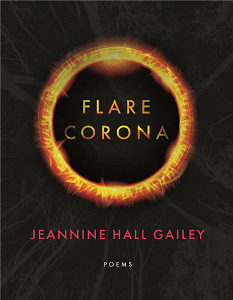
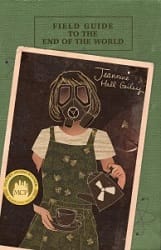
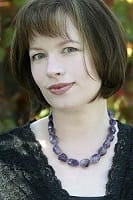 Jeannine Hall Gailey served as the second Poet Laureate of Redmond, Washington and the author of Becoming the Villainess, She Returns to the Floating World, Unexplained Fevers, The Robot Scientist’s Daughter, and winner of the Moon City Press Book Prize and SFPA’s Elgin Award, Field Guide to the End of the World. Her latest, Flare, Corona from BOA Editions, was a finalist for the Washington State Book Award. She’s also the author of PR for Poets, a Guidebook to Publicity and Marketing. Her work has been featured on NPR’s The Writer’s Almanac, Verse Daily and The Year’s Best Fantasy and Horror. Her poems have appeared in The American Poetry Review, Poetry, and JAMA.