All News Tuesday

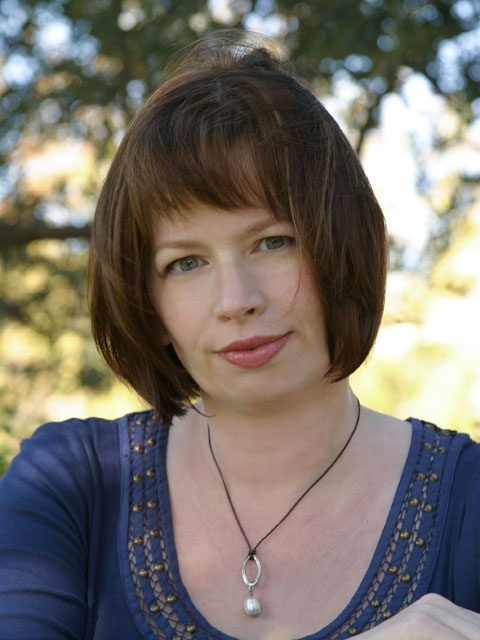
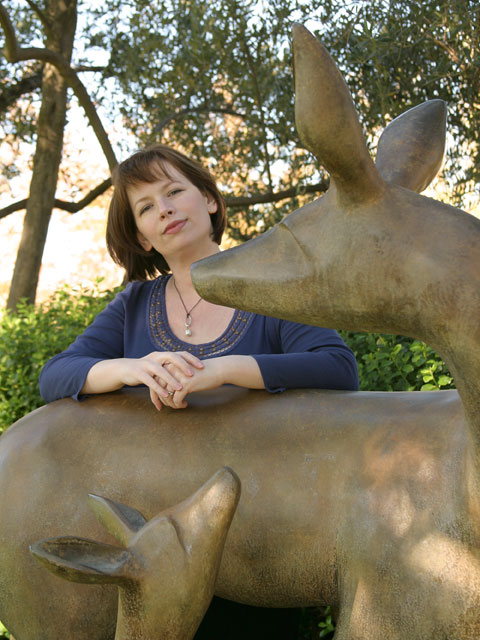
Thanks again for all your help picking out the author photo. The winner was #4. Now you will have to wait to see the final version on the book 🙂
New River’s radio show on Art Internation Radio includes two poems of mine being read by a famous New York theatre actress, Patricia Randell. Here’s what they say:
Our premiere show is Emerging Women Poets: 24 minutes of poetry by Jeannine Hall Gailey, Melissa Range, Darcie Dennigan and Reena Ribalow, read by Patricia Randell, Randell Haynes and Lori Myers. Please check it out by going directly to http://urls.artonair.org/newriver (this show will also be featured on their homepage at www.artonair.org all this week).
My poems are the first ones up, and start around minute one!
Two wonderful new books of poetry just hit the shelves.
Kelli Russell Agodon’s second book, Letters from the Emily Dickinson Room has made its debut. Here’s my blurb, so you know what I think of it:
“Agodon’s book is a bright, funny, touching meditation on loss, love, and the power of words. Her genius is in the interweaving of God and Vodka, bees and bras, astronomy and astrology, quotes from Einstein and Dickinson, a world in which gossip rags in checkout lines and Neruda hum in the writer’s mind with equal intensity.”
Jim Brock’s book, Gods & Money, was just released by WordTech Press.
Here’s my blurb for that book:
“Pop culture, poetry, politics, and religion—all subjects that come under scrutiny in James Brock’s book, Gods & Money. With his tongue-in-cheek humor and observant eye, Brock entrances us with his tales of the melancholy romance of soup, the connecting threads between Walt Whitman and the Florida Everglades.”
Also, Steel Toe Books is open for submissions again, this time for books with religious and/or spiritual themes.
In health news, I got a b12 shot yesterday. I run a little low on b12 sometimes, which I had forgotten about (I’m not a vegan or anything!) and luckily the doc checked for it. I’ve been sleeping ten hours a day lately and moving with the alacrity of a turtle, so hopefully this extra vitamin boost will help power me through the parents’ visit, finding an apartment, doing a reading or two in San Francisco in October, moving, and writing two new book reviews. And trying to write a poem a day, sending out subs, and trying to find work. B12 does give you superpowers, right?
A new review and help with my author photo
Hey you guys! I’ve got a new review of Mary Ruefle’s Selected Poems up at The Rumpus, so check that out! (Also, feel free to log in and comment on The Rumpus – Numbers Trouble)
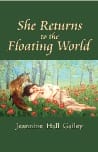
Now I need your help picking out an author photo for She Returns to the Floating World. Comment on which one you like best! Thank you for your help. (These will disappear in a day or two.)
How Do You Find Time To Write?
In service to answering more post-MFA student questions…this one I’ve gotten several times, some variation of “How do you find time to write/submit/read after you get out of the MFA?”
So, in answering this question, I’ll mention that I went to a low-residency MFA while working part-time and/or as a freelance writer, so my practices before, during, and after the MFA didn’t really change all that much. I write a couple of hours each week – and that’s creative writing, not including blog-writing or freelance assignments or reviews. I spend another couple of hours working on book manuscripts, submissions, connecting with other writers, publisher research, etc. But beyond the time spent writing, there are other ways to spend your time I recommend that will help give you the energy and inspiration to create.
I’ve been a big reader since I was a kid, and I haunt bookstores and libraries with as much joy now as I did when I was in fifth grade. I read a lot, probably an average of three books a week and a bunch of journals/magazines/essays/poems. I think that’s important for writers, and not only reading to your own interests and genre, but far outside each as well – your inspiration-catcher will work better if you’re piling in disparate and interesting information. Squeeze a little reading into the every day spaces – waiting for a dentist appointment or at the DMV, in between loads of laundry, in the car while you’re waiting to pick someone up. But going to museums, concerts, readings, hiking a mountain, even watching television – these can all be sources of inspiration for you too. Stay attuned to your personal resonances – and take yourself somewhere inspiring once a week. Note that it doesn’t have to be anything fancy – sometimes a grocery store can be really inspiring. (It worked for Ginsberg!)
Also, I think it’s really important for each person to pay attention to what, for lack of a better word, I’ll call bio-rhythms. You know, when you’re at your most creative or your most sleepy, when you’re better at detail-oriented work and when you tend to daydream. For me, my most creative time has consistently been past 10 PM at night – and, ahem, often until 2 or 3 in the morning. (I’m a night owl for sure.) I want to fall asleep at 4 PM, and in the mornings I’m pretty bleary. So, I save my writing/teaching “business” work – submissions, filling out forms, studying journals, making lists -for the early afternoon. I do errands, which don’t require too much mental acuity, for the 3-5 PM time frame. If I’m teaching, then I like to do grading at night as well (which is probably why I don’t write as much while I’m teaching – I use the same prime “brain space” for both.) So my advice is – make your writing time a priority, keep it at the same time of day, and see how you do. If it doesn’t seem to be working, switch it up – you may be a person who writes best in the early mornings, or during a lunch break you absolutely must jot your ideas down. Find what works best for you, and stick with it.
Having a schedule and following it consistently – this may because I’m a Taurus and we love routine – is really important for me. It might be for you too. Try to follow a “habit” of reading, writing, exploring other art forms, putting your work out there, going to readings, getting together with other writers. The MFA may have provided that structure for you, but you can also re-create it at home. Significant others/children/bosses/family/dogs etc can be trained to understand when and how to leave you alone. I used to have a boss at a company with the initials “MS” that IMed me at midnight or one in the morning, even on weekends. I “trained” him to stop doing that simply by stopping myself from responding to these IMs. My husband notes that when I am writing I cannot hear him call my name or hear the phone ring and do not respond to other stimuli. This is true. I do get a little “zoned out.” But if your loved ones understand and support your decision to be a writer, a little of that won’t hurt the relationship. Hey, this gives your loved ones time and permission to go play Guitar Hero or watch “South Park” or learn to cook a traditional cassoulet or whatever it is they do for fun.
The real point of all this is, create a time and space for you to be creative. Make it a priority and a habit. Don’t stop reading and writing. Don’t stop sending out your work. Don’t stop going to readings, buying books, volunteering for local literary magazines or conferences. Make “being a writer” part of your daily life. I can’t promise wild success, money, or prizes. But at least you’ll be honoring the part of you that wanted to be a writer in the first place.
Not Helpless: Women and Poetry and Numbers Trouble
Once again, there is numbers trouble brewing. Yes, though women far outnumber men as readers of books, women who write their own books are in trouble if they expect an equal number of reviews, awards, etc., as their male counterparts. Who are the serious women writers getting overlooked in favor of the Franzen’s of the world? Will we ever hear about them? Will they fade into obscurity because no one will talk about them, no one will even look at their books on the review pile or prize committee nominations?
I want to point out that we are not just helpless victims in this matter. Some of the most influential critics in the country are women. They’re just choosing to write about men’s books. So what can you do? Speak up! Write in the New York Times Review of Books or The New Republic and ask for equity in book reviews. Write your own book reviews and publish them. Make noise about women writers you love and appreciate, especially those who are up-and-coming. I hope one day there will be more equity, or at least that it will be a consideration, among those doling out the prizes and grants and reviews and other things that can make or break a writer’s career, give them hope, keep them from giving up. Until then, we do what we can.
How Do You Know Where to Send Your Work? Questions About Submissions…
A former MFA student wrote in to ask me advice about how I know which journals to send my poems to. It seems so overwhelming, she said. Well, that’s true for me too! Here’s part of what I wrote back – I hope you guys find it helpful:
What you are experiencing is something every writer experiences! I’m literally going through the same thing doing fall submissions – which journals would be receptive to my work? Which poems should I send to which place? It’s nearly impossible to guess correctly. The best asset I have is that I’ve been sending work out for over ten years, so now I know a few editors who like my work and tend to take it at a higher rate than other places – but mostly, I try to read new journals and send to new places, so I don’t even use my collected wisdom! There are so many journals out there – I use Poet’s Market and mark “likely” markets with little sticky notes – I use Duotrope and see if someone’s open to submissions this week that I haven’t sent to – and I shop around in bookstores and try to get lit mags that I’m not already familiar with. I did lit mag reviews for New Pages for a while, which was a great gig, because I was forced to read and review lit mags I would never have found in whatever corner of the world I was living in at the time. Also, I read lit mag blogs, which can reveal a lot about a journal and its editors – or at least its interns. Ploughshares, Missouri Review, and a bunch of other journals have blogs now, surprisingly. Check Facebook and Twitter too – I got to know my new book publisher by following their Twitter, of all things!
Definitely sign for Duotrope’s Poetry Weekly Wire – I get it and I always find one open market to send to from it, one I might not have thought of on my own.
The other thing to think about is that you want your poetry in a variety of markets – online and print, traditional and experimental, Midwestern, Southern, and East or West Coast – to build up a wider audience. So don’t just worry about prestige – also think of audience size, location, and predilections. Try to be diverse! You might also notice a pattern of certain kinds of magazines liking your work, too. Keep track of where you’re sending and when. I keep a photo album of rejections, in case there are notes or patterns or anything I should be paying attention to. (For instance, do journals in the Northeast like your work better than journals in the South? Do university-based journals or independent journals more consistently publish you?)
The best advice, as the lit mag world is constantly changing editors and formats and everything else, is to keep track of the lit mags you want to be published in in some way – either online, or in a library, or by ordering backcopies or hanging out at something like Minnesota’s Poetry Loft or Seattle’s Hugo House (they keep a huge library of lit mags there.) And, of course, picking them up at a deeply discounted rate (or for free) on the last day of AWP – since you’re going. (PS Tell me all about the hip new journals!)
What other advice do you have? Anything I missed? How do you decide where to send your work?
Who’s a zombie feminist poet? I am!
That’s right! Who won the monster poetry contest? Me, that’s who!
http://wewhoareabouttodie.com/2010/09/02/lizzy-acker-monster-poetry-award-winner-is-jeannine-hall/
Seriously, thanks to Lizzie Acker for choosing my poem, which was brought on by a dream about zombie clone women. Because that’s the kind of dreaming I do all the time. And now I get books from Small Desk Press! And to read with some awesome poets at LitCrawl.
Poetry Chain, Productivity, Poetry Monsters and More!
If you’re interested in reading five questions with me at the Poetry Chain Gang:
http://poetrychaingang.blogspot.com/2010/08/poetry-chain-gang-volume-2-jeannine.html
They’ve also recently interviewed Wendy Wisner and Suzanne Frischkorn. A cool project by Michelle McEwan, and thanks to Wendy for suggesting me!
I haven’t been writing as much new poetry lately, but I wrote a lyric essay, a book review, and put together several job applications, so I feel productive anyway. I’m also looking for places to rent back up in Washington State, so that takes some time as well. And I signed the official contract for my second book with Kitsune Books, which makes me feel very happy! The more I work with them, the more I like them.
I won a poetry contest involving monsters, and I’m very happy about it. Will post a link when I can! Really, I should write more poems about monsters. This one involves beautiful zombie clone women.
There has been a dustup in the poetry world about charging for e-submissions. I like e-submissions. I remember when I interviewed for a managing editor position at Missouri Review like seven years ago, I tried to talk them out of charging $3 for each submission, which they had to do because they spent a boatload of money on software and hardware for the project (this is before CLMP had an affordable solution, or submishmash existed.) I said: writers are poor. They said: our magazine needs the money. I didn’t think writers would submit, but apparently, they still do. Since then, I’ve done a lot of volunteering for literary magazines, with bigger and smaller budgets, trying to help them generate subscriptions, sell ads, raise money in various ways. Most magazines (not all) are all volunteer-run, and sell amazingly small numbers of copies. Subscription numbers for most mags are in the hundreds, not thousands. Think about the average poetry book, how it sells – and compare that to lit mag sales. Everyone wants to publish in them, but no one wants to buy them. The business model is tough, especially in a bad economy. Of course, most writers have struggled financially during the bad economy, too. My point is: everyone should have a little mercy.
Congrats To Amanda
Go over and congratulate Amanda Auchter – her book just won the Zone3 First Book Contest!
People Who Move Too Much
Can you believe we’re thinking of moving again? Okay, not just thinking, actively planning. Napa has some of the best weather I’ve ever experienced, but apparently, beautiful weather is not enough to keep us rooted. Do you know I have to drive over an hour in any direction to get to any kind of poetry reading? (With the exception of the Napa Writers Conference, which, let’s face it, only comes around once a year.) If you like olive oil and wine, forgetaboutit – this is your place. But poetry?
So we started making a list of things we wanted to do before we moved, like visit SPD in Berkeley and Muir Woods, visit some of the SF museums we haven’t made it to yet, drive out to Point Reyes. My repeated ankle injuries have made more nature-hikey-kinds of visits difficult this past year, but I think I’m recovering from the latest (some kind of weird tendonitis) and anxious to enjoy some of the amazing scenery along the coast. It was 110 here yesterday, so I think we have some summer left to do these kinds of things. September is San Francisco’s summertime.
Remember I told you I was reading through all kinds of writing about writers? I’ve read two of Lorrie Moore’s short story collections (“Self-Help” and “Like Life”) and I’m reading “How to Become a Famous Novelist,” which is fairly amusing (though male-centric.) Apparently someone said Lorrie Moore was to blame for all MFA fiction students using the second person. I love using the second person in poetry, but I didn’t have anyone to blame until now. I’m trying to write some poetry book reviews, too, in my spare time. And I’m trying a little fiction/personal essay writing.
Speaking of moving, I don’t want to move all my lit mags (and I subscribe to like, two billion) so if you want me to send you a pack of 3-5 fairly recent literary magazines for the cost of shipping ($5 Paypal,) let me know.
Tic tic tic. The clock is counting down our final days in sunny-but-expensive California. The boxes are out. The hunt for a new apartment is on. A PO box has been procured.
New Fall Manuscript Class
Well, my summer poetry manuscript class is winding down, and it went really well, so I am going to offer it again for the fall.
Wish you had someone to read over your poetry manuscript before you send it out to this year’s contests and open submissions? This eight-week class is limited to five writers and will start October 1. It’s run on a private blog and discussion board (so your work can’t be searched or googled) and you will get feedback on your poetry book (or chapbook) manuscript as it develops over eight weeks from both me and your classmates, and you’ll be reading and commenting on your classmates’ manuscripts as well. We’ll cover topics like organization, style, publishing, and filling in the gaps in your manuscript. We’ll do some writing exercises and one (short) book review. It’s going to be $300 for eight weeks. Any questions? Leave a comment! If you’re interested, send a short bio and a sample of your work – a couple of poems – to me at jeannine.gailey@live.com.
Oh yes…you want to know who I am? Well, let’s see, here’s my bio: Jeannine Hall Gailey is the author of Becoming the Villainess, published in 2006 by Steel Toe Books. Poems from the book were featured on NPR’s The Writer’s Almanac with Garrison Keillor, Verse Daily, and in 2007’s The Year’s Best Fantasy and Horror. She’s also the author of the upcoming She Returns to the Floating World, which will be published by Kitsune Books in late 2011. She won the 2007 Dorothy Sargent Rosenberg Prize and was awarded a 2007 Washington State GAP grant. She teaches part-time at National University’s MFA program, volunteers for Crab Creek Review, and has published reviews, interviews, and articles for Poets & Writers online, The Poetry Foundation web site, and the 2010 and 2011 Poet’s Market.
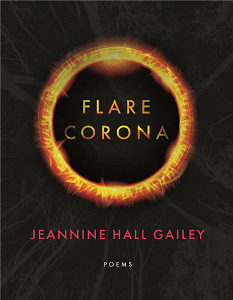
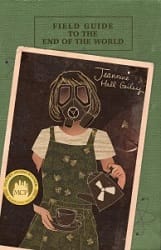
 Jeannine Hall Gailey served as the second Poet Laureate of Redmond, Washington and the author of Becoming the Villainess, She Returns to the Floating World, Unexplained Fevers, The Robot Scientist’s Daughter, and winner of the Moon City Press Book Prize and SFPA’s Elgin Award, Field Guide to the End of the World. Her latest, Flare, Corona from BOA Editions, was a finalist for the Washington State Book Award. She’s also the author of PR for Poets, a Guidebook to Publicity and Marketing. Her work has been featured on NPR’s The Writer’s Almanac, Verse Daily and The Year’s Best Fantasy and Horror. Her poems have appeared in The American Poetry Review, Poetry, and JAMA.