
Why Write Poems in Series?
I’d like to talk about the benefits (and problems) of writing poetry in series. I’ve talked to two other poets (Oliver de la Paz and Joannie Stangeland) about my struggle in trying to teach a lecture on this topic because of the lack of available reading material on the subject. If you know of any essays on writing poetry in series, will you point me to them? If you have any thoughts on the topic, please feel free to post them in the comments!
I write poems in series and I write “one-off” poems that have nothing to do with other poems. I usually get obsessed with an idea (say, female comic book superheroes or characters in fairy tales coming to dark ends, or fox-wives or Oak Ridge’s nuclear pollution or something) for a year and then I write poem after poem around that general idea. This has to do with my reading practices as well; the years that I wrote Becoming the Villainess, I was reading a lot of feminist criticism, Ovid, and Jungian theory about folk tales; while writing my current manuscript I’m reading a lot of non-fiction about the Manhattan Project. There are different speakers and different scenes in these poems, different tones and forms, but the subject stays generally the same. That’s not something I do on purpose; it just works out that way.
The reason I talk in my class about writing in series is because I think it helps students start thinking about larger projects: chapbooks, or full-length manuscripts, which generally are easier to shape if they have a controlling overarching theme or idea. It’s like building your final show for Project Runway; it really helps if the clothes in the show hold together in some way (the same kind of pleating, a Gothic sensibility) but aren’t exactly alike. If you get to the point where you, as a poet, want to put together a collection, and all you have are “one-offs” – a blue feathered jumpsuit, a crisp sailor outfit and a ruffled silk trench – then it’s harder to figure out the structure of the whole and harder to communicate to your audience what you are, as an artist, trying to say. (I watched Project Runway for the first time this summer, so forgive the clumsy analogies.)
But there are downsides to writing in series – what if the poems don’t stand alone, what if necessary information from one poem is missing in another or the interplay between poems is lost when poems are published independently?
Do you write poems in series? Why or why not?
New poem up at Cabinet Des Fees:
http://cabinet-des-fees.com/index.php/2009/09/01/rapunzel-considers-the-desert/
Check it out!
Sorry I haven’t been blogging much – been sick again. Hope to be better soon – and brainier…I guess not being able to eat for five days does something bad to my cognitive processes.
Can’t wait to be well. And then Napa!
Oh, ow! I cracked a tooth/filling, and now have to go tomorrow to get the broken part of the tooth removed and the filling and have it re-filled, then go back and get a crown – my first one! I’m so nervous b/c I’m allergic to novocaine-type medicines and can’t take codeine, so I’m going to try this with tylenol and NO2 (as per the dentist’s suggestion, who also offered IV sedation.) I thought IV sedation might be overkill, since I’ve done fillings with nothing besides tylenol before. Anyone have any advice?
Stupid toothache!
In other news, good reading: Miyazaki’s book of essays and interviews, Starting Point, reveals Miyazaki’s thoughts about religion, environmentalism, and female heroes, and includes notes on many of his films. Margaret Atwood’s book of interviews, Waltzing Again, which had some great quotes about teaching poetry and women editing magazines that I thought were very apropos, and she’s so funny and dry. The last book is Reading Real Japanese Fiction, which includes contemporary Japanese stories in both English and a combination of different Japanese alphabets, and a CD with a narrator reading the stories in Japanese. Tough stuff – but the fiction is so great!
Genre, genre, genre
I love it when people make weird, unsupportable broad statements – like “contemporary women’s poetry isn’t interesting” (Insert eye-roll by me here – honey, you’re just not reading the right books) or “Genre writing can’t be good.“
Elisa does a great job of talking about genre writing here and I had to pop up and add my two cents.
Genre doesn’t matter. Surprising and interesting writing matters. And I would say, sadly, that tooooo many “realistic” literary fiction books are both uninteresting and not terribly well-written. Plot – dare I say such a dirty word – matters. Characters matter. You can have both. My friend Felicity thinks that “realistic” literary fiction may even be on its way out. I mean, you’ve read “The Amazing Adventures of Kavalier and Clay” and “The Brief and Wondrous Life of Oscar Wao,” right? They’re just edging their way out of the mainstream bit by little bits, and critics are all up there saying “this is great!” Is it any wonder, in our post-apocalyptic-seeming lives, that we want more, well…wonder?
I think I’ve said here before that my favorite fiction writers by and large could be considered “genre” writers. Here’s a list of some of my favorite books of fiction:
Margaret Atwood’s Blind Assassin, Kelly Link’s Stranger Things Happen, Haruki Murakami’s After the Quake and After Dark, Osamu Dazai’s Blue Bamboo, AS Byatt’s Little Black Book of Stories…all of them have something a little genre, a little cross-the-line-into-an-alternate-reality, a little speculative aspect. (AS Byatt’s Possession crosses the line into the Victorian romance/mystery genre, I think.) Some of this has to do with what I read and loved growing up – a lot of Madeleine L’Engle, a lot of Andrew Lang’s fairy books and large tomes of Greek mythology. I liked to program computers – I read some of Asimov’s short stories (my Dad’s books, of course) when I was seven or eight – and I liked to play video games. I may not have been the poster child for “average girl,” perhaps, but I think there were enough girls liked me who would have been more interested in comic books if they’d had any useful female characters, who tried to find in books stories of remarkable girls doing remarkable things. In fact, I think I’m still trying to find books like that.
It occurs to me as I write that this may be why my books of poetry get passed up by mainstream publishers and contests – well, they have references to Japanese anime, obscure folk tales, comic books and computer programming – my poetry gets all marked up with “speculative” and “genre” fingertips.
- At August 14, 2009
- By Jeannine Gailey
- In LA Readings, Stories Books
 1
1
Stories Books
1716 W Sunset Blvd
LA
8 PM
Poetry Reading with Rachelle Cruz, Jeannine Hall Gailey, Sarah Maclay and Katayoon Zandvakil
Today I got my copy of Poet’s Market 2010 in the mail. I have been faithfully reading this reference book since I was 18 or 19 years old. I remember sneaking down to the basement of my parent’s house and reading and re-reading the descriptions of literary magazines, enjoying the snippets of poetry in each one. I remember sending poems to a mag called “Blue Unicorn” because I was 19 and liked the name. I remember carefully searching the beginning essays and FAQs for secrets, for meaning, that would help me become a “real writer.” I scrawled notes in the margin in blue pencil. I dogeared pages of journals I liked. It helped reveal to me, in conservative, non-bookstore-loving Cincinnati, a real literary world that I knew nothing about.
This is why I feel strangely happy to have written two of those beginning essays for this year’s Poet’s Market. Maybe a 19-year-old who has never heard of “speculative poetry,” who doesn’t know yet what a “poetry chapbook” is, will get inspired. I know you can look up most lit mags on the web now (and this year’s version includes a year’s subscription to online poetry resources as well.) But I still love having the physical object of The Poet’s Market around.
Yesterday I went through National University’s five-hour new faculty orientation. Five hours in highly uncomfortable chairs. It made me thankful my classes have all been online and not in classrooms with flickering fluorescent lights and tiny desks. Again, though I spent lots of time on university campuses since my Dad’s a professor, it still feels weird to be there as a faculty person, not a student.
I’m going to go up to LA tomorrow to a little bookstore called Stories Books to read with two other poets. Hope to see you there!
I’ve promised several blurbs on manuscripts, and trying to write them proves increasingly difficult. How you want to be accurate, give the reader a good idea of what the book is about, not to use too many “advertising” phrases or anything cheesy…it’s challenging!
I’m gearing up for a reading in LA this Friday, at the Stories Books in what I think is downtown, with another writer or two. If you’re going to be in LA, I’d love to see you! This is probably one of my last readings in Southern California…
Still seeking affordable yet cute place to live in Napa Valley area. We are planning a trip up there to look at possible places to live. We’ll never be able to afford to buy a home there, even a condo, but I think it will be be a nice place to rent for a year or two. I miss bookstores, coffee shops, and not being the only non-blonde in a room…
I want to congratulate a friend and poet whose MS I’ve had the honor to work with, Jeff Walt, on winning the Gertrude Press chapbook contest for Vows. Jeff is an amazing poet and I’ve been lucky to read his work on and off for the past few years and I keep telling him, “It’s fantastic!” You have to buy his chapbook to see what I mean.
In odd news, see this camp for women who want to become “Alias”-style spies. The knife-fighting class sounds interesting; the “sexy dance” class just sounds funny.
There’s been a lot of “dust up” in the blogging world lately. Most of it just makes me feel depressed. There’s nothing worse than thinking about the financial and political aspects of MFAs. I hate worrying about money and prestige and fame and the poetry point system. I’m still a naive idealist in that respect, I’m afraid.
In good-things-coming-from bad, though, I’m excited that Cate Marvin and Erin Belieu, motivated by frustration towards opportunties for women in the literary community (cough, AWP, cough) are starting their own women’s lit conference.
I think we’re leaning towards Napa as our next place of living. Bonus? It’s 14 percent cheaper than Carlsbad, according to some cost-of-living calculators.
In the throes of grading a bunch of student chapbooks and book reviews for my “advanced” class. See? We do make them work hard for their grades! Then I will be done with grading for a month or two. And maybe catch up on those book reviews I’m supposed to write…
A note of variable importance: Last night, on So You Think You Can Dance, they did a “Superhero” dance with the last three girl dancers. With costumes. Hilarious good times. (Of course, I’m voting for Jeanine. Name solidarity.)
Also in the throes of trying to decide where to move next. It’s preventing me from sending out poems via snail mail because I don’t know the address I’ll have in two months. I think we won’t stay here, but I’m not sure where to try – Colorado? Napa? Sedona? Colorado is cheapest, but those cold winters scare me. I’m worried Napa (and environs) is too wet (allergic to mold) and expensive (though it’s beautiful.) I’m not great with heat/sun and that makes me nervous about moving to Arizona. See what happens when you really have the freedom to live anywhere? Nothing but angst! If I moved purely based on poetry and culture, it would have to be the north-of-San Fran area, though both Boulder and Sedona do boast some arts-and-culture-y type stuff. Maybe I should throw darts at a map, or flip some coins. I’d like to find someplace we could stay for a few years. Moving all the time can be stressful and costly.
I will miss San Diego’s weather, beaches, and their terrific Zoo and Wildlife Park. (MEERKATS!) And all the nice poets I met! That’s the good thing about moving – you do meet people you don’t expect, and they’re often wonderful.
Back from my stay in beautiful North Berkeley! The visit really reminded me how much I like northern California, mostly for the things we lack here in San Diego – the trees, the bookstores, the milder temperatures, the cool little restaurants. If I could only afford to live there! If anyone in Napa County or environs would like to rent to a nice poet (and her husband and cat) for a year, please let me know…
I missed Comic Con, but I did see Hayao Miyazaki! We got to see an early screening of his latest movie, Ponyo by the Sea/Ponyo on a Cliff (whatever they’re calling it in English)and it’s a beautiful but strange film. It seems a more eccentric, more upbeat version of Hans Christian Anderson’s “A Little Mermaid” with an environmental twist. (He said in an interview he’s always hated the ending of the original tale, and I have to agree.) It had a lot more humor in it than most Miyazaki films; Tina Fey in the English dub plays the hilarious, feisty young mother who doesn’t really resemble any character Miyazaki’s done before. The drawing is purposefully childlike, different that the ethereal, elegant drawings in Howl’s Moving Castle. The two main characters are five years old, so a lot of the movie is geared towards a very young person’s aesthetic; the themes are similar to those in Princess Mononoke. I enjoyed watching it with children in the audience; their delighted laughter behind me reminded me that they were the real audience for this film.
Hayao Miyazaki, with a translator and in a conversation led by Roland Kelts (who wrote Japanamerica) gave a wonderful hour-and-a-half talk in which he discussed advice for young animators (“Draw what you see in life; then give a more experienced artist your drawing and ask for a tough critique”) and his frequent roles for strong women (“There are so many strong women now, I might have to start making films about little boys!”) as well as his views about apocalypse (generally, he’s pro-apocalypse)and how natural disasters can bring people together. He laughed a lot, expertly evaded questions like “which character in your films do you most resemble,” and was generally really fun to watch.
Berkeley itself is a beautiful campus and the weather was lovely and cool.
The Downtownster, an LA-area blog, also featured my poem, “Female Comic Book Superheroes,” on their blog today!
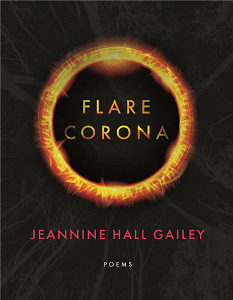
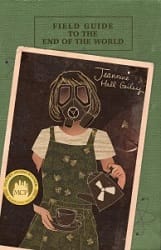
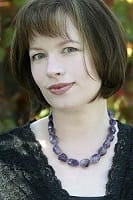 Jeannine Hall Gailey served as the second Poet Laureate of Redmond, Washington and the author of Becoming the Villainess, She Returns to the Floating World, Unexplained Fevers, The Robot Scientist’s Daughter, and winner of the Moon City Press Book Prize and SFPA’s Elgin Award, Field Guide to the End of the World. Her latest, Flare, Corona from BOA Editions, was a finalist for the Washington State Book Award. She’s also the author of PR for Poets, a Guidebook to Publicity and Marketing. Her work has been featured on NPR’s The Writer’s Almanac, Verse Daily and The Year’s Best Fantasy and Horror. Her poems have appeared in The American Poetry Review, Poetry, and JAMA.