Where I’ll be at PNWA Thursday, Friday, Saturday and poems up at Kentucky Review and Villainess Press
- At July 15, 2015
- By Jeannine Gailey
- In Blog
 0
0

Thanks to The Kentucky Review and Villainess Press’ The Plot for posting poems of mine this week:
Kentucky Review: Cassandra, Late to the Party
Villainess Press’ The Plot: “Girl on Fire” and “Girls on Fire”
Also, thanks to Poets Online for this discussion of haibun that mentions a haibun from my book She Returns to the Floating World.
So, starting tomorrow, I’ll be all over the place at this weekend’s PNWA Conference at The Hilton Airport Conference Center:
Thursday: Reading at the Writer’s Cafe at the Bards and Beverages reading 9 PM (post the keynote) with Kelly Davio, Bill Carty, and Carolyne Wright.
Friday: At the autograph party starting at 8:30.
Saturday: My talk on “PR for Poets” starts at 2 PM. (Also catch Kelly Davio’s talk, “What can Prose Writers Learn from Poets” at 10 AM)
Chiho Aoshima Rebirth of the World Show, Anniversaries and the Importance of Taking a Break
- At July 12, 2015
- By Jeannine Gailey
- In Blog
- 1
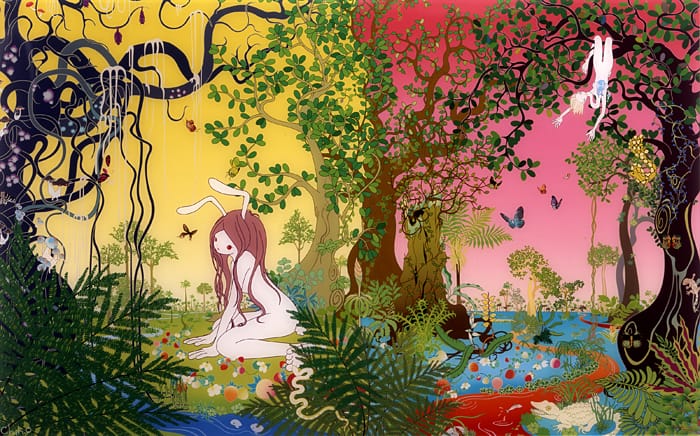
If you were thinking about seeing Seattle Asian Art Museum’s Chiho Aoshima show, go see it. It was truly fabulous. The real knockout is a huge screen projecting an animation of a long cityscape, seascape, and island scape. On one side, a cityscape grows and changes, and pollutes the air, alien spaceships abduct cars and trucks from the roads—then a tsunami comes and destroys everything. On the other, an island dominated by a quiet volcano changes when it erupts, spilling angry red sky across the screen. These continuous repetitions and rebuildings, are apocalyptic, but the post-destruction scene ends with a giant rainbow that spans the entire screen, complete with butterflies and dragonflies zipping across. Did I mention the buildings in the cityscape all have girls’ faces, and occasionally sprout feet and walk around? Here’s “Strawberry Fields,” a painting from the exhibition, a slightly blurry depiction of the animated volcano, and Glenn and I in front of the Black Sun sculpture outside the museum. Down below you’ll see that the museum walls were also illustrated with details from Chiho Aoshima’s work, as opposed to the usual white blank walls, so it was more of a continual experience. If every museum exhibit was like this, more people would go to museums. People sat entranced before the giant screen watching the animation series over and over again.

 These last few days have been all about stepping away from the laptop and smart phone and going out and interacting with the world. On our anniversary we took a day trip where we visited a lavender farm, had cocktails outdoors with live music playing, ate a delicious duck dinner with fig and cherry sauce, visited a spa with an outdoor hot tub and a bookstore – basically all my favorite things! Then yesterday we got together with my little brother to go downtown and visit the Chiho Aoshima exhibit (Mike was very valuable in pointing out things like Shinto and Buddhist symbols embedded in Chiho’s work, since he’s been to Japan many times and minored in Japanese) and celebrated Glenn’s birthday a day early. It reminded me how much better life seems when you’re not sitting in front of a computer all day, our need to unplug and venture out. I think especially for writers, it’s easy to get trapped in your own head, especially when you’re not in an especially good place, and those are the times to go out and walk in the rain (yay, rain yesterday!), eat cupcakes, and gawk at art and nature and all the things that make you happy.


Poems in Redactions, Clementine Poetry Journal, and The Great Gatsby Anthology, plus a 21-year anniversary!
- At July 08, 2015
- By Jeannine Gailey
- In Blog
- 0

Welcome to summertime in Seattle. The lavender is blooming to beat the band. I had Gerbera daisies bloom in my garden! A rare occurrence in the normally gloomy Northwest.
It’s about time to celebrate my 21-year wedding anniversary tomorrow. We are sneaking away for a single night (because the hotel rooms all around Seattle are booked and/or crazy expensive summer weekends) but we hope to make a duck-in-fresh-cherry sauce dinner and maybe some home-made blueberry-cherry ice cream to go with it. (We are inundated with blueberries and cherries right now!) It’s also about to be my husband’s birthday, and we will have to figure out some way to celebrate that too! We usually try to go downtown, but the heat has been making us less outdoor-adventurous than usual, I fear. I’m hoping we get some rain and a break in the heat soon.
I also wanted to bring some attention to a couple of poem publications, in the new issues of Redactions (“Introduction to Dream Interpretation”,) The Clementine Poetry Journal(“Introduction to Husbandry,”) and the Great Gatsby Anthology (“Daisy, at 40.”) I recommend going out and reading them all, of course!

FreezeRay, Rejections, and the upcoming PNWA Conference
- At July 06, 2015
- By Jeannine Gailey
- In Blog
- 0
First of all, thanks to FreezeRay for including my poem “Introduction to Ruby Slippers, Hot Air Balloons” in their new issue! It’s a really fun issue, so check it out!
In the last three days, starting on the 4th of July, I’ve received three rejections. They were all from good journals who had held onto the poems for nine months plus. I understand it taking that long, but a little personal note or SOMETHING would be nice after all that time. Right? Sigh. Also, three rejections means I need to find three more places to send poems out, something not so easy in the July/August time frame.
On the plus side, something new to look forward to – my first attendance of local writer’s PNWA Conference. I’ll be reading with friends Kelly Davio and Carolyne Wright Thursday night the 16th at 9 PM at the Writer’s Cafe, an event that’s open to the public even if you’re not at the conference, so that will be fun! Then I’m doing a talk on Saturday on “PR for Poets” at 2 PM.
I’ve never been before, so I’m not sure what to expect! I hear there are exotic things such as “agents” that you meet. I hope we poets won’t be out of our element! I know the organizers have worked to build poetry back into the schedule this year, so I’m looking forward to it!
Happy Fourth Weekend, heat-based insomnia, and a few appearances by The Robot Scientist’s Daughter
- At July 03, 2015
- By Jeannine Gailey
- In Blog
- 4
 Happy 4th of July Weekend, everyone! Stay safe! I know here in Seattle, it has been in the searing nineties and dry as a bone, so hopefully people leave the fireworks to the professionals and prevent unnecessary fires!
After a lack of sleep last night – heat-based insomnia, is that a thing? full moon fever? – I didn’t get to sleep til 7 AM, and I was woken up by my alarm at 8:05. Yay! Things have been a little stressful with family health stuff, the house selling/buying stress, and work, so it may have to do with that. I guess I am in need of a summer break!
In good news though, I came home yesterday to some mail appearances of The Robot Scientist’s Daughter – get your own Americana-history-themed robot poems here now! – one in the Pacific University Magazine, and the other in the form of an ad in Poets & Writers.
Here’s Pacific’s little write-up – thanks, Alma mater!

And here’s the Mayapple Press ad in this month’s Poets & Writers:

Summer Postcards and Podcasts
- At June 30, 2015
- By Jeannine Gailey
- In Blog
- 0
Thanks to J.P. Dancing Bear for interviewing me on his NoCal radio show, “Out of Our Minds.” The podcast is now available here! I read some poems from The Robot Scientist’s Daughter, we get into a digression about Bladerunner, and I talk a little about my experience with California libraries.
And thanks to Kelli Russell Agodon for making a little summer postcard of one of my poems from Unexplained Fevers, “Sleeping Beauty Loves the Needle.” If you like it, you can order the book from me here or from Amazon.
It has been too hot to be very productive, like, nineties every day, no chance of rain hot. We’ll be crispy by July 4 at this rate! Doesn’t Seattle know I moved here for the cloudy cool June days? But I did get one review written, a new poem written, and I’m working on a handout for the PNWA conference coming up! It’s just been a tough June personally, and I’m hoping July will be a little kinder. On the plus side, we’ve seen a ton of wildlife lately: deer, a beaver (!) chewing leaves, little grebe-lings taking diving lessons from their mom, a plethora of the usual herons, eagles, ducklings, and baby bunnies. I’ll leave you with this recent picture of dusk on Mt. Rainier…

Crazy June, Poets in the Park Recap, Seattle Becoming California
- At June 23, 2015
- By Jeannine Gailey
- In Blog
- 0
Happy summer, everyone! Readers, I apologize for not posting. Since last posting, I’ve 1. been in the hospital 2. had a close family member in the hospital 3. shown my house (even before listing it for sale) and 4. just been generally having a crazy June, and not the good kind of crazy, with lots of parties, the other kind of crazy, with stress and worries of all sorts.
Anyway, I thought I’d post a quick recap of Saturday’s Poets in the Park festival in Redmond, with pictures! It was a beautiful sunny day, I got to see lots of friends read and catch up with friends I haven’t seen in a while, and got to do a reading myself with some fun folks from Jack Straw I hadn’t had a chance to meet before, so that was fun. Even sold some books! A good time was had by all, I think.
-

- Natasha Moni and Ariel, Kelly Davio and myself

-
- Allen Braden, Kelli Agodon, Annette Spaulding-Convy, and me

In other news, we didn’t sell our house yet, and we are still on the lookout for a new one-story place ourselves, so the real estate gladiator wars continue. And as long as I (and my immediate family members) can stay out of the hospital, I promise I will be thankful. I am trying to get back into the swing of things, writing, editing, judging a poetry contest and writing reviews.
We are looking at an upcoming week of 90+ degree weather – here, in Seattle. What does this place think it is with its hot summers and real estate monstrosities, California? I’ll keep you posted, but if we start having wildfires and earthquakes…
Poets in the Park, Summer Poetry Ideas, and the Seattle Real Estate Roller Derby
- At June 16, 2015
- By Jeannine Gailey
- In Blog
- 2
First of all, this weekend on Saturday June 20th is the Poets in the Park, a big festival from 11 AM to 6 PM in Redmond’s Anderson Park. I will be reading at 2 PM with the Jack Straw poets, but lots of my friends will be reading as well, and there’s a fun poetry mini-bookfair as well. The weather’s supposed to be beautiful. I hope we see you there!
I’ve been a bit out of it (I think I caught someone’s stomach flu bug at my last reading and watched the very messy and depressing Game of Thrones finale with the stomach flu – something I don’t recommend) and so I’ve missed out on a few days of having enough mental power to read, write, and send out work. The summer, with its long days, always seems like such a nice time to catch up on “fun” reading we’ve been meaning to do, plus I have a few reviews that I’m behind on, plus I really do miss writing when I don’t do it for a little bit!
The good thing about summer is it forces us to go out and look at new literary magazines, research new presses, and best of all, write new poems! Getting into the summer swing now that I’m getting better from first the lung infection and then the stomach bug is going to be an uphill climb, but I’m ready! This is a great resource for presses and lit mags reading during June and July: http://entropymag.org/where-to-submit-june-july/
We’re also getting ready to buy and sell a house, which will require a bit more effort and energy into the mundane (how much money is in our bank accounts? How clean are our kitchen countertops? how much work does that 1968 roof really need?) than usual. The real estate market in Seattle right now – well, imagine a really mean roller derby where everyone is prepared to play rougher than you AND is twice your size, and that’s how it feels bidding on a house in the Seattle area right now. We’ve missed out twice already, and today’s our third bid. We’re crossing our fingers. If any of you guys have advice for me, go for it!
UPDATED: We lost the house, not to someone who offered more money, but to someone who waived all contingencies. People are so crazy right now! No financing contingency, no inspection contingency. This is no way to run the real estate business. Boo.
A Poem up at Verse Daily today, a Reading Tonight, and How To Up Your Writer’s Game This Summer
- At June 10, 2015
- By Jeannine Gailey
- In Blog
- 1
Woke up to a nice surprise – a poem from The Robot Scientist’s Daughter, “Advice from The Robot Scientist’s Daughter” up on Verse Daily today. Thanks, Verse Daily!
Also, if you’re out and about today, consider stopping by Parkplace Books in Kirkland tonight about 7 PM, because I’ll be reading from the new book there, along with Keith Moul. There’s also an open mike. It’s usually a pretty small reading series, and the bookstore is very cute, so I’d love to see you there!
And, if you’re wondering how to up your writer’s game over the summer, I’ve got a post over at the Gailey and Davio Writers’ Services blog on five ways to do just that!
Upcoming Kirkland Reading, Waterfalls, and More
- At June 08, 2015
- By Jeannine Gailey
- In Blog
- 0
Wednesday night in Kirkland, Washington, I’ll be reading with Keith Moul at the charming Parkplace Books at 7 PM. There’s an open mike as well. I’d love to see some of my eastside friends there since it’s my first East side reading for The Robot Scientist’s Daughter!
Yesterday it was nearly 90 degrees – crazy hot – so we decided to head north to see the waterfalls at Snoqualmie Falls and Ollalie State Park, and drive around Sammamish Lake and Issaquah, as it has really built up since we lived there in 2000. It was lovely to be outside after a long-enforced rest with a lung infection. This is Glenn and I in the forest at Ollalie State Park:

Then me with the little waterfall there at Ollalie, and then the big Snoqualmie Falls with a bit of the Salish Lodge in the background.


Anyway, a little time in the woods with waterfalls on a hot day is always a good idea. Hard to be down around giant trees and rainbow-misted falls, right?
Next soul-helping outing, Seattle’s Asian Art Museum for the Chiho Aoshima exhibit – maybe Thursday? Remember to do something good for your soul this week! It helps you write, it helps you be thankful, and it’s probably good for your immune system, too, right?
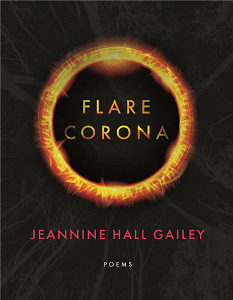
 Jeannine Hall Gailey served as the second Poet Laureate of Redmond, Washington and the author of Becoming the Villainess, She Returns to the Floating World, Unexplained Fevers, The Robot Scientist’s Daughter, and winner of the Moon City Press Book Prize and SFPA’s Elgin Award, Field Guide to the End of the World. Her latest, Flare, Corona from BOA Editions, was a finalist for the Washington State Book Award. She’s also the author of PR for Poets, a Guidebook to Publicity and Marketing. Her work has been featured on NPR’s The Writer’s Almanac, Verse Daily and The Year’s Best Fantasy and Horror. Her poems have appeared in The American Poetry Review, Poetry, and JAMA.