Can a Writer Use a Career and Creativity Coach?
- At June 04, 2015
- By Jeannine Gailey
- In Blog
 0
0

Sorry I’ve been missing, I’ve been pretty sick – like, a partially-collapsed lung, a sinus/lung infection that required daily inhalers, steroids, and antibiotics sick, narrowly escaping being admitted to the hospital sick – but I think I’m on the road to recovery finally, after a couple of weeks. Whew!!
I did something interesting with a little of this downtime – I signed up for a creativity coaching session with Andrea Clark (andrea.clark@aya.yale.edu), a creativity coach working towards her coaching certification, with a Master’s Degree in Counseling and fifteen years experience as a professional writer, so she seemed ideal. She was recommended by another poet I trust, so I was excited about the opportunity.
Then I thought: when could a writer use a coach?
1. Right after graduating from your MA, MFA, or Phd program, and want to get a handle on living a “real writer’s life” and how to approach the job market. (In fact, a career coaching session would be a great add on for so many graduating from MFA programs, don’t you think, to help them with that “what do I do next” feeling?)
2. Writers who feel “stuck” for whatever reason.
3. Writers who are at any kind of changing point – changing directions in what they write, how they write, or trying to figure out where to go next.
I fall into the third category, I think. I was really interested at first in writing down what I wanted to get out of the session – this made me realize what I felt frustrated with in my writing career/life right now, and that I’ve felt a little confused about where I’m heading for a while. It seemed odd to me that I felt so much ennui about writing right after releasing a book, but I was also thinking that maybe I’ve achieved a lot of the goals I had as a younger writer, and now need to shape some new ones. I also had to let go of some earlier goals (like a full-time, tenure track teaching job, which may never happen due to the changes in the university system) and kind of mourn that loss a little bit.
When I talked to Andrea, she asked me lots of questions (we did a Google hangout,) did some mind-body exercises, she reflected back to me my own confusion, and made some good specific suggestions about ways to look at where I am and what I can do to bring joy and purpose back to what I do.
One of her suggestions was to feel all right being in a “still” point, another was a suggestion that I am afraid of boredom and uncomfortable when I don’t have a very clear goal-reward system set up (true!) and another was thinking about a way to get more mental, emotional, and spiritual stimulation – that is, things that I actually enjoy and make me feel alive. Huh. I’ve been doing a lot of the things that I used to feel engaged with and enjoyed – things that have worked for me in the past – but I’m not sure that’s the case now, so I’m sort of looking at my priorities and values and reassessing what I actually want to be doing. Another interesting realization is that though my brain is anxious that I’m not doing more, my body and heart felt fairly peaceful about the downtime. This probably means I worry/have anxiety when I’m not super busy, but sometimes everyone needs downtime, in-between space, stillness, etc. I value money and being rewarded financially for my work, but not enough to go back to tech writing, even part-time, for instance. I liked teaching, but not enough to do it at an adjunct’s salary. I enjoyed engaging with the community as Redmond’s Poet Laureate, but the job took a lot of energy out of me as well. So getting a little clarity about what I really want to do next wasn’t as simple as I thought. Something rewarding financially, engaged with a local community, and mentally and emotionally stimulating, apparently (does such a thing exist?)
Anyway, I would recommend this coaching exercise to anyone who feels they’re in a bit of an in-between space, unsure of what to do or where to go next, who feels like they’ve lost a little bit of their enthusiasm for what they’re doing. Sometimes it’s really helpful to sit down with someone else to try to figure out your goals, worries, and values.
The Seattle Times and The San Francisco Book Review The Robot Scientist’s Daughter
- At May 26, 2015
- By Jeannine Gailey
- In Blog
- 0
Can’t feel too down today – woke up to these!
A mention of The Robot Scientist’s Daughter in my big local paper, The Seattle Times! (PS Seattle folks – head to Open Books in Wallingford to get a copy of my book! Or I can send you a signed copy!)
And a very nice review of The Robot Scientist’s Daughter in The San Francisco Book Review. They say that “The Robot Scientist’s Daughter is a treasure trove of insight and personal reflection.”
Thank you, Seattle Times and San Francisco Book Review! Plus, I wrote six poems in the last two days. So, it may be that feeling sick and discouraged (see my previous post) makes me write more poetry? Weird, right?
Speaking of discouraged, if you got a rejection letter from Breadloaf this week, don’t feel bad – read this blog post by Kelly Davio! She will make you feel better and give you a plan to move ahead!
Success, Jealousy, Submission, and How Hard Are You Willing to Work
- At May 24, 2015
- By Jeannine Gailey
- In Blog
- 8
Well, I’ve been in a bit of a funk lately, I’m not ashamed to admit it. Sick cat, then putting her down, and a two week bout with some mystery virus that’s left me tired and worn out. I haven’t been writing, sending out, or promoting my new book enough. Enough for me to be happy with? Enough to be effective? But what does enough look like?
A little post on Medium this morning by my friend Kelli reminded me of this. This post reminded me that part of success really is, no matter what, tied to how hard you’re willing (and able) to work. You can have a ton of talent, wonderful writing, but if you don’t get it out of your head, out of your hard drive, out your door and into the world, guess what? No one will know. How women sabotage themselves by not thinking their work is good enough to send out, or, if they’re anything like me, they just think sending their work back to an editor who asks for more is “rude, because I should wait at least six months before submitting again.” Because that is what is in my head. A lot of rules that no one ever told me, that I just absorbed at some point from the world around me. I think of myself as a fairly aggressive submitter – I probably average about 20 subs at least per quarter. But maybe not aggressive enough?
A lot of the writing game is about numbers. The more you send out, most of the time, not always, but most of the time, the more you will get published. The more you write, the more you have to send out. So spending your time writing, polishing, and sending out your work will stop you from sabotaging your self. Spending your time feeling sad and listening to sad music and wishing you had things you don’t, well, that’s not so productive.
Sure, there are dream stories: the writers with 200K book deals right out of the MFA gates at 24. Poets & Writers always seems to have a lot of those quicky miracle success stories, though when I meet the poets and writers I admire in real life, they more often tell me stories of years of struggle, pain, impatience, rejection. Writers may seem to win awards and fellowships with ease; sometimes you will not feel good about it. Here’s a post I happened upon today, and I encourage you to read not just the letter and answer, but the comments, which tease out some subtleties that the letter and response, both being a little simplistic, do not: Dear Sugar on Writer Jealousy. Because there are some truths in the letter, the response, and the comments. Seeing people get the things you want and work for sometimes hurts. Sometimes that’s because we’re entitled, maybe, as Sugar suggests. Sometimes it’s because we feel insecure, as some of the commenters suggest. Do those feelings do us any good? Maybe, if it motivates us. Maybe, if it keeps us writing and sending out work.
I was thinking about the difference between my thirties, when I was more optimistic and energetic, maybe more insecure too, and now, in my forties, that I feel less insecure, but I’m getting worried that I’ve spent an awful lot of hours and emotional energy on something I’m never really going to get rewarded for. I genuinely feel happy when good things happen to my friends, even acquaintances, because I think: those people genuinely deserve it. They’ve worked hard, they’re great writers, and I think, yay, the system works! When it doesn’t happen for me, but it happens for them, at least it happened to someone good, someone who deserved it.
These days, and maybe it’s not just physical, I feel tired. Tired of sending things out to rejection or worse, no response at all. (It happens.) Tired of putting out my best efforts, to feel like they fall into a vacuum. I mean, for poets, this is normal, right? Most of the time, poets not only don’t win at life (historically, there’s a lot of consumption, alcoholism, and suicide in this line of work), they don’t get paid, they don’t get recognition, no one notices what they do. I’ve talked before about average book sales for poets. What is the real bar for this thing I think of as “poetry success?” What’s the difference between optimism and false hope? When you work as hard as you can, and the results aren’t what you’ve dreamed of, what then? I was just reading the comments of several women on Facebook, older than me, who have become so discouraged they haven’t stopped writing, but they’ve stopped even being interested in sending out work ever again. I hope that doesn’t happen to me. I am willing to work, but I worry that the discouragement gets to you over time, that the constant doubt, disappointment, and rejection somehow rewire our brains to think “I will never be successful at writing, so I give up.” I sometimes think, if I don’t get a “sign from the universe,” I’m going to do something else with my time and energy. But then I write another poem.
Rest in Peace Little Blonde Cat
- At May 21, 2015
- By Jeannine Gailey
- In Blog
- 6
Our little blonde cat (variously named Sugar Cookie, Bastett, and, much more frequently, just called “blonde cat”) has finally passed away, after 20 years – she’s been around nearly the whole length of our almost-21-year marriage, surviving three other cats and fifteen moves,, making her a more constant companion than most. She was down from her regular 9 pound weight to just five pounds (for comparison, our other cat is seventeen pounds of fluff.) She had been unable to keep down food, had stopped meowing, stopped being interested in treats or getting combed or petted, and had started falling a lot over the last few months, also getting progressively more blind and deaf. I wondered if I had done the right thing in trying to keep her around as long as I did. This morning at the vet she didn’t squirm or meow in protest, she didn’t cry in the carrier on the way to the vet. She was very peaceful at the end. But it was still sad. (This vet had recommended we have her put down two years ago, when she had perfect blood work but couldn’t seem to keep down food and drank water all the time, and it was conjectured that she had a blockage somewhere. Glenn squished all her food up (and we switched her food to easy-to-swallow food, rotating canned turkey and tuna for humans, even) for her every day for two years so she could swallow it.)


Pet deaths are a reminder that the things we love don’t last forever. I was thinking yesterday, I grew up on a farm and saw death all the time, but it didn’t insure that I don’t feel sad every time I lose a little animal friend. My husband and I both shed a few tears this morning, played sad songs, and cuddled our seven-year old remaining kitty, Shakespeare, extra. We will sprinkle her ashes on our little garden plot.
I usually give people a hard time about cat and dog poems, which tend towards the sentimental, but today, here’s a link to three cat poems by one of my favorite (and mostly unsentimental, except, it seems, for cats) poets, Margaret Atwood:
https://marg09.wordpress.com/2011/01/16/three-poems-about-cats/
Changing Attitudes, Mid-Life Crises for Poets, and Three Months Into a Book Release
- At May 17, 2015
- By Jeannine Gailey
- In Blog
- 1
You know, the last week I’ve been pretty sick, the weather has been cold and rainy, and I received no particular good news. But I suddenly became aware of things that I should be happy about.
Nine little ducklings hatched in the pond across from my townhouse. Three months into the launch of The Robot Scientist’s Daughter, I think I’ve been driving so hard – setting up readings, sending out review copies and PR letters, that I wasn’t thinking about the good things – that I’m lucky to have a fourth book out, that I’m lucky to have Amazon reviews and regular reviews out this soon after a poetry book coming out (it can take up to six months, sometimes, to get even one review – and it’s happened to me just like that with previous books, so I know.)
Instead of looking at the news – which has been sort of dismal for the entirety of 2015 – I started looking at other things – little kindnesses, people with goodwill, the flowers and tiny baby bunnies. I was trapped inside being too sick to go outside, and sort of brain-mushy from fevers and cold medicine, so I watched Mystery Science 3000 episodes from the library. I watched movies, listened to books on CD and read books just for fun.
I thought about my earliest ambitions as a poet – and haven’t I already fulfilled some of those hopes? I mean, no Pulitzer, no tenure-track teaching job, no NYC apartment cocktail parties, but the rest of it? I mean, if I think about, my writing life actually pretty good. I have great writing friends, a town to live in with frequent poetry readings and a bunch of book lovers, and lots of time to write and a spouse who loves my work and supports what I do. I’ve met and corresponded with poets I didn’t ever think I would even see in person. I’ve published four books. I think it’s so easy to get caught up with what we don’t have – the twenty-somethings with multiple prizes on their first books, the dudes with the tenure-track jobs ten years younger than me with no books – and the idea that by this or that age, we should have achieved something more than we have – I guess this whole midlife crisis thing, I’m 42 and where am I, what have I accomplished – but if I were talking to my younger self, she’d be thrilled to be where I am now. She would feel grateful. She wouldn’t be grousing about the stuff she didn’t have. She might not be excited about some of the physical limitations I’ve come up against, but then again, compared to where I’ve been in the last few years, I’m doing great – no wheelchair or cane, very few hospital visits in the last six months, etc. And how many people have been married 21 years (this July)? That’s something, too.
So I can’t find a house in my area in my budget – we did spend more than fifteen years as renters! Poets, unless they inherit or marry money, typically aren’t buying big mansions in expensive cities anyway, right? What did I expect?
So what am I saying? I had a sudden change in perspective that shifted my mood from fairly depressed to maybe slightly hopeful. I thought about some of my former poetry professors from my Master’s Degree days, maybe they were never media darlings, but they liked and were proud of the work they did, and that was enough for them. That may be the best attitude a poet can have. We don’t have to be media darlings, we don’t have to win the coolest prizes, we don’t have to live in beautifully decorated, perfect houses with water views. We can just enjoy the work we do every day, and that can be enough.
Beacon Bards Reading Report, New Review of The Robot Scientist’s Daughter, Repercussions of Real Estate
- At May 14, 2015
- By Jeannine Gailey
- In Blog
- 0
A little pic from the Beacon Bards reading last night with me, host Martha Silano, and fellow reader Nance Van Winckel. 
It was raining, traffic was terrible, but the tiny venue was packed! And my friend Natasha M. brought a birthday gluten-free cupcake, which perked me up after the 1.5 hour drive from Redmond to Beacon Hill. (Ugh, Seattle traffic!) Not that I should complain – Nance came all the way from Spokane!
This morning, of course, I woke up with a sore throat, 102 fever, and a bad cough. The home inspection a few days (which did not go well, by the way) may be the cause – one of the inspectors told us he’d been sick. But am I the only person who gets sick right after readings, or right before? Such a strange phenomenon. Is the universe telling me to become a poetry hermit??
I also woke up to a new review by Portland Book Review of The Robot Scientist’s Daughter. So that was nice. I have to say every review makes me feel happy. I know poetry doesn’t get that much media attention, so I really appreciate every little bit.
My house hunt is not going so well, sadly. Even half-a-million dollar houses getting multiple offers can have a ton of stuff wrong with them, which was the result of our pre-inspection – no foundation at all, and water underneath the house. Well, don’t pay for a pre-inspection if you don’t want to hear the results, I guess. I read the Seattle Bubble real estate blog, and the emotions (though not the spelling errors or the apparent buying capacity) of the letter-writer here ring true to me. It does feel like our town is only for the super-wealthy these days, which is a shame. Seattle has a long history as a working-class town, but I think the working class (and artists) are being pushed further and further out as cash buyers gobble up multiple houses at a time in an increasingly crazed market. Oh well. I guess this bodes well for selling our townhouse, anyway. Maybe we’ll take the money from this place and then find a single-level home somewhere out in the country that no one else wants (yet.)
Last Reading in Seattle, New Review for Robot Scientist’s Daughter, Manuscript Summer Camp
- At May 12, 2015
- By Jeannine Gailey
- In Blog
- 0
So, tomorrow is my last scheduled reading in Seattle for The Robot Scientist’s Daughter, so if you want to see me read from the new book, come out to The Station in Beacon Hill tomorrow night at 7 PM. Nance Van Winckel, my co-reader, is pretty awesome, and I’ve heard the series is a lot of fun. More info here.
I also am very happy to post a link to Alice Osborn’s new review of The Robot Scientist’s Daughter here. It’s a really gracious and intelligent review.
“The Robot Scientist’s Daughter is a love letter to the author’s father and profession (a relationship common in sci-fi movies), a complicated love letter to Gailey’s childhood home which no longer exists, and a protest against environmental and social indifference when it comes to the effects of nuclear power.”
In personal news, we had bad news at our pre-inspection, so we’re still looking for our next house, and getting financing is just as difficult, especially since we haven’t put our current house up for sale yet. It’s hard to remain hopeful in a crazy market like ours where there are multiple offers on even houses with the worst foundations (like the one we just wanted to offer on.) Everything is expensive, small, and kind of crappy. If my current townhouse didn’t have two stories, believe me, I would happily stay put. This putting houses up for sale/trying to find a new house thing is more stressful than I remembered. It makes me want to go back to renting!
This summer, Kelly Davio and I are running an online manuscript summer camp. I’ve run it once before and it was a really fun experience, for me and for the participants. You bring yourself and your manuscript, the other participants and Kelli and I bring the fun! It runs well with about six people, so sign up early if you want in!
Writing, Money, Balance: Spring Edition
- At May 10, 2015
- By Jeannine Gailey
- In Blog
- 0
Sorry I haven’t been around on the blog – in the last week, I took on a grant application, a manuscript editing project, construction – getting a large bathroom project done on the house, and, oh, yes, house hunting. Did I mention we’re also getting the house ready for sale? So it’s been a bit bonkers. My asthma’s been acting up – a sign of allergies, or a sign of stress? I threw out my shoulder doing something that should have been easy. These are physical signs of lack of balance – literal and metaphorical.
In the last ten days, we had several large unexpected expenses – over $1500 on the car, over $400 on the house project, plus trying to update the outside with freshly planted flowers for extra “curb appeal” when we go to list our place. Plus one of my student loan payments unexpectedly went up by $200. It all felt very humbling compared to what I make as a writer, editor, poet, etc. Right now I’m behind on unpaid work, like writing reviews and sending out my own poetry and, oh yes, writing poetry. This is all compounded by trying to bid on houses in the hot hot hot real estate market of the Seattle area, where houses are getting ten offers and going 100K over listing. You can see how this is good for selling, not so good for buying. Talk about money worries!
Applying for the $1500 grant – a time-consuming prospect – made me think, gosh, writers really do not get paid very much. I wish I was passionate about writing romance novels or crime thrillers or anything besides poetry, sometimes. (I’m a Taurus, very hard-headed when it comes to finances.)
My friend Kelli – who is a poet who remains at all times grounded and practical, wonderfully qualities – reminded me that we all have different goals when it comes to writing. I mentioned that my favorite thing about being a writer was when young people – high school and college students, especially – get to read my work. And that has happened, which makes me feel lucky, and I hope this new book gets taught as well. Poetry is more about goals besides money-making – making a difference, being remembered after you die, you know, that kind of thing.
What are your best prescriptions for poetry money worries? Let me know in the comments! Since it is a lovely May afternoon, I am going to go smell my little lilac which is in bloom, walk around on the waterfront in the sunshine, and do some other free but relaxing things. I’ve got a reading this week on Wednesday at The Station in Beacon Hill, which will be extra nice because I’m reading with a poet I admire but haven’t gotten to see read all that often, Nance Van Winckel. A local artist I like, Yumiko Kayukawa is having a show at Grace Gallery downtown this week as well, that I hope to get out to see. Seeing art and hanging out with poets seem like good counterpoints to unexpected bills, real estate and mortgage worries, and the like.
What We Give Power To, What We Remember: Rejections Versus Achievements
- At May 05, 2015
- By Jeannine Gailey
- In Blog
- 5
What We Give Power To, What We Remember: Rejections Versus Achievements
First of all, thank you to Every Day Poems for featuring a poem, “The Robot Scientist’s Daughter [villainess]” from The Robot Scientist’s Daughter on its site.
So, I don’t know about you, but I’ve been keeping my rejection slips in photo albums, shoe boxes, or tacked onto cork boards since I started writing and submitting poems – when I was nineteen.
The other day I happened upon a photo album with about ten years worth of rejections: finalist notices for book contests I never won, kindly remarked rejections from journals I’ve never gotten into. It was really kind of a…bummer. Sure, as other famous writers have remarked, rejections are a sign that you’re doing the work of submitting. They keep us humble. In my case, they remind me of where the hell I’ve sent work and what different editors thought of it at various times. But maybe keeping them to the exclusion of the good things that happen in the writing life is doing us no favors.
So, to counter the effect of looking over ten years of kind rejections and unsigned rejections, “this came close” notes, I decided to create a scrapbook. I’m not really a scrapbooking girl, but this seemed important (plus Barnes & Nobles had a scrapbook kit on sale for half-off.)
I started to look up any signs of good things that had happened in my writing life, to see what I had kept. A newspaper clipping from a campus visit for my first book, Becoming the Villainess. A clip from the Seattle Times about my first book. A check from one of my first publications. A reminder that I’d met a lot of college-day poetry heroes like Denise Duhamel and Dorianne Laux. My husband printed out quotes from nice reviews, and found letters of acceptance and awards. I went through years of pictures I’d never printed out – my writing groups, my readings, AWP, meeting up with poets I’d admired at Poetry Festivals and Summer Writing Conferences – from the last ten years. I picked my favorites, and printed out this evidence of poetry success, fun, and friends (along with some really unfortunate hairstyles and colors). One of the lessons I learned from this? Keep more of the good stuff, let go of the bad stuff. Don’t treasure your failures more than your successes.
Maybe your thing isn’t scrapbooking. But think about the mementos you’re allowing to take up space – physical, mental, emotion – and think about replacing the mementos of discouragement with ones that encourage you, that inspire you, that remind you of the good places you’ve been and people you’ve met along the way.
Winners of the April Giveaway, a new review of The Robot Scientist’s Daughter (plus lilacs, how old, and poetry parties!)
- At May 02, 2015
- By Jeannine Gailey
- In Blog
- 0
Sorry I’ve been away from the blog on a short trip celebrating my birthday. There were lilacs and dogwood in bloom, as you can see – on April 30! And cherries for sale on the roadside on the way home – cherries?? Now?? Usually we don’t see them til June. Anyway, besides the strange spring bloomings, it was a much-needed break – and now I’m glad to be home.


Winners of April’s Big Poetry Giveaway according to a random generator set between 1 and 24 are: #3 Sarah O’Brien (who won The Robot Scientist’s Daughter) and #17 Jon Desjardins (who won Don Mee Choi’s The Morning News is Exciting.) I will be e-mailing them both to get their addresses and send them their respective books (and bonus literary magazines.) Thanks to everyone who participated! If you left a comment on my poetry giveaway page, and you still want a copy of The Robot Scientist’s Daughter, you can get a specially discounted copy from me if you e-mail me at jeannine dot gailey at live dot com!
Thank you to Suko’s Notebook for this birthday-timed review of The Robot Scientist’s Daughter. “Overall, The Robot Scientist’s Daughter is a startling, commanding, and beautiful collection of poetry. Her use of language is exquisite and extraordinary.” A nice birthday present!
 As was the Microsoft robot that told me that, based on my pictures, I’m somewhere between 29 and 16, which is pretty reassuring when you’re celebrating your 42nd birthday! Here’s my Napa author’s photo, from four years ago (my most recent author photo is the one that somehow came out as 16?? So perhaps some more tweaking of its algorithms is needed.)
Don’t forget that today is also Independent Bookstore Day, so go visit your local indie bookstore and buy a book (or two!) My choice in Seattle is Open Books, the poetry-only bookstore that just celebrated its 20th anniversary. Here’s a pic of me posing a few days ago at their anniversary celebration with local poetry glitterati Kevin Craft and Kathleen Flenniken. See? I’ve been to too many parties lately! Time for some May downtime! Anyway, happy May!
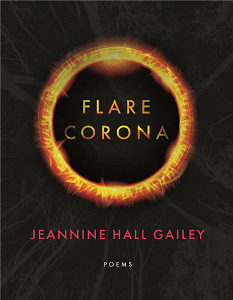
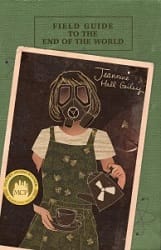
 Jeannine Hall Gailey served as the second Poet Laureate of Redmond, Washington and the author of Becoming the Villainess, She Returns to the Floating World, Unexplained Fevers, The Robot Scientist’s Daughter, and winner of the Moon City Press Book Prize and SFPA’s Elgin Award, Field Guide to the End of the World. Her latest, Flare, Corona from BOA Editions, was a finalist for the Washington State Book Award. She’s also the author of PR for Poets, a Guidebook to Publicity and Marketing. Her work has been featured on NPR’s The Writer’s Almanac, Verse Daily and The Year’s Best Fantasy and Horror. Her poems have appeared in The American Poetry Review, Poetry, and JAMA.