Happy 2015 and Some Thanks
- At December 30, 2014
- By Jeannine Gailey
- In Blog
 0
0

 So, Happy New Year! Here’s wishing us both a warmer, brighter, healthier, happier, more peaceful and prosperous 2015!
A few thoughts and thank-you’s before the year’s end…
Thanks to IthacaLit for publishing my little essay in their Winter issue on “Lights in the Darkness and Literary Fits.”
http://ithacalit.com/jeannine-hall-gailey1.html
Thanks to Donna Miscolta for listing my newest book The Robot Scientist’s Daughter in her “Books to Read in 2015!” (Also some other great books on her list, so check it out!)
I don’t know about you, but I’m ready for a better year. See you later, 2014! I’m cleaning out closets (an end-of-the-year ritual for us, much easier than making resolutions) and took a box of shoes and clothing to the donation center. I boxed up another box to take to a consignment store (good-bye, high heels! Sigh! Wobbly balance and bad ankles = no high heels.) I’m ready with my vision board and calender (see previous post.) I’m ready to be a better version of myself in 2015, and I’m hoping the year will bring better health, better energy, and more writing luck for all of us!
Poem for the End of the World – I mean, Year – and Contemplating 2015
- At December 26, 2014
- By Jeannine Gailey
- In Blog
- 1
I think this poem, the very last one in my current apocalyptic book manuscript, applies equally to the end of the world and the end of the year. Poem first appeared in Redactions.
Epilogue – Or, A Story for After
I want to tell you a story about how we survived the end of the world. Crouched around a dying fire, I illustrate with shadow puppets the old, beat-up van, the velocity of water and sky, the unnamable odds against us. What really sells it? The way the ending goes on forever, moon ebbing closer to the mysterious dark, its craggy face calling out, the skies scattered with falling stars. The way objects are nearer than they appear. You next to me, and I remind you – here is where we used to be, here is where we are. I draw a line in the dirt with a fork and draw a picture – a house made of a square and a triangle, a single daisy in the yard, and two smiling stick figures. This is what we dreamed of, the day we awaited has arrived. There are no more shotguns or dusty trails lined with diseased corpses. A ship arrives on top of a mountain, heralded by doves; an airplane lands on another planet, seatmates dazed by the lack of gravity. We might teach the dragons to dance, learn the alchemy of soil again, rebuild libraries with tales of fantastic voyage. All I need right now is you, the simple weight of your hand, the warmth of your breath, and this last cup of coffee to tell me – we are miraculous.
I am feeling mildly optimistic about 2015. 2014 had some struggles – a broken bone, another case of pneumonia, a bit of a discouragement bender and a lot of bad news on the television – but it was better than the year before it, I think, in terms of life lived and health. In the tradition of the “vision board,” the sort of tradition I don’t really mentally hold to but enjoy due to my child-like entertainment levels with arts and crafts, here’s my 2015 Vision. (Hint: it’s happier! And has more business in it!) I have a new book to launch next year, a new business, and I’m starting next year out with some new practical steps towards a new kind of career (to be revealed later.) To that end, I just ordered a 2015 wall calender to schedule readings, events, work, and fun! Anyway, here’s to a better, happier, and healthier 2015 to us all! Happy New Year!

Happy Holidays (and Hobbit Watching!)
- At December 20, 2014
- By Jeannine Gailey
- In Blog
- 0
 Ah, the holidays. Now we have all the holiday gifts shipped off, all Christmas parties attended, only two minor disasters (fridge death two weeks ago and this week, a credit card fraud – all hastily taken care of with little major damage) I am feeling ready to get back to being a “real person” – aka a writer again – and spending some downtime with Glenn doing the Christmas stuff I love – stupid stuff that makes me happy, like watching the new Hobbit movie, going to see Christmas lights at the botanical garden or local zoos, making gluten-free Christmas cookies for friends. I haven’t done any of that stuff yet! Reading new books by Haruki Murakami and Margaret Atwood, maybe some magazines, finishing up a manuscript project…
Anyway, to all of you out there, Merry Holidays and a Very Happy New Year if I don’t get to check in before then. Make sure you get plenty of good hot chocolate in the meantime!
Multimedia Poetry Coverage and Gift Ideas for the Writer in Your Life
- At December 17, 2014
- By Jeannine Gailey
- In Blog
- 0
What an unexpected late December set of media surprises! In a rundown of the Elgin Award winners, Diane Severson reads a few poems and discusses Unexplained Fevers on the Starship Sofa Podcast (go to minute 56 to hear a few poems, but ignore it when she says Unexplained Fevers won third place in the Elgin Awards – it was actually second 😉 Her notes are also up on her blog: http://divadianes.blogspot.fr/2014/12/poetry-planet-no-14-elgin-award.html
You can listen live to my interview with the lovely Sheila Bender on Port Townsend radio station KPTZ Thursday at 5:30 PM Pacific time. Later it’ll be on a podcast, but you can listen live through a link on the front page (http://kptz.org/) called “Listen Live!” I’m listening through itunes, and there’s also an app called TuneIn Radio where you can listen to: http://tunein.com/radio/KPTZ-919-s138748/
So, you’re struggling with last minute gifts for the writers in your life? I was reminded by a little holiday get-together yesterday with a present swap how much fun it is to buy gifts for and receive gifts from writers! Did I mention that despite the fact that we met in a rather small hotel bar, there was a guerrilla opera performance with piano player and soprano? (Soprano was a bit to close to my ears for comfort – I was about a foot away – but how charming and Seattle-y is that!) Anyway, the gift recommendations below include two books I just received and was delighted by!
Here are a few winning presents I know I’ve appreciated in the past:
- A subscription to a new journal or book series they might not have heard of. I remember two of my favorite gifts from friends being subscriptions to Fairy Tale Review and a subscription to a year of Tupelo Press’s books. Lots of presses offer a year’s subscription plans, and many journals could use a few dollars this time of year. Those are thoughtful gifts that keep giving throughout the year! I love: Crab Orchard Review, Crab Creek Review, Rattle, Mid-American Review, Indiana Review, Redactions, American Poetry Review, Threepenny Review…and there are as many diverse magazines out there as kinds of writers, so try to focus on one for your writer.
- If your friend or loved one has a book coming out in the next year, Midge Raymond’s Everyday Book Marketing makes a great gift. Likewise your writer may enjoy, more quirkily, Mortifications: Writers’ Stories of Their Public Shame and Shakespeare’s Tremors and Orwell’s Coughs: The Medical Lives of Famous Writers.
- Writers will never say no to a lovely pen and fancy notebook. Scented candle or fancy tea cup/coffee mug and chocolate, optional but suggested.
- A lot of wonderful poetry books came out in the last year. Has your writer been hoarding a certain library book, or mentioning a book she/he wants several times? Go ahead and get them one! Reading poetry is a small luxury in world of texting, television, and twitter.
- Speaking of which… If you want one of my books to get to your writer by Christmas, you better hurry and e-mail me at jeannine dot gailey at live dot com. There’s a special right now: all three books for $32, or Becoming the Villainess for $10, She Returns to the Floating World for $10, and Unexplained Fevers for $12. Free first-class shipping. That’s even better than Amazon!
Imperfect Holidays, Imperfect Writing, Imperfect Lives: Celebrate Anyway
- At December 14, 2014
- By Jeannine Gailey
- In Blog
- 2
I should mention from the top I have a lot to be thankful for this year. I just celebrated an early Christmas with my little brother and sister-in-law at our house before they head home to Ohio. There was cream sherry and holiday cookies and presents. It was extremely nice to be able to celebrat e a holiday with family (especially this particular part of my family, who were in Thailand for several years and thus, hard to get together with.) Here are a rare couple of photos
  of me with this cross-section of my family in the wilds of our townhouse, celebrating Christmas. (P.S. My little brother is notoriously resistant to photographs, so enjoy them now! They’re rare sightings!)
Last night I went downtown to a small press book fair where I chatted with folks from Wave Books, Copper Canyon and Chin Music press about their upcoming releases (fun!). I love that Seattle has small press/indie book fairs in the middle of winter. Then today we actually had sunshine so I went briefly outdoors so that I would have enough vitamin D for the rest of the winter. I may have hit my head so hard before the walk that I was seeing everything in double-vision – was that a deer on the trail, or just a dude in a red jacket? – but darn it, I was going to get outside and enjoy that (rare) sunlight!
The holidays are sometimes hard because we want them to be perfect. I struggle with this; wanting to create good memories, buy the right presents, create a happy atmosphere. Sometimes things come together, and sometimes they don’t. Last night I was so overwhelmed the sheer number of things I was trying to put together to ship I almost gave up in confusion. My family was always big, now with kids and spouses, it’s officially ginormous. Thus, I will probably not get the perfect present for everyone, just statistically. But that’s okay. I’m not as thin and glamorous as I want either, but my hairdresser said my hair looked healthier than it’s been since I started seeing her a decade ago, so there’s that. See? Little things we have to be thankful for. I’m not as sick now as I was last winter, and last year I wasn’t as sick as I was the year before that. So. You know. Bright sides.
For a few weeks now, I’ve felt terribly discouraged about – not writing, I always write, whether I’m discouraged or publishing or whatever – but the writing life. Which is different than how I feel about writing. You know, the part where you can be “successful” or “unsuccessful.” The part that can be measured in grants, awards, reviews, and lofty publication credits. The part where I wonder how the heck I’m going to make money with my couple of graduate degrees in English and Creative Writing. The part where I try to get energy up to send out notes asking about readings for my next book, or ask someone if they want a review copy, or try to send out poems into a cold, dark universe of editors who I’m pretty sure are all sick with the flu and grumpy around the holidays and disgruntled with their loved ones who are just going to reject my work anyway. See what I mean? I’m discouraged.
I talked in my last post about battling holiday blues/winter SAD/writerly discouragement, and I’ve been doing my darnedest to do just that. Part of me has to accept that the holidays will never be perfect, that I will maybe say the wrong thing or buy the wrong gift, that winter is tough on us physically, that the writing life (not writing, again, I’m making the separation) can feel like a cold dark world of “no” and more “no.” So we go on writing poems that maybe no one will read, or if they do read, they may be indifferent to. We go on celebrating the small things that can be celebrated in a world of darkness, in a broken world, we try to stay focused on the things that remain whole: our relationships, our senses of humor, our love of and enthusiasm for books, our hope that maybe humans will treat each other more humanely, starting with us, starting with me. Happy holidays, everyone. Drink some hot chocolate, stay safe, stay warm, read a good book. An imperfect life can still be pretty great.
The Next Best Book Club Blog Feature – Growing Up in The Atomic City
- At December 09, 2014
- By Jeannine Gailey
- In Blog
- 0
Thanks very much to The Next Best Book Club Blog, who featured my essay on Growing Up in the Atomic City today on their blog, with the Indie feature “Why I Wrote The Robot Scientist’s Daughter” (available for pre-order now from Mayapple Press, release date March 2015!)
Here’s what TNBBC folks had to say: “Here at TNBBC, we love to tug at the sleeves of the authors who pitch us, suggesting they tell us the story behind the books they wrote, the inspiration for it…The essay I’m about to share with you, by Jeannine Hall Gailey, author of the upcoming collection of poems titled The Robot Scientist’s Daughter, is probably by far the most sad and lovely, and also probably my most favorite. Read it to find out why.”
Thanks guys!
Reading Tomorrow and Holiday (fridge-induced) Breakdowns with Suggestions for Holiday SAD
- At December 08, 2014
- By Jeannine Gailey
- In Blog
- 0
So, I’m reading for the first time ever tomorrow at the Antioch Seattle reading series, and I’m excited, as I haven’t done a college reading for a little while, and it’s being hosted by friend and superhero poet Evan J. Peterson. So it should be fun! 7 PM Tuesday night at Antioch Seattle Cafe.
My holiday cheer budget—and regular budget—were severely curtailed by a massive refrigerator breakdown—as in, we came home with a big thing of groceries to find our fridge totally out of commission. No repairmen were answering the phone (it was a Friday) and I called every local retailer of refrigerators only to find none of them could deliver until after the 19th! As someone with food allergies who can’t really eat out, this was pretty distressing. My husband finally found a fridge at Sears. At first, he volunteered to pick it up and drop ours off himself, but I talked him out of that foolishness, and so we got it delivered this afternoon, sitting, still warm (it takes 12 hours to cool down!) in our kitchen. It was $1,000 we did not want to spend around the holidays, certainly, but I’m thankful to have a working fridge again. I never thought I’d be so excited about a delivery from Sears!
So, holiday cheer is one of those things I wrestle with, because (or even though?) I unabashedly LOVE the Christmas season. I love decorating the tree, listening to Christmas carols, buying presents. I even do a tiny bit of Hanukkah celebrating (I guess I grew up with a lot of Jewish friends in Cincinnati, and this tradition sort of stuck! On that aside, one of the best gluten-free holiday recipes we’ve tried recently include tiny latke mini-muffins (latke ingredients put in a mini-muffin pan sprayed with your oil of choice and baked at 400 degrees for 30 minutes – we included carrot, beet and fennel with our potato shreds and they turned out fantastic! Dab a bit of sour cream on top, and they’re addictively amazing!) Okay, back to the point—as much as I love the holidays, I do tend to struggle a bit with holiday reverse-cheer—that is, sadness, or moodiness, or whatever. I believe this may even be a common thing, because it’s cold and dark, the days are shorter, we have all these pictures of perfect families in perfect homes eating perfect food on television, in all those cheeesy Christmas movies, and it’s hard – impossible – to live up to all the expectations. My family used to struggle with money every holiday (my parents both have December birthdays, too!) so we tended to hear a lot of money arguing during the season and then receive a lot of our Christmas presents on January 1. (January 1 presents are a nice part of my family’s traditions that Glenn and I try to keep up—plus you get to take advantage of after-Christmas sales!) This year our budget was broken by the fridge, but we’ll still do our best to celebrate with family and friends.
Anyway, here are my main coping mechanisms for holiday SAD:
1. Get outdoors. Here yes, we had some snow and ice, and now we have the rain back, so it’s not as inviting as it is in August, but I still feel better just after standing outside for a little bit, especially around trees!
2. Schedule fun events with other people, and then make them a priority.  I wasn’t feeling great this weekend; I always seem to have a cold or sore throat in the winter, and had a major headache as well as being a bit upset about having to throw out food and improvise every meal. I really just wanted to lie in bed by myself, but I’m so happy I made it to at least some of the many holiday parties I was supposed to go to this weekend. For others, this may just be making a date with their loved one for a Lord of the Rings trilogy marathon movie watch. Whatever makes you happy, pencil it in.
(Picture here with Jessica and Jacqui of the VALA Art Center, who threw a mean party this weekend. Friends are beneficial to holiday SAD!)
3. Yule Log on the television? White Christmas, Bridget Jones and The Holiday constantly on repeat, or a marathon of Barefoot Contessa holiday cooking shows? A new book you’ve been dying to read? Need to see the Zoo lights? Whatever it is that you like about the holidays, take a day off from everything and do a little relaxing, guilt-free indulging in your favorite thing.
4. This may be a Northwest thing, but light boxes and Vitamin D3 gummy vitamins are a necessity in December. Full-spectrum light bulbs help, too. Feed your chocolate cravings – chocolate elevates mood, so it’s basically health food. Oh, and feed your backyard birds! We don’t have much of a backyard, but we have three hummingbird feeders and they are BUSY all winter. Hug your pet of choice, even if it’s an iguana. Listen to music that only you like. (I had a continuous loop of Sarah McLachan’s “River,” Aimee Mann’s “Calling on Mary,” The Flobots “Handlebars” and “The Hanging Tree” song from the new Mockingjay movie this weekend, myself.) So, basically: do anything you can do to stave off the winter blues. Do the thing that feeds your spirit.
Light in the Darkness and Beware of Literary Fits
So, the news lately has been discouraging, the world seems in turmoil, the coming holidays seem less cheerful, and the writing world seems crazy as usual. (Re: Ayelet Waldman – but I’ll get to that in a bit.) And the holidays can be a depressing season in the best of times (see: Charlie Brown Christmas special.)
You may have seen that I was encouraging donations to Ferguson’s library during the riots. Bad stuff was going on all around them, and their response was to stay open despite the danger to themselves and the library, to look after the kids, put on the teen programs, create a haven for those who were looking for shelter. And that is being a light in the darkness. To reach out and help when others are harming. That is something I aspire to do, though I rarely achieve it.
In personal/non-national-international news, I’ve been a little discouraged this holiday season. Could I say why, or if it’s something specific? No, I’ve been at this writing thing for a little over a decade, I have a fourth book coming out, and I’ve had many good things happen over the years, but still, I’m feeling tired of rejection and failure and trying hard only to be frustrated. My health is still a bit of a challenge (still being evaluated for MS with no real answers yet, ditto autoimmune stuff, and the usual winter bugs and minor injuries) but not as bad as it has been, so I should be counting my blessings. Which I swear, I have been trying to do (see my two previous blog posts for proof.)
I have to say I have to have a little sympathy Ayelet Waldman, a seemingly – from my perspective – very lucky writer (married to Michael Chabon, lives in Brooklyn the super-expensive epicenter of all things literary, books reviewed in the New York Times) – who had what can only be called a Twitter fit recently when she wasn’t listed in the NYT 100 Notable books list. Now, why would a writer who has been handed so much success be so upset by such a little thing that she would whine about it on Twitter? You may well ask (I mean, besides being a very entitled person, let’s just assume that, but the point is not to be mean, it’s to try to have empathy, right?) But here’s the thing – a writer, however successful, always feels like the next thing for them is being dangled just out of their grasp. I’m not saying we should take to an all-caps freakout on Twitter, of course – although it might make Twitter way more fun to read. That’s not being a light in the darkness. But I was a little amused when I read her tweets and thought to myself, there are times I’ve felt like saying those things, at least under my breath, in private. But she doesn’t seem to realize, when she tweets about pouring her heart and soul into her work and not getting her “due” recognition, that…Honey, we’re ALL pouring our hearts and souls into our work, we ALL feel we could use a little luck, a little recognition. That is the plight of ALL writers. I was happy for my friends who got NEA grants, sure, (I mean, who can be mad when folks like Ellen Bass, Major Jackson, Sandra Beasley and Mary Biddinger get good stuff? They’re nice! They’re deserving and good writers!) but was I also a little frustrated and discouraged (and pissed at all the wasted time that particular grant application takes) that my third (fourth?) consecutive try was rejected? Sure! I’m human! That stuff gets to me. Rejections get to me. Bad book sales get to me. I’m a writer who feels all the stupid small pangs, even when another part of me is thinking “Did they ever get back those kidnapped Nigerian schoolgirls?” (Answer: no, not most of them.)
There is injustice in the “real” world and in the smaller, more petty literary world. To ignore that fact would be perilous. But what can we really do? What can we do to make the world a little brighter, a little lighter, to make the cold less fierce and the long dark nights (starting at 3:30 PM here nowadays) less menacing for ourselves and for others? Can we call and encourage someone else, go volunteer or donate something to make someone else’s world safer, luckier, better? My husband has an app on his phone that simply shows a flickering candle, which some people think is a funny app to have, but I understand. I think, yes, that’s what we need, in this world, another candle, another flickering, unsteady flame.
Black Friday Poetry Shopping List!
- At November 28, 2014
- By Jeannine Gailey
- In Blog
- 0
Hope you all had a wonderful Thanksgiving! We had a great time with our little celebration with local family and a ton of delicious food, and a lot to be thankful for. So onto the next holiday…
Black Friday Poetry Shopping List!
Special: All three of my books for $32 including shipping! That’s Becoming the Villainess, She Returns to the Floating World, and Unexplained Fevers for your favorite feminist/fairy tale/Japanese mythology-fan poetry lovers! Directly from me! And I can sign them to whomever you want! I will probably include some fun swag! Because holidays! Here’s a Paypal button to do it!
OK, this is a not-all inclusive list for this year’s recommendations. There are so many books I loved this year…so this is really just a short list of winners and crowd-pleasers!
1. Support your local small press. This year I’d like to feature Two Sylvias Press, the Kingston-based publisher of the second edition of She Returns to the Floating World, run by superpoets Kelli Russell Agodon and Annette Spaulding-Convy. I recommend two gifts in particular: Natasha K. Moni’s book The Cardiologist’s Daughter, for your friends with interests in the medical field and poetry, and Fire on Her Tongue, an anthology of contemporary poetry by women, really a good gift for any poetry lover. (Related: check out Kelli’s new release this year, Hourglass Museum. You can order a signed copy from her here!)
2. For your friend who just went through a divorce: Blowout by Denise Duhamel. Real, raw, funny, touching.
3. Two books I reviewed this last year that I highly recommend: Jericho Brown’s The New Testament (link goes to Copper Canyon’s ordering page) and Matthea Harvey’s If the Tabloids Are True What Are You? (link goes to Graywolf Press’s ordering page.) Read the review of Matthea’s book here, and Jericho’s book here.)
4. For your horror-fan friend? Ellen Datlow’s anthology (OK, this one is mostly fiction, but it does include a poem or two) The Best Horror of the Year Volume 6.
5. This isn’t a purchase, but a donation idea – throughout the recent troubles at Ferguson in St. Louis, The Ferguson Library stayed open, provided services (particularly to children whose schools were closed) and generally acted in a heroic manner. I’m always for library donations, but this year, maybe think of donating to Ferguson Library?
Things I am Thankful for this Thanksgiving: Family, Poet Bloggers, Small Presses and Other Blessings
- At November 20, 2014
- By Jeannine Gailey
- In Blog
- 1
So, this may be cheesy, but I’d like to highlight some things I am thankful for this pre-Thanksgiving week. Some of them include the poetry bloggers that brighten my days with their contributions!
So, my little brother and his wife will be celebrating Thanksgiving with us this year. This is the first time we’ve had family around for Thanksgiving in…well, a long time. I’m so glad they’ll be here. Thanksgiving in our house growing up was pretty stressful – we had a large family, so it was crowded and noisy already, then Dad always invited graduate students without telling Mom, which caused tension, and Mom didn’t especially like to cook…well, you can see how it might be a bit tense. (Oh, and the girls – me and mom – were expected to do all the cleanup while the guys watched football. Stuff that had me stamping in my pre-(proto?)-feminist boots, I can tell you!) In our current family setup, Glenn does all the cooking, so that leaves me to do the other stuff – family visiting, decorating, and yes, writing thankfulness blog posts. Thanks honey! So it’s a different kind of Thanksgiving for us as grownups than we got to celebrate together as kids, and I am glad. I also anticipate one throwback tradition – the MST3K Turkey Day marathon (now streaming instead of on Comedy Central! Ah, the future is now!)
I’m thankful that I’m not in a wheelchair like I was a couple of years ago, or desperately ill and unable to tolerate most Thanksgiving food like I was even last year (welcome back into my life, chicken, peppermint and carrots! I’ve missed you!)
This year I’m giving thanks for the poet bloggers who are still around, writing long-form notes about their lives, their writing, and random reviews of books, movies, video games, etc. Their ranks are shrinking all the time! Here are some bloggers I’ve been reading for a while that I’m thankful for (and you should take a peek at their blogs, too!) Obviously I love and value everyone on my blog roll or they wouldn’t be there, but these are the blogs I turn to when I’m discouraged, I need a lift, or I need to commiserate:
- Kelli Russell Agodon – http://ofkells.blogspot.com/ – Her words about writing retreats, quotes from writers, and just general reflections on life are always inspiring and cheerful.
- Kristin Berkey-Abbott – http://kristinberkey-abbott.blogspot.com/ – a mix of writing, college administration, and spiritual living, Kristin in intelligent and thoughtful and often ponders things in a way that (I think) make me think about stuff that’s really important.
- Kristen McHenry – http://thegoodtypist.blogspot.com/ – Kristen is a fellow Seattle writer whose blog makes me laugh, she’s a darn good writer, and occasionally writes reviews of movies and video games so good they actually make me go out and get them. (Which is hard, right?) She also makes fun of hipsters, which is necessary to survive living in Seattle, a sometimes unbearably hip place. (I like a little snark sometimes too!)
- Lesley Wheeler – http://lesleywheeler.org/ – Lesley is an intelligent, sparkly human being who also happens to be a successful academic and sci-fi writer. It’s good to read her blog. Do it.
- Mary Biddinger – http://wordcage.blogspot.com/ – I’ve been reading Mary’s blog since before we each had books out from Steel Toe Books the same year (that is, since 2006!) It’s because of her I even know about Zooborns and her pictures of Ohio landscapes are melancholic little poems.
- Kelly Davio – http://kellydavio.com/ – Kelly’s posts of the world of being a poetry editor are worth the price of admission by themselves. A thoughtful fellow Seattle-area writer who is another “sparkly” person in real life.
- Rachel Dacus – http://dacusrocket.blogspot.com/ – a strong soul and good insights into the writer’s life.
Other special blog recommendations include January O’Neil (especially on Confession Tuesday!), Natasha K. Moni (charting the life of a poet who’s also in medical school,) Rebecca Loudon, Susan Rich, Diane Lockward, Martha Silano, Sandra Beasley, Sandy Longhorn and Robert Lee Brewer. Thanks to everyone who does the hard work of writing into the abyss, and keeping up a writing blog in the age of Twitter feeds and Instagram.
I’m also grateful to each press who has supported me by publishing my books: Steel Toe Books, Kitsune Books, New Binary Press, Two Sylvias Press, and Mayapple Press. Say, it’s the holiday season, maybe go buy a book and help support a small press, right?
Feel free to share your favorite blogs in the comments! Happy Thanksgiving week! And next up – a Black Friday shopping list?
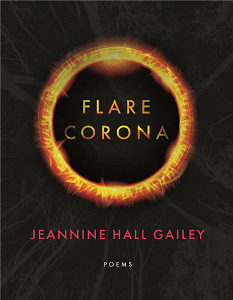
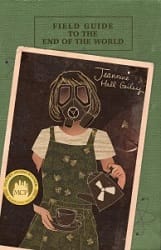
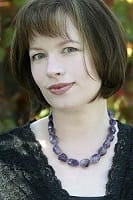 Jeannine Hall Gailey served as the second Poet Laureate of Redmond, Washington and the author of Becoming the Villainess, She Returns to the Floating World, Unexplained Fevers, The Robot Scientist’s Daughter, and winner of the Moon City Press Book Prize and SFPA’s Elgin Award, Field Guide to the End of the World. Her latest, Flare, Corona from BOA Editions, was a finalist for the Washington State Book Award. She’s also the author of PR for Poets, a Guidebook to Publicity and Marketing. Her work has been featured on NPR’s The Writer’s Almanac, Verse Daily and The Year’s Best Fantasy and Horror. Her poems have appeared in The American Poetry Review, Poetry, and JAMA.