Reading August 5 at 7 PM at Station Bistro in Auburn, WA
- At August 04, 2013
- By Jeannine Gailey
- In Blog
 0
0

Hey guys! Thought I’d let you know about a cool reading out at the Station Bistro in Auburn tomorrow night at 7 PM with fellow Redmond poet Dawn-Marie Oliver. More info about the reading here: https://sites.google.com/site/stripedwaterpoets/poetry-at-the-station-bistro
And, the Auburn Reporter ran this very cool article about the reading here, so check it out too!
http://www.auburn-reporter.com/community/217414661.html
I’m thinking about mixing it up and reading from all three of my books! It’ll be a fairy tale/comic book/anime poetry collage!
Wonder Women Betrayed: The Secret to (not) Having it All
- At August 03, 2013
- By Jeannine Gailey
- In Blog
- 0
In which many plates, spinning in the air, are dropped at once
Debora L Spar, the president of Barnard College, released a book that of course attracted my attention with its title – Wonder Women: Sex, Power, and the Quest for Perfection. In it, she makes the argument that, essentially, my generation learned as children – because “Barbie can do anything!” that modern women should. That there is pressure to have a perfectly groomed size 4 body, have a sizzling sex life AND a stable marriage AND perfect children (because dammit, fertility is part of the myth of the woman who has it all) AND a smoking career on which she is “leaning in” and climbing that ladder – oh, and if you can’t be organically raising your own garden and chickens, cooking like Ina Garten (who used to be a nuclear policy advisor to the President of the United States, so…) and making your house more valuable by DIY retiling your bathroom and custom environmentally-friendly landscaping, well, you aren’t really a woman at all.
I am here to tell you perfection is not possible. As a perfectionist myself, this is hard to admit. I was a bright kid, reasonably attractive and ambitious, and expected a lot of myself, namely, almost everything in the above paragraph. But this week’s, let’s say, challenges, highlighted a lot of my own clinging to the myth of the perfect woman.
So, this last week, this is what I had lined up: a visit with a friend to discuss our exchange of poetry manuscripts (reasonable enough, right?), followed the next day by the arrival of in-laws so we had to make the house seem clean AND attractive, followed the next day by a four-hour trial by fire of expensive medical testing and then meeting with specialists to discuss that testing, followed the next day by taking the in-laws for a tour of the city, followed by…Plus, I also expected myself to do the usual Poet Laureate work, my freelance work, scheduling, e-mailing, writing, sending out things, revising work, and etc. All while looking reasonable attractive, beaming a radiant grace towards all people, and etc.
And here is where all the plates were pretty much dropped, when life got in the way.
The night after my friend’s visit, I was visited by a less welcome guest – a fairly horrible gastroenteritis, otherwise known as stomach flu, that lasted several days. So there went any entertaining, plus my looks sunk about ten points with the flu-related lack of grooming, and failure to be a charming hostess to the in-laws, and I had to cancel the important and expensive medical testing and specialist appointments, which had been hanging over my head causing stress which I’m still trying to reschedule, and I got the bad news that the AWP panels that I had been asked to be on were rejected. Plus, remember, very little sleep and no solid food. So, the week felt to me like an abject failure, making me feel like I should give up on everything and feeling very grumpy towards the universe at large.
Most of the time, to the outside world, my life can look sort of like success, at least, I gather this from people asking questions about “how I’m handling so much success.” (Um, mostly by stifling laughter at that question.) My friends (and strangers) tend to exclaim charmingly about my happy marriage (but remember, I can’t have kids, so nix that from the equation of perfect woman.) And my marriage is pretty happy most of the time, but it’s not PERFECT. I have a reasonably attractive husband with a steady job who is kind and does the majority of the housework and cooking. But I have to remind people that our marriage was built over years – the first years were stressful and took adjustment, and my health struggles have necessitated that Glenn take over what most husbands would consider the “woman’s work.” We are lucky that we like each other quite a bit after nineteen years and are still happy to kiss each other at the end of the day, though I doubt we’d win any Cosmo “hot marriage” quizzes.
Career-wise, this week, though I felt like a failure because I had two rejection slips and the rejection-y sting from AWP, I had a very nice article in the local paper about my work, my mother pointed out proudly on Facebook that my name appeared on the front AND back cover of the 2014 Poet’s Market, and I found out that I’ll be part of a featured event at ArtsCrush, a local arts thing in Seattle I am really excited about, with two gifted artist and poet friends. I should have felt happy, like a success, right? But instead, I felt depressed and like a big loser because of all those dropping plates. But the expectations of doing everything and doing everything perfectly are going to cause a whole generation of women, if not anxiety, then a general dissatisfaction, that frankly, we shouldn’t have to worry about.
I mean, women in the past (and this includes women as recent as my grandmother’s generation) were happy if half of their children survived til 18, they had enough food on the table, and their homes didn’t burn to the ground in a prairie fire or they weren’t disfigured in a factory accident or by tuberculosis or something. They didn’t expect to look nineteen when they were forty-five, dazzle their families and friends with their homemaking skills AND careers. They didn’t have to worry if Joan at work was backstabbing them when they had to leave early to take Kitty to her doctor’s appointment. I was thinking about this, and I was thinking, even in my Facebook and twitter posts, even here, I worry people will disapprove or find me lacking. Which is crazy, right? “If I don’t have a perfect perky attitude from dawn til dusk, then no one will buy my books” I think the reasoning goes. “If I ever show a crack in any facade, people will lose all respect for me.” I believe this is why women are discouraged from crying in the boardroom. (And yes, I’ve done it. Act shocked all you want. It did get my team an extra week for their deadlines AND extra budget for staffing. )
The only way to free ourselves from the expectations of having it all and being everything to everyone is to start at home. We shouldn’t expect it of our mothers, our sisters, our friends, or ourselves. If you look at another woman and she seems to “have it all,” be comforted in knowing she probably has areas where she struggles, too. If X is a gifted cook and warm mother, it should be okay if she isn’t also a shark financial consultant with a stuffed 401K. If Y is a whiz at astrophysics, it’s okay if she only gets her hair and nails done once a year and she never bothered to get married at all and her house is kindly called “a disaster zone” by friends. If Z is a writer with a happy marriage but struggles with her expectations of her career and her finances, will never win awards for her homemaking skills, isn’t going to be able to have the perfect kids or any kids at all, sometimes has to cancel things last minute because of her health problems, maybe we should cut her a break. It starts with you and me. Let yourself be great at the things you are great at, and let everything else go. Then we can stop judging each other for falling short of perfection and having to make hard choices, too.
A Little Good News for Amanda, A Newspaper Mention, and How to Bring the Fun at AWP
- At August 02, 2013
- By Jeannine Gailey
- In Blog
- 1
Amanda Auchter’s The Wishing Tomb, which I reviewed back a few weeks ago here, has won the 2013 PEN Center USA Literary Award for Poetry. Go tell her congrats!
There was a nice article in my local paper, The Redmond Reporter, about my small contribution to the wonderful anthology I mentioned in my last post, the Like One anthology. http://www.redmond-reporter.com/news/217822101.html
I woke up yesterday with massive stomach flu, which was inconvenient because 1. the in-laws arrived yesterday from Cincinnati, and 2. I was supposed to get a very long and involved hospital test today, which I had to reschedule. I guess there’s a little irony in rescheduling a medical test because you’re too sick to make it. The downside is, I’ll have weird anxiety dreams for another couple of weeks. (My latest one had me standing on top of skyscrapers in New York City talking to my little brother while the buildings crumbled to black dust beneath our feet, with me saying, “I guess all our financial plans will come to nothing.” Yup, that’s my kind of stress dream…) The upside, I lost five pounds and got caught up in my “lying around like a zombie watching Zombieland for the nth” time.
Today the AWP panels were posted. I was really sad that our geek-friendly town’s AWP had hardly any panels for on subjects like speculative writing, geek poetry (and the accompanying fairy tale/comic book-related writing,) etc. I think they had two faintly geeky panels, and they were both all male. Boo hiss. My hometown AWP had let me down! I had a ton of friends on good panels, but still, I felt jilted by Seattle AWP’s lack of interest in the speculative/pop-culture side of writing. So, what I usually tell people who want the “folks in charge” to do something different is, go out and make your own thing! I don’t know if I have the energy to run my own writer’s conference, but maybe I can do an offsite “party/reading/something awesome. Any of you want to get together and plan something?
And this gets into a larger question – how do you actually have fun at AWP, without stressing out? I find large crowds intimidating and brain-dizzying, although I consider myself kind of an extrovert, AWP is usually exhausting (and really taxes my ability to match names and faces – something I’ve never been great at in the first place and it only gets worse as I get older and know more people) and the “fun” can be sucked out by awkward or rude encounters (because, let’s face it, a lot of writers are not great at socializing gracefully) or just worrying or trying to “network” but let’s face it – why go to these things if not, I don’t know, to celebrate the good parts of being a writer with other writers? How to hold on to that idea at what can sometimes be a sometimes-sordid, booze-filled schmooze-fest? Seattle is a great town for writers and readers, full of coffee shops with smart people inside and good bookstores (Open Books is a must-visit for poets, it will not disappoint) and filled with a kind of a spiky, rainy cool, alternative art and comic shops and robots. How to take advantage of that and really enjoy the city? I recommend, at any AWP, sneaking out to visit the city’s art museum, or zoo, or weird shops or unique dive-y restaurants, because that will be what you remember when you get home, with your stack of lit mags and friends’ and strangers’ books. Please comment and leave your advice about “fun at AWP.”
When the Going Gets Tough, What Good is Poetry?
- At July 28, 2013
- By Jeannine Gailey
- In Blog
- 2
This is a question I’ve been asking myself a lot lately. I’ve been going through what some people call “heavy stuff”, with some scary things that just keep being scary. I’ve not been able to pretend to be light-hearted, not in person, and not in my writing. I’ve been writing mostly prose, mostly first-person stuff that feels too much like confession and not enough like art. Trying to promote a book, trying to promote poetry in Redmond, all that stuff has felt extra hard lately when I wonder “What is the point of poetry?” It doesn’t pay the bills, it doesn’t cure cancer, it doesn’t do anything practical.
This is where I will propose that poetry can be more useful in dark times than prose. Poetry makes you focus on the art part of the language a lot harder. You can’t get away with sloppy language or unfettered messy emotion and trying to cram your own whole wild self into it is hard work. When my husband G was out running errands yesterday, he ran by Half-Price Books and found a copy of a Margaret Atwood microfiction chapbook called “Murder in the Dark,” published by a small Canadian press back in 1983. These microfictions are a bit like prose poems, a bit like very well-managed short-short stories, and Atwood manages to keep them hilarious, dark, and brilliant in the way that only she can. Reading her pieces allowed me to try a bit of her style of microfiction/prose poetry – which was an wonderful escape from my own mind. And the result was the first poem in a long time that I have written that I felt happy with. It felt like I had found me again, when I read Atwood’s pieces about, yes, murder, death, mostly not subjects normal people might feel cheerful about, I was just able to see things from a different enough perspective, to kind of see the humor, the light, again.
And it occurred to me that poetry can be not only an escape, but that ability to transform a moment of grief, or sorrow, or fear, into something more – something dark and dangerous, or light and airy, depending on the artist – is what makes poetry magic. It’s not the publishing, or the payment (God knows,) or the fame (ha ha) that makes being a writer of poetry worthwhile. It is this moment – a moment of enlightenment, a spark of laughter, maybe a rueful acknowledgement – that lets our minds and bodies and hearts heal.
This is why I’ve participated in anthologies that mean something to me – including the recently released Like One Anthology, an anthology for “The One Fund” for the Boston Bombing victims, an anthology focused on positive, lighter poems rather than poems about the bombing event, an anthology meant to lift the spirit, edited by Deborah Finkelstein. It really is a delightful book, so run out and get a copy and know it will be money going to a good cause and money well spent on an entertaining and enlightening collection of poems. There have been other anthologies that I felt honored to be part of, like the Japanese anthology of nuclear protest after the Fukushima disaster, “Farewell to Nuclear, Welcome to Renewable Energy: A Collection of Poems” which was printed in both Japanese and English.
I don’t know if poetry can change the world, but I know it can change my outlook, and if it can do that for me, it can do that for others. It is beautiful, it is art, yes, it can be healing for the author, yes, it can have a message that might help someone somewhere, but there is enough magic in the act of writing (and reading) that makes it worth it, all by itself. I don’t know if Margaret Atwood was thinking, “there’s someone out there who is going to be feeling a little blue and writers-blocky in 2013 who needs this laugh and thought and sharpness” – when she wrote Murder in the Dark in 1983, but it was like a little dose of sorcery, enough to jolt my writing nerves back to writing like myself again. And who cares that I write? Maybe no one cares about what I write now, but maybe there is someone in 30 years who will need it. Who knows?
Radio Interview with Jim McKeown on KWBU this morning, and Fevers
- At July 25, 2013
- By Jeannine Gailey
- In Blog
- 0
I’m excited that I’ll be doing a radio interview with Jim McKeown on KWBU this morning. Here’s a link to Jim’s blog, and his kind review of Unexplained Fevers.
And here’s a link to where the interview will be, along with a link to a previous feature Jim did:
http://www.kwbu.org/index.php?id=66532
I just hope I don’t sound too stuffy – I’ve had a summer flu for days! We had to cancel yesterday’s Redmond Poet Laureate teen event for lack of RSVPs so trying to fix the logistics of that and trying to schedule a makeup date and venue took a few hours. But it was just as well because by the evening I was feeling so sick I couldn’t even get out of bed, couldn’t eat anything, etc. It’s so weird to get sick in the middle of summer! I guess today after the interview I won’t try to, you know, jetski or climb any mountains.
This reminds me to share with you one of the most interesting tidbits from the Sylvia Plath bio I recently finished, Mad Girl’s Love Song, that illustrates some of the differences between American and British health care, at least in the 1950s; when Sylvia got a sinus infection at Smith, she was put up in the fancy sick bay, given cocaine nasal packs, Penicillin shots, and other such extreme treatments, but when she got to England on her Fullbright and came down with the flu, she was shocked that when she checked herself into Cambridge’s sick services for students that all they gave her was an aspirin. No wonder she got sick so often during her undergrad days! It’s said that in America we overtreat symptoms, and in Europe they undertreat. I guess that was the case back then, anyway. A bonus: here’s Plath reading “Fever 103:”
Verse Wrights features “The Conversation” and Teen Poetry Workshop Tomorrow
- At July 23, 2013
- By Jeannine Gailey
- In Blog
- 0
Many thanks to Verse Wrights for featuring my poem, “The Conversation,” on their web site today.
My tenure as Poet Laureate of Redmond is coming to an end soon, but I couldn’t be more excited about my last sponsored “geeks for poetry” workshop for teens tomorrow evening at the Old Redmond Schoolhouse, which will be run by YA author and poet Karen Finneyfrock. Read more about it here: http://www.goodreads.com/author_blog_posts/4568648-free-teen-poetry-workshop-in-redmond or here.
This July has been oppressively hot and surprisingly muggy for the Seattle area. I miss our old-fashioned summers of 70-degree-low-humidity weather. Not that many places in the northwest, by the way, have air conditioning – including a lot of restaurants and my favorite garden store which was 110 degrees yesterday, yikes for its employees! Yesterday as we were driving over the Sammamish river we had a huge bald eagle swoop towards us, right over the car. My mother says the eagle is one of our totem animals, that it is a sign we are on the right path, that we must have courage or that spiritual help for difficult times is coming. Of course, I told her it is a sign we live in the Northwest – there are a lot of eagles out here. It was a nice thought nonetheless. We walked by a winery’s lake covered with yellow water lilies and populated with sleepy ducks. I have a hard time eating, writing, or thinking when it gets this hot and can’t wait for fall to come. This summer has been oppressive in other ways too, with worry, with sadness, with the whole “what does the next part of my life look like.” Sometimes it’s hard to see the path ahead. I guess that’s when we need our eagle totems!
Anne Petty – You Will Be Missed
- At July 21, 2013
- By Jeannine Gailey
- In Blog
- 0
Just heard that writer, editor and publisher Anne Petty of now-closed Kitsune Books, has passed away peacefully after a long fight with cancer. Anne epitomized everything I would like to be when I grow up – she was smart, spunky, funny and fierce. Not only was she an author, she was an enthusiastic critical writer and someone who worked tirelessly to promote others, especially her authors. I feel honored to have been one of them; Anne was the original editor and publisher of She Returns to the Floating World, through Kitsune Books. She was caring and forthright. She loved anime and fox-wife folk tales, Tolkien and Neil Gaiman, and she was excellent and perceptive reader.
Here is an interview with Anne I did back in 2011. Her spirit and humor will be clear to anyone who knew her:
https://webbish6.com/interview-with-publisher-and-author-anne-petty-2/
I think the world is poorer without her, and I know I will miss her.
My Rumpus Review of “Search for a Velvet-Lined Cape and Synthesizing Bad News at Summertime
- At July 19, 2013
- By Jeannine Gailey
- In Blog
- 1
Thanks to The Rumpus who just published my review of Marjorie Manwaring’s first book, Search for a Velvet-Lined Cape (isn’t that a great title?) You should go read the review and then the book. I get really excited by probably one out of every twenty books of poetry that I read, and this is one of them.
Summer summer summer with its relentless SUNSHINE these days and HEAT and we’re not used to that in Seattle we usually drift through summer in the seventies with no humidity and only the occasional sparkling blue clear day where everyone crowds together by the water, but now we’ve had over twenty days without rain and many days in the eighties and without air conditioning that can be pretty miserable. I walked around a beautiful field of flowers yesterday but the smog hung oppressively over Mount Rainier, so much so you could barely see the white snow on the mountain. I’m so not a sunbunny, as I learned living in San Diego and Napa, I’m quite literally allergic to the sun, so I’m looking forward to Fall, to September, the overcast and the cool rain again.
I’m also figuring out how to synthesize some bad news at a doctor’s appointment, you know how you go and have tests and they let you go again? Well this week, one of my last doctors was all “look at this” and “this shows positively this” (Yes, I’m being cagey as I wait for further testing the next couple of weeks) and I came home and felt scared and blue and made a playlist of songs like “Dark Days” by the Punch Brothers and “Will She Just Fall Down” by Til Tuesday, Fiona Apple, The Cure’s “To Wish Impossible Things” and “Young and Beautiful” by Lana Del Rey, a long playlist and listened to it all and let myself feel a little sad, which I don’t usually indulge in. I’m not terribly addicted to robust physicality but I don’t like the feeling of losing things little by little the feeling of normalcy the expectations I guess of things that lie ahead sort of sinister. I’m a poet after all, I don’t need everything to be perfect, I don’t need all of my body to be functioning correctly at the same time, I know already that I am a little mutant and monster and I guess it’s good to get some answers. See? I’m trying to look at the bright side even now. I wish medicine and tests weren’t so expensive these days. I wish I could just let go of expectations and worry and watch the grebe in the pond outside my house and the little families of hummingbirds in my back yard, the egg-sized baby bunnies in the clover of the house down the street, enjoy the jasmine that has come back to life in all this sun and heat.
I will try to be back to my upbeat usual self by the next post. I will hope for unexpected beautiful things. That is the world, it’s beautiful and terrible and we’re rarely prepared.
Mad Girl’s Love Song, Happier at Home, the Cultural Cold War and a new review of Unexplained Fevers
- At July 16, 2013
- By Jeannine Gailey
- In Blog
- 0
Ironic reading pairings? Try the bio of Sylvia Plath, Mad Girl’s Love Song: Sylvia Plath and Life Before Ted , and self-helpish happiness study book by an upper-East side millionaire, Happier at Home: Kiss More, Jump More, Abandon a Project, Read Samuel Johnson, and My Other Experiments in the Practice of Everyday Life
 . I’m really enjoying this particular bio of Plath, and trying to kind of tease out the subtext, something about how to capture Plath’s infectious ambition without going up in flames. Happier at Home is kind of a weird, how-to-be-a-millionaire-happy-housewife throwback guide for women who have enough money and time that “how to arrange my photos” becomes their biggest problem (I have to admit I was hoping for something different, some sort of modern women’s guide to balancing housework and marriage and money and a creative career, perhaps). Thinking about the repressive atmosphere for women in the 1950s and how there’s sort of a throw-back repression thing going to today in American culture. But I think there’s something interesting in both books about how women can put so much energy and effort into a perfect, happiness-filled home, this idea that women are responsible for the hearth, this primitive urge to divert creative energy into that. I’ve been noticing myself latey that my writing energy can easily be distracted by decorating and tidying up and researching recipes…
The other odd pair of books I’m reading is on the CIA’s involvement in literary and visual art culture during the Cold War era – The Cultural Cold War: The CIA and the World of Arts and Letters and Cold War Culture. Last night, to further a theme, I was reading about a 1950’s era book, written by a woman, about a suburban housewife outside NYC who learns to survive a nuclear apocalypse, called “Shadow on the Hearth,” a fictional call-to-arms for American women. Fascinating! I also found out that many “great” artists, literary magazines, and critics were propped up by government funding in an attempt to somehow fight Communism through artistic means. Tim Green posted this link on my Facebook discussion of the subject if you’re interested in further reading: http://web.archive.org/web/20060616213245/http://cia.gov/csi/studies/95unclass/Warner.html. I’ve lately been interested in Cold War culture, what with growing up in America’s Secret City (Oak Ridge, Tennessee) in the seventies with “men in black” hanging around the house, that I’m fairly interested to see the way that the government has tried (and for all I know, is trying now) to control things like art and poetry. (And PS, that big literary or art star might be a government construct! Now everything makes sense!)
Thanks to Collin Kelley for this mini-review of Unexplained Fevers at his blog, here: http://collinkelley.blogspot.com/2013/07/read-this-poetry-by-erica-wright.html
A nice review can make the sting of rejections a little better. I’ll try to remember that when I’m complaining about writing my next review!
What are you looking for in a poetry publisher?
- At July 12, 2013
- By Jeannine Gailey
- In Blog
- 5
I get lots of mail from poets asking about how to get a book published. But a question poets often don’t think about is, what are you looking for in a poetry publisher? I think it is something we should give more thought to before we even start sending out our books. Sandy Longhorn has a great post here about the state of poetry publishing today, and voices some of the frustration at a system that requires writers to pay for the privilege of having an editor or publisher even glance at their work. I piped up a bit because in my own career, I’ve mostly worked with small poetry publishers who either have open submissions or…wait, that’s all I’ve worked with. I like supporting small publishers, but there are pluses and minuses to every decision we make about our books. We actually have a lot more control than we think.
Putting together your first book of poetry, you’ll look at the list of first book contests, which are the most numerous and often the most prestigious, and wonder…You’ll ask….should I part with the $25 contest fee for a lottery ticket to a very expensive, very low-paying lottery? Or should I do research around my city at literary fairs or conferences, find micro-or-small publishers who might be friendly to my aesthetic? Should I wait til AWP’s bookfair and take a look some of the books on offer, find one that offers the kind of design and content I like?
But after your first book, there are fewer contest options, so you’ll have to look around at other resources, like http://www.dacushome.com/Poetry%20Book%20Publishers.htm and http://thelinebreak.wordpress.com/2012/06/16/presses-with-open-readings-for-full-length-poetry-manuscripts/#comment-1345. You’ll probably want to take a look at the books a press produces BEFORE signing up to publish with them, so you’ll want to either check them out in person (easy at AWP, harder the rest of the year unless you’ve got a terrific all-poetry bookstore like Open Books around the corner) or order a copy of one of their books online.
What are the most important things do you think for your publisher to do? Is it great distribution? Is SPD or Ingram okay, or do I want Consortium? What about a dedicated marketing department or PR service? Or is my priority that I want to work closely with a friendly editor who loves and is enthusiastic about my work? Do I want to help promote a new publisher and do extra work to get the word out about both them and my new book? Do I care about the royalty statement, prize money, or profits? Have their books won prestigious prizes? Do I even care about prestige? Can they afford to buy any ads or do any promotion? What about review copies? Do I get input on my book’s cover art? Do they have a decent web site, use social media, are their books available on Amazon, who seems to be on the way to being the monolith of book publishing? Or do I want to try to do everything myself and self-publish?
I have a friend who will remain nameless, who sent out his book manuscript, which I got a chance to read and knew was excellent, for a long time. Lots of years. It was really good and I was anxious for him to get it out into the world, so I advised him to go look for a smaller publisher, and not to concentrate just on the big poetry book contests. Still, he persevered. Then he won the Yale Younger Poet’s Prize. So ha ha, joke’s on me. Remember not to take my advice if you’re about to win the Yale Younger Poet’s Prize.
I’m thinking hard myself about these questions for manuscripts #4 and #5. Please leave your own advice, questions or thoughts in the comments! If you ask questions, I promise I’ll try to come up with an answer, but it may not be the answer. That will be up to you.
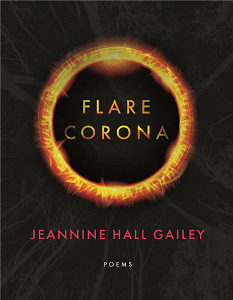
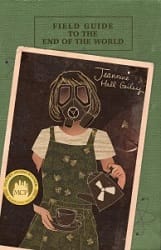
 Jeannine Hall Gailey served as the second Poet Laureate of Redmond, Washington and the author of Becoming the Villainess, She Returns to the Floating World, Unexplained Fevers, The Robot Scientist’s Daughter, and winner of the Moon City Press Book Prize and SFPA’s Elgin Award, Field Guide to the End of the World. Her latest, Flare, Corona from BOA Editions, was a finalist for the Washington State Book Award. She’s also the author of PR for Poets, a Guidebook to Publicity and Marketing. Her work has been featured on NPR’s The Writer’s Almanac, Verse Daily and The Year’s Best Fantasy and Horror. Her poems have appeared in The American Poetry Review, Poetry, and JAMA.