- At August 12, 2005
- By Jeannine Gailey
- In Blog
 0
0

An appropriate quiz from Peter Pereira after the humor in poetry talk…
|
the Wit
|
|
CLEAN COMPLEX DARK You like things edgy, subtle, and smart. I guess that means you’re probably an intellectual, but don’t take that to mean pretentious. You realize ‘dumb’ can be witty–after all isn’t that the Simpsons’ philosophy?–but rudeness for its own sake, ‘gross-out’ humor and most other things found in a fraternity leave you totally flat. I guess you just have a more cerebral approach than most. You have the perfect mindset for a joke writer or staff writer. Your sense of humor takes the most thought to appreciate, but it’s also the best, in my opinion. PEOPLE LIKE YOU: Jon Stewart – Woody Allen – Ricky Gervais |
So the talk went well on Thursday, I think there were about 40 people there, and not only were the other readers good, even the open mikes were surprisingly accomplished. One of the other readers read hilarious essays on, for instance, what Dr. Phil’s advice to Proust might have been. A good time was had by all. I discussed the dictionary definitions of different modes of poetry, like satire, parody, farce, irony, and black humor, and then provided different poetry examples for each (James Tate, John Berryman, Billy Collins, Dorothy Parker and Lewis Carroll all made appearances.)
Now I’m trying to finish a review of Denise Duhamel’s Two and Two, mess around with MS # 2 a bit, and print out new copies of MS #1 for another round of submissions.
- At August 10, 2005
- By Jeannine Gailey
- In Blog
- 8
Why I like British magazines so much better than American magazines…
The August issue of Harper’s and Queen Magazine (The British equivalent of Harper’s Bazaar) commissioned three women writers to write contemporary takes on three Hans Christian Anderson fairy tales, especially for the magazine. I’d love to see that in the middle of Cosmo.
Speaking of Cosmo, and self-indulgent vanity, I need your help deciding which picture to use for my web site and other promotional stuff – my old picture is a few years old now, so I had my husband take some new shots. Let me know which one is your favorite. There’s a time limit – I’m taking the pics down tomorrow night.
Also, I’m giving a lecture tomorrow at Ravenna Third Place Books on Humor and Poetry, so if you’re in the neighborhood, come check it out.
- At August 01, 2005
- By Jeannine Gailey
- In Blog
- 5
Some good-ish news and how is James Tate like The Barenaked Ladies?
Well, along with a couple of rejection slips in the mail, today I got a notice that I was a finalist in Kent State’s Wick Book Prize. Not as good news as say, winning, but you’ve got to take what you can get…
I’m preparing a talk for the It’s About Time series on humor in poetry, and so I was reading a bunch of James Tate. One of his poems is going to be my example for Farce, which is defined as, “a comic dramatic piece that uses highly improbable situations, stereotyped characters, extravagant exaggeration, and violent horseplay. The term also refers to the class or form of drama made up of such compositions. Farce is generally regarded as intellectually and aesthetically inferior to comedy in its crude characterizations and implausible plots.” That pretty much sums up Tate’s work for me. One thing I noticed as I was reading was how closely the sense of play versus darkness and the turns in tone in Tate’s poems resemble the same action in the lyrics of the typical Barenaked Ladies song, which can switch from sincere grief or anger to flip jokiness with a turn of a line. Which makes you question whether the darkness you thought you saw in the piece was really there in the first place. Thoughts? Responses?
- At July 28, 2005
- By Jeannine Gailey
- In Blog
- 0
I knew it was only a matter of time before Barbie started wielding deadly weapons…http://www.mrtoys.com/barbie-dolls/Elektra-Barbie-Doll.htm
- At July 25, 2005
- By Jeannine Gailey
- In Blog
- 2
Finally home from Port Townsend, still wicked tired but glad to be back with my husband, my internet connection, my cats, and various other necessities like a phone and a television. Television, I’ve decided, is really my true muse – ten nights on the seaside with otters and herons, the full moon on the black water etc and nothing, no poems, but the minute I’ve watched some episodes of Futurama, I’m ready to write again. What is wrong with me? I also had a spurt of revisioning last night, I went back and altered about six poems to make them more interesting, brighter, tighter. I guess all that workshop time didn’t go to waste after all – it must have seeped into my unconscious at some point. Probably on those days when I only had three hours of sleep.
Waiting for me in the mailbox at home were beautiful contributor copies from Columbia Poetry Review, which featured many other women writers I admire, among them Alicia Ostriker and Denise Duhamel, as well as some well-known experimental poets (Heidi Lynn Staples, Arielle Greenburg.) Definitely an issue for me to read cover to cover.
Speaking of women poets, one of the lectures from the conference that has stuck in my mind was Paisley Redkal’s rather academic but fascinating delivery of a paper on the lyric I, anger as the “unacceptable” emotion in poems, how the recent rejection of emotion in poetry is actually a rejection of the feminine, how the reaction against “confession” in poems was likewise a reaction against poems about women’s lives, despite the fact that the first major confessional poets (Snodgrass, Lowell) were men. “You can write a poem about anything nowadays, except emotion” she said. “It doesn’t have to make sense, it’s all about wordplay and disguise, it highlights the intellect, it rejects those messy female “feelings.” Interesting stuff. It was enlightening to be at a conference where so many of the faculty (Debra Earling, Paisley, Rebecca Brown) spoke directly about “feminist” topics, about domestic violence, writing as a woman, what women are expected/allowed to say about their lives, etc. These things can seem so outré, so out of fashion in the current literary scene. There was a discussion of the saying in classrooms by girls, “I’m not a feminist, but…”
On a related note, the workshop I was in had several assignments, most of which involved writing poems re-telling news stories, fairy tales, pop culture. The point was to get away from the “I,” the poet’s own life, and widen the scale, while still keeping a narrative structure. Since re-tellings and persona poems are pretty much all I do anyway, I didn’t get many new poems, but I did enjoy looking in class at other poets who write these kinds of poems. Do I favor persona poems because I am afraid to write about the subject matter in the first person? I think mostly it’s because I’ve always been crazily empathetic, wondering about what’s going on in someone else’s head. In some alternate world I might have been a fiction writer, I love creating characters. On that note, I’ll try to have some empathy for my blog readers, and end this long rambling note…
It’s good to see you all again! And, a note of congrats to Paul Guest on his new job in Mississippi!
- At July 18, 2005
- By Jeannine Gailey
- In Blog
- 1
Thought I’d blog briefly while I’ve got an internet connection tonight…probably won’t be cogent due to the fact that I’ve had very little sleep since last Thursday…Been an insane couple of days here at Centrum, where the the windy water and mountains and sandy beach strand make you feel like maybe you shouldn’t be spending so much time indoors in workshops, lectures, readings…however, I hate missing anything here, and all of it has been a blast. Dr. Peter Pereira gave a great talk that brought me to tears several times about the connection between poetry and medicine, Debra Earling’s reading of the prologue of her unfinished novel about a female warrior in her family tree made me want to write a million poems…I’m sneaking in a re-read of the novel Possession at night and trying to write some long pieces on mermaids and the Fairy Melusine myth. And catching up with friends at these things is always the best part. This has been a more intellectually stimulating year at PT’s conference than years past, I’m not sure because of the faculty or the attendees. I’m sitting by the ferry terminal with a big full moon over the water, and so far have seen: eagles many deer sea otter seals and other fun creatures. Am missing my husband and home, but not TV, news, or work. Do miss my constant internet connection, which I take for granted in Seattle – here I’m lucky if I get five minutes every couple of days. Anyway, good thoughts from Port Townsend, where the wind is knock-you-over strong and full of sand tonight.
- At July 09, 2005
- By Jeannine Gailey
- In Blog
- 5
Time to lighten the somber tone of these entries…
This morning it’s my 11th anniversary with my pretty cool husband who is downstairs making crepes for breakfast. To mark the occasion, I also received a happy missive from Rebecca Livingston re: her No Tell Motel Bedside Anthology, which has accepted what I believe to be one of the only love/sex-oriented poems I have ever written, titled “After Ten Years Together, We Sneak Off to Make Out in Someone’s Closet.” It’s not that I’m not a romantic, but my poetry tends to be oriented around other, weirder subject matter. To celebrate both poem acceptance and anniversary, we are going to a restaurant tonight where the dessert chef creates desserts that look like things (old-fashioned ho-hos that are filled with mocha creme fraiche, or a banana split with cookie legs sticking out) and then maybe dance around listening to our old CDs.
The Port Townsend Writer’s Conference is now around the corner, so I can’t put it off any longer – I’m going to have to start to pack, plus pick out some poems to bring copies of. I’m very excited (but nervous) to be in the critiqued workshop with Kim Addonizio, but the conference’s array of stars doesn’t end there – Alberto Rios, the wonderful Peter Pereira, the stellar fiction writer Debra Magpie Earling, and Ilya Kaminsky.
- At July 07, 2005
- By Jeannine Gailey
- In Blog
- 3
This morning I watched the internet news and my eyes and heart literally hurt. Many prayers to the people in London who were affected.
It also triggered a piece of thinking on what I keep reading in the blog-o-sphere (apologies for using that word) about “the new sincerity.” I’m not sure what the new sincerity is, per se, but I remember reading a bunch of news/commentary pieces on the death of irony after 9/11. There was immediate proof that irony does not go away in the face of adversity – the Onion did a special “Attack on America” issue that same week. And Jon Stewart and the Daily Show still seem to be going strong (at least I know I still watch.)
But, did how did 9/11 and the subsequent aftermath (wars, more terrorist attacks) affect my generation, we disaffected X-ers? I mean, are we content with just irony now? Does sincerity seem more important, less “square” than it did before? Do you want more content in your poetry, less snickering and cleverness and fireworks, more heart? I find myself to be drawn more and more to books of poetry in the bookstore and library that say something, something personal, something angry, something universal, but SOMETHING, not just people hiding behind language. I am hungry for poetry that matters. Louise Gluck wrote an essay deriding sincerity for sincerity’s sake. But I am starting to think that sincerity, is, after all, worth something in poetry. Should irony be banished? Hell no. It is part of who we are. But should it be the only feeling allowable, the only pitch poets can hit reliably? Hell no. Ilya Kaminsky’s writing is a brilliant example of the kind of poetry that happens when sincerity (coupled with artistic ability) is allowed on the page. Poetry is, in a way, a spiritual expression, a force against the blanking out of individual voices, against blank hate, against death itself. Even in the most despairing books of Gide and Sartre there is an undeniable, raging person voicing a will to exist, to be heard. I don’t want to believe poetry makes nothing happen. I don’t choose to believe that.
- At July 01, 2005
- By Jeannine Gailey
- In Blog
- 2
Warning: Health problem blog entry
Yesterday I had a revelation about, of all things, Kafka’s Metamorphosis, which I hadn’t read since I was about 15, but that I am rereading again. I enjoyed it then (all that teenage angst and alienation really helped) but I didn’t really realize what it was about. The last four months for me have been really hard, especially with my husband having to do so much for me, like drive me to my many dr appts because I couldn’t drive for two months or having to do all my trips up and down the stairs for me after the surgery. I spent four hours yesterday at the Seattle Cancer Care Alliance Center (no, I have no cancer, but that’s where my specialists work) which is a giant facility with a gorgeous view of Puget Sound, where there are no one but very sick people from several surrounding states, Alaska, Oregon, Washington, some from even further. Probably fifty people in the waiting room at all times. Many people there were in the last stages of cancer. All the nurses and doctors were upbeat and friendly, which, I can assure you, is a rarity among specialists. I had a team of doctors, including one who specialized in rare bleeding disorders and immune system problems. They spent three hours with me in examination, discussing my records, and determining tests and treatment. Lots of talk over test results that were “funny,” trying to connect childhood illnesses, antibiotics, infections, bruising, congenital defects, dental work. One doctor put in calls to every doctor and technician who had received the strange resutls, asked for the circumstances of the test, their opinions. I felt like a patient on that show “House” (very addictive medical drama) – my favorite part was when one of the doctors said “I bet her kidney is just covered in lesions!” in a really excited way, like that might be a desirable thing, LOL. Yes, that would be great. But it made me think about how strange, how different the life of a cancer patient, or any “sick” person, is. All the doctor’s offices, the dosages, not worrying about relationships or clothes or work but how you will get through the day without something dramatically terrible happening.
And I realized that Kafka was writing about his health problems – becoming a tuberculosis patient whom his parents and beloved sister had to take care of, instead of him taking care of them. Becoming a giant disgusting cockroach in the story was a way of him expressing how alone and different and just, well, gross he felt, how he felt no one in his family understood him, how he hated having to be fed and dressed and all that. Maybe this was obvious to others, but I had never thought to research Kafka’s biography and just assumed that my teacher had been right – the story was all about the alienation of the modern world. Which it is, but also the alienation of being sick. Kafka eventually died in one of those sanitariums for tuberculosis, from starvation because his throat hurt too much to ear or drink. In “Metamorphosis” Gregor gives up and dies. I wrote a poem recently in which I referred to myself as part monster, and one of my friends wrote to me after reading the poem, “Sorry you feel like a monster.” But I feel that I have to embrace the inner “monster.” I mean, these days there is really no excuse to give up, what with all the strategies and treatments and medicines and all. And I don’t have cancer – just a bunch of weird stuff that could kill me but might not. I was told I might have to start wearing a medical bracelet, which was alarming because I don’t think of myself as sick, someone who has to wear an emblem of sickness. But I think I talked them down to putting a card in my wallet. Now I have a card in my wallet. It’s weird, the doctors, especially the women doctors, get this weird look of sympathy and tell me how smart I am, how healthy I appear, how I’m so marvellously upbeat. That tells me they feel sorry for me. I volunteered in hospitals for years, and I felt sorry for the children I worked with, for the heart patients on several machines, for the cancer patients being strolled down hallways. It’s very strange to be the one other people feel sorry for. I’m too well for that, right?
Anyway, blah blah blah not taking life for granted these days, blah blah blah not writing but reading a lot, trying to make sense of things, of my body, of those mornings when I wake up feeling bitter and angry and just “not like everyone else.” Like Gregor wondering where all those weird brown secretions are coming from, why his body won’t obey him.
/health blog entry
- At June 25, 2005
- By Jeannine Gailey
- In Blog
- 6
Readers, Writers, Editors
I am realizing there is a difference between the three groups above, how they respond to poetry, how willing they are to search for “something wrong.” Some students from a class on “Intro to Mythology” were assigned my chapbook, Female Comic Book Superheroes, and I get to interact with them for a few days on an online discussion board. Just reading their questions made me realize that what I do is worthwhile, that it is possible to connect with an audience, that it’s not just editors looking through their negative pince-nez glasses at sheets and sheets of my work. (Not that all editors do this, but it can feel that way to us.) Oh yes, I remember, this is why I write, why I bother with the whole publishing thing. So, if any of you Intro to Myth students are reading, thanks!
Had a wonderful visit over coffee with the lovely Jennifer Drake Thorton, who also contributed to my more positive mood about writing. Did I mention that my MFA program seems to be going through death throes and that I received a record number of MS rejections in the last two weeks? So I haven’t exactly been miss cheerful poet lately. It was great to talk about literary magazines, music, poetry and just life stuff. Among the topics: the influence of science fiction reading on the vocabulary of poetry. Thanks Jennifer!
Tomorrow I’m reading at noon at Shoreline Center for the Shoreline Arts Festival, so catch it – if you can! I’d love to see you, I even plan to dress up.
PS – Aha! I have finally mastered both links and italics in one blog entry.
PSS – I took the Tarot card quiz, and I was the Moon card, if you’re interested.
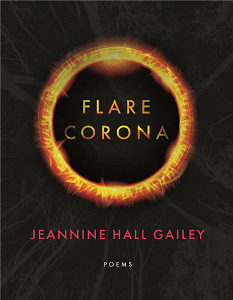
 Jeannine Hall Gailey served as the second Poet Laureate of Redmond, Washington and the author of Becoming the Villainess, She Returns to the Floating World, Unexplained Fevers, The Robot Scientist’s Daughter, and winner of the Moon City Press Book Prize and SFPA’s Elgin Award, Field Guide to the End of the World. Her latest, Flare, Corona from BOA Editions, was a finalist for the Washington State Book Award. She’s also the author of PR for Poets, a Guidebook to Publicity and Marketing. Her work has been featured on NPR’s The Writer’s Almanac, Verse Daily and The Year’s Best Fantasy and Horror. Her poems have appeared in The American Poetry Review, Poetry, and JAMA.