Happy October! Check out this Transatlantic reading and interview video podcast with me and Neil Aitken
- At October 01, 2017
- By Jeannine Gailey
- In Blog
 0
0

 Happy October Everyone!
As you can see, what with the sunflowers and pumpkins, I am celebrating the return on fall, enjoying the return of rain and sixty degree weather and book-reading-season.
Speaking of books, reading, and other fall fun…
I had such a good time yesterday with Robert Peake and Neil Aitken at the Transatlantic Poetry series – if you want to see the video on YouTube, here it is! It’s Neil and I reading from our latest books and then an interview where we talk about the relationships between poetry and code, why we write persona poetry, how to write poetry through dark times, and more. I’ve also embedded the video below.
New Rumpus Review of Field Guide and an International Podcast Tomorrow
- At September 29, 2017
- By Jeannine Gailey
- In Blog
- 0
 Thank you to The Rumpus and to Julie Marie Wade who wrote both a thoughtful and highly entertaining new review of Field Guide to the End of the World. It was a great review to wake up to, both content and style-wise!
Tomorrow at noon Pacific time I’ll be chatting all-Millennial-style in an International Google Hangout podcast with host Robert Peake all the way from England along with fellow guest, my poet friend (and fellow Elgin Award winner) Neil Aitken here! http://www.transatlanticpoetry.com/readings/48-neil-aitken-and-jeannine-hall-gailey/
Come check it out! We’ll talk speculative poetry and all sorts of internationally-appropriate subjects!
And, another shot of orange sunflowers (with Mt Rainier faintly in the background) for good measure, just to up the “fall” quotient of this post!
Today I am dragging out my sweaters and boots, and trying not to think at all about my new MS diagnosis, all the upcoming anxiety-provoking tests. I’m not doing any research today on what therapies work best, or think about all my weird stuff, besides doing my required hour of physical therapy. I have to work to not let my whole life get taken over by this stuff. Today I will read fun books, think about myself as a writer, bring home some sunflowers for the house to celebrate this beautiful review, and get ready to chat poetry tomorrow! I am ready to create some happy space in my life, to open up that tight feeling I’ve had in my chest since my hospitalization, like the hot air balloons that have been rising up in the evening around my house.
Fall! Pumpkins! And finally celebrating some good news…
- At September 24, 2017
- By Jeannine Gailey
- In Blog
- 0
So, I couldn’t really celebrate or enjoy the good news earlier this week (Field Guide to the End of the World won the Elgin Award for full-length poetry books, and Neil Aitken won for chapbooks!) because I was so distracted and miserable with the effects of the steroids. So note to self – steroids have some serious downsides that just left me so sick feeling, sleepless, and yes, that ‘feeling of impending doom’ is a real thing – that I’m just now finally processing the good news today as I’m finally feeling like my body is not one big terrible pain. So, hooray, finally!
Also, Robert Peake will be hosting Neil and I on an International Podcast called Transatlantic Poetry in a week on September 30 where we’ll be talking speculative poetry and more – check it out here: http://www.transatlanticpoetry.com/readings/48-neil-aitken-and-jeannine-hall-gailey/
It helped that the neurologist lowered the dose of the steroids, and I also did some socializing – my old college roommate came over for a visit today, and I’ve had some good phone chats over the last few days catching up that made me feel more in touch with my real self, not just my “sick self.” I’m so sick and self-conscious when I’m not feeling good it’s really hard to schedule visits, but really worth it.
I can’t say the perfect 65-degree-sunny fall weather lately hurt my mood, either. I started hurtling my body outside, after months of being stuck in bed inside, even when I was too sick to leave the house for long and my legs were not willing to stay upright much – I still stumble regularly and mostly have to be in a wheelchair – but I’ve been photographing with a full heart. Here are some of the results. A lot of pumpkins! And sunflowers. Almost all these pictures were taken less than ten minutes from my house. And I even have pictures of a real pumpkin patch versus an artists’ glass pumpkin patch at our local gardening store Molbak’s. When was the last time I was well enough to stop by a farmer’s market, much less eat anything from a farmer’s market? Too long! Today I brought home pears and apples and squash and am so excited about fall produce – that’s got to a be a sign of returning health, after about three months of constant nausea and nausea meds. I think that though the steroids made me miserable, maybe they did help me push through the worst part of the flare – I just wish they’d put me on them earlier so I could have started getting better earlier? Oh well. My thought processes feel a little clearer, too. I’m hopeful this is an upswing that lasts, not just the temporary effects of the steroids and the beautiful weather. Even if it is, I’m hopeful that finally getting some post-steroid sleep and doing things that lift my spirits has a good effect on my immune system. MS is a mysterious illness, I’m finding, difficult and confusing to manage – I’ve got to figure out some coping mechanisms. I think part of it will be enjoying the things you can while you can. Sunflowers and pumpkins seem like positive symbols – maybe a bit fleeting in their beauty, worth noting nonetheless.
-

- Glass Pumpkin patch

-

- sunflowers day

-

- pumpkin patch, mt rainier, sunflower

-

- Sunflowers twilight


-
- orange sunflowers, mountain

Elgin Award for Field Guide! Good News and Perspectives from the Wheelchair
- At September 21, 2017
- By Jeannine Gailey
- In Blog
- 3
Elgin Award for Field Guide to the End of the World!
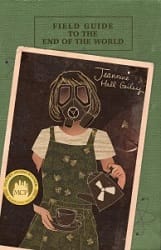
First of all, some good news to announce, finally! Field Guide to the End of the World has won the SFPA’s Elgin Award for speculative poetry. I was so honored to be nominated (amid a lot of friends with good books and chapbooks, this year, so check out the nominees – all the book noms are great and I voted for both chapbook winners Neil and Margaret whose chapbooks are totally worth getting) and extra honored to win, especially in a year that let’s say, in an understatement, has been challenging. Here’s the official announcement on Facebook (will update when they get their web site updated!) This is a great time to order a signed copy from me or order from Moon City Press or from Amazon and finally get the copy of apocalypse poetry you’ve been really needing!
Perspectives from the Wheelchair:
It’s been a little over a week since my new neurologist started me on steroids, what with all the fun and complications of that. More energy – yes! But also, terrible insomnia? Stomach troubles? Other indignities? Well, it was nice to get my speech problems to resolve and a little cognitive boost, but not sure it was worth all the downside? (Let’s not even talk about my research into MS meds – 14 approved from RRMS but none of them look even remotely attractive in terms of problems, side-effects, complications – especially with me, the person who gets allergic..to b12 shots and OTC children’s meds. It reminds me of researching chemo drugs last year for carcinoid – it wasn’t that they were bad, it’s that they didn’t seem to have terribly encouraging results, beyond helping symptoms.
I am not back on my feet yet (still deemed a fall risk as my left leg doesn’t seem to cooperate and my vertigo is still there) and I’ve got a couple of months (!!) still of testing remaining – EMG tests, autonomic nervous system, stomach and eye tests, all in the coming months to help determine what exactly is going on, what processes and treatments might be most likely. I am still doing therapies – card matching games, writing with my hands, typing is still not great (so many more typos!) and trying not to let my stomach.dizziness.houseboundedness stuff get too depressing or overwhelming. My insurance – for which I am very grateful – has sent a non-ending troupe of therapists to my home to try to get me back to some semblance of normal – occupation therapists who help me figure out how to do simple things, physical therapists, speech and swallowing therapists (didn’t even know that was a thing, but yes) – and others, too, if I want or need them. I’m still not getting out of the house much as getting dizzy results from things like swinging my head around too fast, I’m still in a wheelchair, it takes a LOT of my daily energy to shower and look like a regular human still. But I want to get there. And the docs think the steroids should help me get on the recovery path a touch faster, so perhaps worth the pain-in-the-ass level? (Those of you with autoimmune problems who have to be on these things all the time, my sympathies – and also any coping mechanism tips appreciated in the comments? )
So as a writer, I’ve been struggling to write a few poems – and when I tried to send things out, I’ve been botching things – editor’s names, guidelines get mixed up, so I’m clearly not at full-blown writer’s mode yet. In the next month or so, I’m going to try to do a radio/podcast thing and a Skype class visit – I’m hoping the steroids will help both the cognitive and speech stuff enough to make me seem at least sort of “normal.”
After facing the challenges last year of researching and testing for rare kinds of cancer (which, by the way, the best they can still say is that “you probably don’t have it but we have to keep watching the liver tumors”) it seems like MS shouldn’t be worse, or even as bad – but it’s weird because the endpoints of the diseases are different, and some of the research on MS – now I’ve read about fifteen books on the subject – are incredibly depressing accounts of the progression and the disabilities and the ultimate failures of a lot of treatments. I’m mostly trying to focus on the positive things I can do to make things better – Vitamin D, physical therapy – and maybe trying to get out of the house a little and do some things that make me feel happy (which wards off the crazies and anxieties I think.) I have a big goal while on the steroids of trying to make it to the zoo – after trying shorter hops to the local bookstore. I’d like to do something to celebrate the Elgin Win too!
A new review of Field Guide, Another Step on the MS Journey, and Fall Approaching with Poetry Discouragement
- At September 13, 2017
- By Jeannine Gailey
- In Blog
- 4
New Review of Field Guide to the End of the World
Thank to to Poets and Artists and Rita Maria Martinez for this new review of Field Guide to the End of the World. It cheered me up during a tough week.
Another Step on the MS Journey
I saw a much better doctor at the Evergreen MS Center yesterday who did a longer exam and answered many of my questions. She explained why my case was probably too complicated for her, boo, because I liked her, so she’s sending me along to the larger UW MS center’s director and maybe they will send me along to a bigger research center after that. She wants a larger research umbrella for me, she said. She thinks I may have MS plus something else causing some of the symptoms. We’ll get another step closer to a firm diagnosis after doing an evoked potentials test, which will be my next step along with an eye exam and meeting with a new gastroenterologist. She said that was probably the last step before an official MS diagnosis – no spinal tap, yay. She was very empathetic and asked lots of questions, explaining things along the way. (Like, my midsection has gone numb along with having the stomach trouble – which could indicate spinal issues even though I don’t have visible spinal lesions yet.) She also thinks my b12 problems – besides kind of masking the bigger issues for years – might be a symptom of another autoimmune issue that’s using up the b12 stores. Interesting! I keep reading books on this stuff but MS is complicated. She is putting me on steroids (hello, hunger, energy and insomnia) for a short term to see if they help. She’s worried that the 14 approved MS treatments are all going to be problematic for someone with liver tumors, a bleeding disorder and a primary immune deficiency, so a little worry about that, though I guess we’ll cross that bridge with the next set of doctors. She said that MS will eventually be one of my diagnoses, and she was sorry because it would be expensive to get long-term care. I laughed and that, and told her last year I’d been diagnosed with terminal cancer, and I thought that was probably much worse for getting long-term care insurance!
Fall Approaching, and Poetry Anxiety
Last night I had an anxiety dream about Trump taking away my health care – literally coming up to me in person and taking away my prescriptions – and another dream in which I was told I’d never be a famous poet like “blank.” (A specific poet I admire.) I know it was just anxiety dreams, but sometimes I do worry that I’ll never really achieve anything in the poetry world and that my kind of poetry will never get me fellowships, recognition, awards – the stuff that’s not supposed to matter, but still sort of does. And especially if I can’t travel or have to take time off for health stuff periodically, or I can’t make it to every AWP – it just feels tough. For a while this last couple of months I couldn’t write – which was really depressing – or even read. And I realize you can’t really take those things for granted, not with MS, or maybe anyone, ever. You feel like you have all the time in the world, and then you’re like…well, maybe it’s limited. Maybe my time to do the things I want is limited. I can see my life getting smaller – being in a wheelchair for the past two months again has reminded me how NOT handicapped friendly most of the world is. Even in liberal and wealthy Seattle, it’s like half the city hadn’t been built with ADA specifications in mind – and I have a six-foot-two 250 pound man to help me when I get stuck with my walker or wheelchair by a curb or stairs or a non-automatic door, most people don’t.
-
- ships at Carillon Point

-
- Kirkland late roses

-
- Glenn with Sylvia

-
- New haircut (finally feeling human!)

The weather has gotten mercifully cooler, and the air cleaner, finally devoid of smoke, and the weather report is calling for rain and highs in the sixties. I can feel my body sighing with relief. I managed to get out of the house today and for the first time in two months (!!) get my darn hair cut – it’s still hard for me not to get really dizzy and nauseous when I’m out, but it was worth it to feel like I was doing something normal and human again. I took some pictures of pink roses still in bloom late and these pirate-type boats at Carillon Point while I was out. And I start medication tomorrow that will hopefully help with the dizziness, numbness, stomach problems, and leg weakness – maybe even the minor motor skills that I really want to get back (hello, handwriting and eyeliner possibility!) I know the fall usually makes me feel more hopeful about writing – all the journals and publishers opening back up, all the readings and book launches. I’ve just really been struggling with doubt about my poetry path as well as this diagnosis, which is definitely a challenge even compared to all the other weird diagnoses I’ve had in my 44 years. I’m feeling a little down on my luck, a little discouraged not only with my body’s multiplying problems but my writing path. I am hoping things get a little easier – rewards, even small ones, might manifest, that my body responds well to treatment and lets me start doing “normal” things again – at least a little socializing. This is really the third month of enforced alone-time and rest, and I’ll admit to growing restless in my confinement. I hope soon I’ll have better news to report. Good luck to all of you in September!
Disappointing Doctors, Villains, Notre Dame Review, and Looking for Fall
- At September 04, 2017
- By Jeannine Gailey
- In Blog
- 0
Hello my friends!
Notre Dame Review and a new poem
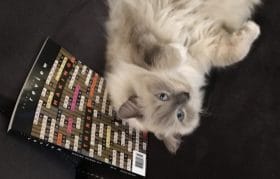
First of all, thanks so much to Notre Dame Review – I was so happy to get this acceptance after at least fifteen years of submitting – I received my Fall 2017 contributor’s copy the other day, including my poem “On Being Told You’re Going to Die, But Not Quite Believing It.” Here’s the poem and Sylvia posing with the Fall 2017 issue.

Villains and Disability
And thank you to Kelly Davio for her “reading loop” about disability and villains in pop culture, which features one of my poems 🙂 It’s also just fascinating to think about how the disabled body is often presented in movies and comics.
A Report on How I’m Doing, and Wishing for Fall
I’m sorry to report I’m not doing any better yet, especially after I had so many hopes for my appointment at the Swedish MS Center last week. The doctor was either extremely unknowledgeable or extremely uncaring (literally answering almost every question with a shrug or an “I Don’t know” – even for things that he definitely should have known something about as merely a practicing doctor, not to mention a neurologist )- or possibly both, and left me with no new information, no help for any of my problems, and a lot of frustration. (It was so bad I actually called back the office to complain, which I have literally never done before. They got me another appointment with a different doctor, but not til December. December!) If you remember my cancer stuff last year, you might remember I had a similar appointment with a “top” oncologist at UW, so I guess this is par for the course – you can never rely on the first doctor you see after a hospitalization, I guess. So I’m still unable to eat or walk much, mostly stuck inside, and frustrated by my lack of getting better. So many sweet friends have offered support, which I really appreciate, and at least my reading ability – which was knocked out by vertigo for a while – has some back, so I finished up work on a book review and my newest book manuscript draft and sent it in to a third publisher. (If any of you publishers are interested in a book about being diagnosed with terminal cancer and then MS, but you know, with a funny spin, please let me know. I could really use the pick-me-up!) The dizziness has improved with home therapy exercises but the nausea and gastroparesis stuff persists, unfortunately, along with the weird leg weakness and some other weird symptoms. I’m sorry I can’t report dramatic improvement yet, but then again, I’ve started no new treatments thanks to deadbeat doc neurologist #1, so…I guess it would be overly optimistic to hope this goes away on its own. But you can send good thoughts my way if you want, I feel so bad for my poor husband who has been taking care of me since a month before the hospitalization, just to watch me becoming increasingly sick and weak – I don’t like it, I wish he didn’t have to watch it either.
We have wildfires on all sides of us right now and they’re predicting weather in the nineties today and tomorrow. MS flares happen more often in the heat, so maybe things will settle down when our weather changes, at least I hope so. I’ve always liked the fall but never really craved it the way I have this year, this year of record-breaking heat and scorched earth and fires in the usually mild Northwest. Looking at the news – wildfires down the coast in California, Houston’s flooding, North Korea’s nuclear warheads – isn’t particularly hope-inspiring right now, is it? I’m hoping for something better for me, for the weather, for the world, soon. I think we could all use a break.
Still Summer, Still Struggling, MS Center Tomorrow
- At August 30, 2017
- By Jeannine Gailey
- In Blog
- 4
Hey guys, thank you so much for your support, which means so much in these long hot mean days of summer, which just keeps holding on, it seems. Just this week, I received a vase full of pink flowers from some of my speculative writer friends (thanks Nancy, Kelly, Lesley, Molly, Sally!), some really beautiful get-well-soon cards from various friends, an offer to visit which I hope to take on soon from one poet. I’ve ordered (on orders from occupational and physical therapists) a rollator/walker thing in pink, a pink travel chair, some “cooling” accessories, books on MS…a lot of fun shopping, you can tell. Apparently MS hits you harder when you get hot, so traveling with ice packs is a must, especially on these weird late summer hazy 90’s days we’ve been having. I’ve never been so ready for fall in my entire life!

I’m due at the MS Center tomorrow for my grand rounds and intake and such, and hoping against all hope I walk out with a decent treatment plan, so I don’t feel like vomiting round the clock, and maybe my legs will start working again, etc. Please think good thoughts for me tomorrow starting at 3:30 PM.
I’ve been asked how I’m doing, so I’ll be frank – everything still sort of sucks, as you might imagine as I’m only on symptom control as of today, and really it’s been hard not being able to speak easily, swallow pills easily, remember things, dropping stuff, and oh yeah, remembering I might throw up or fall at random times and staying on some absolute knock out pills for the nausea and dizziness round the clock. I haven’t been able to put on any weight yet. I don’t really feel better yet. I’m hoping that’ll change as of tomorrow.
I did start being able to read in teeny doses – otherwise I’ve been on a steady diet of TCM and HGTV to entertain myself, while everything else does weird stuff to my eyes to make me dizzy. It’s hard to type, (SO CLUMSY!) but here I wanted to show up for a quick update while I was up for it.
I’m also going to beg my Science Fiction Poetry Association Friends to please vote for Field Guide to the End of the World for the Elgin Awards – votes are due for members September 15! Here’s the link: https://docs.google.com/forms/d/e/1FAIpQLScC4YJ4eDbRAXqpEMPcEpIsrqPl19k_fjQtFG_J7-c5OZj2ZA/viewform?c=0&w=1
There are a lot of great books and chapbooks up this year, including many by friends like Nancy Hightower, Margaret Rhee, Jessie Carty! And I think we could all use a pick me up. It’s been a rough year for a lot of us.
I hope to have some good (or at least better news) next time I post. In the meantime, send me your positive vibes! I hope fall gets here soon for all of us. (And of course, prayers for my Texas friends!)
Some Time in the Hospital, a New Diagnosis, and a Tor.com shout for Field Guide to the End of the World
- At August 15, 2017
- By Jeannine Gailey
- In Blog
- 10
First of all, thanks to Abby Murray and Lish McBride for writing up Field Guide to the End of the World for this feature on Tor.com! This was a bright spot in an otherwise challenging week
I spent the last three days admitted into a hospital – after a week of repeated trips to the ER, collapsing with dehydration and fainting and cyclical vomiting – hooked up to IVs, getting lots of MRIs (three!) and giving lots of blood. Before that, I’ve had over a month of very strange symptoms – dizziness, nausea, vomiting, inability to keep down food, and strange heavy feeling in my lower legs, with wobbliness and my knees giving out. At the hospital I had a neurologist specialist work me up along with the hospitalist (along with, among others, a nutritionist, an occupational therapist, and a physical therapist.) It should be said here vomiting is one of my most hated things in life and the other is being hooked up to a damn IV. Even at a very nice hospital with private rooms and big televisions and pretty surroundings, like Swedish Issaquah, no one loves being in the hospital.
Several different radiologists and neurologists have decided my symptoms, combined with a rather devastating new MRI of my brain, mean I have probable MS. This has qualified me to be worked up at the best MS Center in Seattle with one of their top doctors. (If these doctors hadn’t interceded for me, there’s almost no way I would have made it in with their doc within two weeks notice.)
A Year After I Received a Terminal Cancer Diagnosis, I’ve Received a Positive MS Diagnosis.
A year and a half after I received a terminal cancer diagnosis at an ER in Redmond, I’ve discovered that my neural lesions, which had been watched for over five years and stayed pretty static, had changed, grown, spread, and generally developed a pattern that looked a lot to the neurologist and radiologist like MS. (The medical terminology is “McDonald’s criteria.”) Because I cannot have a spinal tap – the usual way to get a diagnosis – my diagnosis has been slow to come, even as I developed more lesions and more symptoms. This latest weirdness has been termed an official “MS flare,” which typically last thirty days and bring lots of symptoms on to the unwary MS sufferer.
MS is not as scary a diagnosis as terminal cancer, and MS is treatable – though we don’t know yet what kind of treatment will work for me. Currently I’m on a giant cocktail of meds to get me through the time when the MS specialists will decide what the best treatment for me is (because of my other health conditions, they didn’t want to do the usual throw a huge dose of steroids treatment at me. Though I might have welcomed it!) My brother came to visit me in the hospital, and my parents flew out to Ohio to help Glenn as right now I am termed a “fall risk” and can’t be left alone even if I wanted to be. Getting out of a chair or taking a shower have become huge difficult challenges for me all of a sudden.
Anyway, it’s been more than a month since I could focus on being a friend, a writer, or even a decent human being, so I apologize – – but just trying to survive the constant vomiting – along with a huge decrease in my ability to walk or even stand unaided – has been a real bear. I hope that the new cocktail of drugs will work until they can get me under a more stable treatment plan. Think good thoughts for me as I am dealing with a new reality. I said to a friend that MS wouldn’t even be the scariest thing – or the thing most likely to lead to be death – that I’ve been diagnosed with. But it is still a challenge as I learn the new reality of my body, which constantly morphs. Like Buffy, you learn to defend yourself against one monster one week, and the next week, another pops up and you start all over again,
BookRiot and Poets for People Who Don’t Like Poetry, plus ER trips and Smoke on the water
- At August 06, 2017
- By Jeannine Gailey
- In Blog
- 1
First, thanks to BookRiot and Carolina Ciucci for including me on this list of “Poetry for People who Don’t Like Poetry.” Very good company there! Share if you like the article.
Second, I’m sorry if I haven’t been on top of things – I’ve been sick – several trips to the hospital and different doctors kind of sick, where I can’t stop getting – well – no graphics here, but let’s just say I’m having trouble keeping down anything but liquids, and sometimes not even those. They can’t figure out what’s wrong though my white blood cell count is sky-high and other inflammatory factors, they’ve misdiagnosed me twice already and given me a bunch of meds that didn’t help, so I’m a little frustrated (and tired, and having a hard time staying hydrated or doing anything but sleep with all the anti-nausea drugs. Oof.) This has been a month so far, with no relief. Boo. I have things on hold – haven’t been writing and sending out as much, so forgive me if I have been slow to respond.
Also in the weird zone, the British Columbia fires – 500 miles from us – have covered Seattle and the whole state of Washington in smoke, and this along with a bizarre hot/dry streak have left us kind of living in an apocalypse zone, right when most of us would like to be spending time outdoors, the air is literally too unhealthy – not just for asthmatics, for everyone! Now everyone is wishing for rain and wind and lower temperatures. I can look over the valley from my deck, and a weird thick haze hangs over everything. The moon was weirdly orange last night, baleful even.
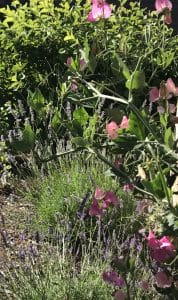
Sweeptpeas and lavender running wild in my garden
Here’s a quick clip of my garden in bloom. It doesn’t seem to be bothered either by the smoke or my illness, nor do the hummingbirds and stellar jays and flickers. We saw a coyote on our street the night we went to the hospital, and I saw this when I went out to water the garden yesterday – a tiny bunny eating the leaves off my dahlia! 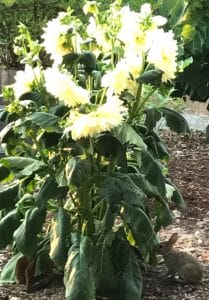
On Illness and Ambition
- At July 31, 2017
- By Jeannine Gailey
- In Blog
- 8
Hello, readers. Sorry I haven’t been here much during July – as I may have mentioned in previous posts, my immune system has completely rebelled on me this month and I’ve spent the whole thing sick as a very sick dog. On the plus side I lost fifteen pounds.
But this has given me some time – when I am not on so many antihistamines and anti-nausea drugs I can’t think – to do other things. Catch up on my gardening – my garden which has finally, after some months scratching at a front patch with not much in it – paid off with a marvelous production of sweet-peas, lavender, roses, lilies, dahlias, fuchsias, and the tiny hummingbirds and bumbling bees that accompany them. Catch up on my reading – several poetry books including Jennifer Whitaker’s The Blue Hour, a lovely collection of fairy tale poems with cover art that I literally almost bought at a gallery because I loved it so much (just lacking the spare several thousand dollars necessary), Victoria Chang’s Barbie Chang, Beth Ann Fennelly’s mini-memoir collection Heating & Cooling (for which I am working on a review). In fiction and non-fiction. Allegra Goodman’s The Chalk Artist, a combination of video game narration and poetry teaching that should have been slightly more fun for me than it was, given the subject matter – and lately, the collection of essays, Double Bind: Women on Ambition, edited by Robin Romm – with pieces from fiction writers and television showrunners, scientists, athletes, and writers from Francine Prose to Roxane Gay.
It’s this book that makes me think about how my body and its various illnesses have influenced and controlled my ambition. I wanted to become a doctor, but as I struggled to stay healthy at nineteen and twenty getting my pre-med degree, a well-meaning professor advised against it, telling me my constitution was simply not a good fit for the rigors of medical school. As a young twenty-something, I worked a lot of hours and made a lot of money in the tech industry – not an indecent amount, but enough – until my immune system failed so hard on me that I ended up almost dying. It was at this point that I went back to my childhood ambition – not to make money in tech, not to be a doctor, but to be a writer. Not just a writer, but a poet. Not practical. Not a money-maker. But it turned out to be something I was fairly passionate about. I spent time every week reading, writing, reviewing, sending out work for publication. I would never have had this dedicated time had I not been forced into failure by my physical body at two other things – I think about that. I had worked full-time in tech while I was getting my MA in English, so I went into an MFA program dedicated to idea of spending time actually writing. Halfway through the program, I had my first book, Becoming the Villainess, accepted for publication. I was serious about this.
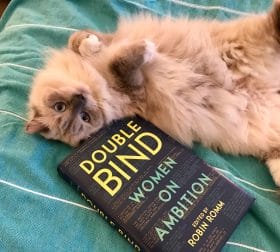
In some ways, my ambitions have been thwarted by my system’s unreliability, by its fragility. In other ways, my illnesses forced and shaped my ambition into something that could be practiced outside of an office, outside of regular hours, even while lying in a hospital bed on an IV full of chemicals. I have not become less ambitious as I got older, as I’ve faced more and more health challenges, a lot of them, lately, pretty serious. My brain is full of lesions, the neurologists can’t explain, that are affecting my memory, language and motor skills. My liver is full of tumors, which for the time being we’re waiting and watching and hoping don’t kill me. That’s on top of the hereditary bleeding disorder, the mutations like being born with one kidney, the asthma, the weird allergies, the primary immune deficiency. Yes, it’s a lot. Sometimes it gets to me. I don’t travel as much as I’d like; my days are often planned around how much energy I have, if I’m too sick to get out of bed, if I’m able to manage to leave the house. I’m a social girl who can’t socialize very often, a driven workaholic who has to limit how many hours I do anything in a row, including sit at a computer. It’s often a life that leaves me frustrated, confined.
What is my ambition now? To write as much as I can in the time that I have left. To get those poems out into the world the best way I know how, as fast as I possibly can. Robin Romm quotes Anna Fels in her introduction to Double Bind, that the idea that ambition is “the desire to do good work in the field and have that work recognized by people who understand it.” That seems like a mature idea – not pursuing fame or fortune, but simply the ability to create work I can be proud of, and perhaps – and only perhaps – have some people understand and recognize it. I hope this doesn’t make you like me less, because one of the big things about being female in this culture – something the book explores and that we saw demonstrated in front of us in Hillary Clinton’s demonization as she ran for President, Trump’s fans chanting “bitch” in unison – is we as women are not really allowed to admit that we’re ambitious. It looks selfish, or striving, or whatever the hell else the culture tells us is unacceptable for women. “Be anything you want, honey, be the best you can be – but make sure first you’re selfless and sweet, humble, keep your mouth shut when people treat you like you are less than you are, work hard to be as thin and beautiful as you can be, and never put yourself forward in any way or admit that you’re better than your brothers or male compatriots at math or baseball or whatever, because you don’t want them to feel bad.” Bah. I’m pretty sure my whole generation, and for sure the Millennial girls, can see that the dream of being the Disney-style princess is its own kind of prison, and besides, weren’t the villainesses the interesting characters anyway?
But at this point in my life, I care less than I used to. My drive to write more has resulted in a whole book being created in the last year, a book I’m proud of that’s quite a departure from my previous books – if I lacked this drive, I really don’t know how I would have coped with the bad news, the bad days, the bad medical tests, the dark and dismal prognoses I’ve been given. I am thankful for my ambition. I’ve told this story before on the blog elsewhere, but I remember in California, being plugged into a bunch of machines in the hospital, with double pneumonia and pleurisy and goodness knows what else, on the second day after my admission, choking and unable to breathe, seriously thinking: “I can’t die – I’ve still got three more books that need to be published!” The three books that became Unexplained Fevers, The Robot Scientist’s Daughter, and She Returns to the Floating World, were published in pretty quick succession after that hospitalization When I was told last year that I had six months to live, that the doctors couldn’t do anything, that the doctors were absolutely sure – I just froze and thought – I’d better get on to the business of getting the next book out of me before anything happens, I’d better do all the fun things I can before I can’t any more, and some of those fun things included going to poetry readings and AWP. Our ambitions can literally save our lives, or at least motivate us to live them as meaningfully as we can. My life of the body has been pretty unpredictable – in and out of hospitals and wheelchairs, doctor’s offices, etc – but my writing life remains rewarding and reliable, at least, so far.
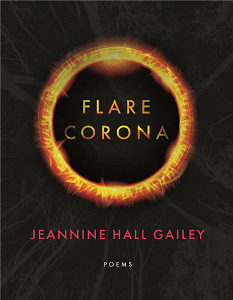
 Jeannine Hall Gailey served as the second Poet Laureate of Redmond, Washington and the author of Becoming the Villainess, She Returns to the Floating World, Unexplained Fevers, The Robot Scientist’s Daughter, and winner of the Moon City Press Book Prize and SFPA’s Elgin Award, Field Guide to the End of the World. Her latest, Flare, Corona from BOA Editions, was a finalist for the Washington State Book Award. She’s also the author of PR for Poets, a Guidebook to Publicity and Marketing. Her work has been featured on NPR’s The Writer’s Almanac, Verse Daily and The Year’s Best Fantasy and Horror. Her poems have appeared in The American Poetry Review, Poetry, and JAMA.