Mini-Reviews of Render and The Wishing Tomb, Blessing of Long Weekends, and AWP Planning…already?
- At July 07, 2013
- By Jeannine Gailey
- In Blog
 1
1

The four-day weekend of seventy-degree days, a blessed lack of traffic, walks with the wind off the cool water watching eagles feed their eaglets…time to read a couple of books, including two poetry books I’ve been meaning to review here and a book of Isak Dinesen’s, Winter’s Tales, a melancholy collection of short stories that were combinations of Hans Christian Andersen-toned fairy tale and morality tale with a twist.
Someone mentioned AWP 2014 to me today, and I thought, do I need to start planning things like readings and off-sites and parties already?? Yikes! I was thinking of trying to throw a party at my little townhouse, but we’re twenty minutes’ drive away from the conference site, so that might not be feasible. Maybe a collection of readings at a cupcake shop?
Mini-reviews!
I won a copy of Amanda Auchter’s The Wishing Tomb during the Great Poetry Giveaway, and I was delighted, because I really enjoyed Amanda’s first book and her previous chapbook, and was excited to read her follow-up effort. This was a wonderful sensual exploration of the history and personalities of New Orleans, from the 1600’s to Katrina, and conjures the sights, sounds and smells of the French Quarter, the mysterious charms and dangers, the crimes, the social injustices and heartbreaks. Dead prostitutes and magic charms, Jazz funerals and tombstone offerings. From the title poem, “The Wishing Tomb:” “Give me what you wish:/ bread crumbs, earrings, your high-heeled shoe/ and I will show you what you’ve earned:/ a rain-smeared kiss, a letter, or nothing/ but nights of teacups, an empty bed.”
Collin Kelly’s poetry has been on my radar for a while, because of our mutual love of pop culture figures, particularly superheroes. I think this book might be my favorite of Collin’s, at once more personal and more universal – memories of Knoxville’s 1982 World’s Fair, first boyfriends and early sexual experiences, family vacations juxtaposed with dreams of Charlie’s Angels, Pam Grier, and Lois Lane. Especially touching moments include, in “Parallel Lines,” the speaker describing his grandmother dancing with him to “Heart of Glass,” and the speaker’s empathy during Margot Kidder’s breakdown, remembering her wonder in the arms of Superman in flight. From “to Margot Kidder, with love:” “Margot Kidder was Lois Lane./ Fiesty, brave, in perpetual need of rescue./ Her dark hair, un-PC cigarette dangling,/ whiskey voice, in love with the one man/ she could never truly have.”
Happy Holiday Weekend, Shock Treatment, Intro to Time Travel, and Not Having All the Answers
- At July 03, 2013
- By Jeannine Gailey
- In Blog
- 0
I am wishing everyone a wonderful holiday weekend. We here in the NW are having record-breaking heat, which means I have to avoid being outside because I am easily scorched. In the last three days, I’ve been repeatedly shocked (nerve tests at a neurologist, this time for numbness in my arm and hands – it’s a standard carpal tunnel test, but it was miserable) and had three episodes of anaphylaxis at 2 AM (maybe related to the sun? Even my allergist is stumped.) Yes, so I am looking forward to a few days with less trauma and maybe less sun and way more antihistamines. And let me tell you, I do not think that the old-fashioned shock-therapy was a good cure for anything, after my experience yesterday! It left me with little “echo-zaps” in my arms and legs for hours – super disconcerting – and I can’t imagine someone thinking this might be good for state of mind! No thank you! Poor Zelda and Sylvia!
Thanks for all the positive feedback from my last post, but I wanted to say, I don’t really even want to pretend to have all the answers. I’m definitely still stumped by the same problems everyone else has – how do you find a good teaching job/job for a writer that pays the rent/student loans? How do you find a good publisher? Which journals do you send your work to? I still ask myself all these questions, plus more! All I can do here is entertain our thoughts and arguments about obstacles, problems, and tricky riddles – basically you’re watching my own struggles to figure out, yes, what to do next. So, you’ve published three books. What do you do with your next book? So, you’ve been Poet Laureate of a city. What do you do next? In the last few days, I’ve made some next steps – hopefully forward – and will see how they turn out. I’ve tried to make positive movements, and not only that, but tried to work with some friends to also help them make positive steps forward, because, I guess, I feel best not just when I succeed, but when I can help someone else succeed at the same time. I consider myself a fighter for sure, but I also have that weird female trait, which is, not just to conquer, but to nurture and conquer (kind of like Daenerys, the only character you can really root for in Game of Thrones. Plus, dragons! Except, so far, for me, very few dragons. I’m still hoping though! At least for some fire lizards! Oh, addendum, my friend Felicity reminds me that we also root for Arya. Of course. My apologies.)
Speaking of sci-fi references , you’re interested in my new poems, or in time travel theory, then check out this new poem, “Introduction to Time Travel Theory,” in Apex and Abyss. The poem is supposed to be in couplets, but I think it didn’t come through in the online version. Just mentally read it in couplets, then. And nerd alert: if you can catch all the pop culture references in the poem and name them, I’ll send you a mystery prize! http://www.abyssapexzine.com/2013/06/introduction-to-time-travel-theory/
Secret to Writing Success #43: Don’t Get in Your Own Way
- At June 30, 2013
- By Jeannine Gailey
- In Blog
- 6
I’ve been talking about success as a writer lately, and today I want to talk about what can sometimes be your biggest tripping point on the path to success – yourself.
I’ve been teaching and mentoring writers for a few years now and have recently been alarmed by an increase, especially in women writers, of a certain crisis in confidence, a kind of self-sabotage, that causes them to be the biggest obstacle in their paths to writing success. I don’t want to give away any secrets, but let’s look at some things female writers have said and done lately that made me just want to get up and shout: Don’t be the thing that keeps you from succeeding!
–A young student confessed after a reading that she was in tears every night after her old-white-dude adviser at her MFA program (which shall not be named, but it wasn’t Pacific U) said some mean things in his critiques, and that therefore, she didn’t want to write anymore. (Full disclosure: my MFA advisers were so kind this literally never happened to me. I think maybe one of them criticized my use of commas, which was probably well-deserved, but they were all to a person so supportive and encouraging that, much like this example girl writer might think if her adviser was encouraging instead of critical, I feared they were lying to me. That’s right, when they criticize you, you cry, but when they praise you, you worry they’re lying. Sigh. Because I also lacked confidence in my own writing for many years. Well, I still sort of do, but I just grit my teeth and get on with it now.) Um, your adviser is there to help you, he is not a father figure you need to impress. Really. Take the comments that help you and ignore the rest. This goes for mean people in writing groups, workshops, and editors, too.
–A woman writes a terrific book that gets published with a really good press, but is afraid to do anything to promote it, not wanting to appear too self-promoting or selfish or proud or whatever. Therefore, no one hears about her terrific book, while dozens of mediocre books are lauded far and wide. This is part of what motivates me to write book reviews, but really, if you have a great book, you have to do the work to get it some attention.
This is also a self-prescription. Go ahead, what are you afraid of, a little success?
–A publisher asks for someone’s book manuscript, which almost NEVER HAPPENS, and that person doesn’t send it because they’re worried “it’s not good enough…” For years. That’s not your decision, it’s the publisher’s. Books that do not get sent out are impossible to publish. If a publisher asks for your work, send the work without any questioning.
–Bright young writers who feel that their work, which has been praised by workshop leaders and friends alike, isn’t good enough to send out to publish, so they never send it. So it never gets published.
–Or, bright young writers send out a few individual poems, but don’t feel like their work deserves/is good enough/is well-organized enough fo a chapbook or full-length collection, so they never spend the time crafting a chapbook or full-length collection. It’s really hard to get a chapbook or book published if you never put one together. Plus, putting one together is an eye-opening journey into your own psyche – what are you protecting yourself from? Put the book together! Then send it out!
–Bright young writer gets a really specific and mean-spirited rejection, and stops writing because of it. Bright young writer gets mean workshop criticism, and stops writing because of it. Bright young writer thinks, what’ the point of publishing anyway, nobody reads poetry, what’s the point? And stops writing because of it. Writers who stop writing? Don’t magically find success. Writers who keep writing no matter what? Yes, you guessed it.
I hate to say this, but very few of the young men (literally, maybe only one or two) I’ve worked with have struggled with any of the above, regardless of the quality of their writing. Therefore, those guys have several books and a tenure-track teaching job now. Just think of that, ladies, and let it motivate you to not stand in the way of your own writing. Send it out, be proud, take the time to work on it and make it the best it can be but then for God’s sake send it out and when it gets published then promote it without feeling ashamed. Because I guarantee you the boys aren’t worrying about whether they seem selfish or whether some publisher will send them a mean note – they are sending out their work and thinking it is the best thing since the invention of the atom bomb. And guess what? That will make them successful a lot faster than if they were sitting fretting in their rooms about whether their work was even worth writing or not, or whether some group of writers or their teachers like them, or if their work deserves attention. So I prescribe a kind of exercise in reckless courage – write a poem you think everyone will hate and then send it out to the best journal you can think of. Write the book inside you, even if it scares you. The worst thing that might happen to you is not that bad, and the best is that you create some art that might even get noticed.
PS Please do not let this post be one more thing that makes you feel bad about yourself, either.
Notes on a visit to Pacific University’s MFA residency
- At June 28, 2013
- By Jeannine Gailey
- In Blog
- 0
Back from a trip down to Oregon to visit my MFA alma mater, Pacific University, to speak on a panel about “Life After the MFA.” I think the talk went well, and though I thought the audience would be 30-40 people, it was more like 150! My part of the talk included a lot of tips that I’ve been writing about here the last few weeks – but it was sort of overwhelming to try to sum up the last seven years of teaching, publishing, volunteering, and lately, working for the city of Redmond as Poet Laureate, plus tips I hoped would be useful to students about to graduate! Well, if you were there and have any questions, I’m here so shoot me an e-mail and I’ll do my best to answer them! I mean, I don’t have all the answers about life after the MFA – far from it – but I like discussing it!
I got to see a few old friends from my days in the program, catch up with almost all my former professors still working at the program, and meet a bunch of interesting, lively, intelligent students – some of whom I had e-mailed with or been Facebook or twitter friends but got to finally meet in person. During my visit I got to field questions about everything from how to find places to publish “geeky” poetry (I wrote a bit about speculative poetry markets in one of the Poet’s Markets from the last few years, in case you want to look it up) to how to put together a chapbook, how to deal with workshop criticism, how to volunteer for a literary magazine and how to plan for financial stability after graduation. I was impressed again with how much enthusiasm and energy everyone had.
Below, pics: a trio of redheaded poets (Mary Bond, Larissa Nash, and myself) – me with Joe Millar and Dorianne Laux – and posing with Twitter friend Killian Czuba…
 |
 |
 |
 |
And a final note to any of the young poets I have talked to recently – because I’ve been thinking about it ever since a young woman poet (not at Pacific) was telling me about crying all through her school semester because her advisor’s notes about her work were so rough: remember, the only person you need to please with your writing is really YOU. They (your workshop, your advisor, that guy who wrote that really mean rejection or review) are there for you, to use their advice to help you or to ignore as you choose, so are not worth your tears, not even one. Channel your inner cranky Margaret Atwood-poet-warrior-self. Curse if you want, but mostly, don’t worry about pleasing everyone. Remember so much of the writing life is getting back up after being smacked down, and going for the next round – it’s the only path to a sustainable life as an artist.
Life After the MFA and my poem “Elemental” up at Rattle
- At June 26, 2013
- By Jeannine Gailey
- In Blog
- 0
I’m on the road with a bad internet connection today but wanted to post two quick things!
My poem “Elemental” is up at Rattle today and you can hear me read it there. (PS This poem is up for a Rhysling Award, so if you’re part of the SFPA, vote 🙂
http://www.rattle.com/poetry/2013/06/elemental-by-jeannine-hall-gailey/
And I’ll be doing a talk tomorrow at Pacific University in Forest Grove, Oregon on “Life After the MFA.” Wish me luck! And if you’re at the Pacific residency, come by and say hello!
Success as a Writer Part III: What You Have Control Over, and What You Can Do
- At June 24, 2013
- By Jeannine Gailey
- In Blog
- 2
I’ve been writing a lot lately about what defines success as a writer, as honestly and completely as I can, but I realized I might have left out a couple of really important things, chiefly, what can you, as a writer, do about it? In the end, it’s not really about fame or money or grants or fellowships or number of books sold, it’s about how you go about your daily life.
You can’t control critics, or mentors, or grant advising committees, or readers, sales numbers, or publishers…but you can control yourself and your own actions. So what are the activities that will make you, in your everyday life, a more successful (and probably happier) writer
1. Remember to keep writing. And try to write the best work you are capable of. Challenge yourself. And try some new things sometimes – whether it’s a new POV, a new subject, a new genre. The worst thing you can do is write a bunch of work, then end the “That’s it. I’ll just send out that work over and over, and waste a lot of energy worrying about it.” Or, after you, say publish a book, obsess about sales numbers and Amazon ranks and good/bad reviews. No, you start another book…or two. The best thing you can do for yourself and your career as a writer is “always be writing.” Even if you win the Pulitzer Prize, you won’t know if that’s the best work you were truly capable of. You have to keep writing.
2. Try to give something back, if it’s just listening to someone struggling with their first set of rejections, all the way to becoming a mentor to a younger writer. Teach something, because you’ll always be surprised at what you learn when you try to teach. Maybe help out with a local literary magazine, because you will gain crazy insights into the publishing world. Or work with high school kids or read to children at the library. Or start reviewing other people’s books, again, because you’ll gain a lot of insight about contemporary poetry – plus, you’ll realize you actually have strong opinions about different writers and styles that you might not ever have thought hard about if you weren’t reviewing a book for someone else.
3. Take a class in something you don’t know how to do yet. Try to paint, or program. If you’re not tremendously physical, try something outdoors that challenges you physically. It’s good to crash up against walls, to drive into mountains, to allow yourself to fail at new things. Go dancing. Listen to a new band your much younger/older friend recommends. If you’ve always killed your plants, try to garden. Cook. Research an obscure topic (I am currently researching CIA manipulation of the modern art scene in the 1950s. Why? Because I find it interesting!) I think all writers should have their hands in some weird other world all the time. If you become the world’s best classic-arcade-Galaga player, well, at least you’ll have something new to write about!
4. Build your own family, or, writers need to create their own small towns. The writing life, as I have written about it here, is challenging. Sometimes depressing. You’ll face a lot of negative messages. You need others of your own kind to connect with – and that can include not just writers, but musicians, visual artists, anyone who is out to create their own thing in this harsh world. Your spouse, best friend, and family may want to support you, but there’s a special thing that happens when like-minded creative types get together. You can gossip, learn about opportunities, give someone a boost when things get tough, let someone bring you brownies when you had a bad day. Here in the Northwest, the landscape is challenging and far-flung – some of my best writer friends live across mountains, or water…but we don’t let that stop us from getting together, even if it’s just online. You will someday need the support of others, so it’s best to start offering your support to others now. The good thing about being an adult is choosing your own company, your own ragtag band of misfits to go conquer the world with.
Twin Peaks, Waterfalls, and Getting Perspective: Happy Midsummer Night’s Eve and Supermoon!
- At June 22, 2013
- By Jeannine Gailey
- In Blog
- 0
Yes, sometimes we have to get away from it all to get some perspective. After feeling worn out and sick as a dog for two weeks, today I woke up with the sun shining and feeling well enough to get around a bit. So we decided on a day trip out to Snoqualmie Falls (the Salish Lodge there was used as the site for Twin Peaks) and to Ollalie State Park Falls, a somewhat smaller and less touristy nearby waterfall hike.
It was 79 degrees, a breeze was blowing the waterfall’s mist up in our faces, and there was a rainbow. It was the biggest we had seen the falls in sometime – we have had some rain and snowmelt, but whatever caused it was amazing! It was great to drive into the cool mountains in the heat of the day, to watch Glenn walk around a tree about ten times as wide and wall as he is, to watch deer and eagles and stop and buy local honey, to see the storefronts with the famous “Cherry Pie!” discussed in Twin Peaks and antique trains. 
This all reminded me of the things I love about where I live – twenty minutes from an ocean, twenty minutes from the mountains, it’s just the traffic and life that get in the way of getting to either, most of the time! And also helped me get outside of my own head – not worrying about jobs, or money, or books, or anything other than – should we make corn chowder out of that fresh corn we just bought? Or – what kind of odd duck and ducklings are we looking at? Was that a flicker or a stellar jay? This was one of the things I missed most about Washington when I lived in California – the Northwest mountains and waterfalls with their cool pines remind me of growing up in the mountains of Tennessee. It seems like taking these little breaks – no more than a few hours, but still a break – helps me remember why I am a writer, why I love where I am, helps me feel a little easier about a body that can be unreliable and cranky. I cut some sweetpeas from my garden, where our first strawberries are getting ripe, and put them in a vase by my computer. This is what a midsummer night’s dream is all about – the enchantment of a glowing giant moon in the sky, the flowers nearby and water and feeling warm from the day’s sun, the birds still calling outside your window.
Why We Do Readings, Running to Stand Still, Book Tours Take a Toll and How Not To Build a Platform
- At June 19, 2013
- By Jeannine Gailey
- In Blog
- 1
I don’t know how many of you are old enough to, like me, remember one of U2’s Joshua Tree hits, “Running to Stand Still?”
“And so she woke up/ Woke up from where she was/ Lying still/ Saying I gotta do something/ About where we’re going…”
I have been feeling a lot like that lately, running to stand still. A lot of it has been the Redmond Poet Laureate work, as well as the readings for the new book, and my own internal pressure as a Type A person that I should always be doing something to better myself, to make my book sell, to make myself a better writer, to build my local writing community…to do something about where I’m going. And I’ve kind of hit a brick wall – those of you who follow the blog know I have some health challenges, and it seems that every time I start to get a little healthier these days, I do another event or reading and end up back in bed with 101 fever and varying levels of immune-y/sinus/cough/stomach/killerbeesinmyhead etc.
Thanks to friend and blogger Rachel Dacus, I found this entry on Anne R. Allen’s blog “7 Ways Authors Waste Time Trying to Create a Platform.” I laughed when I read the post, because I recognized a lot of the scrambling I’ve been trying to do for the last year, publicity-wise, and how a lot of it was probably just that…a waste of time. I liked her quote that “no one buys a book because someone on Twitter orders them to.” Ha! We writers these days put so much pressure on ourselves to be everything to everyone, and often with little impact on sales or the quality of anything worthwhile in the writing life. I mean, in the old days, we could rely on publishers and their PR teams to do some of the salesmanship and PR for a book – but now, it’s up solely to us. But weren’t we, you know, supposed to be writing or something with our time? I keep remembering that…oh yes, I used to be a writer before I started worrying so much about all the other parts of being a writer besides writing! (And obviously I don’t consider blogging a couple of times a week a waste – it seems more like something natural, reaching out to family and friends and a larger writing community and sharing.)
But this comes to something else that I don’t believe that (well, most of the time anyway) is a waste of time: Readings. Sometimes they hurt – you drive a couple of hours, you don’t get paid, a toddler screams through the entire reading, no one shows up to the reading, you go back home considering a life maybe in a nice nunnery somewhere, or possibly some alternate universe space piloting job or something. But a lot of times, like the reading last night at Hugo House, they go awry, but not terribly – a reader might not show up, but you meet people you might not have otherwise met, someone new connects with your work, or you’re able to give someone support or encouragement at just the right time – they might not go exactly as you planned, in fact, they almost never do – but they are really still one of the best ways to connect your work to an audience, to meet the audience, to hear other writers and share ideas. The chance for a high school girl to tell you she likes your way of looking at fairy tale things and also your earrings, or two people show up that have never been to a poetry reading before and were surprised at how much fun they had. I mean, there are some things that can happen at readings that can’t happen anywhere else. So even if you are held back by realities like – no money to tour, no time off from your job, fear of public speaking, or, like me, struggling with staying healthy – you should remember that even with Facebook and blogs and twitter, there are some things that have no substitute, and readings, from the sublime to the ridiculous or the somewhere in-between, are one of those things for writers. And that’s why you should do readings. But for God’s sake, writers, be kind to yourselves. Give yourselves some time to rest and recuperate and WRITE! If we stop running, I promise, the ground will not slip out from under us. A day or two off from the world (or Facebook, or twitter) is not going to be the end of your writing career. Remember the good things: the moment you write something new you really like, the smile on the face of someone at a reading when they’re listening to your work, when you found an editor or publisher who really got your work, the person who fell down and you could help them up. Those are the reasons we keep at this crazy life.
Now, I am going to take a Tylenol and sleep for about 48 hours. Someone wake me when it’s time for the next reading…
A New Review at Strange Horizons And the “Girls on Fire” reading tomorrow 7 PM at Hugo House
- At June 17, 2013
- By Jeannine Gailey
- In Blog
- 0
Thanks to Lesley Wheeler and Strange Horizons for this new review of Unexplained Fevers:
http://www.strangehorizons.com/reviews/2013/06/unexplained_fev-comments.shtml
Tomorrow is the “Girls on Fire” reading at Richard Hugo House in downtown Seattle. The description says “Poets Kelly Davio, Jeannine Hall Gailey, Rebecca Loudon, and Tiffany Midge read from new work inspired by fire, fever, apocalypses, and heat. The reading is free. The bar will be open, and books will be for sale.” Really, it is an ignitable group of poets! I hope to see you there!
What Does Success Mean for a Poet
- At June 14, 2013
- By Jeannine Gailey
- In Blog
- 3
If you’ve been following along with my last few posts (starting with “How to be a poet: A Choose your own adventure story“) you know I’ve been struggling with the idea now of “what to do next.” How to measure true success. Should I keep going with this poetry thing or give it up and, I don’t know, open a gluten-free cupcake shop/bookstore or something.
Yesterday Robert Lee Brewer, who is the editor of Poet’s Market with his first full-length book collection on the way from Press 53, wrote on his blog about “finding success as a poet.” He broke the idea of success down into “Publication Credits, Money, Fame, Artistic Achievement and Immortality” with the idea that some things, like “publication credits” and “money” are measurable, while “fame” and “Immortality” are dubious to try to measure at best. But I don’t know that for me, it can be broken down that easily. As I spoke about before, I have the strong feeling that compromising what you write to be popular or famous will only lead to a feeling of being ultimately cheated.
I’ve been asked in previous interviews about my “success” which I have to put in quotation marks for myself because I really don’t think of myself as successful, even if a younger, more shiny-eyed version of myself might look upon some of the things I’ve accomplished as “success.” Being a practical-minded girl who didn’t grow up with family money, some part of me will always have “being able to support yourself with your work” as the highest priority for success, in which case, I’m dramatically failing. A more romantic version of myself cares about connecting with other people with my work – maybe that’s the ultimate version of success, or the ability to maybe shine light on difficult topics – in case you’re one of those readers who wonders why my work is “so dark” and “focuses on hard things” – because maybe that seems important to me, to talk about cultural issues. But if all I want is to connect with readers, or get people talking about some subject matter, surely there’s an easier route – because most people don’t read poetry at all. Immortality is attractive, but elusive, and always comes with a price. And I also think it’s really hard for a generation to measure their own artistic merit with accuracy, so I’d have trouble judging not only the merits of my own work and the work of my peers, even as a practiced critic, because each generation is blind to some tics and generous to a fault towards others. So that leaves us with things like publication credits, grants, jobs, awards, etc. Things you would write down on your imaginary CV. The problem with those is, the feeling of success we get with each accomplishment is illusory and fleeting, because as we achieve one step on the icy mountain, the goals we have actually slip up – as soon as we get a glimpse of the snowy top of the mountain, it turns out it wasn’t the top at all, but just another crag to climb. In other words, if you achieve your goal of publishing your first book, then you want a second, and then you want your third to get a book award and good reviews in big places, etc. It’s human nature not to celebrate the present, but brood on past mistakes and fear the future. If you read the journals of famous writers, you can see it – this ability to never really focus on the good things they’ve just done but worry and fuss and fidget (and sometimes, in more extreme examples like Sylvia Plath, even kill themselves) over what they haven’t. I wrote a poem recently about Hedy Lamarr, who was only recognized for her scientific achievements at nearly the end of her life – sometimes the recognition, as Emily Dickinson put it, “comes late, and is held low to freezing lips/ too rapt with frost to take it – how sweet it would have tasted – just a drop…” (From “Victory Comes Late.”)
So I think the question can really only be answered with more questions…but surely Isaac Asimov’s quote would be apropos: ““You must keep sending work out; you must never let a manuscript do nothing but eat its head off in a drawer. You send that work out again and again, while you’re working on another one. If you have talent, you will receive some measure of success – but only if you persist.” So that even when we lose hope, or we become somewhat jaded, or burnt out, we keep coming back, not just to writing, but to writing and sending out that work…hoping that it will achieve for us something…immortality, maybe, publication credit, maybe, connecting to an audience, maybe…
But it terms of career as “poet,” I’ll admit to still being mystified, to wondering “where do we go from here?”
So, how do you define success for a poet? Are some of you struggling? Are you happy with your accomplishments? Are you always aiming upwards towards an increasingly difficult and slippery climb? What is it about this job that leads so many to nervous breakdowns and alcoholism and other destructive behavior…the constant rejections, the dispiriting low pay and lack of readership, the not-exactly-knowing-what-you’ve-done-or-if-you’ve-made-a-difference nature of the job? Or are you able to embrace yourself and your art exactly where you are? Clearly I am shuffling about in my head for definitions, structure, the reassurances of certainty…which just may not exist for a poet. Or maybe it’s just my fever and I should go back to sleep.
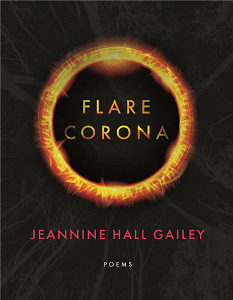
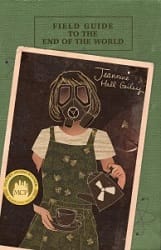
 Jeannine Hall Gailey served as the second Poet Laureate of Redmond, Washington and the author of Becoming the Villainess, She Returns to the Floating World, Unexplained Fevers, The Robot Scientist’s Daughter, and winner of the Moon City Press Book Prize and SFPA’s Elgin Award, Field Guide to the End of the World. Her latest, Flare, Corona from BOA Editions, was a finalist for the Washington State Book Award. She’s also the author of PR for Poets, a Guidebook to Publicity and Marketing. Her work has been featured on NPR’s The Writer’s Almanac, Verse Daily and The Year’s Best Fantasy and Horror. Her poems have appeared in The American Poetry Review, Poetry, and JAMA.