
Sorry for my lack of posts – I had a surprise visit from my little brother and his wife (and he’s coming back next weekend, after his LA-based training) and I’ve been spending a lot of time in doctor’s offices. Plus I’m wrapping up my class at National U for the quarter.
It seems my (auto)immune system is on the fritz again. I went to a very smart UCSD doctor yesterday who was recommended by my Seattle hematologist who called the head of medicine at UCSD for me (thank you Dr. G! You are so getting a fruit basket!) and I was very impressed with her. Not only was she intuitive to the point of being psychic, she asked good questions and was actually interested in my records (which I usually shuffle in with, embarrassed, since I’ve had sooo many tests and screenings over the years that might or might not be helpful for a new doctor I feel like a bit of a freak.) So I feel like I am in good hands in my new city.
Also, if you’re someone who may or may not have lupus, you might want to avoid a lot of sunlight. Such as that found in Southern California.
Note to self: Southern California: good for Reynaud’s syndrome and asthma. Bad for lupus-like autoimmune problems.
Also for my notes on SoCal:
Good: lack of rain.
Bad: plenty of fire.
I also had time to sneak out to a reading and dinner with K. Lorraine Graham who invited me to a very interesting feminist/experimental fiction reading. (One of the readers was Seattle-ite Laynie Brown, a prose poet who also apparently dabbles in prose prose.) What was expecially interesting was how the “experimental” methods in fiction – split and layered narratives, for instance, something Old TS Eliot was doing years ago – seem hardly “experimental” at all – even old-fashioned – in poetry. I’m not up with the usual “experimental fiction” suspects, but if any of you all out there know more about this, I’d be interested in more of a discussion…
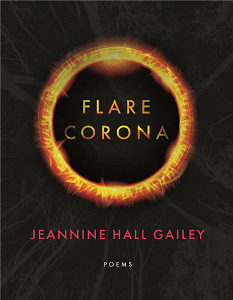
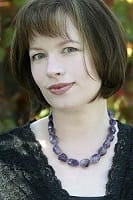 Jeannine Hall Gailey served as the second Poet Laureate of Redmond, Washington and the author of Becoming the Villainess, She Returns to the Floating World, Unexplained Fevers, The Robot Scientist’s Daughter, and winner of the Moon City Press Book Prize and SFPA’s Elgin Award, Field Guide to the End of the World. Her latest, Flare, Corona from BOA Editions, was a finalist for the Washington State Book Award. She’s also the author of PR for Poets, a Guidebook to Publicity and Marketing. Her work has been featured on NPR’s The Writer’s Almanac, Verse Daily and The Year’s Best Fantasy and Horror. Her poems have appeared in The American Poetry Review, Poetry, and JAMA.