
For writers, and especially poets, cynicism about our ventures abounds. I am a cynic by nature, about such subjects as politics, corporate culture, “scientific” findings, especially as reported by the popular press, and many other topics. But perhaps I am more optimistic, more hopeful, about poetry – and poets – than most other things.
Two recent essays: one on how poetry-writing is nothing but an assertion of the self, gratification for the ego, and another about the pitfalls and paltriness of the poetry world, have spurred an examination of this optimism.
There is no doubt that there are editors who publish people for the wrong reasons, publishers whose ethics could be questioned, whole poetry organizations whose aesthetics might be described as craven and capitalistic rather than artistic. That we can look at the top prize winners of our century and wonder, honestly, without bitterness, whether we are crazy if their poetry seems “bad” to us personally. There are times when every writer wonders if they should continue writing; that recognition and the means to recognition seem at once to be feared, hated, and prized. Sometimes it seems that even poets hate poetry, or at least that they’re certainly not buying any of it for themselves.
But I believe that poetry is a force, in general, for good. It is a method for laying out and sharing the gifts that we are given, whatever they are, a gift for noticing, chronicling, imagining, painting an internal world. I know that poetry has been something I have read when I have been depressed, discouraged, at odds with the world; that the anger or bitterness or ecstasy of some poet dead or alive has been able to light something within me. And that the reason that I write, and that most writers that I know write, isn’t for the glory of the writer’s game but to ignite that light in someone, somewhere, at some time. Even the poem (or poet) that thinks it dwells in darkness is actually full of illumination. It is an energy of sharing, of openness, of revelling in light.
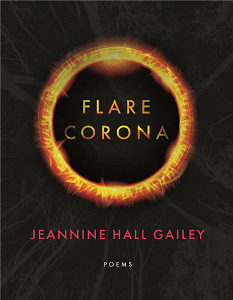
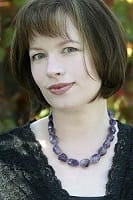 Jeannine Hall Gailey served as the second Poet Laureate of Redmond, Washington and the author of Becoming the Villainess, She Returns to the Floating World, Unexplained Fevers, The Robot Scientist’s Daughter, and winner of the Moon City Press Book Prize and SFPA’s Elgin Award, Field Guide to the End of the World. Her latest, Flare, Corona from BOA Editions, was a finalist for the Washington State Book Award. She’s also the author of PR for Poets, a Guidebook to Publicity and Marketing. Her work has been featured on NPR’s The Writer’s Almanac, Verse Daily and The Year’s Best Fantasy and Horror. Her poems have appeared in The American Poetry Review, Poetry, and JAMA.