Poems from Field Guide to the End of the World: “Martha Stewart’s Guide to the End Times” Plus Some November Cheer
- At November 05, 2016
- By Jeannine Gailey
- In Blog
 0
0

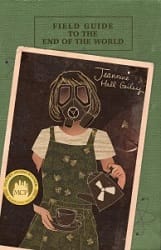
Yes, it does feel a bit like the apocalypse out there these days. My last post was a little heavy. So, to add a little levity to your political/life/strife and time-change/SAD-ness, here’s a poem from my new book, Field Guide to the End of the World.
Martha Stewart’s Guide to the End Times
Of course you know I love those little drones, so I’ve stockpiled them. Those and lemons. I’ve learned the hard way that life without lemons is barely worth living.
Animal husbandry 101: Fill your own organic pantry. Which breed of chicken will give you the best eggs under stress? Pg. 13.
Leave the fondant til later. You can always do a ganache topping for your cupcakes in a pinch. So simple!
Evacuation map for New York City, Boston, the Hamptons, with scratch-and-sniff icons: page 24.
Survival skills are just like hostess skills: a little preparation, a little spying (with the drones,) a little determined defense-driven hedging of the grounds. Razor wire goes beautifully with your holly thicket.
Guide to storing munitions in attractive wicker boxes: page 52.
If your water isn’t as clear as it should be, use up those charcoal filters first, but after, try a solid iodine tablet in your home-dug well. In these times, it’s a good thing.
Culinary tips for after the mega-store raid: mixed nuts have a long shelf life. Throw in a little rosemary and toast them over an open flame for anytime elegance. More ideas for those family-sized tubs of popcorn: page 68.
Now’s the time to get out your hurricane lamps! They create a lovely glow in these last days.
Here are some more cheerful thoughts – we had two straight days of November sunlight, so we went out, did some gardening (very Martha Stewart-ish,) baked cranberry-apple muffins, checked out the Bellevue Botanical Gardens where I captured some still-blooming white fushcias and Glenn snapped a pic of me with the leaves still turning. Plus, our cats Shakespeare and Sylvia decide the weekend is for sleeping in on – not reading – magazines! It’s a struggle not to smile when ragdolls decide it’s time for you to pay attention to them!
-

- White fuschias at Bellevue Botanical Gardens, November

-
- Glenn and I sharing some rare November sunshine at Bellevue Botanical Garden

-

- Ragdolls on magazines! Mom, you didn’t want to read these, did you?

-

- Me in Bellevue Botanical Garden

New review of Robot Scientist’s Daughter, new poem in Interfictions, Lucia Perillo, and Dark Days
- At November 01, 2016
- By Jeannine Gailey
- In Blog
- 2
First, the good stuff!
Happy to have a new poem up at Interfictions called “Serendipity” (and yes, it references the sort of mediocre romantic comedy of the same name, and also has a line from the show “Community” and a reference to The Last Unicorn. Points if you can find them all!)
Thanks to Jannell McConnell Parsons and CrossTalk CellPress for this lovely – and science-minded – review of my fourth book, The Robot Scientist’s Daughter, along with Natasha K. Moni’s The Cardiologist’s Daughter – here: http://crosstalk.cell.com/blog/the-poetry-of-nuclear-physics-and-cardiology
Dark Days
It’s the beginning of November, when the bright leaves of Seattle’s extremely brief fall have been blown away and the dark pretty non-metaphorically begins taking over. It’s dark when you wake, dark when you go to sleep, and often dark in between. The rain, which becomes ever-present this time of year, is cold – not midwest or northeastern cold, just cold enough to make you feel a little miserable, to make your face hurt and your lungs work harder to keep up.
After the death of Brigit Pegeen Kelly last month, Lucia Perillo, local (and terrific) poet, essayist and novelist – who started out as a wildlife biologist and became a writer after being diagnosed with MS at midlife – has passed away. She was tough, and funny. Her work – not just her poems, but her essays, and when I saw her speak – was breathtaking in its intelligence and bravery. She was a true inspiration as a writer and a person. Go read her work! “The body tells a story/ mostly about loss.” (From “Rotator Cuff Vortex.”) She has great things to say about responding to the question: “How are you doing” and not saying “fine,” about having a body – and then losing a body, slowly – that allowed her to paddle across lakes and climb mountains. She talked about disability in a way that helped me when I was stuck in a wheelchair and unable to process what was happening to me.
And it’s not just the loss of these two poets. I also lost a family member this week. This is on top of dealing with the unknowns of a metastasized cancer diagnosis that highly paid specialists cannot agree on how to treat, having a new neurologist tell me that my neural-lesion-related motor skill loss, difficulty with proprioception, and foot and hand numbness were permanent but it was obvious I was “working hard’ at physical therapy to help these problems (yeah, no doubt, I’ve been going once a week for six years, so hooray, finally some minor improvement!) and of course the terror that is modern politics. (I’ve already voted, and I can’t tell you the feeling of sheer relief I felt when I got that voting ballot in the mail.)
I’ve found myself unmotivated to write or send out work in a way that’s unfamiliar to me. Maybe this year’s unfortunate surprises have started to wear on me. I actually bought a magazine yesterday because it had an article on planning “end of life” stuff. I read Max Ritvo’s pretty amazing Four Reincarnations – which is beautiful, but maybe not the best thing to read when you’re pretty sure you’re dying of cancer – the author died of cancer at 25 right before his first book was published by Milkweed. I don’t know if I’ve been processing the bad news enough, or maybe trying to ignore it a lot. I have a life-long survival skill of focusing on the good stuff whenever possible, but there are times when you kind of have to face the bad stuff, too. I don’t know what to do next, because I feel unable to plan for the first time in a long time. I’m the kind of person who plans things out in advance, who likes to be prepared. And now I have to prepare for…what? The unknown, mystery. I’ve never been very comfortable with the unknown, even though I’m a poet and love Jung and the subconscious and folk tales that celebrate that dark forest path. I hope, I hope, I get a little light for the path.
Open Books Reading, Halloween-y Poem up at Women’s Voices for Change, Wonder Woman Poetry Videos, and More
- At October 30, 2016
- By Jeannine Gailey
- In Blog
- 0
Today one of the poems from the new book, “Introduction to the Body in Fairy Tales,” is featured on Women’s Voices for Change. It’s a very Halloween-appropriate poem – it was even included in The Best Horror of the Year, Volume Six !
!
Thanks to The University of Cincinnati and Cincinnati Review who featured my poem “Wonder Woman Dreams of the Amazon” – from my first book, Becoming the Villainess, as a video they made from one of my readings and images they put together in their first foray into video poems! Here it is. A lot of fun!
So, last night was the Seattle debut of the new book, Field Guide to the End of the World, at Open Books. We did a little reception, a little book signing, a little reading – it was really cool. Thanks to everyone who came out! Here are a few pics that Glenn snapped. It was a wonderful way to celebrate the book during a very difficult year!
-

- Pre-reading – the sun came out!

-
- Girls at the Open Books reading!

-
- Open Books Reading

-
- book signing

I’m hosting the Twitter #poetparty tonight at 6 PM Pacific/9 PM Eastern to talk spooky and speculative poetry. Come in and join the hashtagging!
Wishing you all a happy and safe Halloween!
Apocalypse Poetry for Halloween Weekend this Saturday! Spooky Poems from Field Guide to the End of the World
- At October 25, 2016
- By Jeannine Gailey
- In Blog
- 0
Looking forward to this Saturday’s reading and reception for Field Guide to the End of the World at Open Books at 4 PM. Apocalypse-themed costumes welcomed, and festive treats (i.e. cupcakes, cheese and fruit, and sparkly celebratory drinks) will be served! I’ll read poems about the apocalypse, sure, but also about teen witches and vampires, zombies, plagues and pop-culture! This is only my second reading for the new book, and the last one I’ll do in the Seattle area for a while. (I’m reading in Port Townsend in November, but that’s a trek for most Seattle-ites!) I hope it’ll be a fun celebration and also appropriately Halloween-y. We could use some cheering up!
(And thanks to The Stranger for listing my reading on their 29 things to do this weekend on Saturday!
http://www.thestranger.com/things-to-do/2016/10/25/24649448/96-stranger-than-usual-things-to-do-in-seattle-this-week-october-25-30)
Here are a few pics from Woodinville’s October – Mt. Baker view, Chateau Ste Michelle winery grounds, fall!


In addition, I’m hosting this Sunday, the 30th’s, official Twitter #poetparty! You show up, ask questions, give advice, learn how to use hashtags correctly, etc! 6 PM Pacific/9 PM Eastern. We’re talking spooooky poems (and where to send them) in light of the Halloween holiday!
Here are a couple of poems from Field Guide to the End of the World:
Introduction to Witchcraft
Always these young women in search of power,
their eyes rolled back in their heads, midriffs exposed.
Always some girl with a candle in a dark room –
and poof, her face brightens as she achieves
some moment of bliss. The raindrops around her freezein midair, the wolves stop baring their fangs, and for a moment
the young girl marvels at her own invincibility.
But then it’s fire, fire, always someone with a stake or a knife
ready to do her in. She is a spark about to go out.
Introduction to Teen Girl Vampires
turn feral while defending their human boyfriends, harmless and blond
in Varsity jackets and crewcuts. These girls just want to be loved, and fed,in that order, and can we blame them? A nurse here or there won’t be missed,
or the guy playing “second policeman.” Bram Stoker equated blood and sex,Mina chaste and clever while hunting her Dracula down, his bite awaking
impulses that ignited and were ignored. These days, teen vampire girls enjoy sexwith abandon, tossing lovers around like tree limbs. These days, the girl
doesn’t succumb to the monster, she is the monster, teeth gleaming in the moonlight,coquettish limbs and curls masking superpowers. Oh, she still wants to be
the prettiest girl at the prom, and perhaps she mourns some future ideaof motherhood. But men line up for the promise of her bite, her blood.
And she has nothing to fear; she cannot be broken, tarnished by age, her heartimpenetrable to anything except for that wooden stake.
They Are Not Regenerating (from the movie “Zombie Stripper Clones”)
We are not zombies, thrown into a pool
of dubious origin and coming back beautiful
but decaying
unsure of how to live – pretending to swim,
eat yogurt like regular girls.We are not clones, despite being drawn to specifications
(36-26-36) and bearing bouffants and bikinis
we might hack each other to pieces
but we are not confused about our identities(living or not living) we continue
in this shape we were given
our cells cannot regenerate and the scientist
names us “Dead”
we are not regenerating we cannot reproduce ourselves we cannot be anything
but the fulfillment of your fantasy, flesh-eating or not.
Brigit Pegeen Kelly, a New Review of Field Guide, Internet Attacks and Poems of the Apocalypse
- At October 21, 2016
- By Jeannine Gailey
- In Blog
- 0
First: I was so sorry to hear of the passing of the truly great poet Brigit Pegeen Kelly. I never met her in person (though reports of her kindness and generosity are widespread) but her poetry was an important discovery for me years ago and definitely an influence on my own work. Her combination of darkness, morality, and surrealism – especially in Song – are unsurpassed. If you have never read her work, see the title poem from that book, Song, here.
I meant to post this morning but the internet had been shut down by a hacker attack. It reminds me of the limits and vulnerability of online communities, our writing, and our communication. Security on the web – especially in web services – is still mostly pretty easy to hack, and it’s difficult to defend against all types of hacks (DDoS attacks are simple to perform, hard to stop.)
Kathleen Kirk compares and contrasts a poem of mine from Field Guide to the End of the World with a poem from Donna Vorreyer’s Every Love Story is an Apocalypse here, “The Bounce and the Chaos” . An interesting and thoughtful discussion of two poems whose subjects – human relationships and electromagnetism – are very similar.
As I’m also currently working on a review of Dana Levin’s Banana Palace, another apocalyptic collection, and recently read Render: An Apocalypse by Nick Flynn and Rebecca Gayle Howell, I was thinking of our current obsession with apocalypse in the news, in pop culture, in weather reporting. The last time I saw so much apocalypse in the poetry zeitgeist was back in the 1920’s, what with Eliot’s “The Waste Land” and Yeats’ “The Second Coming.” I even noticed the theme in children’s movies – not the teen dystopias like Maze Runner/The Giver/Hunger Games/Divergent stuff, but the children’s stuff, like, every “Ice Age” movie is another version of the characters facing an apocalypse, the latest caused by asteroids. Think of what people were about to face in the twenties – a huge stock market crash, the second World War, arguably more horrifying than the first, the Great Depression. A decimation. They could not have known what was coming, but perhaps they sensed this. What do you think accounts for our current obsession – the movies, the television shows (the latest – “No Tomorrow” – has another asteroid destroys the earth plot), the novels and poems of imagining beyond the end of the world. I know that my own personal medical crises – first of the brain, in the discovery of brain lesions a few years ago and their effects, like memory and motor skill problems, and this year, being diagnosed – not once, but twice, in six months, with metastasized cancer in my liver – definitely spurs thoughts of afterlife, survival, luck, the spirit versus the body. With Brigit Pegeen Kelly’s death, my thoughts drift to how a poet survives beyond reach of her physical person, her short lifespan. Her three books continue to be taught and loved, and that is a kind of immortality and grace.
Thank you to Melanie at the Teabird book blog for this kind review of Field Guide to the End of the World. http://teabird17.blogspot.com/2016/10/field-guide-to-end-of-world-by-jeannine.html
I’m also hoping for a friendly crowd at tomorrow night’s Hugo House event at the Pine Box, where I’m participating in a crazy-scary contest-reading sort of thing – you can read more about it here.
And please put October 29th on your calendar for my updated reading/reception at Open Books for Field Guide to the End of the World. Apocalypse-related costumes welcomes. Cupcakes and sparkling drinks provided! Put on your poetry-apocalypse shoes and come party!
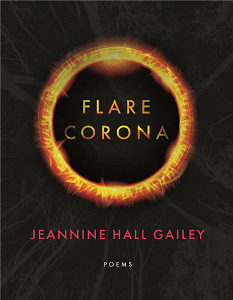
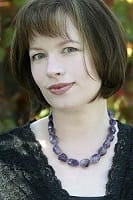 Jeannine Hall Gailey served as the second Poet Laureate of Redmond, Washington and the author of Becoming the Villainess, She Returns to the Floating World, Unexplained Fevers, The Robot Scientist’s Daughter, and winner of the Moon City Press Book Prize and SFPA’s Elgin Award, Field Guide to the End of the World. Her latest, Flare, Corona from BOA Editions, was a finalist for the Washington State Book Award. She’s also the author of PR for Poets, a Guidebook to Publicity and Marketing. Her work has been featured on NPR’s The Writer’s Almanac, Verse Daily and The Year’s Best Fantasy and Horror. Her poems have appeared in The American Poetry Review, Poetry, and JAMA.