Reading this Sunday and Playing Fall Tourist in Search of Inspiration
- At October 01, 2015
- By Jeannine Gailey
- In Blog
 0
0

I’m reading on Sunday at the Bellevue University of Washington Bookstore, which is a charming store all on its own, with a cafe, at 3 PM. I hope some of you can make it! I’ll be reading a teensy bit of older work and from my new book, The Robot Scientist’s Daughter.
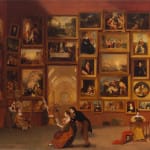
Back from the new Impressionist exhibit (and new Morse exhibit) at Seattle Art Museum, where we went in search of inspiration. Glenn’s favorite was Gallery at the Louvre by inventor Samuel Morse, while I like Renoir’s Girl with a Cat and the Van Gogh Flower Fields in Holland Best (Van Gogh’s Flower Beds doesn’t look totally like his style yet, does it? We’re so used to him painting French landscapes. But that painting reminded me of La Conner’s flower festival, with its hyacinths, daffodils, and tulip beds.)
-

- Van Gogh’s Flower Beds in Holland

-
- Renoir’s Woman with a Cat

-
- Morse’s Gallery at the Louvre
Yes, we’ve been taking advantage of the beautiful fall weather to go out and play tourist – last night at the SAM, the day before that at the Point Defiance Zoo.
-

- jellyfish!

-

- clouded leopard, lounging

-

- Glenn with Mt, Rainier, a study in blue

-

- meerkats (how many can you spot in this picture?)

I’ve been in search of inspiration to last through the drearier upcoming winter months. Right now, though, the outdoors is full of mountains, sunflowers, dahlias – the stores and roadside stands stocking the first of the new squash and apples – and I’m unearthing sweaters (though I fear that at the rate we’re going, we’re going to be stuck renting in our old home for the winter, too!) Yesterday I got to page 100 on my book for Two Sylvias on PR and marketing for Poets, which was my goal for the first draft. I’ve been struggling a bit with feeling okay about writing this book – you know, imposter syndrome (who am I to write a book like this? What are people going to think of me for writing about this subject? Will they think I’m a sellout? Is it even possible to sell a lot of books of poetry?) – just stupid stuff like that.
Fall usually means settling down for the rain and reading and writing more, getting work done, though I have to say my last few late summer weeks felt more productive than usual. But they’ve also been anxious – about this non-fiction book, about our housing search, about the health of various family members and my own stupid partially collapsed lung, about maybe getting a regular job again – so maybe another reason to go out and find and celebrate the beauty in the world around you is to quiet the spinning, to turn anxiety into energy for other things. Time to bake something and then get this first draft of the book into my publishers!
Spectacular Start to Fall – Supermoons, Turning Leaves, and Sci-Fi Geek Excitment
- At September 28, 2015
- By Jeannine Gailey
- In Blog
- 1
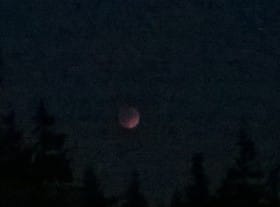
We drove out to an unlit park last night to watch the eclipse, and it was pretty spectacular. My own camera shots weren’t that exciting – here’s one at the peak of the eclipse and one where it got a little brighter and redder. Two deer were walking down our street when we drove home. Supermoon deer!
Seattle has given us a lovely break in terms of sunshine and cooler temps – exactly the kind of weather that makes me want to get out and do things! There’s plenty to do this week – from Mary Szybist’s reading Tuesday night to the opening of Seattle art museum’s Impressionist exhibit for members Wednesday night. I’m really wanting to get out to Tacoma’s Point Defiance zoo to see the clouded leopard cubs. In Woodinville, Dr. Maze’s farm – complete with delights such as fields of sunflowers, a corn maze, and a pumpkin patch, has just opened – a sure sign of fall. But last night after moon viewing I was pretty zonked and started running a high fever with a bad cough again. So it’ll be health-dependent, but we’re supposed to have lovely weather…
Here are a few pics from our visit to the Japanese garden in Seattle – where the leaves are just starting to turn – and our visit to the Experience Music Project museum for the Star Wars exhibit, leaving Oct 4 (and just as exciting, new “myth and fantasy” section, with Game of Thrones art, Princess Bride props, and a dragon!) – it was like a little mini-residency, just in our own town. It’s easy when Seattle’s gloomy weather hits to stay in, sleep in, turn in early, stop socializing, and basically start ignoring all the parts of your city more than a ten minute’s drive. It’s a temptation…but would be a shame! Plus, I think it’s good for writers to experience nature and museums for inspiration, right?
-
- Dragon at EMP

-

- Jeannine with Boba Fett at EMP

-

- In Seattle’s Japanese garden

-

- Bird’s eye view of costumes

-

- Princess Bride

-

- Supermoon Eclipse from my cell phone
I’m working to send out Robot Scientist’s Daughter to appropriate prizes, send out my new MS, finish my PR for Poets first draft (eek!) and generally try to fight my increasing desire, as the days shorten, to pull the covers over my head, drink hot cranberry juice with honey and eat pickles (an old cough-fighting cure I’ve used for some years), and re-watch old movies. I’m trying to get well for an October 4 reading at the University of Washington Bookstore in Bellevue too! Wish me luck!
Re-Entry, Rumpus Review of The Yellow Door, Supermoon Eclipse, and Free Museum Day
- At September 26, 2015
- By Jeannine Gailey
- In Blog
- 1
Happy Fall! I’ve successfully re-entered normal life (complete with house-hunting, bill-paying, and submitting poems) and woke up today to perfect fall-mid-sixties weather – with sunshine! I hope you enjoyed the residency posts and the interview with Robert Brewer! It was a bit bumpy trying to adjust to regular life again, but I think I’m back to “normal.”
I’d like to direct your attention to a new review I did of Amy Uyematsu’s book, The Yellow Door. This was the review I worked on during the residency, and now it’s up at The Rumpus! http://therumpus.net/2015/09/the-yellow-door-by-amy-uyematsu/
I’ve also written a new poem since I got home (multi-part!) and I’m trying to make some more progress on the PR for Poets book before I turn in a first draft. Right now I’m trying to write a section on submitting your book to book prizes in conjunction with your publisher. I also got to virtually visit a class this last week in Iowa with Google Hangouts, which was pretty cool. I’ve been a bit under the weather since returning, a lot of coughing and sneezing and that sort of thing, which slows me down a little, but oh well. The price of travel!
Today is also free museum day (see more here – http://www.smithsonianmag.com/museumday/) so we are going to take advantage of that – and the sunshine – by taking a trip downtown to see the Japanese gardens and EMP’s Star Wars exhibit. We can’t be house-hunting every Saturday, right?
The supermoon eclipse is tomorrow evening, and I’m hoping it’s clear enough here to see it. Supermoons always have a weird effect on me – I’ve fainted twice during supermoons, and I hardly ever faint, for instance. This particular kind of “blood moon” – which happens only every thirty years – means, to some, that the apocalypse is coming. I’ve been writing a lot of poems about the apocalypse, and some do feature a moon, but I don’t know, that just seems too easy, you know, dating the apocalypse by the moon?
Writing Platform Tips from Robert Lee Brewer
- At September 24, 2015
- By Jeannine Gailey
- In Blog
- 0
It’s turned to fall, and almost October, and time for the October Platform Challenge (which I am going to try to actually do this year! After all, what writer feels confident in their platform?)
It’s hosted by Robert Lee Brewer, a hard-working individual, editing everything from his Writer’s Digest blog posts to Poet’s Market and Writer’s Market. And here’s a short interview I did with him on the subject of platforms! (The full interview will appear in my upcoming book, PR for Poets!) So if you don’t know what a platform is, or you just want to learn more about how to increase your “reach,” read on!
Brewer is Senior Content Editor of the Writer’s Digest Writing Community, which means he gets to help writers through several channels, including posting on the Poetic Asides and There Are No Rules WritersDigest.com blogs, editing WritersMarket.com and its free weekly e-newsletter, editing the Writer’s Market and Poet’s Market books, online webinars and tutorials, judging poetry contests, writing a poetry column in Writer’s Digest magazine, and much more. He’s also the author of Solving the World’s Problems. Follow him on Twitter @RobertLeeBrewer.
JHG: So many writers are freaked out by the word “platform,” maybe because it sounds too “business-y” or overwhelming to think about having a platform. How would you explain what a platform is to a writer new to this idea?
RLB: Platform is the quantifiable reach authors have to their target audience. So it could be followers on social media sites, subscribers to a newsletter or e-mail list, unique visitors to a blog, number of people who subscribe to a publication in which an author has a regular column, and so on. The idea is that authors have a better chance at selling more books if they have a bigger platform.
Of course, it can be misleading to think of it as merely a “numbers” game, because I would argue that 100 people who are willingly on a personal e-mail list are more valuable for selling books than 1,000 followers on Twitter. That’s because they’re more engaged.
JHG: If a poet has limited time, what parts of their platform do you think are the most important for them to focus on? Someone asked me recently at a class I was guest-teaching how many hours I spent weekly or monthly on online book promotion and platform work, and I couldn’t really estimate, as it has become so ingrained in my routine (blogging, Facebook, Twitter, web site work, sending out submissions and queries) which is really a little scary!
RLB: If a poet truly has limited time, I would argue that the poetry should come first. This is true, whether we’re talking platform or submitting to publications. That said, if poets don’t carve out a little time for submitting and platform, their work is likely to collect dust and never connect with readers. So what’s the most important for poets to focus upon?
It’s different for each person, but I think everyone can benefit from getting on some low impact social media sites like Facebook and Twitter. If used appropriately, poets can connect with other poets, publishers, and publications. It’s an easy way to make connections without a lot of commitment on the part of the poet.
After that, submitting work is probably the most important. Publication does two things for a poet: First, it puts a stamp of approval on the work from an objective editor; second, it helps the poet reach readers.
Having a website is important, because it’s a centralized piece of online real estate for an author that readers can turn to even as other platforms rise and fall.
Beyond that, I just encourage folks to try various things (blogging, podcasting, various social media sites, live events) to find what works for them. What works for one poet might not work for another. So there are best practices, but there’s also trial and error and experimentation.
JHG: Why do you provide space and encourage a platform challenge for writers? What are you hoping to help writers accomplish?
RLB: One of the cool things about my job is that I get to help writers achieve more success. I write articles, edit books, post on blogs, and so on, sure, but the main thing I do is help writers achieve more success. If I’m doing my job, then I expect writers to find success and want to build on that success by subscribing to the magazine, taking online courses, and buying books.
In regards to the platform challenge, I’m hoping to help writers challenge themselves to work at their writing platform with easy daily tasks that show what writers can do. And hopefully, they build upon that after the October challenge is over, and I’ll find out about various success stories for months and years after. That’s been my experience with other challenges I’ve hosted, whether they’re for building a writer platform or writing poetry.
And success stories always blow me away and inspire me to do more.
JHG: How do think poets in particular can help increase their “reach” by developing their platform? What would you say has been most surprising for you in terms of growing your poetry audiences?
RLB: I think blogging has really helped me. Social media sites have helped. Speaking at live events has helped too. As far as selling books, I’ve found that publishing new poems helps sell the old book.
It’s not a surprise anymore, but I think one thing I’ve learned as an author and through working in publishing is that numbers are helpful—but they don’t tell the whole story. An engaged audience that comments on a blog is more powerful than a bunch of “fans” on Facebook; an engaged e-mail list that buys new books is more valuable than a gazillion followers on Twitter. It’s not that a gazillion followers on Twitter is not valuable in its own right, but it’s a matter of how engaged the audience is.
JHG: Thanks Robert!
Six Tips for Getting the Most Out of Your Writing Residency
- At September 22, 2015
- By Jeannine Gailey
- In Blog
- 5

- Have a specific goal you want to achieve, but don’t beat yourself up if you don’t get to everything. I think, on this residency, I had too many disparate things I wanted to get done on the trip, and I didn’t quite have the physical fortitude after a few days to be as efficient as I am at home. I did my “have-to” work first, and my “want-to” work second. I think it’s okay to have an adventure and new experiences at a residency, because even if you don’t achieve everything, you’ll still have devoted yourself for a bit of dedicated time to your art, and that is great. (This residency resulted in a review, some pages on the PR for Poets book, and a good handful of new poems, but my last residency, I think I mentioned, I barely wrote anything at all, and spent most of my time trying to do watercolors. And that was okay. No one was harmed, except my sketch pad…)
- Take advantage of the specific area you’re in for your residency – I don’t know about how but I noticed some of the scholars barely left the campus – which was indeed beautiful and had a water view – but San Juan Island is really a place best explored by car – it’s larger and hillier and the best views and features farther apart than you might think, hard to access even by moped or bike – and after a few hours of reading and writing each morning, and before a few hours reading and writing after dark, I needed a couple of hours – even with my sprained ankle and mad-evil virus – to get out and about and experience the amazing sights and sounds on offer. Seeing whales, foxes, eagles, otters, seals – they may not directly feature in what I wrote, but I’m sure seeing the different vistas – Lime Kiln Point’s rocky outcropping with a 360-degree view of the ocean, American Camp’s driftwood beaches and meadows – helped stimulate my mind more than just staying in the (admittedly pretty sweet) little cabin. If you’re a food person (and don’t have my allergies,) this extends to going out and getting a coffee and scone at the local coffee shop, or trying the local seafood the cute little organic restaurant that only the locals know about that someone recommended. Residencies aren’t just for reading, studying and writing – they’re also about getting you out of your routine and having adventures.
- Bring the things from home you need to sleep – white noise machine, your pillow, special pajamas – if you’re anything like me, you’ll have trouble sleeping in a new weird bed that’s not your own, so do what you can to make yourself comfortable. Sleep is important for mental power!
- Be social. I wasn’t great at this this time around because I was sick so many of the days and I didn’t want to get my fellow scholars sick, but my short conversations with the other residents and the staff were always rewarding and interesting. There is a lot of silence on a residency – as I mentioned in previous posts, the no phone, no television, no internet thing can get to you if you’re an extrovert who’s used to a lot of background noise while they work – so sometimes these small interactions can help get you inspired and remind you you’re still part of humanity.
- Don’t worry about how you look, but be prepared for multiple weather situations and “the unforeseen.” Seriously. I know, for me, it’s hard to let go of all the little things we end up doing to look good for people, even going to the grocery store, but at this residency, the wildlife didn’t care what I looked like, and if I wore yoga pants and Ugg boots every day, no one was going to start a scandalous whisper. You want to be comfortable, too, so be sure you pack for the weather – ours on San Juan Island was so changeable, I was glad I brought sunscreen, a warm coat, a raincoat, boots appropriate for mud, and multiple kinds of scarves. I had to wrap myself in a blanket I packed on the ferry on the way home, because it was so cold and wet and windy, even on the ferry, that I couldn’t get warm. Pack for all emergencies, too – a flashlight or candles (d’oh – we forgot ours and were unprepared when the power went out), a first aid kit, all possible meds (I ended up taking extra allergy and nausea medications, my nebulizer, plus a ton of Pepto Bismol) – you don’t want to be scrambling around an unfamiliar town after hours trying desperately to find a Benadryl or a special kind of asthma inhaler. So, bottom line – less makeup, more Emergen-C and sunscreen.
- Bring a variety of reading materials, because you never know what will inspire you or when you will have down time on your hands. Some days I was in the mood to read difficult fiction or poetry, and other days to read magazines. A Kindle was useful on the boat ride and ferry wait – it took us about four hours to get over, and five and a half hours to get back (with the airport trip, we could have been to LA in the same amount of time to get to this nearby island), and if you have an airplane ride, a Kindle saves a lot of packing space (as long as you can charge it…) And don’t forget chargers for your laptop, reading device, and cell! And if you write by hand, be sure to have a little notebook and pen you can carry that’s not too heavy on days you might want to hike and write outside.
I’m tired and ready to get back into my routine, but happy I went. Good luck to you and I hope this was helpful! If you have more residency tips, please leave them in the comments!
PS. A deer was waiting for us on our street when we finally got home! And I’m still sick. But so worth it!
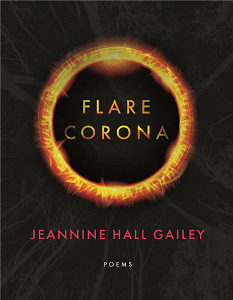
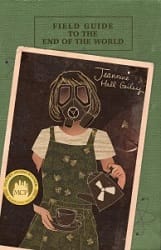
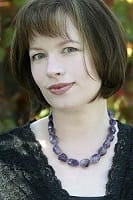 Jeannine Hall Gailey served as the second Poet Laureate of Redmond, Washington and the author of Becoming the Villainess, She Returns to the Floating World, Unexplained Fevers, The Robot Scientist’s Daughter, and winner of the Moon City Press Book Prize and SFPA’s Elgin Award, Field Guide to the End of the World. Her latest, Flare, Corona from BOA Editions, was a finalist for the Washington State Book Award. She’s also the author of PR for Poets, a Guidebook to Publicity and Marketing. Her work has been featured on NPR’s The Writer’s Almanac, Verse Daily and The Year’s Best Fantasy and Horror. Her poems have appeared in The American Poetry Review, Poetry, and JAMA.