Halloween Post: Spooky Poems, Horror Writers
- At October 30, 2014
- By Jeannine Gailey
- In Blog
 0
0

Happy Halloween! It’s official: I’m now a horror writer! I just joined the Horror Writers Association and wrote an essay for their newsletter that was just sent out on the dark side of science poetry!
Appropriate to the season, here are two spoooooky poems.
“Introduction to the Body in Fairy Tales” appeared first in Phantom Drift and was selected for The Year’s Best Horror, vol. 6!
Introduction to the Body in Fairy Tales
The body is a place of violence. Wolf teeth, amputated hands.
Cover yourself with a cloak of leaves, a coat of a thousand furs,
a paper dress. The dark forest has a code. The witch
sometimes dispenses advice, sometimes eats you for dinner,
sometimes turns your brother to stone.
You will become a canary in a castle, but you’ll learn plenty
of songs. Little girl, watch out for old women and young men.
If you don’t stay in your tower you’re bound for trouble.
This too is code. Your body is the tower you long to escape,
and all the rotted fruit your babies. The bones in the forest
your memories. The little birds bring you berries.
The pebbles on the trail glow ghostly white.
Introduction to Witchcraft first appeared in Atticus Review.
Introduction to Witchcraft
Always these young women in search of power,
their eyes rolled back in their heads, midriffs exposed.
Always some girl with a candle in a dark room –
and poof, her face brightens as she achieves
some moment of bliss. The raindrops around her freeze
in midair, the wolves stop baring their fangs, and for a moment
the young girl marvels at her own invincibility.
But then it’s fire, fire, always someone with a stake or a knife
ready to do her in. She is a spark about to go out.
What’s Really in Your Control (as a small press author)
- At October 28, 2014
- By Jeannine Gailey
- In Blog
- 2
Oh, look at the news these days: you might see something about spying drones, ebola, maybe some random crime spree (or school shooting, as our community had this week.) All of this worrying stuff that is out of our control.
And in our own lives: no matter how we try to follow doctors’ orders, eat right, exercise, medicate as advised, etc., our bodies will still let us down. Sometimes in an annoying way, sometimes in a spectacular way. We can’t control the weather, our friends and family, the way our neighbor looks at us funny. You can be nice to your neighbor, hug your loved one, floss, help some stranger on the street.
You know that old serenity prayer, the one that talks about knowing the difference between things you can control (your eating habits, your time reading books on subjects you want to know more about) and things you can’t control (your genetic propensities, weather, your love of seventies supergroups)?
So how does this apply to poets and small press authors (most poets)?
I’ve been thinking of the things I can do for my next book, The Robot Scientist’s Daughter, and the things I can’t do. I’ve done some of the hard work already: written the best book I could, found the best publisher I could for this particular book, and now…
Things I can do:
- Buy an ad somewhere.
- Send a book out to reviewers, bloggers, media folks.
- Get on social media and post, thoughtfully, weekly.
- Maintain a web site.
- Send my book out to book contests (or select contests for your press to send)
Things I can’t do:
- Make someone actually buy a book.
- Make someone who reads the book like it.
- Determine if the book will win any prizes or recognition.
Realistically, I’m looking at what I can do differently for this book than my last two books. I probably won’t be able to afford, either monetarily or re: physical health, a big gigantic book tour. I may be able to handle a couple of readings in cities I love and have family/friends (Portland, Cincinnati, maybe even Knoxville or NYC.) But I can plan some fun and exciting local events. I’m actually working with a PR person (a blessing in itself, as there are a dearth of PR folks who are excited to work with low-sales, esoteric poetry books) to try to launch the book with a little more forethought and try to reach out to non-poetry audiences a bit more. I know I may not make the money back from this endeavor, but I wanted to try to do something different for this book, instead of just complaining about things I can’t control.
Please feel free to post more examples in the comments of things a poet (or any small press author) can and can’t control, and what you’ve tried that made a difference! (Next post, I promise – more Halloween-type poems! Spoooooky!)
LitCrawl Seattle writeup, an Interview at Geosi reads, and Poison Ivy Poems
- At October 24, 2014
- By Jeannine Gailey
- In Blog
- 0

Readers at the Fairy Tale vs Superheroes event
LitCrawl Seattle last night seemed like a big success, judging by the numbers of attendees (almost every event I saw, including ours, was packed) and the after-party was a great place to see long-lost writer friends, assuming you’d missed them at all the other events, and was also packed. I got a pic of our readers and MC just before the “Superheroes vs Fairy Tales” reading started.
A big thank-you for this interview up with Geosi Gyasi at Geosi Reads (he’s a very thoughtful interviewer:)
http://geosireads.wordpress.com/2014/10/24/interview-with-jeannine-hall-gailey-author-of-unexplained-fevers/
I read my Poison Ivy poem last night and it seemed to be a hit. Since it’s getting close to Halloween and I should be putting up spooky poems anyway:
For the Love of Ivy
(Poison Ivy Leaves a Note for Batman in the Wake of Another Apocalypse Attempt)
You can see, can’t you, the appeal of such a world – lush with growth,
an earth empty of men’s trampling? In college, sitting through botanical medicine
classes, ecotoxicology, experiments in plant poisons – it became clear
that this was my verité – an orchid dressed to seduce wasps, a blooming
parasite wrapped around the trunk of a tree. You might take me home,
beg me for a kiss, but don’t you see the xylem and phloem in my veins
can’t pulse for you? My only offense not-death, regenerating from venom
fed me by my own professor? Feculent, fecund and feral, my power
you couldn’t understand, being born of cave-dwellers, bats and humans,
and your peculiar love of stray cats. My very existence, perhaps, my only crime
against nature. You can’t stem the murmur of voices under soil,
buried against their will – radioactive trees, GMO fruit. Just consider me
another mutant gone wrong, my betrayals in the distant backstory, my tears
now flow a green ooze as I try to heal the land, cesium in the sunflowers,
goat genes welded into innocent corn. Despite drought and denial,
I will continue to grow unharmed, my defense all delicate leaf and toxic petal.
Two new poems and LitCrawl Seattle 2014 – Superheroes vs Fairy Tales
- At October 21, 2014
- By Jeannine Gailey
- In Blog
- 0
Very excited about this Thursday, which is Seattle’s 2014 LitCrawl event, Superheroes vs Fairy Tales, where I’ll be reading at The Project Room at 8 PM. The lineup: Angela Jane Fountas, Jeannine Hall Gailey, Michael Schmeltzer, and Maya Sonenberg, with Evan J. Peterson. Michael and I will be representing the superhero side (plus I might sneak in a fairy tale poem,) so come early and cheer us on! I’m also planning on going to the after-party at Hugo House, which starts around 9 PM. Should be a blast!
I’d also like to thank Spolia Review for publishing a poem of mine, “Heroines at 40, Isabel: I Delight in a Moat” in their issue dedicated to Henry James.
And I’d like to thank The Freeman and Fee.org for publishing my poem, “Introduction to Dermatographia.”
Yesterday I ventured into downtown Seattle for a meeting, and we got towed (for the first time since college!) Downtown Seattle has gotten much more aggressive with its ticketing and towing, just a heads-up for those who visit – even we locals get confused by the signs and rules! But the meeting was lovely, and I also got to visit the office of the press Chin Music, which is a lovely local press that does some amazing books.
Thinking a bit and planning a bit for the next book, The Robot Scientist’s Daughter, including things like marketing, PR, print runs, that kind of thing. That’s because the book is basically complete and going early to get ready for sending out e-galleys soon!
Speaking of robot scientist’s daughters, I watched a bit of the Manhattan series yesterday, which is maybe a bit overwrought (some of the dialogue lands with a thud: example, the teen daughter of one of the nuclear scientists: “Why does everything have to be a secret??”) and I object to all the “important” work being done in New Mexico (as a lot was done at Hanford and Oak Ridge) but it’s definitely a fascinating mini-series about the Manhattan Project. Everyone waves a lot of Geiger counters around a lot. I do like that they have a female botanist/biologist who starts outside the project to notice things going wrong with her backyard flowers, and later medical records indicating problems with the children exposed to the radiation around Los Alamos. It’s a series that helps bring to life some of the “boring science” of the Manhattan Project – and, this being what it is, they fill it with lots of sex and violence to give it more tv-friendliness – of a subject that most people probably don’t know enough about. This first season (it’s just been renewed for a second) focused on the failed “Thin Man” project.
Superheroes, fairy tales, radioactive flowers – I mean, really, what more can you ask for? Hope to see you Thursday!
Is Writing a Team Sport?
- At October 14, 2014
- By Jeannine Gailey
- In Blog
- 3
Most writers are not also known as jocks. They’re not the kind of people you picture shooting hoops, throwing the touchdown pass, kicking a goal. The stereotype of a writer, forgive me: is bookish, introverted, who doesn’t understand the dynamics of cheerleading other players, or being the supporting player in a larger group. And that same introverted, bookish young writer dreams of being the star all the time: alone at his laptop, “creating,” or in front of an audience, accepting a prize or performing work to a rapt crowd. They don’t necessarily dream of the hard work it takes to make those things happen – a lot of which revolves around acting as a supportive team member. So is writing a team sport, or an individual sport?
For instance, what will your connection to your poetry community be if you never show up to anyone else’s reading, but complain when no one shows up to yours? If you ask for reviews from friends, but never write any yourself? (And I’m including Goodreads and Amazon in that – not everyone loves writing long-form critical reviews, but everyone can write a nice Amazon review.) What happens if you go to a writing group where you listen attentively to everyone’s comments on your piece, but never offer any feedback yourself? If you act as an editor, or a publisher, for a literary magazine or poetry series, yes, it will take time and energy, but what will that add to your understanding of rejections, suggested edits, or book promotion?
There’s also the trouble of group dynamics – again, a stereotype of writers is that they’re touchy, sensitive, crying over a rejection or a bad reading, unable to stand a single negative comment at a conference workshop. If you have a group of people who consider themselves sensitive, or stars, how do you interact with each other in a helpful, non-painful way? I mean, if you’ve been to AWP, you know what I’m talking about: people pushing their books without listening to anyone else, waiting to talk to people they deem “more important” while ignoring those “less important.” Everyone can’t be the star all the time, everyone can’t be “the sensitive one” in a room of 10,000. That will lead to a lot of crying at the bar.
If you think of yourself, sorry for the basketball metaphor, as someone who not only makes the layups themselves, but also stars in “assists” – that is, passes to people who score the points – then I think you’ll be happier and more successful in the long-haul work of being a writer. (I know it might be a surprise for those of you who know me now, but I used to play three sports – soccer, basketball, and track – and was even offered a couple of college basketball scholarships. Yes, even though I’m five four – I was a point guard, it’s a little bit of a support role rather than a forward/star kind of role.) Back then, before the onset of most of my autoimmune issues, my body was more cooperative, but even more than any physical thing, or learning sports skills and learning how to win and lose, these sports taught me that I don’t have to always be the person in the spotlight, and helping the team to a win sometimes means a little bit of sacrifice individually.
So, yes, we have to spend a certain amount of time locked up alone with our notebooks/laptops/typewriters, but we also have to go into the world and find fellowship, encouragement, find your audiences and like-minded friends, find people we can be cheerleaders for, find people we can mentor and be mentored by, find opportunities to pitch in to something larger than ourselves.
I’ve thought of a lot of dream jobs: running a bookshop, teaching part-time at a low-res MFA program, being a publisher, working in PR for writers, running a writer’s conference or retreat (if I ever come into unexpected money, a lot of these things are possible!) I’ve realized that I actually thrive more when I’m slightly more social, when I open my arms to more people. There’s also balance necessary there – you don’t want to be a pushover, or encourage people who take advantage of you or are bullies or otherwise toxic – and it seems to me most women writers are often so nice it’s at the expense of their own writing careers. Being a good team player also means standing your ground and taking the shot sometimes.
I’m working at finding my own balance right now. What do you think of the team sports metaphor? Apt? Or not?
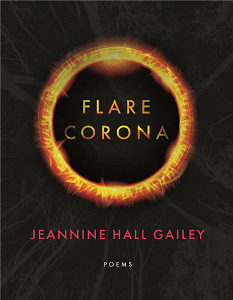
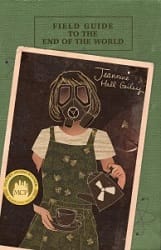
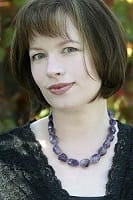 Jeannine Hall Gailey served as the second Poet Laureate of Redmond, Washington and the author of Becoming the Villainess, She Returns to the Floating World, Unexplained Fevers, The Robot Scientist’s Daughter, and winner of the Moon City Press Book Prize and SFPA’s Elgin Award, Field Guide to the End of the World. Her latest, Flare, Corona from BOA Editions, was a finalist for the Washington State Book Award. She’s also the author of PR for Poets, a Guidebook to Publicity and Marketing. Her work has been featured on NPR’s The Writer’s Almanac, Verse Daily and The Year’s Best Fantasy and Horror. Her poems have appeared in The American Poetry Review, Poetry, and JAMA.