Representations of Women Writers in Film, Fiction, Memoirs
- At June 01, 2013
- By Jeannine Gailey
- In Blog
 4
4

Okay, I thought I would do a post on how marriage was like The Hunger Games. But I’ll save that for another day, because yesterday there was a sneaky snake attack by my little lake full of ducklings – a four-and-a-half foot black snake charged me out of nowhere, which has never happend to me before – and I was on a wet grassy bank, so I jumped, fell, sprained my ankle, pulled my knee and bruised my spine. (Ouch – sleeping last night wasn’t pleasant! But thank goodness I had an appointment with my physical therapist, who was able to check my injuries and tape up my knee and ankle. Anyway, this all leads to the fact that I’ve been reading and listening to books non-stop.
So, we watched “The Squid and The Whale” – which critics just loved, but I just felt “meh” about – I kind of hated the representation of the tarty, successful writer/mother character and I thought the kids were awfully whiny – I mean, those writers/parents weren’t winning any parenting contests, but then, I think I know a lot of x-er childhoods that were a lot more traumatic (including my own, almost all of my friends and most of those closest to me.) Then I was reading “Z – a Novel of Zelda Fitzgerald” – I just saw the new Gatsby movie, which I loved, but I conflated – I think incorrectly – Zelda and Daisy from Gatsby, so I had Fitzgeralds on the brain – and doing some research on her life, discovered she died, rather pathetically, in a sanatorium fire at the age of 48 with eight other women. And you know I’ve been reading Flannery’s letters, yes, funny and tough, but who died at 39 of complications from lupus – and I’m reading two books on Sylvia Plath, Pain, parties, work : Sylvia Plath in New York, summer 1953 and Mad Girl’s Love Song, which are both about Sylvia life as a young woman. And we all knew what happened to her. Sigh.
I just wish there were some representations of happy, balanced women writers somewhere – in fiction, film, memoir….I was thinking that maybe the closest I come to healthy role models are Margaret Atwood and AS Byatt – both well known for their grumpiness but also fairly old and not that tragic! Can you think of some positive fictional or memoir representations of women writers? How about films? I think every film I’ve ever seen in which a woman writer appeared, the writer was a. tragic/pathetic b. deeply neurotic or c. a love interest, not a main character. How am I supposed to do this woman-writer thing with everyone dying young or going crazy? Help me out! I’m stuck inside and need something cheerful to watch/read to inspire me!
Happy Memorial Day! And thoughts on Writing Priorities and True Success
- At May 26, 2013
- By Jeannine Gailey
- In Blog
- 2
Happy Memorial Day Weekend Everyone! And thanks to all our troops who have serve or are currently serving!
This weekend, after scanning with some dismay the number of poems I’ve written and/or sent out in the past twelve months, I decided to make this weekend profoundly unscheduled – no parties, no readings – and just devote myself to getting back my brain’s space, writing, and trying to send out some work and revise some of my manuscripts. It’s been tough – I’ve been easily distracted – but I’m getting back into my old habits after a day or two – staying up late to write poems, starting in the morning before I get out of bed to go over XL spreadsheets and deciding where to send out or researching publishers and magazines. I want to have some sort of higher ambitions – I’ve been reading, a little bit every night, Flannery O’Connor’s Habits of Being , and have been really struck noting both her tough ambitions, her constant revisions and aiming high in her publications. (I have some other literary memoir-type things calling my name to read as well – Pain, Parties Work on Sylvia Plath, and Z A Novel of Zelda Fitzgerald when I’m done with Flannery.) Note that things didn’t really end well for any of these writers. Oh well. I’m taking note of their good habits and ignoring the bad. After all, that’s what we do in real life with friends and mentors, right?
I have been thinking about notions of “success” for a poet/writer (as you may have notice from previous posts) and have come to an odd conclusion: you cannot compromise or let your writing become commercialized or fall victim to trends or else, like the tragic example of the brainy teen girl whose high school crush finally comes around when she puts on a short skirt and makeup – she’ll find the shiny object of her affections sadly tarnished. As a writer, what I really mean when I say “Success” is that someone (or someones – hopefully a larger number rather than a smaller number) – appreciates what is unique and special about your writing in particular, not your writing as part of a trend, or your writing for what it represents, but what is unique to you in terms of ideas, styles, slant, POV…you know, without the short skirt and makeup, with your hair in a ponytail and your glasses on. We worry about how to make our writing pretty and popular. But inside, you want your audience to love your writing in the same way you want a loved one to love you – that is, to embrace not just the exterior, but the true nature of you. Of course it would also be nice to sell, say, 7599 copies of your new book! But really, what is the use of “success” with money or numbers if your work has ceased to represent the real you? In other words, don’t worry about sending your poems to that Reality Makeover Program. Editors and readers – the ones your writing is meant for – will like you just the way you are. (This is advice, by the way, that you cannot give a teenage girl. Do not try. They’ll figure it out for themselves.)
Springtime and Change is in the Air
- At May 23, 2013
- By Jeannine Gailey
- In Blog
- 1


Quick update: Thank you to “Up the River Journal” who posted three poems from Unexplained Fevers up on their site: http://uptheriverjournal.wordpress.com/issue-one/jeannine-hall-gailey
Last night I went to a really fun poetry reading where I got to hear from Marge Manwaring’s new book and work by Ron Starr, and got to hang out with a few friends afterward, had a long phone conversation with a good friend in medical school – and had one of those spur-of-the-moment, embrace-change haircuts! (Razor-cut asymmetrical bob.) I also colored my hair much, much blonder. It felt good to do something different. That’s right, people – I don’t want to be a walking cliche, but when you have the blues, go blonde! I mean, what can it hurt? (PS my blonde is always a bit strawberry, because I really can’t get rid of the red in my hair no matter what color I mean to color my hair. “Chocolate brown/mocha” ends up auburn, so “light brown/dark blonde/caramel/honey/almond” ends up strawberry. By the way, notice how many of those words involve food – is someone going to be eating our hair? Right? Gross!) I know I’m being a total junior high girl and posting pics of the hair. (I did it on Facebook too! Crazy!)
Talking to a bunch of folks yesterday, I realized a lot of people have been feeling down and ready for a change, not just me – especially in their jobs. How many people have been stuck in jobs they hated because of fear, because of the bad economy? Maybe it’s time for some optimism, some positive change, again – time to stop gritting our teeth and getting through the day, and looking for something better.
I’ve also applied for a long-shot job kind of thing, and am continuing to look for newer, bigger opportunities. Why not, I say? What can it hurt? I’m also planning my first out-of-town reading for the new book out in Portland in June, so yay for that! I’m trying to write a little, God-help-me, fiction. Maybe an attempt at memoir too. Maybe I’ll send out a few freelance queries. I have always thought when I get really down, it’s a sign I should change a few things. Not moving to Hawaii/get a divorce/meltdown kind of changes, but changes to the small things I’m unhappy with – personal interactions, job and money stuff, adding and deleting things to the schedule (writing time in – doctor’s appointments – out!) I do think struggling with weird health problems AND being a poet (talk about job uncertainty!) could potentially drive a lot of people batty, not just me. It’s my own work to figure out how to balance and manage that with good things in my life – how to let go of worrying about my family, how to be ask for the things I want and not be afraid of being more assertive, how to add in things like writing time and hanging out with friends and going out (i.e., fun!) and make those things just as important as the many duties and responsibilities I usually give priority to. Also, trying for things I’m normally too nervous to try for! Because, at this point, why not?
Appearing around the Web and Feeling Blue under Blue Skies
- At May 20, 2013
- By Jeannine Gailey
- In Blog
- 1
First, let me thank Jim McKeown for his kind review of Unexplained Fevers at RabbitReader:
http://rabbitreader.blogspot.com/2013/05/unexplained-fevers-by-jeannine-hall.html
A version of which I think might be on his local radio show!
And thank you to the new site VerseWrights which did a little feature of poems from all three of my books here:
http://www.versewrights.com/jeannine-hall-gailey.html
Warning: The Rest of the Post Contains Unedited Feelings about being a Writer
So, as usual, I know I have plenty to be grateful for. But lately I’ve been feeling blue, and more than that, scattered, a bit at a loss for what to do next. I don’t know if it was the let down from turning 40, or publishing a third book, or my mom’s stroke, or the variety of exciting health challenges (including, yes, unexplained fevers of 101 for days at a time) – coming to the end of my year as Redmond’s Poet Laureate – but I’ve been feeling blue. Also, like I’m starting to ask for more from life – if I’m going to put the time and energy into something, I want to feel like it’s worth it – this applies equally to poetry work or doctor visits – and that just smiling and playing nice doesn’t always get results. Maybe this is what happens when “nice girls” like me get older – they notice that being nice all those years didn’t really work out in the way we thought it might. I think I have already said all this in poetic form for the last few books.
Like I said, I have plenty to be thankful for, that is for sure. But having a job that actually could pay off my student loans? I’m missing that. The ability to deal with jerks in a way that doesn’t give me a migraine and autoimmune flareups? That too. And if I’m honest, I’m not quite – after more than a decade of doing what I’ve been told to do – studying (then teaching,) volunteering, publishing, reaching out to the community, self-promoting in hopefully a non-obnoxious way, being diligent as I know how with reading, writing and submitting – where I’d like to be as a writer yet. These three issues (along with the health stuff) have been literally keeping me up at night, anxious thoughts spinning despite soothing Paris memoir reading or putting on soothing comedic television like Futurama or 30 Rock (usually both send me right to sleep, in a good way, with their familiar humor.) I’ve been talking in my last few posts about not whining, about taking positive steps and resisting self-pity. But what happens when we come to the limits of what we, with our limited scopes or abilities, are able to do? Do we keep hoping and crossing our fingers that things will get better for us, somehow? Wish upon a star? Or just change our life entirely? I’m looking for a sign from the universe, and that is usually a sign in itself.
Taking Steps and a fear-based society
- At May 17, 2013
- By Jeannine Gailey
- In Blog
- 0
You may have noticed a bit of shambling around in the last couple of posts, trying to align my life (over here) with my values and actual passions (over here.) So, after a few weeks of trying to get my thoughts in order, yesterday I finally took some steps after several long walks in the unusual May sunshine watching duckling and bunnies and hearing the red-winged blackbirds chirping mightily and other such springy-visions.
I started a job application. (By the way, if any of you are looking for an MFA-holding, three-book-published poet to work for great pay part-time let me know! I’m looking at you, well-funded low-res MFA programs!) I wrote to a publisher that had been holding a manuscript since last August, I looked at that same manuscript and rearranged it a bit and took out some poems I can see now don’t fit in it, I printed out my Excel spreadsheet of poems to send out, I looked at the drafts of the poems – eek, often full of angst and not much else – I have written in the past few months to see if any were worth revising. In other words, I actually did some real writing work. Also, I painted my nails cobalt blue, which looks sort of goth and scary but also reminds me that these fingers are getting stuff done. No more polite buffed nude fingernails, which seems like a metaphor for a life lived in more color, with more vigor. I know, it’s just nail polish.
One of the things I realized after this aforementioned set of writing chores was that, after an acceptance from earlier in the week and the publication of the new 2013 Jack Straw Anthology, every single poem from “The Robot Scientist’s Daughter” has been published. I also watched a bit of “The Girls of Atomic City” lecture from PBS I had recorded some days ago, really thinking about how foreign and alien the subject matter of nuclear enrichment and bomb-building in a secret city must seem to the screeners and editors looking at the manuscript, how outer-space-science-fiction so much of my actual real life has been. Most people, I know, don’t grow up with Geiger counters in their basements, knowing how to measure nuclear pollution in their gardens. I was thinking suspicious thoughts about government coverups by the time I was seven and eight, because it wasn’t science fiction, it was happening within a five-mile radius of my house. My whole early childhood, complete with men-in-black and secrets locked is safes, was like an Appalachian X-Files episode. A neighbor stabs their husband one night, my father is teaching me about radionuclides and dosimeters the next.
My next manuscript, almost finished, might be more user-friendly, but no less dark – it’s all about apocalypses and the end of the world, which it seems is the subject of every single movie that’s come out in the last few years. Kids today don’t know what it’s like to fly without taking off your shoes because of terrorism – it’s created sort of a fear-based society here, one different than the kind I grew up in the seventies, when, yes, we were worried about nuclear bombs and hostage-taking in Iran, but basically, America felt safe and secure – not “fifties” safe and secure, exactly – there were moving tides all around us then, racism and sexism held up in the light, the EPA starting to have a voice – but still, I felt safer and more secure than I bet the kids I teach in workshops today feel. That’s what I’m trying to capture in this (fifth?!?) manuscript, that sense that the world is about to end, all the time, if not by zombie, then by plague or food chain collapse. (I’m reading a delightful YA-style geek-and-tech book called “Mr. Penumbra’s 24-Hour Bookstore” that features a near-future in which the food chain has already collapsed. So much fun to read, it’s like a vacation for the brain…) The idea that disaster, unpredictable and uncontrollable, is always near, right around the corner, and how one can live a life in that kind of mindspace.
Anyway, despite all the foreboding, the bad economy, the fears, young people today have the daunting task as they enter school and then the workplace, trying to decide what to do with their lives, how to make a difference. At forty, I’m considering the same darn questions, it seems. How to (and if I can) make the world a better place. How to do more than complain and be afraid, because those things, besides being useless, are boring. The idea of the superheroine and supervillain today seem more applicable than ever. If anyone is going to save us…it’s going to have to be…us.
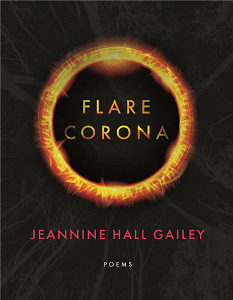
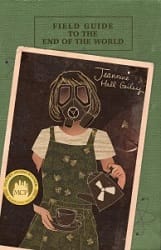
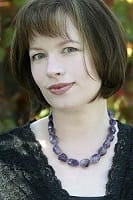 Jeannine Hall Gailey served as the second Poet Laureate of Redmond, Washington and the author of Becoming the Villainess, She Returns to the Floating World, Unexplained Fevers, The Robot Scientist’s Daughter, and winner of the Moon City Press Book Prize and SFPA’s Elgin Award, Field Guide to the End of the World. Her latest, Flare, Corona from BOA Editions, was a finalist for the Washington State Book Award. She’s also the author of PR for Poets, a Guidebook to Publicity and Marketing. Her work has been featured on NPR’s The Writer’s Almanac, Verse Daily and The Year’s Best Fantasy and Horror. Her poems have appeared in The American Poetry Review, Poetry, and JAMA.