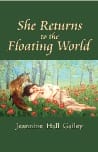
A new review of She Returns to the Floating World in the New Madrid Journal

I was pleasantly surprised to wake up today to a new review of She Returns to the Floating World in the New Madrid Journal by Christine Cutler. (Click here for a link to the review; it’s a PDF file, but it’s easy to read.) Thanks so much to Christine and those at New Madrid Journal!
Here’s the final sentence, which I think would make a nice blurb, too!
“She Returns to the Floating World is a well-crafted and delightful collection of poems that will take readers on a journey with Gailey beyond the chaos of the modern world into the potential of the future.”
Why I Write About Superheroines, or How I Became A Poet – Today on SheWrites
This post appears today on the web site SheWrites.com so click here to check it out. (Many thanks to Sandra Beasley for featuring the blog post today and giving me the opportunity to write about these subjects!)
When I was ten years old, if you had asked me what I wanted to be when I grew up, I would have said “I want to be a poet.” I memorized John Berryman (“Life, friends, is boring,”) T.S. Eliot, and E.E. Cummings.
But, growing up, my path was guarded by practical desires – I needed to be able to support myself, I needed to make money, etc. I ended up with my BS in Biology and then an MA in English, working as a tech writer. I got married, I grew up, I put my dreams of poetry aside. The usual. I think, like most people impacted by physical problems, that I want to believe that they do not impact my inner self; that I can go and do and be anything I want. But the truth is, my health has impacted not only my decisions about my life, my work, but has even carved out space inside my subconscious, causing me to fight to find new subjects. Like superwomen.
I spent my mid-twenties climbing a typical techie corporate ladder; I led a team of techies at a big software company and had a glowing future. I was still a writer underneath everything, but my writing energy was directed in memos, proposals, technical papers. Then I started to get sick. Really sick. Sick enough that I had to quit working. I took a temporary disability leave. And I didn’t end up returning.
This could have been a tragic, sad turn in my life. And I’m not going to lie – the physical part of this time in my life was no picnic. Surgeries, endless hours in waiting rooms, tests. But it also gave me freedom, for the first time in my life, to decide what I would do with my time if money had nothing to do with it. And you know what I wanted to do? The same thing I wanted to do when I was ten years old: write poetry. My husband encouraged me to go back for an MFA in poetry, to try to send out a book of poetry. Why not give it a try? What did I have, at that point, to lose? The answer was: nothing.
When I started to write poetry, I noticed that the poems developed their own voices – women from mythology, women from comic books, women who had transformative powers. I think these superwomen (and supervillains) interested me because I was trying to write my way out of my inner crisis. If I wasn’t going to be “normal” – i.e., work a nine-to-five job, have kids, which I was being informed was not going to happen – then what was my storyline?
In comic books, kids who were hyperintelligent but physically fragile tended to supervillain storylines. In comic books, women who were super-powerful often had no choice but to move to the dark side eventually (Dark Phoenix comes to mind as the prototype for this) although it certainly beat being de-powered as female comic book superheroes tended to be (see Gail Simone’s web site, Women in Refrigerators, for a prep on how women superheroes have fared in comics.) How could I harness my inner powers without going dark? How can frailty become a strength? The poems that I wrote – which eventually turned into my first book, Becoming the Villainess – explored these issues internally, even while I refused to acknowledge the issues consciously.
It’s been a decade since I quit my techie job and turned to poetry. I did get an MFA, I’ve published two books of poetry now, and even teach part-time and online classes. I’ve created a life that has space for my physical issues but doesn’t let them take over my entire narrative. I’m managing. After all, a lot of my writer heroes had serious physical illnesses yet still managed to write every day, to publish and teach and travel. They overcame with superheroic strength. I realize now my need to reach out in poetry to the heroic narratives of my childhood – the X-Men, Wonder Woman, Buffy the Vampire Slayer – was my own effort to fight the demons I had chosen to fight – and still fight – to overcome. My more recent subject matter- women who turn into foxes and cranes in Japanese mythology, fairy tale heroines trapped in towers and glass coffins, even the stories of my childhood in Oak Ridge, Tennessee, where the beautiful surroundings of woods and farms hid nuclear contamination that ended up in our food and drink – still tells a story of a women trying to build an inner life that takes into account her limitations, but also her strengths.
Learning About Poetry After the MFA, Without an MFA, or: Why Independent Study of Poetry is Probably Important No Matter Which Route You Choose
I had noticed, from this post on Justin Evans’ blog, and from this post on post-MFA poverty and life, that it might be useful to talk about what the most helpful resources I’ve found have been for learning about poetry before, during, and after the MFA. What I wanted to say to the girl living in misery and unemployment after her MFA – learning and getting better don’t happen on their own – you sort of have to keep going out and making it happen. Just getting an MFA doesn’t automatically make you a writer, and in my experience, it certainly does not automatically make you an employed writer. You have to keep writing and trying and reaching. I got an MA in English in my twenties, where I learned about formal poetry and nineties-style literary criticism. Ten years later, when I went back for my MFA, I learned a totally new approach to poetics, one with a more relaxed Northwest-centric feel. Now I teach, but I still don’t feel like I’ve learned everything I need to know, so I reach out to people all the time for advice and critique.
Here are the books I recommend to my National students and personal coaching students for the best overall understanding of reading and writing poetry:
–Introduction to Poetry by XJ Kennedy (preferably a 1980’s version, I like the older versions of this textbook – and they’re cheaper than new!)
–The Poet’s Companion by Dorianne Laux and Kim Addonizio – like hanging out with two warm and wonderful poets, but with learning!
–In the Palm of Your Hand by Steve Kowit – Steve’s approach is low-key and you may not learn everything you need to know, but you’ll certainly have fun trying out his exercises and reading some new poems.
If you read these three books cover to cover, you will have an understanding of how to read, write, and talk about poetry that may be more in-depth than one you might gain in a studio-based MFA, where they don’t talk very much about craft or critique.
Local Writing Conferences
This is how I jump-started my way back into poetry after years away, and depending on the conference, it can be nurturing, laid back, challenging, competitive, agent-filled and focused on publishing, or agent-free and focused on craft. You’ve got to find a good fit for you. The good news is there are so many of these now, all you need to do is figure out budget, where you want to go and who you want to study with, and go! It’s not all about Breadloaf. You can try conferences like the laid-back Port Townsend Writing Conference, where I got to work with Erin Belieu and Kim Addonizio years ago, and not only workshop for several hours a day, but hang out and chat and gossip – the vibe is relaxed and the people are always friendly. There’s very little competitive jockeying going on, and you’re just as likely to be sitting in a group with a grade-school teacher and an ex-con as a professor or professional writer.
Local classes and readings: This should be a no-brainer, but if writers and editors you admire are talking near you, attend. Listen. Learn. I love Seattle’s Hugo House, and there are useful writer’s centers like this in many large cities.
Side note: Check out February 4 – Elizabeth Austen’s Class on Call and Response Poetry at Hugo House. Read more about it here and sign up!
Approaching Your Favorite Writers
You might be interested to hear that besides community readings and workshops, you can also just write out of the blue to your favorite writers and ask if they’d be willing to coach you for a fee. You’d be surprised to find out who might say yes, and this is a much better way (not to mention, more cost-efficient) for you to get advice on, say a particular stretch of manuscript from a particular point of view than a two-year degree. I’ve had some wonderful experiences trying this. The worse thing that can happen is they say no, but at least you had a chance to tell a writer you admired how much you admired them, right?
Patience in January
Yes, they say patience is a virtue, but sadly, I’ve never had much of it. So much of the writing game is waiting: waiting to hear back from a publisher about a book you’ve sent out, waiting to hear back on submissions or queries – sometimes for a year or more, waiting to hear the results of a contest or grant decision. It seems so little is in our hands. It’s one of the things I like least about the writing life, quite frankly. I’m a “get-it-done” kind of girl, and have always felt that little push from the back of my mind that “life is short – do what you can when you can.” (Or, for a more amusing version of my real feelings, see this e-card for my personal motto, but warning: it has a curse word in it. I’m sure it will ring true to you other A-types out there…)
January in Seattle, even without a week trapped in a snowpocalypse, is a gloomy, dreary stretch of grey days. Everyone catches the flu in one or more versions. It’s a month when I read more than I write (right now, Poets in Their Youth, a memoir from John Berryman’s wife Eileen Simpson about his life and Haruki Murakami’s sprawling 1Q84,) when I find myself watching more dumb comedies in an effort to cheer myself up, when, yes, I miss California’s mild, short, sunshine-filled January days.
So I’m trying to focus on the positive things I can accomplish during this grump-filled, chilly month. Like updating to the Facebook (terrible! okay, I said it) Timeline format. (See Kelli’s excellent tips on that process, here.) Reading “how to buy a house” guide books as there is nothing on the market right now anyway to even go look at; dreaming up decorating plans for said unknown future house. Working on the poetry manuscripts that aren’t yet published; reading and editing other people’s manuscripts. Coming up with ideas for new goals for the year, experimenting with new genres (right now, it’s creative non-fiction and flash fiction. See Anne Petty, Kitsune Books editor’s tips for Flash Fiction here.)
My real drive here is to focus on the things I can get accomplished, and try not to think about all the things I’m waiting to hear back on…hopefully things that will propel me towards the life I love, which I can see vaguely in the distance, out past January…
What are your January doldrums cures? What do you do when the waiting game has you on pins and needles?
Published Book Prizes, Grant Writing Tips, and more helpful links
Happy birthday to my little brother, born in the dragon year of 1976, so it’s doubly lucky for him! (I’m pretty sure that solar storm yesterday was just the dragon acting up!)
If you’ve been reading my blog you know I’ve been wrestling with grant applications; here’s Susan Rich’s terrifically helpful tips for applying to grants:
http://thealchemistskitchen.blogspot.com/2012/01/grant-proposals-some-random-thoughts.html?showComment=1327471180104#c5106411319332706938
I’m finally done; now all I have to do is bite my nails while waiting for results!
And, in case you, like me, just had a book come out last year, Jessica Goodfellow supplies a great list of post-publication prizes here (some of which I had never heard of:)
http://jessicagoodfellow.blogspot.com/2011/04/post-publication-book-contests.html
I’m not going to go to this year’s AWP, so I’m relying on you guys to report back with all the news, gossip, how awesome Margaret Atwood’s keynote might be, etc. Sorry to miss you! Can’t wait til AWP is in my backyard…
Having a harder time locating a house here that I was hoping; I guess one-story homes on the East side of Seattle are sort of rare, and it seems no one wants to sell their houses now that prices are so low, so there’s very little inventory of any sort. Because we’re going FHA, we have to avoid most condos, so that eliminates those possibilities. Tough stuff!
I found out from my publisher that I’ve sold about eleven times as many paper copies of She Returns to the Floating World as e-book copies. So I’m providing a link here and reminding you this great-looking (if I do say so myself – but seriously, Kitsune Books did a great job of formatting the poems) e-book is only $3.50, people! If you haven’t picked up a copy of my book yet, or you were wavering, this is your chance – go go go!
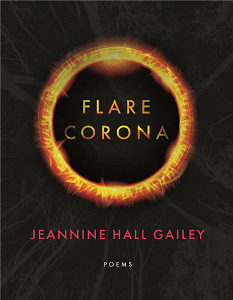
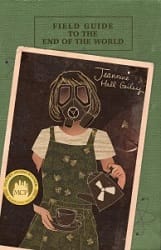
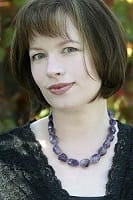 Jeannine Hall Gailey served as the second Poet Laureate of Redmond, Washington and the author of Becoming the Villainess, She Returns to the Floating World, Unexplained Fevers, The Robot Scientist’s Daughter, and winner of the Moon City Press Book Prize and SFPA’s Elgin Award, Field Guide to the End of the World. Her latest, Flare, Corona from BOA Editions, was a finalist for the Washington State Book Award. She’s also the author of PR for Poets, a Guidebook to Publicity and Marketing. Her work has been featured on NPR’s The Writer’s Almanac, Verse Daily and The Year’s Best Fantasy and Horror. Her poems have appeared in The American Poetry Review, Poetry, and JAMA.