Looking for some fun this weekend? Poetry-type fun?

If you’re looking for poetry-type action this weekend in Seattle, well, you’re in luck.
Open Books. 3 PM Sunday Sunday Sunday. Origami cranes! Japanese candy! Monster Trucks!
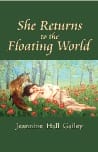
Well…maybe no monster trucks. But I will be doing my first Seattle reading of my new book, She Returns to the Floating World. I’m nervous. I’m picking poems, some of which I’m reading out loud for the first time.
Here’s one of them, inspired by Hayao Miyazaki’s Howl’s Moving Castle. Hope to see you there!
Love Story (with Fire Demon and Tengu)
Maybe in this version you are a bird, and I have become an old woman. Maybe you ate a falling star. It’s hard to love someone in a castle—they always feel distant. I will open a flower shop and learn to speak German, take to wearing ruffled dresses and straw hats. You’d like to pin me down, but you could tell my feet weren’t touching the ground. I called your name over and over, but you couldn’t hear me above the din of the bombers. It was like movies of wartime Japan. I looked up and there were planes bulging with smoke.
The blue sky kept getting darker –
sometimes, I thought,
with your shadow.
In the end, I have a dog in my arms and a scarecrow for a friend, but I never make it to Kansas. The field is wet and stormy, I kiss three men goodnight for their magic. The door to your childhood is opening for me. It allows me passage into a brick wall, my fists full of shiny black feathers, the shell of an egg, the howl of cold wind against a mountain. Don’t worry, your heart is in good hands. Let me keep it a little longer; its blue glow illuminates everything.
Attitude Adjustment – Contentment in Any Situation Edition
Just yesterday, I was so grumpy and whiny that I had to go back and delete my own blog post! Blah! Bad grumpy Jeannine was on the loose! Then…Magic Attitude adjustment. This morning I woke up…content. Not spring-out-of-bed energetic, but, vaguely…all right with everything going on. The lack of writing, I knew, was temporary. The rejections on the job front were all there for a reason, and after all, thanks to my still-gainfully-employed husband, I still have health insurance, enough to eat, a roof over my head. My health problems, while irritating, were not insurmountable – I can still enjoy the late fall sunshine, go watch the horses at the nearby horse farms, and my evil tonsillitis seems to finally be on the mend. I tossed all of the too-large clothes out of my closet yesterday, along with heels my physical therapist has deemed not great for my weak ankles for at least a year. Somehow, this seemed symbolic of the things I have to leave behind in order to embrace the things I have.
The sunshine and mild temperatures, the fall smells in the air (surely not falling leaves, here in mostly non-deciduous Seattle, but the recent rain on the pines) combined to bring back my…spirit? I decided not to sweat the small stuff. I took my wedding ring in to be repaired, and in the meantime, I bought a $5 rhinestone replacement at Claire’s so I didn’t keep touching my finger and missing it. My recent cancellation of my trip home to Cincinnati this fall, which had been bumming me out, instead made me think of all the good things I do have – a family great enough to actually miss, for instance, and the chance to relax a little more this fall as I mend and tend to my new book’s launch (like the new Northwest Bookfest where I am going to be reading with wonderful poets Kelli Agodon, Elizabeth Austen and Susan Rich, the new Geek Girl Con which will be awesome, and other new exciting ventures!) So see? I just have to learn to be content despite my circumstances. Rainier came out today, and was so beautiful shining over the flat green fields and trees of Woodinville. Also, a beautiful black horse with a white star on its nose walked right up to me in the field today, and nodded at me, and when I nodded back, it nodded again! (Horse magic!) I wished I had some sugar cubes or apples for it. Plus the ability to scale a fence and a large ditch.
And oh, running into this Onion article on the Poet Laureate first thing in the morning didn’t hurt my mood: if only poetry was the thing holding our troubled nation together!
New issue of Crab Orchard Review plus my 2 cents on the MFA ranking debate
So, week 2.5 into my persistent summer-weather-induced head-cold-throat-thing, I haven’t been doing as much creative writing as I’d like, but I finally finished up a book review for the Rumpus that had been hanging over my head, and working steadily on that job application for a local academic job that would be a perfect fit for me (at least I think so.) I sent out some poems and even entered a fiction contest (shhh, don’t tell! Secretly practicing fiction over here. It’s tough stuff.)
I got the wonderful new American South issue of Crab Orchard Review (Summer/Fall 2011, for those of you keeping track.) It’s really a wonderful collection, with three poems in it from my “Robot Scientist’s Daughter” manuscript (Thanks Crab Orchard editors!) and poems from Amanda Auchter, Stacy Lynn Brown and Erika Meitner, among other familiar names.
So, the recent issue of Poets & Writers included creative writing school rankings for MFA and PhD programs. Then, a bunch of professors signed a protest letter saying creative writing programs can’t possibly be quantified and ranked, etc. (The New Yorker has a bit on it here. And Poets & Writers printed a response here.) Then, on the Sunday twitter poetparty, people complained about being judged by having an MFA (people with MFAs are snobs! Or “You’re just an adjunct hack,” one person noted being called) or not having an MFA (one of my good friends being told he is not a “real poet” because he doesn’t have an MFA, etc.) Hrmph. So much ill will and complaining among writers, it doesn’t seem right.
Here is my opinion on the issue: the MFA is expensive for most people, because most people cannot afford to set aside the money or time for a graduate program that doesn’t really lead to increased income potential (the way, say, an MBA or MD might.) Does an MFA make you a “real” writer? There is no Pinocchio effect that I know of. When I signed up for my MA at the University of Cincinnati, I was a few years out of school, working a full-time job, and got a free ride courtesy of their generous grant program at the time. I learned a lot of literary criticism terms (that come in handy when I am reading poetics) and, at times against my will, a lot about formal poetry. I went back to more years of working at various corporations. Then again I started really wanting to move forward with my writing, to get regular experienced feedback. I attended some writing conferences, started going to a local writer’s group, and started reading more literary magazines, books on poetry, books of poetry, etc. This is when I started thinking about the MFA again. My husband and I talked and decided we did not want to move for my degree. I looked at the low-residency options available. At that time – not that long ago, after all – there was little information to be had about how good/bad/indifferent/well-funded different programs were. Not only were there no rankings, any info I had about any of the programs was based on gossip (what little there was) and guess work, because the program’s web sites were not very informative and a lot of programs didn’t respond to e-mailed questions. So, deciding to do the very thing I had been counseled over and over not to do – go into yes, student loan debt to get an MFA – I made my decision on where to go (Pacific University) based on friendliness of e-mail responses and faculty that I liked (and a bit of what is called “geographic attractiveness” – whether or not the place was within driving distance.) I was accepted at several places that I applied to (and I only applied to a couple of places, not knowing back then that you’re supposed to apply, like, ten or fifteen places as a time.) Whew! Lucky I survived the experience! (And, really, you don’t lose going to any program where Dorianne Laux is a teacher. She rocks!)
I think the rankings may not be that important, but surely, it doesn’t hurt prospective MFA students to know a little bit more about each program – whether they offer scholarships, whether the listed faculty actually teach there, etc. I think the rankings don’t do all the footwork – you still have to try to talk to alumni if you can, communicate with faculty if possible, definitely visit at least once – but I guess I don’t understand the vim and vigor of the hatred of rankings, except that creative writing people are all against rankings in general for artistic study? But we all know the best schools for visual art – I mean, visual artists and musicians know which graduate schools are best for their kind of work, typically, and the reputations of the programs do impact where people apply. So, I guess, my stand is: more information is better. And rankings aren’t the devil. These rankings may not be perfect – but who are they hurting? One person’s number one school – like, say, Iowa – is not going to be a good fit for someone else, I think that is obvious. For instance, Iowa wouldn’t have been my number one choice – I didn’t want to move to Iowa, but I had also heard (perhaps unfairly – remember that gossip thing) that Iowa was competitive and unfriendly, and while I don’t mind the usual amount of competition, I was definitely interested in a friendly environment. So, if they were doing rankings customized for me, Iowa would not be #1; but in terms of selectivity and reputation, everyone thinks of Iowa as #1 already. Surely the conversation can expand, get bigger, the rankings could start accounting more for, say, how alumni do in their writing after graduation, whether the big name writers actually spend time with students, what the atmosphere/craft classes/workshops/residencies are like, instead of focusing so much on funding. And Poets & Writers could profile programs in more detail for interested folks, which would surely benefit everyone (why is everyone so tight with information?) But maybe condemning the person trying to start the conversation (ahem, Seth or ahem, Poets & Writers) isn’t the right methodology for getting a better picture of MFA study to the world at large. (and I promise I’m not just saying this because my alma mater happens to be well-ranked.) So instead of criticizing, maybe people could come up with better rankings, better methodologies, maybe programs could be more transparent about costs and funding and scholarship and who teaches when. More help, more opportunities, more open conversations, more offers to collaborate and share, not less, is needed.
Also, there is a bit of class warfare in the background of these discussions, too – someone who can afford to send themselves to, say, an expensive program like Columbia without worrying about the cost – is going to be pleased with their experience at Columbia, and so would say they don’t deserve their lower rating, but someone who can’t afford it needs to know up-front that they probably can’t afford it – and so the rating is useful to someone who needs the funding. For me, the decision to go into student loan debt may have been – well, optimistic (naive?) – but, life is short, and attending was a wonderful experience, and I enjoyed it and think my writing benefited from it. I haven’t gone on a real vacation in ten years, my husband and I split the use of one car, and we don’t have a lot of extra money even when I do get adjunct work – and this quarter, I don’t have a class, so it’s a little tougher financially. The fact is, it’s really tough out there to get creative writing teaching jobs, even adjunct jobs. I tell my students this when they start my classes in the MFA program, as I want them not to be discouraged but to have realistic expectations. Maybe be prepared to make ends meet by doing freelance work, or copyediting, or teaching community groups…
Also, no one “needs” an MFA. (And I say this as someone who really loved getting her MFA and encourage those who have the time, energy, direction – and can realistically take the hit financially.) I think you can do the things that an MFA lets you do – pay focused, directed attention to your writing, learn from writers you respect – outside the MFA system. You can ask a writer you admire if they do private coaching – hey, it’s probably less expensive than school would be. You can buy that “book list” you’ve been putting off, and actually make time to read those twenty books that might change the way you think about writing. You can go to conferences and make friends with other writers, find a local group and workshop. Many fine writers became fine writers outside of the MFA system. And the only thing that makes anyone a “real writer” is writing.
Let’s stop looking for reasons to fight, and start trying to help each other out. It’s a mean cold world out there for writers and would-be writers, after all. Let’s find ways to lift each other up, to share information, to encourage each other to be better.
Celebrating Artists – Beyond Book Covers
So today, I wanted to talk a little bit about some artists I love – and why I think as important as it is for writers to be plugged into a writer’s community, they should also strive to connect to the visual art community. And it’s not just so they have slamming art to use the next time they have a book cover coming up! (Although that is a positive side-effect…)
Tonight, I’m going to the reception for artist Yumiko Kayukawa, whose new show is opening at terrific Seattle gallery Roq La Rue. (She also graciously allowed me to use her piece, “Zen Cracker,” for this web site.) You can see some preview art for the show here. So many people talk about the SAM, the Seattle Art Museum, or maybe they mention the Henry Art Gallery at UW, which hosts some kickin’ literary events as well. Both deserve a visit, but this quirky downtown gallery always has something up on its walls that makes me wish I could afford to buy more art.
And soon, I’ll be reading October 21 at a reception for local painter Deborah Scott, whose fairy tale series “Waiting for Prince Charming” is a combination of subversive pop culture wit and traditional stunning painting techniques. Check out this review of her show here. It starts today as well – click here for more information about viewing her work! You can see why I’d like her work.
I’m hoping to meet up with the cover artist of my first book (Becoming the Villainess) Michaela Eaves, at the opening tonight, and I just wish I could follow Rene Lynch (the cover artist of She Returns to the Floating World) around because her exhibitions are always in fancy places like Germany and NYC.
I think poets have a lot in common with visual artists, whose work necessarily taps into the subconscious, whose images are often drawn from the same sources (history, mythology, pop culture) as ours. Yumiko’s work draws on old eighties record covers, Japanese anime, and ecological concerns; Rene Lynch clearly focuses a lens on fairy tale tropes, as does Deborah. Michaela’s pop-goth-with-a-twist sensibilities might suit, say, a speculative writer. I think we can benefit from hanging out with each other; poets can be inspired to write based on the striking visual input, and artists (maybe, hopefully) can be inspired by our writing. (Well, like I said, we can hope!) I think about Frank O’Hara, who used to write for fancy art magazines as well as book reviews and poetry, who wrote the poem “Why I Am Not a Painter.” I’ve loved this poem since I was a kid, and I swear I’ve actually had the conversation in the poem. “It needed something there.” “There should be so much more, not of orange, of words, of how terrible orange is and life. Days go by. It is even in prose, I am a real poet.” So today I encourage you poets to go out this weekend and find some local art and try to talk to a real live artist!
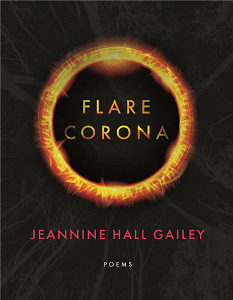
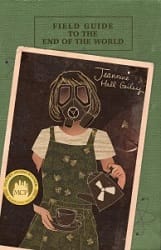
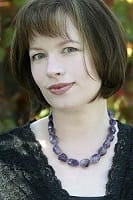 Jeannine Hall Gailey served as the second Poet Laureate of Redmond, Washington and the author of Becoming the Villainess, She Returns to the Floating World, Unexplained Fevers, The Robot Scientist’s Daughter, and winner of the Moon City Press Book Prize and SFPA’s Elgin Award, Field Guide to the End of the World. Her latest, Flare, Corona from BOA Editions, was a finalist for the Washington State Book Award. She’s also the author of PR for Poets, a Guidebook to Publicity and Marketing. Her work has been featured on NPR’s The Writer’s Almanac, Verse Daily and The Year’s Best Fantasy and Horror. Her poems have appeared in The American Poetry Review, Poetry, and JAMA.