Interview with Annette Spaulding-Convy

This will be the last of my summer interviews, I think, with the very exciting editor and poet Annette Spaulding-Convy…and tomorrow I’ll talk about art!
Annette Spaulding-Convy’s full length collection, In Broken Latin, will be published by the University of Arkansas Press (Fall 2012) as a finalist for the Miller Williams Poetry Prize and her chapbook, In The Convent We Become Clouds, won the 2006 Floating Bridge Press Chapbook Award and was nominated for a Pushcart Prize. She is co-editor of the literary journal, Crab Creek Review, and is co-founder of Two Sylvias Press.
http://www.crabcreekreview.org/
http://www.twosylviaspress.com/
Jeannine: Annette, I know you and Kelli Agodon are working on an e-book anthology of women’s poetry. Can you talk a little about that project? Why e-books? Why now?
Annette: Last year both Kelli and I purchased eReaders (a Nook and an iPad) and immediately noticed that there weren’t many contemporary collections of poetry available on electronic platforms, so we decided to utilize our skills as editors of a print journal and undertake an eBook poetry project. We invited our favorite women poets to submit and we were thrilled with the positive response, even from poets who had previously felt trepidation at the thought of their poems being distributed in an electronic format. This anthology, Fire On Her Tongue, will be available for purchase/download in the late autumn and it will be amazing—featuring over seventy contemporary women poets, ranging in age from thirteen to ninety-one, beginning and established poets, as well as women from a variety of careers and backgrounds.
Another aspect of the anthology that we are excited about is that the entire process from our first call for submissions to the sale and distribution has been “green” with a zero carbon-footprint. One of our goals for the project was for it to be entirely paperless and, so far, we’ve been successful, even having our poets sign electronic contracts.
I’m not sure why many of us feel an initial resistance to electronic reading platforms, perhaps because as writers and readers we love the tactile, visual nature of printed books and we fear they might be endangered by this new technology. I believe both can co-exist peacefully. It is my hope that Fire On Her Tongue will inspire poets to ask their publishers to make their collections available in eBook format in addition to the traditionally printed book. And, for some poets, electronic books are an economical way to self-publish. Lastly, I am excited that the production of this anthology has prompted Kelli and me to start our own independent press, Two Sylvias Press, which will primarily publish books written by women.
JHG: And your book has been selected for publication by University of Arkansas Press, due out in Fall of 2012. Tell us a little about what that book is about and how it came together.
ASC: I received a surprise phone call this past Valentine’s Day morning—Enid Shomer, judge of the Miller Williams Poetry Prize, calling to tell me that my manuscript, In Broken Latin, had been chosen as one of three finalists and would be published in 2012. Just the week before, I had decided that the ten year process of writing this collection and sending it out to contests had cost me enough money, time, and disappointment—the manuscript would be retired to a hidden folder. I guess the writing process is about both perseverance and letting go.
In Broken Latin is inspired by the five years I spent as a Roman Catholic nun in the San Francisco Bay Area. The collection took me nearly eight years to write as I often found it challenging to articulate how I simultaneously loved and disliked my time in the convent, how the contemplative life gave birth to a non-traditional view of divinity, how the line between what is sacred and what is profane is sometimes extremely thin. The poems are critical of the Catholic Church as a patriarchal institution and attempt to show the human, generous, and compassionate lives of the women who have devoted themselves to an ideal in a religious tradition that disregards the feminine (in my opinion). That sounds so heavy and didactic—but, really, there is also nun naughtiness and humor!
I think I began writing these convent poems as a catharsis. I soon had a small collection, which I submitted to the Floating Bridge Press Chapbook Contest here in Seattle. They chose my chapbook, In the Convent We Become Clouds, as the 2006 winner, and this encouraged me to create a full-length book based on my experience. I’m finished writing about nuns for awhile and now I’ve moved on to cowgirls.
JHG: You’re also one of the editors-in-chief of Northwest literary magazine Crab Creek Review. What has that been like? What’s your favorite part of being an editor? Your least favorite?
ASC: I came aboard Crab Creek Review with some editing experience, but not a lot. I learned very quickly that the production of a literary journal takes hours and hours, and is basically, a labor of love. I co-edit CCR with Kelli Russell Agodon and we are part of a strong production team. The two of us are in charge of the journal’s finances, fund raising, PR, website/blog, release readings, proofing, distribution, and giving the final ok to the poems, fiction, and creative non-fiction chosen by the genre editors to appear in a given issue. I think my favorite part of editing (aside from cracking open a new copy of the journal just off the press) is having the opportunity to read through the poems and stories that our wonderful editors (Lana Hechtman Ayers, Jen Betterley, Nancy Canyon, and Star Rockers) have found to be the strongest in the bags and bags of submissions that they read through. There is nothing more exciting than finding a new, unpublished poet or receiving a submission from a huge literary name. The least favorite aspect of editing for me is the behind-the-scenes-housekeeping details that need constant attention and the large subscriber mailing—the local post office clerks grimace when they see me. There are two CCR staff members who help us tremendously with all of our editorial tasks: Carol Levin and Ronda Broatch, CCR’s editorial assistants. Crab Creek Review is a fantastic literary journal—everyone should subscribe!
JHG: What advice would you give a new poet just starting out?
ASC: I would say these things to a poet who is just beginning to write and submit:
- Read as many other contemporary poets as you can. Read collections that are just coming out and find the poets who inspire you and study their work. Also, read literary journals and find out what poetry editors seem to be choosing in terms of style and content. And, pick up a dead poet once in awhile, too: Shakespeare, Dickinson, Eliot, Sexton.
- Write about your experiences and/or the aspects of life that fascinate you. Be free with your poems and write them in any voice you want. Poetry is not non-fiction. You can write a poem with conviction about your aunt’s house burning down, even though you have no aunt and the event didn’t happen.
- Find a writing group made up of people with whom you “click”. A writing group gives you an opportunity to receive valuable critique and teaches you to read with a critical eye so that you can offer insightful feedback. You will be amazed at how much you will grow as a poet by simply being in the company of poets.
- Put your writing first. This is difficult, especially if you are busy, but sometimes it is better for you (and for your world) if you shut yourself away and write a poem rather than do the dishes. Find a writing routine that allows for a slice of quiet time: early morning or after everyone has gone to sleep or escape to a favorite coffee house.
- Submit your work constantly. Begin with local publications and branch outward (there are great lists on the Internet of journals and what styles they publish—Poets & Writers online has a terrific database). Continue to submit even if you only receive rejections. Talk to other poets about their submission experiences and exchange ideas for places to submit. Occasionally send your work to big name journals that seem out of reach—you might be surprised!
- Go to local poetry readings, listen to famous poets read their work (the Internet is a great resource for both audio and video of poets reading), and read your own work aloud to yourself. Write a few lines and read them aloud—your ear will catch a bump that your eye may not.
- Submit your poems to Crab Creek Review. We love emerging poets!
Blazevox Scandal Has Me Thinking About Poetry Sales (and Book Sales in General)
So yesterday this bizarre and frankly fascinating thing happened while I was out blissfully walking around giant cedars and gasping at local waterfalls (Weeks Falls and then Snoqualamie Falls) and generally ignoring all poetry-related business…
A little press called Blazevox sent out some letters telling authors their books had been accepted but they needed to pay a $250 fee for them to be published. Certainly not the first or last time such a thing had happened, but it rubbed some folks the wrong way, then those folks blogged about it, then there was a lot of fighting on Facebook, then Blazevox’s editor (who, among other things, really needs to run spell check on his professional correspondence, if he learned nothing else from the blowup – really, poets are super bitchy about typos) announced on their web site that he was closing down the press.
So, my problem with the whole discussion was how the editor – and lots of other folks – made the assumption from the beginning that they can’t make any money from poetry or poetry books, and that that’s just a given. Hmph. I don’t think it’s a given. If maybe the press researches some marketing techniques, or does a little more PR work, maybe their books will sell better. Most poetry presses do very little in terms of trying to market their books. Those who make even a little effort probably have slightly better sales. Yes, I know Borders just went under – also from bad management decisions – and that e-books outsell paper books – and I know that poetry has never been terribly profitable. But there’s some weird elitist undertones to the conversation, as in, “Those silly masses of people out there will never be capable of liking or understanding poetry, so we need to get our support from the writers,” which really doesn’t make any sense to me. Why do we assume more people can’t or won’t like poetry IF THEY ARE EXPOSED TO IT CORRECTLY. Which means, not by an English teacher who hates poetry already who grudgingly makes students write terrible sonnets and teaches them about some eighteenth century dead guy, but, you know, real contemporary poets who are fun and enjoyable to read and don’t make you want to rip your own eyes from your head. I think Matthea Harvey is awfully fun to read, and would be for any random high school kid or college kid, and Denise Duhamel too. A lot of my friends write poetry that’s fun to read, fun to hear, fun to perform. The question is, why aren’t more poets (and poetry publishers) more ambitious about getting poetry out to more people who aren’t already poets or poetry lovers? A non-poet friend of mine who was a former VP of marketing at a Fortune 500 company asked me, so what do poets do to, you know, get the word out about their work? Well, I answered timidly, we wait til a college asks us to come out and read, and sometimes we read for free at coffee shops and little bookstores. Needless to say, she was not impressed with this plan – it’s not very practical if you want to really reach people who don’t already love poetry. So what should we be doing?
Also, for the record, my two small presses (bless you, Steel Toe Books and Kitsune Books) never asked me for money to publish my books. If you are a beginning poet and you don’t know this, there are publishers out there who will not ask you for money and will still publish your book. Yes, contest fees are a reality – but there are presses that still have no-fee open readings. And the way to help support them? It is to buy their books now before they go under. So, the rallying call is: if you like books and poetry, buy some books! From publishers who support their authors and don’t ask them to incur expenses themselves! Encourage your friends and family to go to some poetry readings, fall in love with poetry, and buy books themselves. I took my seventeen-year-old brother (and his gang of scary-looking-punk friends) to a Louise Gluck reading once, and he still has his signed copy of Meadowlands. You never know what’s going to connect with readers.
Holiday Weekend Bits
Open Books has a very kind write-up (plus a sample poem) of She Returns to the Floating World here.
If you are interested in reviewing She Returns to the Floating World, well, now’s your chance – Rattle has a copy and is looking for a reviewer! Info here: http://rattle.com/blog/available/
Had a chance to entertain my poet friend N (newly arrived from the East Bay back the NW) and show her around Woodinville (including the two potbellied pigs at the Herbfarm garden!) during pitch perfect sunny-low-humidity-mountain-is-out Seattle weather. It was a beautiful day and lovely to visit.
Now we are considering going to visit one of the local waterfalls. (It was either that and ick, clean up the house and work. Not appropriate activities for Labor Day Weekend, especially with this kind of weather.)
And I’ve set up a reading in October with my artist friend Deborah Scott and her latest exhibit. I’ll post more about her fairy-tale-themed exhibit soon!
And in case you missed it the first time, Escape Into Life calls my poems “heat sparking” – go check out their digest!
Say Anything Thursday
September 1, or Say Anything Day!
Well, for all you folks who are still in love with Say Anything, Cameron Crowe has posted new deleted scenes from the original script on his blog. I love this movie more now than I did when I first watched it, because I understand some of the subtext of talking about success in blue collar, Boeing-dependent Puget Sound. (This was pre-Microsoft-taking-over-Redmond, of course.)
It’s September, so no more “it’s August, the last summer month in the Northwest” procrastination is allowed. In the last 24 hours, I revised my “Robot Scientist’s Daughter” manuscript, updated the acknowledgments page (three accepted poems since last month!) and sent out a packet of poems. This makes me feel like less of a slacker and more like a real writer.
I am still working on my gigantic job application for desired academic job #1, and I’ve gotten into a sticky wicket where I’m wondering whether the sample syllabus should be my actual syllabus from classes I’ve taught or something else? (Anyone out there with advice, I’d be grateful to hear! Like, do they really need all of the grading and ethics information on there, or just the content stuff?) It also requires a writing sample (do I use poems from both books, or new work?) and a letter of something called a “commitments to creative writing and poetics” statement (no idea what something like that is supposed to contain. And I call myself a book critic!) Whew! My tech writing job applications are way easier to do.
I’ve been angsty about whether I’m doing enough to promote the new book, and how much is too much, and how many readings to schedule and where, and I realized that though having a book come out is something to celebrate, it can also provoke a lot of anxiety. My first Seattle reading will be on the 25th of September at Open Books, my very favorite bookstore of all time, so if you’re my friend and will be Seattle that day, come by and wish me luck! Or better yet, stay for the reading (at 3 PM.) I’m putting together the reading list for that, too, and practicing the new poems out loud. I heard Obama will be in our fair town that day, and I told him it would only be a 45 minute reading, and afterwards we could go out for gelato, so I hope he shows 🙂 I think it would be good for poetry and for presidents if presidents went to more poetry readings. Plus, I’ll read about politically important subjects like nuclear environmental challenges. Fun for everyone!
Today I’m nervous also about going to the dentist for multiple fillings (ouch!) and excited about seeing my friend N who is back in town tomorrow. It’s always good to see old friends. Not sure I can say the same about the fillings!
Tuesday Confession: In Which Things Don’t Get Done, Feminisms, and Closed Doors
Updated: I had two nice poetry world things happen today that caused me to rethink my grumpy post, so I decided to delete the evidence of grumpiness. For those of you who missed it, sorry!
PS You should still read Celia’s excellent post, I am a Feminist poet, here. I think all that stuff still applies.
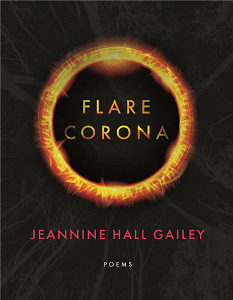
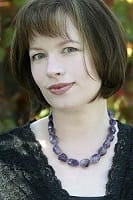 Jeannine Hall Gailey served as the second Poet Laureate of Redmond, Washington and the author of Becoming the Villainess, She Returns to the Floating World, Unexplained Fevers, The Robot Scientist’s Daughter, and winner of the Moon City Press Book Prize and SFPA’s Elgin Award, Field Guide to the End of the World. Her latest, Flare, Corona from BOA Editions, was a finalist for the Washington State Book Award. She’s also the author of PR for Poets, a Guidebook to Publicity and Marketing. Her work has been featured on NPR’s The Writer’s Almanac, Verse Daily and The Year’s Best Fantasy and Horror. Her poems have appeared in The American Poetry Review, Poetry, and JAMA.