32 Poems Fave Book Feature and More

Well, my five favorite poetry books feature is up at the 32 Poems Blog:
http://www.32poems.com/blog/2238/day-21-jeannine-hall-gailey-shares-her-five-favorite-poetry-books
May all the books listed sell a thousand copies. Great books, all of them.
And, yesterday, Kelli Russell Agodon’s five fave feature was up, which might have have mentioned Becoming the Villainess:
http://www.32poems.com/blog/2233/day-21-kelli-russell-agodon-national-poetry-month
The bad things about lists like this is I still feel I didn’t even get to talk about a third of my favorite poets. Rebecca Loudon, Karyna McGlynn, Suzanne Frischkorn, Kristy Bowen, Jeff Walt, Karen Weyant…OK, now I’ve listed another six poets that I love. And that’s just for starters.
I have a small haiku up at the new issue of Pirene’s Fountain. The whole issue’s pretty great, and Aimee Nezhukumatathil (another of my fave poets…see, the list just keeps going) is featured in it.
Thanks to a very generous donor, the drive to collect money for the Japan disaster – specifically, for Doctors Without Borders – by selling copies of Becoming the Villainess raised more than $200 for the cause. Thanks again! All proceeds will go to the charities.
More Poetry Month and a Sad Passing
I was very sad to read this morning on C. Dale Young’s blog about the passing of Jeanne Leiby, who had recently taken over editor-ship of The Southern Review. I thought she had a great vision for the magazine and she wrote me a very kind note while she was editor there. It’s a strange thing; in the age of Facebook, I said to my husband: “But she just posted to Facebook yesterday!” She was about the same age as my older brothers, in her mid-forties, and that just seems tragic and unfair.
I am reminded that we should tell all the people we admire and care for just how much we admire and care for them. I was so happy to see some of my old friends at poetry readings in the last week. Rebecca Loudon read her poem “Love Letter to the Whores on Aurora Avenue” which always makes me cry, and I saw Colleen McElroy, who spent time and energy mentoring me when I was just starting out as a writer/lit mag volunteer in Seattle – in fact, before I met her, she accepted one of my poems for my first “real” poetry acceptance (you know, outside of teen-y contests and high school mags and such.) She got up, rocking her skinny jeans and high-heeled boots, and was such a fierce poetry presence…it was really inspiring. If I could be half as fierce a poet as Rebecca and Colleen, well, I’d still be a pretty darn fierce poet.
Collin Kelley has started blogging for Poets & Writers. Check out his first post here!
During Poetry Month, I wanted to take a moment to encourage everyone to go buy poetry books from independent bookstores. Specifically, you should all buy books from Open Books, the poetry-only bookstore in Seattle. I recommend calling in and placing phone orders if you don’t live in Seattle. When I lived in California, I found myself constantly wishing I could just pop in and see John and Christine, the owners, who are always full of good advice and news, and check out the new poetry books propped up on the front shelf. For a poet, it is a magical place. Did I mention they also host some rollicking poetry readings? Lately I really enjoyed Martha Silano’s book debut readings, where she passed out little toy aliens and did physics experiments along with her poetry. I’m looking forward to a visit on May 12 when C. Dale Young will be making a stop in on his poetry book tour!
More Poetry Month Celebration – Busy busy busy
If you haven’t signed up yet for my poetry month book giveaway, do so now! And here’s Kelli’s links to even more poetry book giveaways!
Tonight I’m going to go see Susan Rich, Major Jackson, and Brian Turner read and do a Q&A together downtown as part of Seattle Arts & Lectures. This Sunday I plan to attend a reading with some of my fave peeps – Susan Rich, Kathleen Flenniken, Rebecca Loudon, and Colleen J. McElroy. I’m only attending like, 1/100th of the poetry events going on around Seattle for Poetry Month, yet I have something to attend almost every single day. Not to mention that Sakura-Con and NorWesCon are both going on next weekend, which means lots of socializing in a short time with out-of-town friends.
I’ve also spent some time each day proofing my manuscript (with help from other poet-friends and family members, whom I thank profusely) and teaching National U’s MFA program’s April/May advanced poetry workshop. I’m lucky to get one poem written a week in April, much less a poem a day! No time for loafing or leisure – it’s April! Ha! (I’m also formulating an idea of doing a class on speculative poetry on my own. Seems like there are lots of speculative poets but not a lot of speculative poetry classes!)
Hope to see some of you down at Benaroya Hall tonight!
More About Japan
And here’s a little bit about risk and probability and what we can learn from Fukushima – thanks for the link from Dorianne Laux.
The bottom line is, for companies, human costs are usually not as important as profits, and therefore, nuclear stuff isn’t built as safely as it should be.
Roland Kelts writes a beautiful meditation here on how physical distance from the tragedy has been affecting him: http://japanamerica.blogspot.com/2011/04/disaster-and-distance.html
Disaster narratives have been woven into the fabric of Japan’s art – ancient prints of giant waves hanging in museums, numerous tsunami-savior stories told to children, stone tablets set in the ground warning people not to build below a certain point. The famous Gamera and Godzilla movies, where the monsters were metaphors all about the ravages of the nuclear threat. I heard several versions of the following story, called “The Burning Rice Fields,” while I was researching “She Returns to the Floating World.” Here is one version of it I found online. The version I originally heard involved some self-sacrificing cooperation between an elderly farmer and a fox, and it inspired this poem from “She Returns to the Floating World.”:
“The Fire of Foxes”
In another story a man lights a fox on fire to save others, to warn them of tsunami. The fox is a willing partner, burning brightly in the night to tell the village and his own people to flee. The men and foxes see the fire and run. The water comes and swallows the burning fox, the old farmer who lit him, and all the farmland. But the families of fox and man are safe. The rice smolders underwater. The fox is rewarded with eternal life; his eyes and tail become stars in the sky. At least that is the version I have learned by heart.
Things I’d Wish I’d Known When I Was a Younger Writer
I was inspired by Susan Rich’s blog post of advice for young writers and Jim Berhle’s more humorous but equally valid post here. So I thought I’d pass on the things I wish I’d known earlier to you all. Please post your own tips you wish you’d known earlier in the comments!
–Be assertive about seeking out what you need – information, mentorship, etc. When I was in my early twenties, I was waiting for someone to tell me I was good and to tell me what to do to “make it” as a writer. But you know what? No one did. I wish I had known to go out and do more on my own. I got myself a copy of Poet’s Market when I was 19 and read every word in it and read magazines like Writer’s Digest, but other than that, I was clueless when I started out. Even when I signed up with my MA, no one really discussed stuff like how to send out work, how to get grants or fellowships, or how getting a teaching job happened. It was like this was all secret code, and you had to be a member of a secret society to get it. No one is going to hand you everything at the beginning, no matter how good a writer you might be, how nice a person, etc. If you don’t know how to write a cover letter, ask someone more experienced to show you one of their examples. If you admire a poet, write to them, tell them what they have meant to you and ask for advice or help. (You’d be surprised how many of them will respond, even if not all of them do.) If your professors haven’t really paid attention to your work, ask to meet with them after class and talk about your work and their suggestions. Or find a writing group nearby and start meeting with them. I didn’t write for a few years after my MA, because of a lack of encouragement and that feeling of being outside of a closed system, and I regret that lost time now. Don’t wait for someone to tell you you’re good enough. Go out and find the mentoring you need. Sometimes that’s not going to be grad school. It might be a local community group. The Bainbridge Island poetry group I’ve been going to for eight or nine years (or ten or eleven?) now has been much more important to my writing life than either of my graduate degrees, and that is a fact.
–You will probably not regret sacrifices you make for your writing. I had so much anxiety about the money situation. I still do. I grew up in a household with two parents who had grown up in horrible poverty, who had gotten college educations so that they could do better, and they did, but money was still always tight for us growing up. As an adult, I’ve always felt a bit behind the eight ball financially – and money for things like, say, a poetry class or a writer’s conference can seem like frivolous waste. But it is not. Spend in line with your values. You may regret buying that used car, or that house (darn Virginia money pit! Never buy a house with a well! Sorry, had a Richmond house-ownership flashback there) but you won’t regret meeting a writer you’ve always admired or learning more about the craft you really want to excel at. You will not get rich being a poet, in fact, you will probably lose money doing it, if I’m any indication. But it just might be worth it.
–Get involved. Volunteering for literary magazines and organizations gives you an inside view of how things work in the poetry world, and the perspective can do a lot for you as a writer. Those rejections – when you’re the one writing them, you learn that not every poem that gets rejected is a failure, so the writer can’t think of it that way – sometimes the poems just don’t fit a theme or they’ve already accepted a poem about crème brulee and apocalypse or the editor is in the mood for one kind of poetry versus another that day. Fund raising for literary organizations also makes you aware of the limits of audience, and the limits of interest in literature among the general populace, but also how just a few lovers of literature can make a difference. The best thing volunteering does is that it puts you in touch with other volunteers, people who value the same things you do, who believe enough in what they’re doing to do it for free.
–Be curious. The best thing I did early in my writing career was volunteer as a literary magazine reviewer for NewPages.com. They sent me literary magazines of various sorts, some new and some revered gray ladies, and every month I got a new batch, read them, and tried to point out what was unique and interesting about each. If you could force every new poet to do this, I would, because it opened up a whole new world of publishing to me. I also started writing book reviews and that keeps me reading all the time – reading poets I wouldn’t otherwise read, or find, on my own. This is the best way to find out what is going on in the contemporary poetry world – what are the people around you publishing, and why, and how?
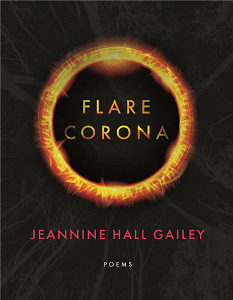
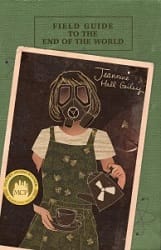
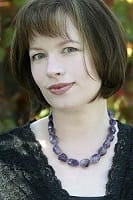 Jeannine Hall Gailey served as the second Poet Laureate of Redmond, Washington and the author of Becoming the Villainess, She Returns to the Floating World, Unexplained Fevers, The Robot Scientist’s Daughter, and winner of the Moon City Press Book Prize and SFPA’s Elgin Award, Field Guide to the End of the World. Her latest, Flare, Corona from BOA Editions, was a finalist for the Washington State Book Award. She’s also the author of PR for Poets, a Guidebook to Publicity and Marketing. Her work has been featured on NPR’s The Writer’s Almanac, Verse Daily and The Year’s Best Fantasy and Horror. Her poems have appeared in The American Poetry Review, Poetry, and JAMA.