How to Survive Not Going to AWP DC

How to Survive Not Going to AWP DC
So, for whatever reason, money, health, job, family, you find yourself not going to AWP this year. If you want to cheer yourself up, my advice is to try to simulate the experience as closely as possible. Please include your own suggestions in the comments!
–Throw some dirty snow on yourself. Maybe roll around in it. Stand outside in whatever inclement weather your neighborhood provides. Make sure you’re carrying something heavy, like a bag full of books.
–Make yourself an awesome name tag (you don’t have to use your real name) and try to sell books to passers-by on the street. They don’t even have to be your books!
–If you’re lucky enough to live in Seattle, Boulder, or Boston, go to your local poetry-only bookstore and complain about how you can’t afford to buy everything you want. Pick up several obscure literary magazines you’ve never heard of, just to mix things up. If you have no poetry-only bookstore, any independent bookstore will suffice. Flirt with the person behind the register.
–Pick a bar in your area crowded with weary conventioneers – it doesn’t matter what kind, software sales, concrete machinery, whatever – and try to start your own drunken poetry reading. Bonus points for getting others to join you!
Wishes for AWP, my recommended sidetrips from the conference, and crash courses
While life is giving me a crash course in food allergies (anaphylaxis versus intolerance, IGE tests versus IGG – these phrases were a foreign language just a few months ago!) I’m thinking about the upcoming AWP and wishing I could see all your shining faces there next week! I’ve always had fun (exhausting fun, but still fun) at the AWPs I’ve gone to, and have missed it the last couple of years. I’m going for sure next year, and of course AWP 2014, but that’s small comfort this year.
So, in service to all of you AWP-goers, and as someone who used to know DC pretty well – I worked there for six months – make sure you make a few side-trips outside of the conference:
–Check out the Smithsonian; I personally love the Natural History stuff, but them I’m a lover of dinosaurs. And the Smithsonian’s free! Tax dollars at work, people.
–Some awesome art museums, including the National Gallery and the Corcoran Gallery of Art.
–Go about fifteen miles into Northern Virginia to Great Falls National Park. It’s so beautiful, you can hardly believe it’s right outside the city. I stopped there all the time when I commuted to DC from Richmond.
–Some terrific food to be had in Georgetown, if you can manage the traffic. 1789 is (higher end) traditional DC done right, Cafe Bonaparte is all about wonderful French-ified brunches (crepes!) Just stopping by some place for coffee is fun. Wander around on foot if possible.
–One night, be sure you order gigantic room service sundaes. I don’t remember how it started but this was a tradition in our family when we visited DC for Dad’s business trips. So I just naturally associate DC with hot fudge and ice cream.
Most importantly, remember to blog about your adventures, especially the juicy stuff. Because I want to live vicariously!
All over the internets!
Hey guys! Kelli Russell Agodon interviewed me today about my research recently on small presses and micropresses for an article in the 2012 Poet’s Market.
Check it out here!
I’m going to miss AWP this year, but Deb Ager from 32 Poems has some great tips for AWP-goers here!
Snow Bees, poems for the weather and some great books I’m reading…
A very seasonally-appropriate Winter 2011 issue of Goblin Fruit is out, featuring my poem “Snow Bees” – you can even hear me reading it!
Incidentally, this is one of the poems that I wrote while collaborating with artist Amy Johnson for her installment art exhibition, which involves snow, wolves, bees, the works. I’ll post info on it as soon as it’s up!
While the doctors are busy trying to figure out why I keep going into anaphylaxis (I’m going to learn to spell that word correctly, for one thing) – food allergies, autoimmune, etc – I’m trying to keep my mind occupied with new reading material. Cate Marvin’s Fragment of the Head of A Queen, Sandra Beasley’s I Am The Jukebox, and issue 8 of Cave Wall, which I’ve seen some people mention lately, and I wanted to discover a new lit mag. I’ve only glanced through all three so far, but I’ve loved what I’ve read of Sandra’s “I Am the Jukebox.” Here’s a little bit from “Another Failed Poem About the Greeks,” which will indicate why I love the book so much:
“His sword dripped blood. His helmet gleamed./ He dragged a Gordon’s head behind him…As first dates go, this was problematic.”
I’m also reading Lizzie Acker’s terrific and strange Monster Party, a hybrid-forms, short-short fiction collection from Small Desk Press, as odd and crazy and interesting as can be. I just finished the story called ‘Baby,’ in which a dying narrator talks to…well, I can’t explain what or who the baby is, but let’s just say, it’s not what you’d guess.
Reality is Overrated
Julianna Baggott has an interesting post at her blog about creative writing programs and “reality” literature. Meaning, most MFA programs strongly encourage their writers not to stretch their imaginations beyond the bounds of “what really happens.” Which I think makes for some very boring fiction. And also, poetry.
My favorite fiction writers are fabulists, magical realists, writers who cavort at the edge of the possible – Haruki Murakami, Kelly Link, and Margaret Atwood, for instance. Geek culture figures heavily in a lot of the books I read – The Brief and Wondrous Life of Oscar Wao might fall into that category, or The Amazing Adventures of Kavalier and Clay. The movies and television shows I watch aren’t reality shows, or even shows that follow realistic plotlines – they often have superheroes, or time travel, or those kinds of elements. Japanese Anime does wonderful futuristic dystopias, if you’re into that kind of thing.
So why the fetishization in fiction and poetry, in MFA programs, of “the real?” Is it from the old adage, “Write what you know?’ (I always say, write whatever you can imagine. Just imagine it with a lot of specific details.)
I often tell my students to get away from writing about their families of origin, their latest breakups, or their backyards. Yes, I know that’s what Sharon Olds and Billy Collins do. Doesn’t mean you have to do that too. There’s too little flair, wild creativity, in most poetry books today. The old great poets – William Blake, Yeats – they had imagination, and it showed up in their work. I encourage them to try new subjects, write in persona, break out of their personal “reality” cages.
Realism is a fine mode, but it’s not the only mode. It wasn’t the mode of Homer, or Ovid, or some of the finest ancient poets. “Poetry is Not Memoir.”
If you want to put superheroes in your poetry, well, that’s a reflection of some part of your “real world,” anyway. Ancient humans created myths to liven up extremely hard and dull lives. It’s up to us to continue that tradition. So yes, write about your zombies, your superheroes, your anime characters and your folk tales. Write your book in reverse narrative as both a ghost-story and a time-travel story like Karyna McGlynn did in “I Have to Go Back to 1994 and Kill a Girl.” What do you have to lose?
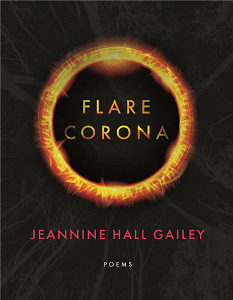
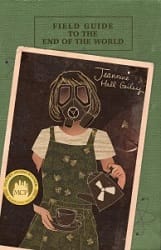
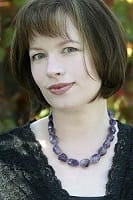 Jeannine Hall Gailey served as the second Poet Laureate of Redmond, Washington and the author of Becoming the Villainess, She Returns to the Floating World, Unexplained Fevers, The Robot Scientist’s Daughter, and winner of the Moon City Press Book Prize and SFPA’s Elgin Award, Field Guide to the End of the World. Her latest, Flare, Corona from BOA Editions, was a finalist for the Washington State Book Award. She’s also the author of PR for Poets, a Guidebook to Publicity and Marketing. Her work has been featured on NPR’s The Writer’s Almanac, Verse Daily and The Year’s Best Fantasy and Horror. Her poems have appeared in The American Poetry Review, Poetry, and JAMA.