New Interview at Poemeleon and New Horizons

There’s a new interview with me up for the Habitual Poet at Poemeleon here:
Interview with Jeannine Hall Gailey
Had a good visit with my folks, with perfect NorCal weather, vines turning red, lots of wine tasting and touring parks in the sun, going out and looking at the Harvest-est moon. My Dad actually read Reb’s two-part talk about poetry publishing and we talked about the business models of poetry presses. I’ve talked about starting a press for a long time but haven’t quite gotten around to it yet, mostly because of the financial difficulties of it.
Glenn was successful in finding us a new apartment back up in Seattle, kind of out-in-the-countryish – it’s a little cheaper the farther you get from the city, of course – but a nice-looking, newish place. We’re hoping to settle down and buy sometime in the next couple of years; if you follow my blog, you’ll see we’ve moved so much that you might wonder if I have some kind of addiction to the act of moving, but no, we’re just looking for a good place to call home.
I’m reading in San Francisco a week or so before we move at Litquake on October 9, so let me know if you want to get together while I’m in the city!
All News Tuesday
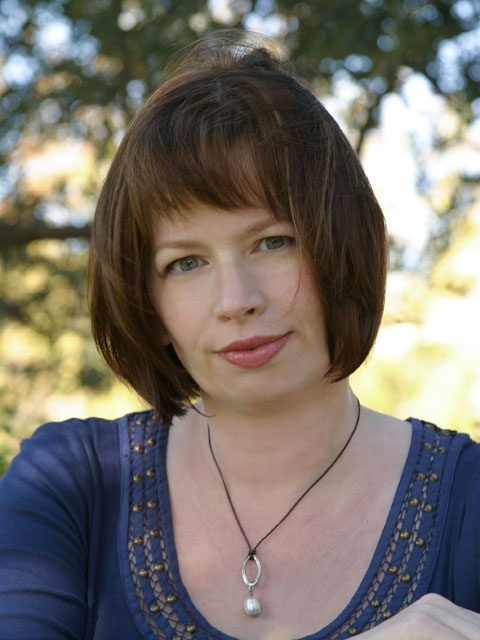
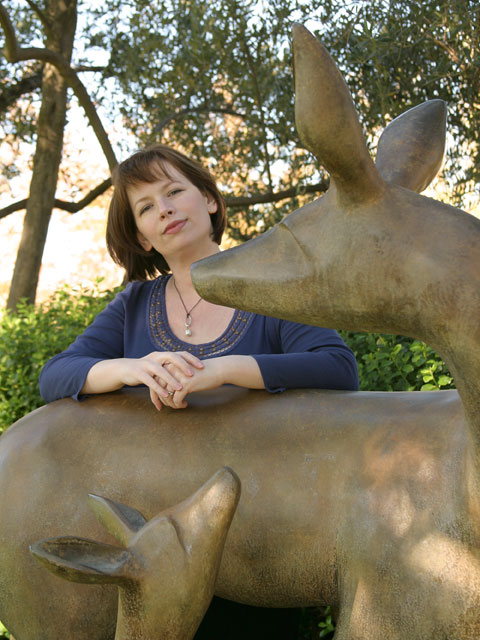
Thanks again for all your help picking out the author photo. The winner was #4. Now you will have to wait to see the final version on the book 🙂
New River’s radio show on Art Internation Radio includes two poems of mine being read by a famous New York theatre actress, Patricia Randell. Here’s what they say:
Our premiere show is Emerging Women Poets: 24 minutes of poetry by Jeannine Hall Gailey, Melissa Range, Darcie Dennigan and Reena Ribalow, read by Patricia Randell, Randell Haynes and Lori Myers. Please check it out by going directly to http://urls.artonair.org/newriver (this show will also be featured on their homepage at www.artonair.org all this week).
My poems are the first ones up, and start around minute one!
Two wonderful new books of poetry just hit the shelves.
Kelli Russell Agodon’s second book, Letters from the Emily Dickinson Room has made its debut. Here’s my blurb, so you know what I think of it:
“Agodon’s book is a bright, funny, touching meditation on loss, love, and the power of words. Her genius is in the interweaving of God and Vodka, bees and bras, astronomy and astrology, quotes from Einstein and Dickinson, a world in which gossip rags in checkout lines and Neruda hum in the writer’s mind with equal intensity.”
Jim Brock’s book, Gods & Money, was just released by WordTech Press.
Here’s my blurb for that book:
“Pop culture, poetry, politics, and religion—all subjects that come under scrutiny in James Brock’s book, Gods & Money. With his tongue-in-cheek humor and observant eye, Brock entrances us with his tales of the melancholy romance of soup, the connecting threads between Walt Whitman and the Florida Everglades.”
Also, Steel Toe Books is open for submissions again, this time for books with religious and/or spiritual themes.
In health news, I got a b12 shot yesterday. I run a little low on b12 sometimes, which I had forgotten about (I’m not a vegan or anything!) and luckily the doc checked for it. I’ve been sleeping ten hours a day lately and moving with the alacrity of a turtle, so hopefully this extra vitamin boost will help power me through the parents’ visit, finding an apartment, doing a reading or two in San Francisco in October, moving, and writing two new book reviews. And trying to write a poem a day, sending out subs, and trying to find work. B12 does give you superpowers, right?
A new review and help with my author photo
Hey you guys! I’ve got a new review of Mary Ruefle’s Selected Poems up at The Rumpus, so check that out! (Also, feel free to log in and comment on The Rumpus – Numbers Trouble)
Now I need your help picking out an author photo for She Returns to the Floating World. Comment on which one you like best! Thank you for your help. (These will disappear in a day or two.)
How Do You Find Time To Write?
In service to answering more post-MFA student questions…this one I’ve gotten several times, some variation of “How do you find time to write/submit/read after you get out of the MFA?”
So, in answering this question, I’ll mention that I went to a low-residency MFA while working part-time and/or as a freelance writer, so my practices before, during, and after the MFA didn’t really change all that much. I write a couple of hours each week – and that’s creative writing, not including blog-writing or freelance assignments or reviews. I spend another couple of hours working on book manuscripts, submissions, connecting with other writers, publisher research, etc. But beyond the time spent writing, there are other ways to spend your time I recommend that will help give you the energy and inspiration to create.
I’ve been a big reader since I was a kid, and I haunt bookstores and libraries with as much joy now as I did when I was in fifth grade. I read a lot, probably an average of three books a week and a bunch of journals/magazines/essays/poems. I think that’s important for writers, and not only reading to your own interests and genre, but far outside each as well – your inspiration-catcher will work better if you’re piling in disparate and interesting information. Squeeze a little reading into the every day spaces – waiting for a dentist appointment or at the DMV, in between loads of laundry, in the car while you’re waiting to pick someone up. But going to museums, concerts, readings, hiking a mountain, even watching television – these can all be sources of inspiration for you too. Stay attuned to your personal resonances – and take yourself somewhere inspiring once a week. Note that it doesn’t have to be anything fancy – sometimes a grocery store can be really inspiring. (It worked for Ginsberg!)
Also, I think it’s really important for each person to pay attention to what, for lack of a better word, I’ll call bio-rhythms. You know, when you’re at your most creative or your most sleepy, when you’re better at detail-oriented work and when you tend to daydream. For me, my most creative time has consistently been past 10 PM at night – and, ahem, often until 2 or 3 in the morning. (I’m a night owl for sure.) I want to fall asleep at 4 PM, and in the mornings I’m pretty bleary. So, I save my writing/teaching “business” work – submissions, filling out forms, studying journals, making lists -for the early afternoon. I do errands, which don’t require too much mental acuity, for the 3-5 PM time frame. If I’m teaching, then I like to do grading at night as well (which is probably why I don’t write as much while I’m teaching – I use the same prime “brain space” for both.) So my advice is – make your writing time a priority, keep it at the same time of day, and see how you do. If it doesn’t seem to be working, switch it up – you may be a person who writes best in the early mornings, or during a lunch break you absolutely must jot your ideas down. Find what works best for you, and stick with it.
Having a schedule and following it consistently – this may because I’m a Taurus and we love routine – is really important for me. It might be for you too. Try to follow a “habit” of reading, writing, exploring other art forms, putting your work out there, going to readings, getting together with other writers. The MFA may have provided that structure for you, but you can also re-create it at home. Significant others/children/bosses/family/dogs etc can be trained to understand when and how to leave you alone. I used to have a boss at a company with the initials “MS” that IMed me at midnight or one in the morning, even on weekends. I “trained” him to stop doing that simply by stopping myself from responding to these IMs. My husband notes that when I am writing I cannot hear him call my name or hear the phone ring and do not respond to other stimuli. This is true. I do get a little “zoned out.” But if your loved ones understand and support your decision to be a writer, a little of that won’t hurt the relationship. Hey, this gives your loved ones time and permission to go play Guitar Hero or watch “South Park” or learn to cook a traditional cassoulet or whatever it is they do for fun.
The real point of all this is, create a time and space for you to be creative. Make it a priority and a habit. Don’t stop reading and writing. Don’t stop sending out your work. Don’t stop going to readings, buying books, volunteering for local literary magazines or conferences. Make “being a writer” part of your daily life. I can’t promise wild success, money, or prizes. But at least you’ll be honoring the part of you that wanted to be a writer in the first place.
Not Helpless: Women and Poetry and Numbers Trouble
Once again, there is numbers trouble brewing. Yes, though women far outnumber men as readers of books, women who write their own books are in trouble if they expect an equal number of reviews, awards, etc., as their male counterparts. Who are the serious women writers getting overlooked in favor of the Franzen’s of the world? Will we ever hear about them? Will they fade into obscurity because no one will talk about them, no one will even look at their books on the review pile or prize committee nominations?
I want to point out that we are not just helpless victims in this matter. Some of the most influential critics in the country are women. They’re just choosing to write about men’s books. So what can you do? Speak up! Write in the New York Times Review of Books or The New Republic and ask for equity in book reviews. Write your own book reviews and publish them. Make noise about women writers you love and appreciate, especially those who are up-and-coming. I hope one day there will be more equity, or at least that it will be a consideration, among those doling out the prizes and grants and reviews and other things that can make or break a writer’s career, give them hope, keep them from giving up. Until then, we do what we can.
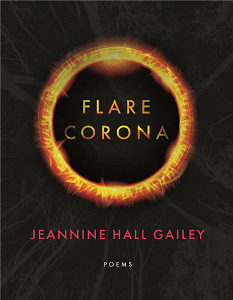
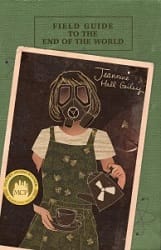
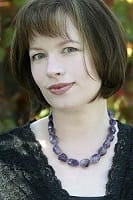 Jeannine Hall Gailey served as the second Poet Laureate of Redmond, Washington and the author of Becoming the Villainess, She Returns to the Floating World, Unexplained Fevers, The Robot Scientist’s Daughter, and winner of the Moon City Press Book Prize and SFPA’s Elgin Award, Field Guide to the End of the World. Her latest, Flare, Corona from BOA Editions, was a finalist for the Washington State Book Award. She’s also the author of PR for Poets, a Guidebook to Publicity and Marketing. Her work has been featured on NPR’s The Writer’s Almanac, Verse Daily and The Year’s Best Fantasy and Horror. Her poems have appeared in The American Poetry Review, Poetry, and JAMA.