LitCrawl Readings and Report

Woke up this morning to a beautiful fogless San Francisco morning (I got a really cheap rate at a downtown hotel, and they put us on the 31st floor in a tiny room with a great view of the Bay and the Golden Gate bridge.)
Yesterday we rolled into the city – after a beautiful drive through harvest-ready vineyards – during the exhibition of the Blue Angels, which means people driving their cars kept swerving into us because they were watching the planes instead of the street. It was Fleet week, so there were crowds of sailors in uniform everywhere as well. (It made me think of my little nephew, Dustin, who is serving in the Navy now down in Florida.) It was a perfect 70-degree-sunshiney day, and the Mission District seemed charming with its restaurants and shops rather than scary (maybe it was the abundance of writers everywhere?)
My first LitCrawl event was the Small Desk Press reading at Adobe books, a really small and dingy but interesting book store. The space was kind of awkward for a reading, but I really enjoyed meeting the folks there, especially Lizzy Acker (who is the namesake for the Monster Poetry contest I won and whose upcoming book I am looking forward to reading) and Marisa Crawford, who happens to be a Switchback Books author (Rock on, Brandi Homan!) And thanks to my friends who came out to see me 🙂
The second event was at Muddy’s Coffee Shop for the Eleven-Eleven/Fourteen Hills reading. I felt pretty good about this reading (unfortunately, Glenn forgot to turn on the video recorder, or I’d have a nice YouTube video for you) and sold a couple of books, which is always reassuring. The space was nice and big and the crowd was friendly and upbeat. (Also, the other readers had a robot-thing going on in their work that dovetailed nicely with some of my new poems.) The Fourteen Hills editor-girls – especially Hollie, Leanne, and Kelly – were really great – I wish I could bring them with me up to Seattle! They really know how to set up readings. I’ve never been to a Fourteen Hills event that wasn’t a lot of fun. And I came away with back issues of Fourteen Hills and Eleven-Eleven.
Then it was on to the After Party at the Blue Macaw, which had a DJ, a hugely crowded bar, and was the first place I’d ever seen people turned away from a lit party (I watched a big crowd of drunk twenty-something guys get told “You’re not readers? Then you can’t come in. And there were bouncers. Bouncers!) I only stayed an hour or so, but got to talk to a lot of fun people, and got some good feedback on the new Robot Scientist’s Daughter poems I had read – one guy even stopped to talk to me about Oak Ridge and tell me a creepy Disney-robot story that is definitely going to make it into a poem. I can’t reveal everything about it, but it involves an animatronic Lincoln and a death waiver.
Today we’re planning to hit Union Square (I want to take a last look at my favorite art gallery, Jenkins Johnson) and the big Impressionist show from the Musee d’Orsay that’s up at the DeYoung in Golden Gate Park. Then home to pack, because we’re starting our ten-day countdown – to Seattle! Which means my brains will probably be mush for the next two weeks.
Goodbye, San Francisco and friends! I’ll miss you!
Reading at San Francisco’s LitQuake this Saturday, MFA programs
It’s a few weeks before I move, and I’m doing a final reading or two in San Francisco (part of the LitQuake’s Saturday night LitCrawl) if you want to come see me before I flee back to the rainy Northwest. Here’s where you can find me:
Saturday, October 9
Jeannine Hall Gailey
Litquake’s LitCrawl
Adobe Books with Small Desk Press
3166 16th Street, San Francisco, CA
6 PM free
Saturday, October 9
Jeannine Hall Gailey
Muddy’s Coffee House with Fourteen Hills
Valencia & 24th Street
San Francisco, CA
8:30 PM free
Don’t be late – I think I’m reading first!
There has been a lot of discussion (like this article and commentary at The Rumpus and the scandal over a Columbia MFA program’s adjunct professor’s e-mail and this round-up) about MFA programs – if they’re a scam, if they’re any use, if they can make you a good writer, etc. I do know this: they give you time to practice reading and practice writing with people who probably know a lot about both topics. Unless you have access to the aforementioned writing mentors I discussed in the last blog post, it’s probably worthwhile for you, if you want to become a writer, to go to an MFA program to work with other writers to get better. I don’t think you can pay money to “become a writer” – you probably either have a knack/desire for that or you don’t – and they can’t make a dull writer exciting, but on the other side, I don’t think they make exciting writers dull.
In case you’re interested, here’s a little of my personal history with the MFA: I got a full-residential traditional MA (full of lit crit and competitive workshops and professors who didn’t really hang out with students) before getting my low-residency MFA (which was warm and collegial, and the professors did hang out with students. It didn’t have much in the way of lit crit going on but the students were pretty nice to each other.) I appreciate the experiences I had at both programs, but I was definitely more encouraged and grew more as a writer at the MFA. A lot of people talk about funding, too. My MA was fully funded but my low-res MFA, like most low-res programs, was not. I think the MFA was worth the cost (roughly, my friend Kelli always says, equivalent to a used Camry) even though it means student loan payments. Honestly, I think throwing myself into writing full-time – after ten or eleven years of trying to write while working full-time corporate jobs – was really important to me getting anything published (my first book was accepted in the middle of the MFA program, and I wrote my second book while in the second year.) Taking a risk – even a financial risk – was important. I don’t think I really took writing seriously in my life until that time. So it was worth it for me.
Now I teach a little part-time in an MFA program too, and I work really hard to give worthwhile reading suggestions, help students with their work, even give them publication tips when I can. I do it because I care about the students, because I care about poetry, because believe me, I wouldn’t do it for the paycheck (the average adjunct professor is paid worse than a retail worker – and I know, because I put myself through college working retail.)
So all in all, I think the MFA might help you and it probably won’t hurt you. Unless you go to the wrong one, where they’re all mean and discouraging. Also, despite Seth A’s – and many other’s – advice, funding isn’t everything. Make sure the program you’re going to actually cares about you and your writing. Make sure it’s the kind of environment – competitive or nurturing, academically stringent or more relaxed, Midwestern-reserved or West Coast optimistic – that’s right for you. Try to do some research before you apply, talk to alumni – possibly the best way to get a feel for a program is to talk to a couple of alumni and a faculty member if you can.
Also read The Poetry Lesson by Andrei Codrescu, which was much funnier and more satirical than “All is Forgotten, Nothing is Lost.” It’s more experimental writing as well. I did not feel depressed after reading it, which is always a bonus.
Fall Manuscript Class, All is Forgotten, Nothing is Lost, Foetry, Poetry Champions, Poetry Careers
Still a few days left to sign up for my Fall Poetry Manuscript Class (read more about it at this link) so if you’re still looking for a little motivation, a few exercises, a little encouragement and critique, e-mail me at jeannine.gailey@live.com.
Just finished the new novel All is Forgotten, Nothing is Lost, a kind of moral fable about two male poets in an “Iowa Writers Workshop-type” MFA program in the eighties, one of whom has an affair with his “Jorie Graham-type” professor and subsequently is awarded prizes by said professor that lead him to a great career, while his more pure-minded classmates ends up dying in obscurity, despite, perhaps, being the better writer. It’s kind of old-fashioned in that it lacks an ironic take on these proceedings, and, I think, ascribes old-fashioned moral suffering to a main character who doesn’t seem to have any morals. It was written by the current director of The Iowa Writers Workshop, and seems to support the “Foetry” view of the Poetry Universe – unless you get a champion early on, preferably by sleeping with someone famous, you are doomed to a life of artistic unrecogniton. Which is, for me, since I’m someone who has never slept with any famous poets, kind of depressing. (Hey, I got married early to a cute guy I still really like! It’s really a sleeping-with-your-professor deterrent.)
It makes you wonder about the way poetry “careers” – teaching jobs, awards, grants, etc – are still made today. Do you think increased scrutiny has lead to less nepotism today? Do you think a young emerging poet needs a older, more famous poetry “champion” to get any notice, and if so, how do we go about getting such a “champion?” (Without, you know, the sleeping with part.) I know the internet is a great equalizer, and I’ve met so many nice poets with great personalities and great writing out there, poets who deserve more recognition…And don’t give me the old saw “Only the writing matters, don’t worry about your poetry career.” Because I don’t believe many writers write who don’t also want to be read, and often, getting those “boosts” – awards, jobs, grants, reviews in the right places – is the difference between getting read and not getting read.
New Interview at Poemeleon and New Horizons
There’s a new interview with me up for the Habitual Poet at Poemeleon here:
Interview with Jeannine Hall Gailey
Had a good visit with my folks, with perfect NorCal weather, vines turning red, lots of wine tasting and touring parks in the sun, going out and looking at the Harvest-est moon. My Dad actually read Reb’s two-part talk about poetry publishing and we talked about the business models of poetry presses. I’ve talked about starting a press for a long time but haven’t quite gotten around to it yet, mostly because of the financial difficulties of it.
Glenn was successful in finding us a new apartment back up in Seattle, kind of out-in-the-countryish – it’s a little cheaper the farther you get from the city, of course – but a nice-looking, newish place. We’re hoping to settle down and buy sometime in the next couple of years; if you follow my blog, you’ll see we’ve moved so much that you might wonder if I have some kind of addiction to the act of moving, but no, we’re just looking for a good place to call home.
I’m reading in San Francisco a week or so before we move at Litquake on October 9, so let me know if you want to get together while I’m in the city!
All News Tuesday
Thanks again for all your help picking out the author photo. The winner was #4. Now you will have to wait to see the final version on the book 🙂
New River’s radio show on Art Internation Radio includes two poems of mine being read by a famous New York theatre actress, Patricia Randell. Here’s what they say:
Our premiere show is Emerging Women Poets: 24 minutes of poetry by Jeannine Hall Gailey, Melissa Range, Darcie Dennigan and Reena Ribalow, read by Patricia Randell, Randell Haynes and Lori Myers. Please check it out by going directly to http://urls.artonair.org/newriver (this show will also be featured on their homepage at www.artonair.org all this week).
My poems are the first ones up, and start around minute one!
Two wonderful new books of poetry just hit the shelves.
Kelli Russell Agodon’s second book, Letters from the Emily Dickinson Room has made its debut. Here’s my blurb, so you know what I think of it:
“Agodon’s book is a bright, funny, touching meditation on loss, love, and the power of words. Her genius is in the interweaving of God and Vodka, bees and bras, astronomy and astrology, quotes from Einstein and Dickinson, a world in which gossip rags in checkout lines and Neruda hum in the writer’s mind with equal intensity.”
Jim Brock’s book, Gods & Money, was just released by WordTech Press.
Here’s my blurb for that book:
“Pop culture, poetry, politics, and religion—all subjects that come under scrutiny in James Brock’s book, Gods & Money. With his tongue-in-cheek humor and observant eye, Brock entrances us with his tales of the melancholy romance of soup, the connecting threads between Walt Whitman and the Florida Everglades.”
Also, Steel Toe Books is open for submissions again, this time for books with religious and/or spiritual themes.
In health news, I got a b12 shot yesterday. I run a little low on b12 sometimes, which I had forgotten about (I’m not a vegan or anything!) and luckily the doc checked for it. I’ve been sleeping ten hours a day lately and moving with the alacrity of a turtle, so hopefully this extra vitamin boost will help power me through the parents’ visit, finding an apartment, doing a reading or two in San Francisco in October, moving, and writing two new book reviews. And trying to write a poem a day, sending out subs, and trying to find work. B12 does give you superpowers, right?
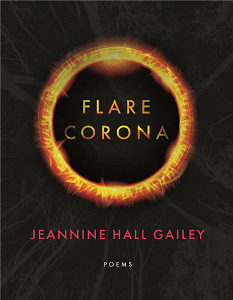
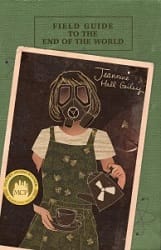
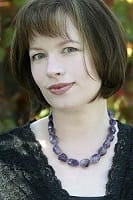 Jeannine Hall Gailey served as the second Poet Laureate of Redmond, Washington and the author of Becoming the Villainess, She Returns to the Floating World, Unexplained Fevers, The Robot Scientist’s Daughter, and winner of the Moon City Press Book Prize and SFPA’s Elgin Award, Field Guide to the End of the World. Her latest, Flare, Corona from BOA Editions, was a finalist for the Washington State Book Award. She’s also the author of PR for Poets, a Guidebook to Publicity and Marketing. Her work has been featured on NPR’s The Writer’s Almanac, Verse Daily and The Year’s Best Fantasy and Horror. Her poems have appeared in The American Poetry Review, Poetry, and JAMA.