Notes from the Northwest

Two spots still available for my manuscript summer camp session, so if you’re interested in getting some feedback on your manuscript this summer before you send out to the contests this fall, or are just putting it together for the first time and need some guidance, this is a great opportunity to let me know! I’ll be doing full manuscript critiques, and the other members of the class will be sharing their own work and their feedback as well. I’m hoping to have a place where we can talk about organization, structure, individual poems, publication opportunties, the whole nine yards. (Something that doesn’t happen often enough for poets, I think.) Starting July 1!
My first road trip up from wine country in California to coffee country in the Northwest, a great drive. Got to see Lake Shasta, the beautiful whitewater rivers winding through evergreen forests, astounding Mt. Shasta, a hugely tall volcano, completely snow covered, that the road passes closely around, and stopped the night in Ashland, Oregon, home to a big Shakespeare festival (and many little motels.) Yesterday we got to spend a sunny summer-feeling day in Seattle, having brunch with good friends (and Crab Creek editors) Kelli R. Agodon and Annette Spaudling-Convy, going to Woodland Park Zoo to see the new meerkat exhibit (more enclosed than San Diego Zoo’s, for the obvious rainy-and-cold climate reasons) and just generally enjoying the downtown area. Being back is wonderful, though we are supposed to have some rain coming up this week. Well, almost everything (zoo excluded) you probably want to do in Seattle is indoors anyway. Husband G will be at the office all day all week and I’ll be stuck in an East-side hotel room without a car, so I’m going to try to get some reviewing and other (paying) work done as well as some poetry revisions. Looking forward to seeing my MFA buddies at the reunion on Friday in Forest Grove, Oregon – and hanging around Portland for a day at the end of the week. I punctuate my visits to cities by bookstore – Open Books on Wednesday, Powell’s on Friday.
A week of blue herons instead of egrets, water and mountains instead of vines and rolling hills.
Who’s Your City: Deciding Where to Live – Poet’s Edition
I’ve been reading this interesting book called Who’s Your City, by the guy who wrote that “Rise of the Creative Class” book back in the nineties. Who’s Your City has a kind of anti-“the world is flat” thesis. It makes the argument that where you live is one of the most important decisions you can make, that it affects your life in myriad ways, and that most people don’t give where they live enough thought. It offers some ideas and information like: B types like small towns, A types like big cities. Agreeable and conscientious folks live in the Midwest and Southeast. Creative clusters bloom under the right conditions: good weather, good schools, a high number of motivated and ambitious people (who are neither agreeable nor conscientious, by the way. Apparently successful people are open to new experiences, but big jerks. I’ve never thought of agreeable-ness and conscientiousness as being liabilties, but this book makes that argument via graph.) Being close to friends and family can be worth over six figures to people. I’m the kind of person who does a lot of research before I move somewhere: air quality? crime rates? average rent? wait times at the local ER? But stats can only tell you so much of the story.
Once again we are considering a move at the end of our current lease. California is beautiful but very expensive, and Napa is far enough from San Fran to keep us from going there as often as I’d like. The Northwest’s constant rain raises some health challenges for me with allergies and asthma, but that’s where my friends live, and the poetry community there – and I’m talking about Seattle and Portland both – is warm and convivial. Husband G’s job is still in Seattle, which makes the West Coast preferable. The book makes the point that if you want to be the best in your field, you move to where the best in your field live. For instance, if you’re a musician, you move from a small town to Austin to Nashville. If you’re a poet…well, I’m not sure -would New York City/Boston be the equivalent kind of city? I love the energy of NYC and Boston, but they’re super expensive, out of our price range for sure, as is living any closer to San Fran proper than we already do. I’m not sure that kind of thinking even applies to writers anyway…
There are costs to moving as often as we have – economic and emotional stress for sure. But I am happy I’ve gotten to explore some of these wonderful places, and as a writer, it’s been fascinating to see the different writing communities, the bookstores (though Napa Valley’s independent bookstores have mostly closed, and San Diego was no great shakes for bookstores either,) the landscapes and cultures and people. Some places are going to have better job opportunties, better vistas, better education opportunities, or better weather; cheaper costs of living, better access to friends and family. How does where you live impact how we write? There are writers that I can’t imagine living outside the Northeast (like Louise Gluck) – or think about how Margaret Atwood’s threatening Canadian wildernesses feature in so many of her stories. I’ve been writing a series of poems about growing up in Oak Ridge, Tennessee. Where my neighbors were a combination of poor Appalachians and nuclear physics experts, the liquor store got held up by the teenagers who lived down the street, where we grew the most wonderful strawberries in soil that was laced with contaminated heavy metals and radioactive waste.
I don’t know if I agree with Who’s Your City’s author, Richard Florida, that where we live is the most important decision in our lives. But I think where we live does seep into our selves – into our writing, the way we walk and dress, who we marry and befriend, how we think and carry ourselves. As a bit of a rambler, who was moved four times before she turned ten, and continues in that tradition as an adult, maybe what I’m looking for is just a place that feels like home, that doesn’t bankrupt me to rent there, that has good doctors and good libraries, that provides a bit of the balance between cultural benefits and natural beauty. Maybe I’ll just keep wandering. Maybe I’ll take a vote.
What is the Role of Intelligence in Poetry?
A few days ago, I got a letter from a publisher, a publisher I respect and like, one of those contest letters about all the manuscripts they received this year, what they thought of them, yadda yadda.
I had a hard time getting past a line or two in the middle of the two page letter about intelligence in poetry. “As for intelligence-of course we assume that a poet is intelligent. And she should be. If not, no hope for anything beyong intelligence. But the person we really want to be intelligent is our doctor. More and more we’d rather our poetry impress us with an eye and heart that sees recognizable human beings, and gives them to us…”
I sat back baffled. I thought, “The person we really want to be intelligent is our doctor?” Well, no doubt. But isn’t the reason, I mean, one of the very main reasons, we read literature is to be intellectually stimulated? Is it all about feelings and mushy stuff in poetry? In fact, I was just reading one of this particular publisher’s book, a difficult book with a shattered narrative and many embedded clues to different pop culture references. It was not an easy, emotional, accessible book, and one of the reasons I liked it is because it challenged my mind. I guess I might be a “head” poet rather than a “heart” poet. I like putting science and mythology in poems, and I like reading poems about things I don’t already know. I don’t play Sudoku, instead, I like to read poems that don’t necessarily make themselves clear to me the first time around. It made me think about publishing, about poetry, about priorities. What are your poetry priorities? Do you demand that your poets be at least as intelligent as your doctor? Because I think that would be ideal.
I never think about things like references to science or folk tales being offputting to people. But I guess I should. I like poets who aren’t afraid to talk about difficult subject matter in difficult ways; this isn’t about avant–garde or quietism or whatever, it’s about demanding something from the reader, and providing something for the reader they didn’t have before. It’s about not talking down to an audience. It’s about expecting a poet to know things about the world, beyond just poetry, beyond just themselves and their feelings.
What do you think? What should the role of intelligence be in poetry?
Summer Online Manuscript Workshop Special
Hey guys! I’ve been doing online one-on-one poetry consulting (along with my National MFA program teaching) for some years now, but I want to try something new this summer, more fun, more interactive. Kind of like summer camp for your languishing poetry book manuscript!
This is something I’ve been wanting to try out for some time. I’d like to set up an online poetry manuscript workshop, using e-mail and a private blog, for about five poets. I’d do my usual manuscript consulting, exercises, and critiques, with discussions of publishing, organization, theme, tropes, and individual poems, but we’d also have discussions and participants could comment on each other’s work as we go along. I’d also have participants read and review a book of contemporary poetry, besides working with your own and your fellow participants’ manuscripts. I might also have a guest mentor come in and “talk” – well, virtually – to the participants as well. All in all, it’ll be a good time!
If you’d be interested in something like this, I’m charging $250 for two months with once-a-week check-ins and assignments. Applicants for the workshop – and I’m only going to take five students, so apply early – should e-mail me a brief writing-oriented bio and a few poems if they’re interested to jeannine dot gailey @ live dot com. Deadline for applications is June 25, as I’d like to get started by July 1.
And here are some qualifications in case you’re curious, in the form of a bio:
Jeannine Hall Gailey is the author of Becoming the Villainess, published by Steel Toe Books. Poems from the book were featured on NPR’s The Writer’s Almanac, Verse Daily, and two were included in 2007’s The Year’s Best Fantasy and Horror. She has written articles and interviews for The Poet’s Market, Poets & Writers online and The Poetry Foundation Web site., as well as book reviews for The American Book Review, The Cincinnati Review, and many others. Her poems have been published in journals such as The Iowa Review, The Beloit Poetry Journal, and Ninth Letter, and she has won grants from Washington State’s Artist Trust as well as the Dorothy Sargent Rosenberg contest’s top prize. She has been teaching at National University’s MFA program for a few years, as well as doing poetry consulting independently. She has a BS in Biology and an MA in English from The University of Cincinnati, and an MFA from Pacific University. Besides teaching part-time, she also works as a journalist and volunteers as a consulting editor for Crab Creek Review.
Happy Memorial Day Weekend! Empathy, Poetry, Summer Plans
Hey everyone! Since we went on our big weekend last week (San Fran – Fourteen Hills reading/launch party, the de Young art museum’s Impressionism show, many galleries, a teensy bit of shopping, and the Ferry Building Market) we’re just relaxing this weekend – well, I’m mostly grading the chapbooks and papers of my class and two thesis papers and aesthetic statements, but besides that, relaxing. California’s been shaking and storming this spring – we barely got a sunny day last week – but this weekend the sun is supposed to make its appearance anew.
Speaking of students, a study just came out showing that today’s students are more self-centered and less empathetic than students of thirty years ago. Do you think that’s true? This was, after all, a generation raised on “self-esteem” being the name of the game, which let’s face it, is self-esteem more important than caring about other people? If so, it is a shame, because reading poetry itself requires some degree of empathy – of caring what another person is thinking or feeling. To step into another person’s “I” or “You” is to take a leap of imaginative, and yes, empathetic, faith. When I do my persona poetry exercises, I explain to classes about what empathy is, and how persona poetry can help students step into another person’s shoes. It’s also why I purposefully teach books of poetry from many different perspectives in terms of gender, sexuality, race, and class.
I’m looking forward to summer, because now I can focus on writing and sending things out for a bit instead of student work, and maybe setting up some more readings (I had so much fun at the last one it’s made me more enthusiastic – and let me take a moment for a shout out to Seattle poets Michael Schmeltzer and Johnny Horton, who both rocked the house!) and sending out a few manuscripts. I’m still working heavily on revising my latest book manuscript, too – deleting poems, changing lines, updating cover sheets and acknowledgements. Some people take a poetry vacation over the summer, but for me, it’s one of my most productive times in terms of both writing and getting things out into the world. I’ve also volunteered for not one, not two, but three book review assignments in the next month or so. Yikes! A lot of work, but I felt the last year or so with all the health challenges I hadn’t been able to do as much reviewing, and I feel like it’s important for women to get out there and get in the critical conversation, right?
And I’m planning a trip up to Seattle – with maybe a stopover in Portland for my MFA reunion reception – in a couple of weeks, and trying to get things in line for that. Figuring out gluten-free eating is much easier in Seattle than San Francisco, surprisingly enough. Although San Fran did just open up an all grilled-cheese-sandwich restaurant with the option for house-made, gluten-free bread, so points for that. Of course, here in Napa, I have Pica Pica, my gracious fallback in Venezualan gluten-free food.
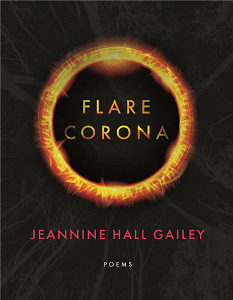
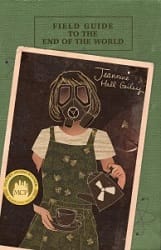
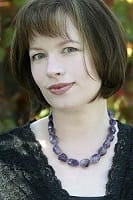 Jeannine Hall Gailey served as the second Poet Laureate of Redmond, Washington and the author of Becoming the Villainess, She Returns to the Floating World, Unexplained Fevers, The Robot Scientist’s Daughter, and winner of the Moon City Press Book Prize and SFPA’s Elgin Award, Field Guide to the End of the World. Her latest, Flare, Corona from BOA Editions, was a finalist for the Washington State Book Award. She’s also the author of PR for Poets, a Guidebook to Publicity and Marketing. Her work has been featured on NPR’s The Writer’s Almanac, Verse Daily and The Year’s Best Fantasy and Horror. Her poems have appeared in The American Poetry Review, Poetry, and JAMA.