
Just read After the Workshop by John McNally, a novel about a writer twelve years out of Iowa’s MFA program struggling to finish his book and support himself as a freelancer and “media escort” – someone who drives around visiting writers. The writer is very funny – I laughed out loud at a couple of things- although the story is very, in some ways, “macho” – there’s a lot of drinking and all the female characters women are portrayed as sex objects and nothing else. Once again, it’d be nice to see a book about writers with women as any of the main characters.
I watched “Up in the Air” last night, a surprisingly downbeat movie worth watching. There was a part that made me wince – the part where the hard-charging younger woman and 30-something business woman were exchanging their expectations for their romantic lives, and of course the younger woman’s are much more grandiose and optimistic. She says: “When I was 16 I thought by 23 I’d be married, maybe have a kid and a corner office.” The older woman says something like “Life can underwhelm you that way.”
[OK, even more cringe-inducing was the line where the young woman says: “I appreciate everything you (feminists) did for us and all…but I still feel like nothing I accomplish will matter if I don’t find the right guy.” Eek! I never felt that way. Do people really feel this way!?!?]
I was thinking about the differences between my expectations at 21 and my expectations now at 36. I had the supposedly “great” job and an actually great guy by my mid-twenties, but life threw some twisty obstacles in my path (re: health problems) that kepts me from storming the corner office, as it were. So there were some detours: instead of trying to become a director by 30, I took time off writing, went to an MFA program, published a book of poetry. Are my expectations less than they were? They’re different, for sure. My hopes and dreams: to publish more books, to make new friends and get time to hang out and visit my current ones, to be healthy enough to be able to go out and enjoy art museums and parks and once in a while a take a romantic trip with Glenn the way we used to. A little better financial situation would be great (grants, freelance, awesome paying job, etc.) but I don’t think of myself as a failure because I make a bit less (ok, a lot less) than I used to. Just a reminder that values change, and life can underwhelm you/thwart your younger-self dreams, but you will probably still figure out a way to do the things most important to you.
On the nets:
In the “Why didn’t I think of that” category, a female writer nets seven figures for YA book trilogy retelling Helen of Troy and Persephone’s stories…Dang! If only I’d written Becoming the Villainess in prose…and made it more of a love story…and more cheerful…
Amazing interview with one of my favorite poets, Dana Levin. She always manages to sound so much smarter in interviews than I do. Sigh! (By the way, her book, Wedding Day, is a perennial favorite of mine.)
Kelli Russell Agodon details how to make a book trailer. Very helpful! Her follow up on the process is here.
Ron Silliman blogs about women in poetry.
Not poetry related, but very funny: Google apologizes for privacy breaches with eerily specific apology. My favorite part:
“The company has also encouraged feedback, explaining that users can type any concerns they may still have into any open browser window or, if they are members of Google Voice, “simply speak directly into [their] phones right now.”
Either way, the company said, “We’ll know.”
Interview with the Husky Herald in which I reveal secrets about poetry and give advice about putting together a manuscript! Thanks to Patricia El Koury – who was an amazing student I got to meet a few years ago – for doing a great job with the interview.
I love the name of the newspaper, because I keep picturing a basket of husky puppies. Is that wrong?
Books (and a movie) to recommend
I just finished Allison Benis White’s Self-Portrait with Crayon, a wonderful book (my mini-review of it will appear in the next Crab Creek Review) of crystalline prose poems that present a puzzle and a glimpse of how loss and art work together. The thing I’ll say here that I didn’t get to say in my review: this is a great book for people who are looking at 1. how to build and organize a manuscript, because her organization is meticulous and very clever and 2. how to write about personal tragedies through the lens of art (kind of ekphrasis of the soul.)
The other book I’m recommending is a Young Adult book called When You Reach Me by Rebecca Stead. It’s a book the author said was inspired by L’Engle’s A Wrinkle in Time, which was all I needed to hear to read it, and it involves a young girl coming of age in 1970’s New York City and time travel. It’s not as good as A Wrinkle in Time, but it’s the kind of smart, emotionally engaging book I wish had been around when I was a kid. Issues of class and race are addressed, as well as the confusing transition between childhood and adulthood. The best time travel book L’Engle wrote, in my opinion, was not A Wrinkle in Time, but A Swiftly Tilting Planet, the third in her trilogy.
The movie I saw was an independent film called Haiku Tunnel, about an aspiring, depressed novelist working as a temp in a law firm. The writer/actor/director is charming and funny, and a lot of the scenes reminded me of the Kafka-esque cheer of showing up to work as a temp and how work can actually help writers stay connected to the world. At least, that’s what I think it was about. It was a fun movie of the genre “movies about writers.” I wish more of these movies were about women writers, but there you go. Maybe I’ll become a famous screenwriter writing the exciting life of a poet. Probably not.
This article from The Chronicle of Higher Education combines the usual “too many poets, too many journals, too many MFA programs are ruining poetry” argument with Foetry–esque accusations of too much corruption and cronyism in the poetry world.
Sometimes these kinds of articles depress me. Besides the fact that I’m a fan of people outside a tiny circle on the East Coast writing and publishing poetry, I’m an optimist who wants to believe that the poetry world is a meritocracy, even when on the inside, I know it’s probably pretty corrupt – as easily corrupted, for instance, as environmental science (which recently experienced an embarrassing uproar about top scientists faking or mis-stating data about global warming in order to make their theories stand up) or politics. When I studied biology, and I actually researched papers – on genetic engineering, on carbon dating, and on tissue culturing, to name three topics where I went back to original sources – I was surprised to see that many papers that were used as references were later withdrawn or discredited because the data was corrupt and the scientists who wrote it exposed as cheats. Which depressed me then, maybe enough to keep me from going into research after graduation. Because, really, if you can’t trust your scientists and your poets, who can you trust?
It reminds me the orca who killed a Sea World worker today (and had previously killed two other people. This is one mad whale!) I used to think whales were sweet, because there are documents of whales saving people, and I personally love seeing them in the ocean, but then I found out sometimes they beat up other whales and dolphins too. I actually watched a bunch of orcas beating up a smaller whale of a different species. And dolphins themselves act like gang members, beating up smaller, lonlier dolphins. And I love seals, but a little while back a seal attacked and drowned a girl, a marine biologist who was my age at the time. Animal nature, human nature, both a little darker than we’d like to admit? I guess, once again, it’s up to the individual. Not all poets, scientists, or seals can be trusted.
Even if the poetry world is fairly corrupt, you’ve got to keep writing, keep sending out, keep believing that someone, somewhere will stand up for you even if they don’t owe you a favor. Am I too naive? I just read for a chapbook contest and didn’t think about anything beyond: “Which one is the most interesting and the best written?” Is it possible there are lots of judges out there doing the same thing?
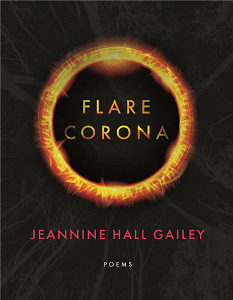
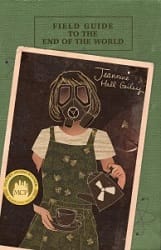
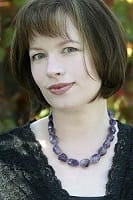 Jeannine Hall Gailey served as the second Poet Laureate of Redmond, Washington and the author of Becoming the Villainess, She Returns to the Floating World, Unexplained Fevers, The Robot Scientist’s Daughter, and winner of the Moon City Press Book Prize and SFPA’s Elgin Award, Field Guide to the End of the World. Her latest, Flare, Corona from BOA Editions, was a finalist for the Washington State Book Award. She’s also the author of PR for Poets, a Guidebook to Publicity and Marketing. Her work has been featured on NPR’s The Writer’s Almanac, Verse Daily and The Year’s Best Fantasy and Horror. Her poems have appeared in The American Poetry Review, Poetry, and JAMA.