
Two days and counting…
Well, the time has come to leave San Diego. I just saw my doctor and got my records, got a teeth cleaning and my dental records, and got my hair cut (while being admonished for leaving Carlsbad too soon by my very sweet hairdresser.) My apartment is nothing but boxes now – my toaster was missing this morning when I looked for it, and Glenn couldn’t remember where he packed it. My poetry office is one of the last things to be packed – I’ve been sending out work right up until the last minute. I’ve put in address changes with my PO box and my post office. We called the cable company, the phone, company, the electric company, to set up stuff for the new apartment. So much busy work to moving! I confess I haven’t written a poem for a couple of weeks. We did manage to squeeze in a quick visit to the San Diego Zoo Wild Animal Park to say goodbye to the meerkats, the cheetahs, and the lorikeet house. (The lorikeets were a bit too enthusiastic when we fed them, and had a gang fight right on my bare arm!) The weather has been so warm – mid-eighties – I barely believe it’s mid-September. Eek!
Onward, to Napa! If you need my new address or phone number, drop me an e-mail! Have to admit Glenn and I are looking forward to the trees and even a little bit of rain…I’m hoping to make new friends, enjoy a little better physical health, and get to know a new part of California. I promise I’ll be back to talking about poetry again soon…
Favorite quote from new HBO series by Jonathon Ames, “Bored to Death,” from a conversation between a slacking writer and a slacking comic book artist:
“My girlfriend wants me to be a high school art teacher. High school teacher? I wake up at 11 AM!”
The reality of moving is setting in. Boxes are proliferating in our tiny apartment. I’m frantically searching through books, figuring out which ones need to be set aside for my Advanced Poetry class that starts in October, which ones might need to be reviewed in the next couple of weeks. I hope Napa is kinder luck-and-health-wise than San Diego has been. I could use a year of recuperation among the grapes!
I’m sending out individual poem packets, book manuscripts to open submissions and contests, using my brand-new PO box address labels. I’m looking forward to living down the street from a lovely independent bookstore again (Copperfield’s Books) and a Trader Joe’s. We can also afford a slightly bigger apartment, and yay, since it’s two bedrooms instead of just one, I’m getting an office again! Instead of having to type and research in a corner of the bedroom. Napa also has a lovely farmer’s market, which I’m looking forward to visiting.
I also had good news, that the Santa Cruz weekly paper Good Times Santa Cruz will be featuring poems from Becoming the Villainess next week in their Poetry Corner! Did I mention how I’m having lots of fuzzy-happy feelings about Santa Cruz? First the radio show, now this. Thank you, Northern California, for such a warm welcome!
If you happen to be in the Santa Cruz area, tune in to (88.9) KUSP’s the “Poetry Show” this evening with Dennis Morton, who will be reading five poems from Becoming the Villainess. You can listen to the podcast version, which will be up on Tuesday, here.
Thanks Dennis! I’m happy to be moving to Northern California already 🙂
Why Write Poems in Series?
I’d like to talk about the benefits (and problems) of writing poetry in series. I’ve talked to two other poets (Oliver de la Paz and Joannie Stangeland) about my struggle in trying to teach a lecture on this topic because of the lack of available reading material on the subject. If you know of any essays on writing poetry in series, will you point me to them? If you have any thoughts on the topic, please feel free to post them in the comments!
I write poems in series and I write “one-off” poems that have nothing to do with other poems. I usually get obsessed with an idea (say, female comic book superheroes or characters in fairy tales coming to dark ends, or fox-wives or Oak Ridge’s nuclear pollution or something) for a year and then I write poem after poem around that general idea. This has to do with my reading practices as well; the years that I wrote Becoming the Villainess, I was reading a lot of feminist criticism, Ovid, and Jungian theory about folk tales; while writing my current manuscript I’m reading a lot of non-fiction about the Manhattan Project. There are different speakers and different scenes in these poems, different tones and forms, but the subject stays generally the same. That’s not something I do on purpose; it just works out that way.
The reason I talk in my class about writing in series is because I think it helps students start thinking about larger projects: chapbooks, or full-length manuscripts, which generally are easier to shape if they have a controlling overarching theme or idea. It’s like building your final show for Project Runway; it really helps if the clothes in the show hold together in some way (the same kind of pleating, a Gothic sensibility) but aren’t exactly alike. If you get to the point where you, as a poet, want to put together a collection, and all you have are “one-offs” – a blue feathered jumpsuit, a crisp sailor outfit and a ruffled silk trench – then it’s harder to figure out the structure of the whole and harder to communicate to your audience what you are, as an artist, trying to say. (I watched Project Runway for the first time this summer, so forgive the clumsy analogies.)
But there are downsides to writing in series – what if the poems don’t stand alone, what if necessary information from one poem is missing in another or the interplay between poems is lost when poems are published independently?
Do you write poems in series? Why or why not?
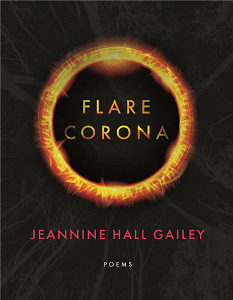
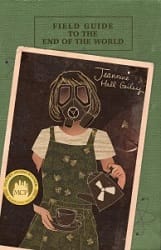
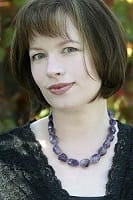 Jeannine Hall Gailey served as the second Poet Laureate of Redmond, Washington and the author of Becoming the Villainess, She Returns to the Floating World, Unexplained Fevers, The Robot Scientist’s Daughter, and winner of the Moon City Press Book Prize and SFPA’s Elgin Award, Field Guide to the End of the World. Her latest, Flare, Corona from BOA Editions, was a finalist for the Washington State Book Award. She’s also the author of PR for Poets, a Guidebook to Publicity and Marketing. Her work has been featured on NPR’s The Writer’s Almanac, Verse Daily and The Year’s Best Fantasy and Horror. Her poems have appeared in The American Poetry Review, Poetry, and JAMA.