
Dreaming of Joss Whedon-brand Soda!
Last night I had a series of recurring dreams in the form of a commercial, where Joss Whedon dressed up as a soda bottle or a soda-delivery truck, and people gave him a thumbs-up. Then, the tagline was “Joss Whedon soda, as refreshing as…” and then different things. The one I remember was ‘as refreshing as a Sally Fields acceptance speech.” (Featuring a current Sally Field joking about how there’s botox now, so she has fewer wrinkles than she did when she made her first speech.)
Should I go get a job as an advertising exec now?
Vague Discouragement in Poetryville
I’ve been sick for two weeks, so that may be coloring my disposition about this, but I’ve been writing a lot and not sending out much – no book contest entries, no poetry packets. I have all these poems sitting about but I can’t seem to get the “right poem to the right magazine within the right sub dates” equation to work. I mean, right now I’ve got a lot of, say, Japanese-themed persona-poem haibun, for instance, and who really publishes stuff like that?
I like my books, but I don’t feel confident others will like them, and don’t have the extra money for fees (California is very expensive.) So they’re languishing.
Rescuing sick sea lions
Yesterday, we were driving by the beach and saw what looked like a very sick sea lion (with all these people coming up really close to it and like, poking it and stuff, which always makes me angry) and we called it into, not the park rangers (which we might have done in Port Townsend) but to the only people who rescue distressed animals out here: Sea World. They picked up the sea lion within hours.
So, after reading about feminism here and here, I was thinking about feminism and how I came to call myself a feminist. When students ask me, “Are you a feminist?” I always answer with the Margaret Atwood quote “If a feminist is someone who believes women are human beings, then sign me up!”
My two “isms” – feminism and environmentalism – started out grounded in very practical, real-world issues. I worked with my Dad on his grant proposals to clean up a Superfund site in Ohio called Fernald – and learned about the difficulty of containing nuclear waste safely. Of course, my study in “Ecotoxicology” – I had a great professor in my undergrad at U of Cinci who taught this class – has come in handy lately, as I research my childhood home, which was a few miles from the Oak Ridge National Laboratories. And this has come to be important in my poetry, too.
Anyway, the origins of my feminism really came from volunteer work I did early on with high school girls. (Note: some of you may already know, yes, I was a youth counsellor AND a Sunday School teacher. Squaresville!) But what I found out was, a LOT of the girls I worked with had been abused. I also found that parents weren’t talking to the girls about anything practical – drug use, what to do when a boy hits you or pressures you to have sex against your will, or contraception, for instance. This was in urban, rural, and suburban settings. A lot of girls who had been abused or raped were suicidal. It really sucked that I didn’t have enough answers for them, that I didn’t really know how they could protect themselves. (Although, note: I did find out the police – through several phone calls on behalf of teenagers – won’t do diddly squat if you’re harrassed and abused – a restraining order provides very little practical safety. A bit disenchanting to find out when you’re 19 or 20, but I guess good to know.)
A lot of the poems in Becoming the Villainess were written after these experiences left me frustrated – “Okay, Ophelia” is one of them. I started noticing that the culture does a great job of portraying women as eye candy, as victims and villainesses, but not a great job of portraying them as anything else. I started thinking about the mythology and fairy tale stories I grew up with, and how women today could or couldn’t model themselves after those characters. I took a class called “Intertext and Modernism” for my MA at U of Cinci that introduced me to deconstruction, how to read a piece with an eye towards how it addressed class or gender. But for me, theory followed my experience. The poems grew out of my increasing awareness of how women are treated now, in myth, and in our culture.
I grew up around guys – I have three brothers, I dated a lot of great guys and had mostly guy friends – and I’m happy to say I have a terrific, supportive, dare-I-say feminist husband. But I look around me and wish for more positive role models, for some support for women who need to be protected, for a place where girls don’t have to worry about what they wear for fear they will be attacked. For a world where women are paid equally for equal work, where a woman CEO or senator isn’t an oddity. I will say that a lot of my work doesn’t fit in with traditional ideas about what being a feminist is or isn’t – what with my having a bleeding disorder and all, you’re not going to see any poems about celebrating the glories of “that time of the month” or the wonders of childbirth. Some of my female characters are unequivocally “Bad Girls” – because if you can’t explore the dark side of being a woman, you’re not allowing your female characters to be fully human. (I think I might also have stolen that from Atwood.) And that’s the story of how I became a feminist.
So, I’ve been laid up the past couple of days with a cold that turned into a case of tonsillitis and an ear infection. Boo! I thought sunny CA was supposed to cure me of these problems!
With many important things to do, such as get my new class (Advanced Poetry Workshop – yay!) ready for it’s June start date, finish up the last couple of weeks of my spring class, send out poems, work on my new manuscript, prepare for another trip to Seattle, and try to get back in shape as I recover from my foot-break, what have I mostly been doing? Running a fever, sniffling, and watching reruns of “What Not To Wear.” Not a recipe for success for any of those goals. At least I haphazardly managed to read Fanny Howe’s memoir, The Winter Sun: Notes on a Vocation. I like her poems a lot, but I thought the book was a bit random; it read a lot like a blog, little bits of memory and asides and what she was reading at different times in her life. I haven’t read her other memoir/essay collection, The Wedding Dress, which I’ve heard good things about.
I will always be grateful to the two female editors who took my very first two poems ever published in “real” literary magazines, Colleen J. McElroy (at that time, the editor of The Seattle Review) and Marion K. Stocking (who was, at that time, editor of The Beloit Poetry Journal.)
I just heard that Marion passed away today. I was very sad, because I think without her kind words and encouragement all those years ago I wouldn’t have had the courage to send out again, to keep trying. I remember how proud I was to hold that copy of BPJ in my hands, how I gave my extra contributor’s copy to my mother. Thanks Marion.
Happy Cinco de Mayo! We are celebrating with Glenn’s delicious homemade flan.
I have my first official San Diego reading coming up this Sunday (yes, on Mother’s Day…but after brunch!) and I hope if you’re around, you can come!
Here’s the info:
Sunday, May 10 at 3 PM
Jeannine Hall Gailey and Poet/Musician Peter Bolland
Second Sunday of the Month Poetry Reading Series
Open Door Books
4761 Cass Street in San Diego
I’ve been inundated with grading work this weekend, as well as trying to set up the content of the “Advanced Poetry Workshop” class I’m teaching next month in the online software that the college uses. A lot of work to set up a class from scratch, but I hope it will be worth it! I’m also very behind in sending out poems into the world. I’ve been writing, but not sending out as much.
Got the shiny contributor copies of the 2009 issue of The Evansville Review, which included poems by John Updike and my fellow-Pacific U MFA classmate Joshua Michael Stewart. And me 🙂 The Evansville Review does beautiful work putting out their journal – thanks, editors!
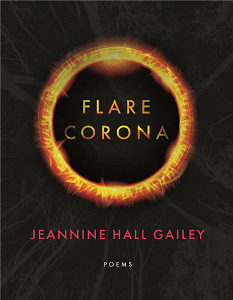
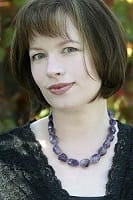 Jeannine Hall Gailey served as the second Poet Laureate of Redmond, Washington and the author of Becoming the Villainess, She Returns to the Floating World, Unexplained Fevers, The Robot Scientist’s Daughter, and winner of the Moon City Press Book Prize and SFPA’s Elgin Award, Field Guide to the End of the World. Her latest, Flare, Corona from BOA Editions, was a finalist for the Washington State Book Award. She’s also the author of PR for Poets, a Guidebook to Publicity and Marketing. Her work has been featured on NPR’s The Writer’s Almanac, Verse Daily and The Year’s Best Fantasy and Horror. Her poems have appeared in The American Poetry Review, Poetry, and JAMA.