- At December 24, 2008
- By Jeannine Gailey
- In happy holidays
 5
5

Merry Christmas Eve!
Well, the shortest day of the year is behind us. I’ll remember 2008 mostly for the weirdness, the combination of dramatically good with dramatically (and sometimes comically) bad.
For instance, the day in the middle of a Northwest cold snap I found out Kelli and I had won the Dorothy Prize (a hugely helpful poetry phenomenon in a financially tight year) I was also hospitalized for breathing trouble (a combo of asthma and bronchitis) and the propane tank of the cabin we were renting in PT (our source of heat and hot water) was repossessed because our landlord had some complicated problem with his bills.
It was really hard to celebrate that day, but that is something I’m coming to learn – you have to celebrate the good things when they come along, even if it’s hard to appreciate all that wonderful. To be happy despite. To count blessings instead of curses, even while you’re cursing.
In the last year, I’ve seen white deer in the woods, watched orcas and sea otters, taught marvelously talented high school kids about poetry and comic book heroines, finished writing a new manuscript, read hundreds of wonderful books, learned new poems by heart. In my new town, yesterday, in between rainy spells during which I was thinking about how I missed my Seattle friends and my family back in the Midwest, I saw whales from the shore, jumping around in the blue ocean. I watched egrets and phoebes and hummingbirds. My sweet husband baked cupcakes. I am breathing. These things make me thankful.
Here’s wishing you all a happy, healthy, bright 2009! Don’t forget to celebrate!
Tis the Season…
For interviews? Here’s an interview with me (where we talk about fairy tale influences, Cinderella, and other various and sundry details) posted at the online fairy tale lit site, Les Bonnes Fees:
Interview with Jeannine at Les Bonnes Fees
In the Christmas Spirit…
Well, you know, living in Seattle for so long made me realize the grave importance of celebrating around the solstice, whatever religion you might follow, because the short short days, the absence of sunlight, absolutely demands that you throw yourself into a frenzy of sugar and caffeine and general merrymaking of some kind. I never went to one of those naked-dancing solstice party things, I’m more of a church-on-Christmas Eve-with candles-and-carols kind of girl, but you know, I’m happy I was invited to some. Yesterday there was snow in Seattle and I felt sad I missed it.
Yesterday was huge winds and driving rain for 24 hours here in SoCal; weirdly, it was warmer in Boston than San Diego. We could barely drive our little Honda CRV over the flooded highways. So we mostly stayed in and decorated our little three-foot tree (perfect size for a little apartment, by the way) and Glenn made homemade tamales with masa and pork slow-cooked in orange juice and apple cider. They took forever to make but were really good. Here tamales are a Christmas food; they show up at the fast-food Mexican restaurants around Thanksgiving. I’m down with this tradition.
So, I’m writing Christmas cards and putting together presents to ship out. I should also maybe put together some poetry subs to send out, but who is really reading this time of year? We’re also thinking of going out to see some of those holiday lights. It’s been too cloudy for several days in a row. I can even wear my coat!
I’m feeling very blessed and content this year. Thanks to all my friends and family and everyone for their encouragement, their love, and the little (and big) things.
Nothing to get you in the Christmas spirit like a nice cold MRI in the morning. Brrr…A lot of doctor appointments this last week, which means we have postponed getting our tree. Honestly, our new apartment is so small, we’ll probably just get one of those tiny decorative trees. Like a toy. A toy tree for our toy apartment. It’s supposed to turn cold here after tomorrow. I heard Seattle was having a winter storm warning!
Some of my e-mails seem to having some problems – so if you haven’t heard from me or I haven’t responded to something and you need something urgently, please comment here!
Good news for Aimee Nezhukumatathil and C. Dale Young on the NEA grants! (Sure, it would have been nice to get one those this year, but at least applying was good practice…for applying next time.) And also, my friend Natasha M. just got her first piece of fiction published here. I’m always excited (and jealous) when poets publish fiction.
Lots of waiting rooms mean lots of reading…finished The Brief and Wondrous Life of Oscar Wao, which was a little difficult because it was full of Spanish slang (really I need to pick up some Spanish!) and was pretty brutal in its depiction of atrocities committed in the Dominican Republic by various despots and thugs. Started All the Sad Young Literary Men. Got my contributor’s copy finally of American Poetry Journal, which is now beautifully perfect-bound and full of blogger poetry – and it has a review and a poem in it from little old me. Appropriately, there was a series of three poems called “MRI.”
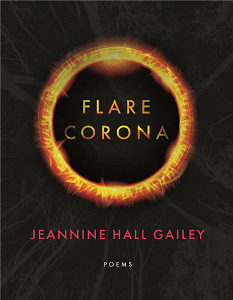
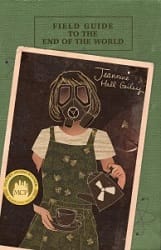
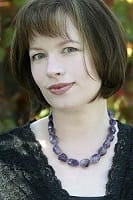 Jeannine Hall Gailey served as the second Poet Laureate of Redmond, Washington and the author of Becoming the Villainess, She Returns to the Floating World, Unexplained Fevers, The Robot Scientist’s Daughter, and winner of the Moon City Press Book Prize and SFPA’s Elgin Award, Field Guide to the End of the World. Her latest, Flare, Corona from BOA Editions, was a finalist for the Washington State Book Award. She’s also the author of PR for Poets, a Guidebook to Publicity and Marketing. Her work has been featured on NPR’s The Writer’s Almanac, Verse Daily and The Year’s Best Fantasy and Horror. Her poems have appeared in The American Poetry Review, Poetry, and JAMA.