
Narrative Poetry for the iPod Generation, Comic Book Plots for Poems: or, Is Poetic Narrative Dead?
Ron Silliman’s blog has a long post about how Ron is tolerant of narrative in film but intolerant of it in poetry. I made a short comment about how narrative should still be celebrated, but it could be that the narrative type transforms every generation – so, for the generation growing up right now, texting each other and downloading scenes of television on iPods, reading manga – how will they define narrative? What kind of narrative structure will they need or want? But in the end, people are hungry for communication, for structure and story, for emotional and intellectual connection – perhaps it may look different, but at its heart, that is why we turn to poetry.
I just got finished writing an article about how pop culture may become more dominant for the new generation of poets…because it is the new universal language, because this generation have been taught to be constant consumers of media…for a lot of reasons. I have been thinking about Matthea Harvey’s Modern Life a lot, maybe because it represents a way of talking about serious subjects in pop culture language, avoiding the personal narrative for a surreal type of narrative, making ridiculous leaps and at the same time, keeping the reader emotionally invested.
I don’t believe, myself, that narrative will ever be dead, any more than poetry will ever be dead – it will be continually reborn in new ways, with new voices, in new modes.
Thoughts? Arguments?
5-Alarm Weather
Yes, we are safe, though the apocalyptic weather continues here in the Northwest. 15 inches of rain in something like 24 hours and high winds have caused quite the ruckus. Today, we didn’t really think about the weather, until, running errands, my 6-foot-4 200+ pound husband suddenly found it hard to walk in the wind – a few minutes later, trying to drive to Target, we drove past a huge downed tree leaning heavily against a power line, and then we had to turn around in the middle of the road where it was washed out and a car in the street was up to its windows in flood water. It turned out that if Glenn had been trying to get home from his work to our old apartment today, instead of working from home, he wouldn’t have been able to – the entire highway system back to our old place was blocked by mudslides and floods, the streets were parking lots or flooded, and the bottom of our old street – we lived on the top of the hill – is currently underwater. The little condo we rented for a couple of years – right on the banks of the flooding Sammamish river – and the Chateau St. Michelle wineries – also lowland on the banks of the same river – are both being threatened by rising water. And it hasn’t even rained for 40 days and 40 nights! Just a couple of days of heavy snow followed by heavy rain.
I’m thinking good thoughts for my friends in Seattle, especially North Seattle, Kent, Kirkland, and Woodinville, tonight. The street above beautiful Golden Gardens park has completely collapsed into sinkhole and mud. The highway I-5 to Portland is impassable by train or car because of mud and flooding. Many families had to be rescued by airlift and raft from their homes. Turns out the ocean is, in this case, safer than the rivers.
We’re grateful we have power on and that our house is dry.
- At December 02, 2007
- By Jeannine Gailey
- In artists, blizzards, Centrum, windstorms
 0
0
Blizzard! And the arts!
Had a great time meeting and getting to know my fellow Centrum Young Artists Project art faculty (a couple of drama folks, visual artists, videographers and dancers) but did not so much love this afternoon’s activity – trudging around the Centrum Fort Ward buildings for an hour in 20+mile an hour winds and blizzard-levels of snow with freezing hard rain – they wanted to acquaint us with the spaces which I had already seen, and of course, as a writing teacher, don’t really need like the drama or dance teachers might. I have asthma and I had to sneak into the different buildings and take an inhaler twice (so embarrassing having asthma attacks!) and tonight I am coughing and hacking. Stupid lungs! Also the wind broke my umbrella that has survived over five years of Seattle weather.
It was really fun to sit around and talk about art with all these people who have sacrificed and worked so hard to practive their various art work, committed and dedicated and intelligent folks who all care about sharing their excitement about art with kids.
If you live in the Seattle area, and you have children in middle school or high school that you think might enjoy a spring-break or summer week of arts studies in creative writing, music, drama, and visual arts, check out this link: http://www.centrum.org/youth/yap-workshops.html They have scholarships for kids who need them. I think the middle-school kids might need to sign up through their school. It’s a pretty incredible program. And I’m teaching a class called “Superheroes, Mythology and You – Creative Writing” for two weeks in March and a week in June. Most of the time, Centrum’s campus is postcard beautiful and they have very nice, mild weahter. Not mostly blizzards.
Even more weather news – we are expected to have 70 plus mile an hour winds and storms tomorrow…maybe I’ll stay in with a nice hot gallon of ginger tea…
Writing Prose About Poetry, AWP Prep, and Snow on the Ocean
Lately I’ve lucked into several simultaneous assignments to write about poetry. This is usually good, but I find when I have several articles due all at the same time, I feel unable to write poetry and must stick with my prose assignments til they are all finished, which inevitably crumples any inspiration I had at all for any type of writing, my enthusiasm dulls, and my usually crackling wit and charm dry up. I know some of you churn out poetry-related prose like nobody’s business, writing tome after tome of criticism and keeping up your poetry work too. How do you balance your prose about poetry with your actual poetry writing?
This weekend I’m going to a 48-hour intensive planning session at Centrum at Fort Warden, where I’ll get to hang out with a lot of other kinds of artists and talk about collaboration among the arts (cool!) and lesson plans (hmmm…) and basically get it in gear for our sessions in March and June. Hopefully all that work will shake up the old brain. It usually does. And I’m reading books on teaching poetry to high school and junior high kids as well as resources on teaching mythology and some comic book-related stuff as well.
Finally registered for AWP officially and made some hotel reservations (not as cheap as the room rates for the conference, sadly, but less than the non-conference rate for the Hilton) and now will have to look up airline tickets to NYC. Strangely, it is much cheaper for me to fly to New York City than to see my family in Ohio (I pay around $500 for bad coach seats to see them in Cinci while apparently I can get to NYC for around $300 if I’m not too picky) even though there must be more fuel involved getting to NYC than to Ohio from Washington State? Anyway, I swear I’m looking forward to the conference this year – even though it is at the worst time of year to visit anywhere in the general area of New York – I don’t always feel this excited. I think because I miss New York, the cute hole in the wall restaurants, the rush-rush attitude which I totally embrace when I’m there, the wonderful museums and Central Park…I feel like myself in NYC, one of the only other cities that happens in besides Seattle. I could totally see myself living there (I turned down a publishing job there about ten years ago, and have just always wondered “what if…”) someday. Someday after I win the lottery, perhaps.
In my tiny-town-by-the-sea, it is snowing. I don’t think anything will stick, but it does encourage the thinking about Christmas (I have yet to do much shopping, or get a tree, or make plans…) My Dad asked if I was getting much writing done, now that I’m in the ideal place for it. Well, with all the move-related shenanigans, doctor appts, and trying to get my freelance assignments done, I haven’t had time (or brainspace) for many picturesque walks by the beach, or visiting with my friends who live reasonably close, or, writing or sending out poetry at all. I hope this will change and the muse will visit soon. I’m sort of cranky when I’m not writing poetry. However, little half-grown deer all over the place, everywhere I drive, there are little deer on the road, deer in the yards, four or five at a time! It’s hard to be cranky looking at these little animals. No whales or bald eagle sightings yet, but I know they’re out there…
And PS Thanks for the great discussion on pop culture on the last post. Very helpful! I wish I could just fly everyone out to my house to sit around and talk about poetry for a few hours.
Earthquakes, My Publisher’s New Book, and Pop Culture and Poetry
Yes, my friend, almost one week after we moved in, we had a 4.0 earthquake near our new home. Now, the Pacific NW ain’t California, but it’s no earthquake-free zone. This one didn’t even rock our plants, although the cats were acting crazy about the time of the quake.
My publisher, Steel Toe Books’ Tom C. Hunley, just won the Holland book prize from Logan House Press for his newest MS, Octopus. Congrats Tom!
So, I’m writing a little article about pop culture and poetry, so I’m curious to get some discussion going and hear your thoughts…
What do you think about artists like Denise Duhamel, Bob Hicok, and others who drop pop culture references (from Pepsi to baseball blayers to Barbie) in their poems? What role do you think pop culture plays in the “high arts” ie painting, poetry, music, etc? Should it play a role?
Has advertising language penetrated our minds and souls?
Is there a way to subvert the culture while participating in it?
Are superheroes the new Greek myths?
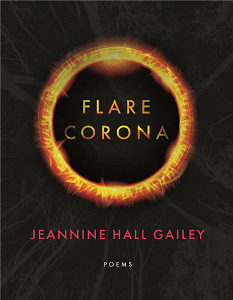
 Jeannine Hall Gailey served as the second Poet Laureate of Redmond, Washington and the author of Becoming the Villainess, She Returns to the Floating World, Unexplained Fevers, The Robot Scientist’s Daughter, and winner of the Moon City Press Book Prize and SFPA’s Elgin Award, Field Guide to the End of the World. Her latest, Flare, Corona from BOA Editions, was a finalist for the Washington State Book Award. She’s also the author of PR for Poets, a Guidebook to Publicity and Marketing. Her work has been featured on NPR’s The Writer’s Almanac, Verse Daily and The Year’s Best Fantasy and Horror. Her poems have appeared in The American Poetry Review, Poetry, and JAMA.