- At May 24, 2005
- By Jeannine Gailey
- In Blog
 0
0

What kind of feminist are you?
My mom, who is studying for her Phd in Education, has been studying “feminism” in the classroom. It’s so funny, I think of myself as a feminist, because, you know, I’m for things like equal pay for equal work and radical ideas of that nature. But apparently there are specific categories. Here is the e-mail she sent me. So tell me, what kind of feminist are you?
“Kinds of feminism, according to Rosemarie Tong and Michael Crotty, are:
1) Liberal feminism – humanist (truth and vales are uniquely human, and only humans give them meaning) and politically liberal (any law or policies needs to be justified because it limits the rights of the individual to “perfect freedom”). This view strives for a society that safeguards individual rights and permits self-fulfillment, and believes the purpose of government is to protect those rights while staying out of people’s personal lives and choices as much as possible. The goal is to achieve government reforms that accord women the same political and social rights as men.
2) Marxist – revolutionary; this view believes that because the current political and social structure is based on male dominance and control, women cannot achieve equal rights through reform alone. They believe that the ends of capitalism are achieved at least partially on the oppression of women as unpaid domestic labor and low paid staff. They want the government to pay domestic workers a salary in recognition of their importance to society. They do not value the differences between men and women.
3) Radical – separatist; this view of feminism derives from the belief that oppression of women is the oldest and most grievous of all forms of deprivation of human rights. They view rape, pornography, prostitution, emotional and physical battering, sterilization, and abortion as abuse of women by men. They do not want to be like men. They believe that patriarchal societies cannot be just, and want to create matriarchal societies or entirely separate, female-only organizations to safeguard their rights.
4) Psychoanalytic – anti-Freudian, these feminists believe that the oppression of women derives from psychological notions that males are superior biologically, psychologically, sexually, and socially, and that we must discard these notions and refuse to pass them on to the next generation before females can enjoy equal rights.
5) Socialist – believe that feminists (both men and women) must unify and speak with one voice about the causes of female oppression in order to achieve freedom. They draw on all forms of feminism as variations of a single theme.
6) Existentialist – this view derives from the view that there is no orderly, stable, or sensible set of laws governing the world; therefore, everything we accept as truth is something we have construed in order to control or dominate our environment. Males oppress women by constructing myths and stories about women that ensure that “good” women will not threaten their domination. This view calls upon women to deny these images and create their own social roles that are not defined by men, but by women.
7) Postmodern – this view is that society must “deconstruct” or dismantle the elaborate social, psychological, and other structures that support the oppression of women to discover its roots, drive out its influence in science, philosophy, and psychoanalysis, and recognize the subtle ways in which women are prevented from empowerment. Women must stop defining themselves in terms of men altogether, and define themselves in uniquely female ways.
Mainstream thought among both sexes in the USA today is that women should have the same rights as men, that men and women should be paid the same wage for the same work, that they should be provided with the same social, political, educational, and career opportunities, and that women should be more proportionately represented in the government and other law and policy making organizations. This is not feminism, but a line of thought based on the concept of “no taxation without representation.””
I feel like I don’t fit into any of these categories exactly. My favorite “feminists” are usually writers like Margerat Atwood and A.S. Byatt who have been criticized by various “feminist” groups for their negative/”disempowering” visions of women. But we are nothing if not complicated, right? I guess maybe “existentialist feminist” might be the closest…since I love to re-work old mythologies about women…
- At May 22, 2005
- By Jeannine Gailey
- In Blog
- 1

You are William Blake! Wow. I’m impressed. Not
only are you a self-made artist and poet, but
you’ve suddenly become a very trendy guy to
like. It’s not that we doubt that you have all
your marbles, it’s just that we’re not quite
sure what you did with them to come up with
those terrifying theological visions. The
people of your time were nowhere near as
forgiving as that, and all your neighbors
thought you were a grade-A nut job. But we
love you, so rest happy.
Which Major Romantic Poet Would You Be (if You Were a Major Romantic Poet)?
brought to you by Quizilla
Hmph. It’s a good thing I got Blake – he’s pretty much the only Romantic poet I can stand, except for a little Coleridge.
- At May 16, 2005
- By Jeannine Gailey
- In Blog
- 5
Have you read a book lately that was so good you just sat down and started writing about it? I had that happen recently with a book by Dana Levin, Wedding Day. Fantastic stuff, dark, twisted, funny, ultimately asking a lot of questions about American poetry, what it is, why we write it. I have to quote a little bit of it here, from a poem “Ars Poetica:” “Six monarch butterfly cocoons/ clinging to the back of your throat-/ you could feel their gold wings trembling.// You were alarmed. You felt infested./ In the downstairs bathroom of the family home,/ gagging to spit them out-/ and a voice saying Don’t, don’t –“
Anyway, wish I’d come up with that poem. Another don’t-miss poem is “Quelquechose,” which was published in the 2005 Pushcart anthology. My review of Levin’s book will be in the next issue of 88.
I turned in my final homework packet for school, so now I have officially started my six month break from homework. I hope I can keep up my writing without the extra push I’ve gotten accustomed to. I’m also hoping when I go back in January I’ll be completely well, not distracted by the constant tests and dr appts, etc.
I’ve been trying positive visualizations for my health and stuff, and I think it worked – I found out I won a small sweepsteaks for which the prize was a Stila lipgloss set. Not quite the book contest I was hoping for, but close, right? I’ve just got to aim those positive visualizations a little higher next time.
- At May 08, 2005
- By Jeannine Gailey
- In Blog
- 2
(Warning: Mini-Blog-Chapbook-Review!)
Congrats to blogger and fellow poet Steve Mueske, who recently (and happily) had his manuscript A Mnemonic For Desire, accepted for publication by Ghost Road Press! I recently received Steve Mueske’s chapbook, “Whatever the Story Requires” from Pudding House, which deals with subjects of mortality, music, Evil Kneival dolls, and the insect world, is a collection of simple grace and understated melancholy. One of my favorite poems was “After Reading of an Amazing New Device That Brings Back the Dead in Lifelike Holographic Images.” These are some excerpted lines: “…and there Aunt Mertle/ bends to the bright task of baking rhubarb pies…and soon Uncle Fred,/ dead these seventeen years, is splitting wood for the fire…Here cousin Matthew will never know/ the slice of a boat propeller, and Anne can safely ignore/ / those pricks of pain in her arm.” Good stuff. I love discovering the work of other bloggers that I might never have seen otherwise; one example is I remember being blown away by Suzanne Frischkorn’s chapbook, really lush and magical and eerie, which I can also highly recommend.
I’ve been on a reviewing roll; just finished up a review for the journal 88 and reviewed Tom C. Hunley’s The Tongue for Raven Chronicles.
Okay, back to your regularly scheduled Mother’s Day Activities. Enjoy your brunch and try to dodge those guilt trips!
- At May 03, 2005
- By Jeannine Gailey
- In Blog
- 1
So, Kate Gale at Elliot Bay Bookstore – Amazing reader, if you get a chance to see her read (she’s touring around with her new Tupelo Press book) go, go go. Esp. the poems addressed to her son and daughter, just killer. She’s one of those readers that avoids the dreaded poetry voice, doesn’t linger lovingly over her own syllables, just bangs the poems out with energy and really draws you in. A lot of very funny stuff her in her poems too. I bought her first book and am waiting til I finish it to buy her second. She also spent a lot of time answering questions about poetry community and how to built one (she’s active as a PEN president, I think, runs her own press called Red Hen, as well as the new L.A. Review, and runs a couple of reading series in LA. Wow!) I have been thinking a lot about poetry community, how I can be more involved while I am still “convalescing,” how to support local groups and magazines, etc etc. I have volunteered with several magazines over the last few years, including Seattle Review and Raven Chronicles, but have had to cut back lately, and I miss it.
At the Seattle Poetry Festival at Hugo House I got to hang out with the lovely and talented Martha Silano, who I hadn’t seen in a while, as well as man other poetry-friends and acquaintances. Went to panels on starting a literary magazine and on publishing poetry. One of the local mags I am really impressed with is Cranky, run by Amber Curtis; she talked about her print run, profit margins, the process of starting it up – to me it’s a real success story, and when she talked about it I thought Yes, that’s do-able, I could try that too. My favorite part of the festival was the fact that, along with a “grilled cheese poetry” booth, they were selling actual grilled cheese sandwiches all day, which made the whole place smell delicious.
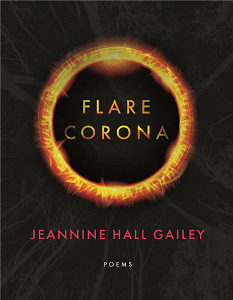
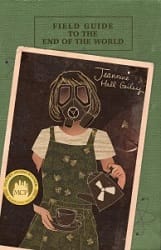
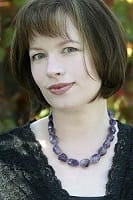 Jeannine Hall Gailey served as the second Poet Laureate of Redmond, Washington and the author of Becoming the Villainess, She Returns to the Floating World, Unexplained Fevers, The Robot Scientist’s Daughter, and winner of the Moon City Press Book Prize and SFPA’s Elgin Award, Field Guide to the End of the World. Her latest, Flare, Corona from BOA Editions, was a finalist for the Washington State Book Award. She’s also the author of PR for Poets, a Guidebook to Publicity and Marketing. Her work has been featured on NPR’s The Writer’s Almanac, Verse Daily and The Year’s Best Fantasy and Horror. Her poems have appeared in The American Poetry Review, Poetry, and JAMA.