- At February 13, 2005
- By Jeannine Gailey
- In Blog
 2
2

A Week o’ Poems in Print
One of those rare weeks when serendipitously three poems appear in print…In the mail, the Fall 2004 (!!)
Diner appeared (which included not just my poem but two wonderful poems by Natasha Moni) as well as the new American Poetry Journal,which was chock-full of good poems, a lot of them by people whose names I recognized from online communities – Paul Guest, Steve Mueske, C.J. Sage, and Ilya Kaminsky. Wondering through Barnes and Nobles my husband picked up a copy of the Spring 2004 Puerto del Sol, which happened to be the issue my poem was in – as well as a great poem by J.P Dancing Bear, who publishes American Poetry Journal. (Eerie twilight zone music here.) It was strange to get these journals after all my recent weeks of not submitting very much.Maybe it’s the universe’s way of telling me to send poems out. I’ve been writing more, which feels good, anyway, but I’ve been having strange nightmares – possibly these things are connected?
To balance out the warm fuzzies, I also got four rejections on one day this week, which is always bracing – I’m feeling discouraged about my first book manuscript, which is still making the rounds, 19 months now. Especially after you shell out $20 a pop for a one-sheet winner announcement, you start to feel like the game is playing you, instead of the other way around. I’ve sent to a couple of publishing houses who publish without running contests (Gray Wolf, Carnegie Mellon University Press) but I should probably send to even more. Although, to counter-balance that, I’ve had really good responses from people on the poetry in my chapbook, which makes me think, maybe what I’m writing is worthwhile after all, that someone besides my mom, husband, and four best friends wants to read the weird stuff I write. I even have to order more copies for my next two readings! The surprising thing is that, after the chapbook came out in January, I had four different journals contact me about publishing work that was in the chapbook. Has this happened to other people? Hey, believe me, I’m not complaining, just curious.
Also, a quick report from ComicCon, which, yes, I went to and enjoyed immensely. (ComicCon, if you don’t know this from listening to the dialogue of the O.C., is a big comic book conference that tours big cities once a year, including Seattle.) I had a great time wafting through the crowds of girls in Goth getups and many, many young men in their twenties – I really enjoyed looking at all the work by the comic book artists, it was a little like going to a museum where everything is for sale and you can get it signed! The artist at Top Cow, Mike Choi, who does beautiful, baroque work was absolutely swamped with fans, and there was this booth where hopeful comic book artists could get people from Marvel to evaluate their work and tell them what they needed to do to get published in the industry. Wow, wouldn’t that be great if at AWP there were some top publishers and writers at a booth where you could walk up with your poems and they’d be like, “Yes, focus on blank, which is your strength, and cut out your adverbs, and then we’ll take a look at your manuscript!” Seriously, I thought it was a warm and supportive atmosphere for creative folks, and I recommend a visit for poets who need to channel their inner superhero. Also, to accompany my poem about Wonder Woman fighting Nazis (see “Wonder Womans Dream of the Amazon” in the American Poetry Journal and, of course, the chapbook, “Female Comic Book Superheroes”) I now have a huge poster of Wonder Woman fighting…Nazis! I mean, how great is that! I recommend Superhero posters for every poet’s writing nook. My husband’s getting it framed for me for Valentine’s Day. Isn’t it romantic…
- At February 04, 2005
- By Jeannine Gailey
- In Blog
- 10
The universe must be trying to cheer me up…
Got an acceptance from 32 Poems Magazine, one of my all-time favorite journals. Hooray!
- At February 03, 2005
- By Jeannine Gailey
- In Blog
- 0
Sorry I haven’t been posting here much – I’ve been depressed, what with the upcoming surgery (fifteen days now and counting) and I feel like I’m wearing a sign that says “Thank you, no, I won’t be able to have children after that. Nope. Not ever. No chance.” It’s been hard to pick out clothes from the closet in the morning, much less which poetry journal to submit to…(my poems are lined up and stamping their feet impatiently. Well, you’ll just have to wait!)
But last night at my writer’s group I read a poem I had written about this experience, and felt better, especially after all the kind comments from my friends. I was like, hrmph, maybe there’s something therapeutic about this poetry thing after all. And it’s good to have a group of writers you can trust to bring anything to.
I turned in my first new packet of poems, essays, etc to my new advisor, and I am nervous and hopes she likes them. Honestly, it’s like being in fourth grade – “I hope the teacher likes me/my poems!” Especially since I’ve been writing lately with my “neurotic” edge rather than my “funny” or “feminist” edge.
I have a reading this Saturday with my good friend and great poet, Natasha Moni, at this tiny coffee shop in a tiny town. Sometimes those readings feel the best, I don’t know, more intimate, more like the crowd is with you rather than there by chance and resenting it, you know? I’ve been going to and giving readings a lot lately, because of the new chapbook. It’s kind of weird to go out and be extroverted when you really want to curl up in a cave and grow thick fur.
On another note, I felt ashamed of myself for complaining earlier in my blog about what a pain it was to vote (I had some red-tape issues this year) after I saw the pictures of Iraqi women holding up purple fingers, who went out to vote even with threats of beheading and the chopping off of hands. Those women are way braver than I will ever know how to be. Seriously, not to be all corny and whatnot, but I was crying when I saw those pictures.
And, on a still less related note, if you haven’t already seen them, there’s a great series of essays up at the Academy of American Poets site, all by “younger” writers. http://www.poets.org/almanac/index.cfm
I just loved reading this stuff. Perhaps soon I will be able to write “manifestos” about poetry. I like debating topics like these. What are my responsibilities as a young writer to “make it new?” (Dana Levin.) Is personal narrative dead? Lord, I hope not. (Aaron Smith) And, after dissing Wordsworth and Whitman like a punk, I am humbled by reading the excellent use of each in essays by Tom Thompson and Richard Tayson. PS – Also read the spirited defense of MFA programs by Arielle Greenberg. Okay, though, seriously, read all of them. As much fun or more than reading the “letters” section of Poetry Magazine!
- At January 24, 2005
- By Jeannine Gailey
- In Blog
- 5
High-five me! Finally finished the first all-out terrible assignment I’ve been given in my MFA program: reading and writing an essay on Wordsworth’s Prelude to the Lyrical Ballads and Whitman’s Democratic Vistas. I had to keep punching myself to stay awake, much less make sense of these two essays. Maybe I’ve been away from academia too long to do this stuff anymore. I literally got angry at these two “fathers” of Romantic American literature as I wrote. What’s up with all Whitman’s “Lo’s!” and all those exclamation points? And could Wordsworth BE any more pompous? Anyway, I spat out as much summary and examination as I could and now I don’t have to do it anymore. I think I just don’t like people who are Transcendentalists. No offense meant, of course, to any transcendentalist readers.
On the plus side, I find I’ve been reading several members of my blog roll lately – I’ve just finished Suzanne Frickshorn’s Red Paper Flower, Paul Guest’s Resurrection of the Body and the Ruination of the World, and Rebecca Loudon’s Tarantella. All three were so much better and more enjoyable than so many other books that I’ve bought and read – Red Paper Flower was both lovely and punch-in-the-gut moving – Guests’ poems had the perfect combination of wit and sobriety, of pathos and merriment, and Tarantella was brilliantly fierce, lyricism with fangs. So, way to go, blogger/poets. It just goes to show that if you enjoy people’s blogs, you should definitely buy their books. Also, if I were the one handing out book prizes, these three collections would all be big winners.
Haven’t managed to write any new poetry since I’ve been home (almost a whole week now! Snert! Snick! and other sounds of anxiety) but I’ve sent out some batches. I received the standard rejection from Poetry in the mail today, which, for some reason, disappointed me more than it should have. I mean, we expect rejections from Poetry, don’t we? Now onto more homework assignments, all hopefully less painful that this first one.
- At January 19, 2005
- By Jeannine Gailey
- In Blog
- 4
Finally home from Pacific University’s second residency. Exhausted and kind of out of it and also surrounded by boxes in a new place, which has made me a little disoriented. Have a reading tomorrow night with some other excellent poets on Bainbridge Island, which should be fun. I’m going to read from my new chapbook.
Can’t even remember all the highlights of the trip – Marvin Bell and Glenn Moore’s workshop on reading poetry with jazz accompaniment which was a blast, the panel with all the poets (Dorianne Laux, Joseph Millar, Marvin Bell and Pattiann Rogers) on “What Makes a Poem Sexy,” and meeting all the new students were definitely up there on the list. Also, a quote from Pattiann Rogers: “Disney Has Ruined So Many Words.” I don’t even know exactly what that means, but it sounds like it would make a great poem.
I’m actually really looking forward to reading my book list this semester, which includes a ton of newer books, mostly by women, people like Dana Levin, Tony Hoagland, Marie Howe, Carol Ann Duffy, Denise Duhamel. I’ve also been made the editor-in-chief for the launch of the new MFA-based lit mag, to be named soon, which is exciting, but I’m trying to figure out how to balance school and the lit mag and volunteer work and paying work and health stuff – and oh yeah, all that writing and trying to get published stuff. I’m sure it will all work out. That, or I’ll collapse in nervous exhaustion. Either way 🙂
I need to catch up on my mail and reading – I’ve got three books waiting for reviews and a friend’s MS I promised to look through. Not too mention all the back episodes of Lost and Alias I’ve missed. One thing that was really funny about the students at the MFA program was how many of them share my geek interests – coding, X-Files, Buffy, video game addictions, etc. Weird.
Off to unpack and then sleep as long as possible. Hopefully I will recover my ability to write cogently after that.
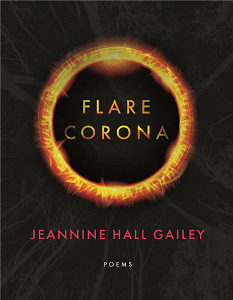
 Jeannine Hall Gailey served as the second Poet Laureate of Redmond, Washington and the author of Becoming the Villainess, She Returns to the Floating World, Unexplained Fevers, The Robot Scientist’s Daughter, and winner of the Moon City Press Book Prize and SFPA’s Elgin Award, Field Guide to the End of the World. Her latest, Flare, Corona from BOA Editions, was a finalist for the Washington State Book Award. She’s also the author of PR for Poets, a Guidebook to Publicity and Marketing. Her work has been featured on NPR’s The Writer’s Almanac, Verse Daily and The Year’s Best Fantasy and Horror. Her poems have appeared in The American Poetry Review, Poetry, and JAMA.