Time Change, A Poem in Waterstone Review, Surviving November in the Second Year of the Plague
- At November 07, 2021
- By Jeannine Gailey
- In Blog
 0
0


November Sunrise
Time Change and the Pacific Northwest
I am not a big fan of time changes. I wish it just stayed on Daylight Savings Time all year round, which gives Seattle more sunlight when we’re actually awake. We actually voted as a state to get rid of the time change, but turns out states don’t have that power.
This picture is not the sunrise this morning, but a few days ago, when it wasn’t quite so gray and gloomy. In fact, it occurs to me the poem I’m including in this post is very season-appropriate!
November isn’t the most picturesque time in the Pacific Northwest, but I did manage to get a few pictures this week that might fool you into thinking it is. Here’s Glenn and I at Chateau Ste Michelle, their harvest decor, and a rainbow on one of our stormy/sunny days this week, with our last blooming cosmos.
-

- Chateau Ste Michelle Harvest Decor

-

- Glenn and I haunting the winery post-Halloween

-

- Rainbow with last cosmos

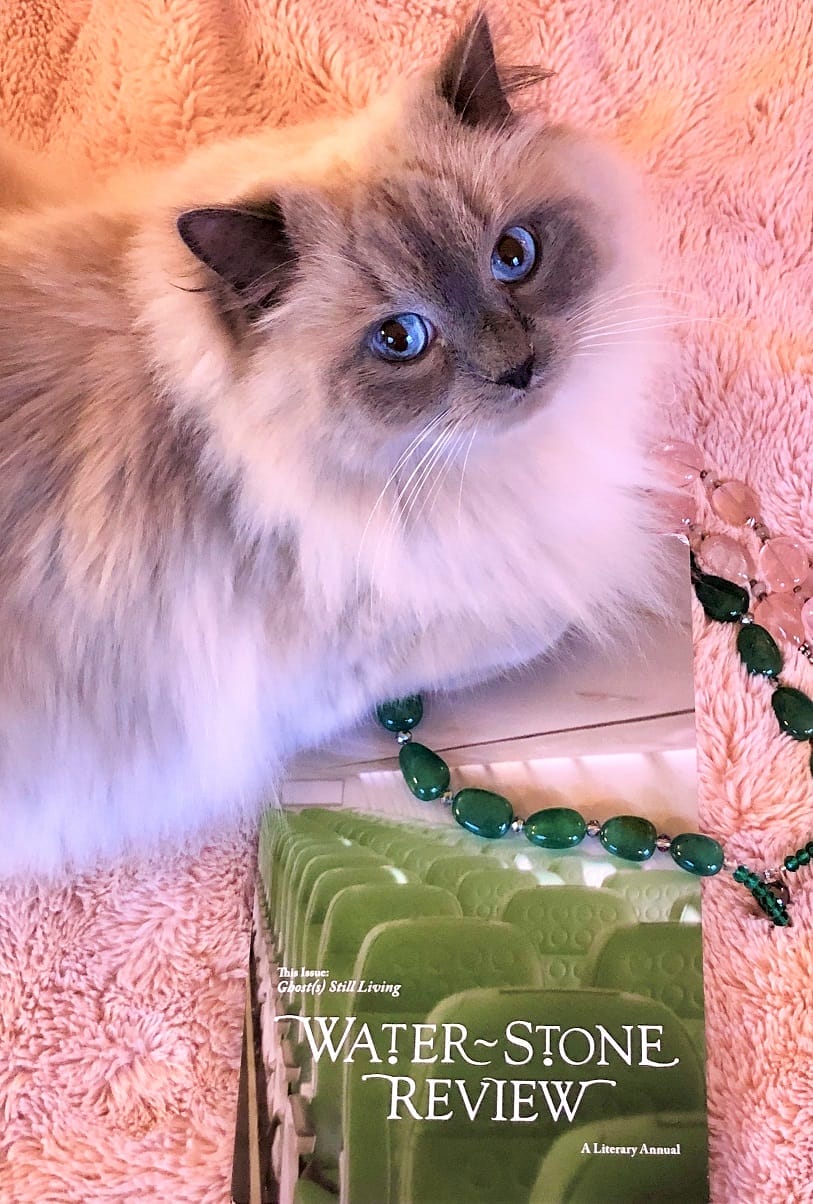
Sylvia with Water~Stone Review
A Poem in the new 2021 Water~Stone Review
So happy to get my contributor’s copy of Water~Stone Review’s annual print issue, which included my poem, “On the Autumn Equinox, 2019” but also poems by friends like Oliver de la Paz, January O’Neil, Todd Kaneko, and Alison Pelegrin.
The letter from the editor for this issue begins: “This issue is haunted.”
Here’s a sneak peek at my poem: (Click to enlarge)

From the Water~Stone Review
 Surviving November in the Second Year of the Plague
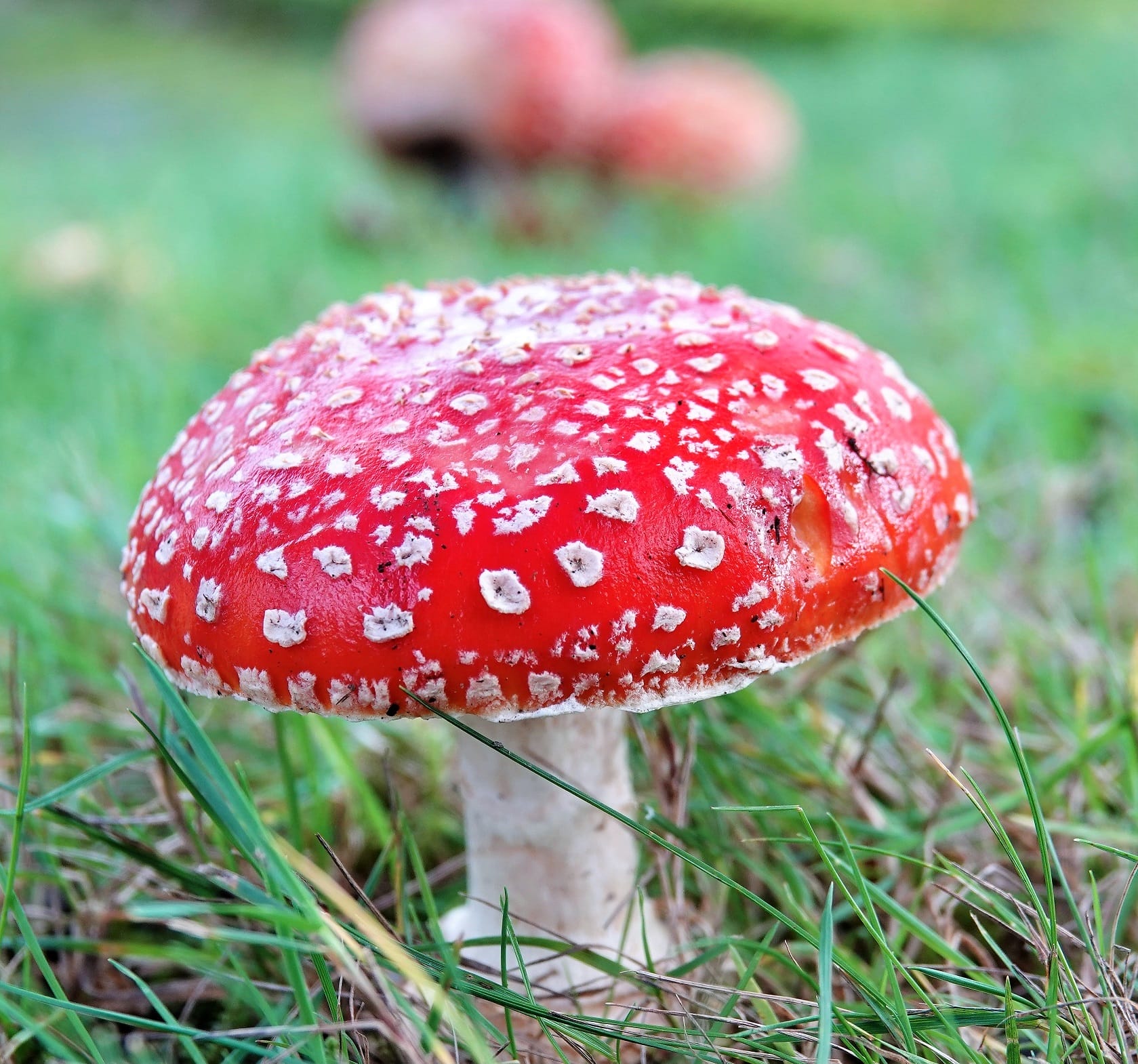
There’s a spot on the grounds of the Columbia Winery near my house where I can reliably find Fairy Tale mushrooms (or Amanita muscaria) every year, but not until the flowers are nearly done and it’s started to feel like winter. It seems like a metaphor for the hidden beauties of this time of year; sometimes they take a little seeking out.
There was a meme going around on social media, something like, “This month I’m doing a challenge called November. It’s where I try to make it through every day of November.” That feels very true this year, in which we find ourselves confronting the end of the second year of the pandemic, getting booster shots, still unsure of whether it’s safe or not to…travel? see loved ones? have an indoor holiday dinner? It’s deflating to think that we are still dealing with the uncertainty and misery of the pandemic even after vaccines, plus now empty shelves at the stores (supply chain issues,) and a general feeling of malaise that’s hitting everyone from doctors (my brilliant hematology specialist of 18 years is going on “unlimited sabbatical” and my ER doctor friend from Alaska has moved to New Zealand) to mailpeople and retail workers. Don’t feel bad – this is hard. It is not your imagination. Do what it takes to survive this winter, and don’t feel like you have to be your usual ambitious, sparkling, driven self. I know I am casting around, looking for escape – should I move again? Get a job in a different city? Should I just decorate for the holidays way early, put on pajamas for the whole month and constantly stream Christmas specials?
“Adjusting expectations” seems like a continuous lesson of the pandemic. If you can’t get across country to see your family, well, you can still walk around a new neighborhood, try a new apple variety at your local farmer’s market, pick up a new book you might not usually read. If you miss shopping in stores in real life, there’s online shopping – there’s Facetime for talking to friends – and hey, it’s the perfect time to clean out your closet and send a box of clothes to charity or ThredUp. Yeah, these aren’t the options I was hoping to be facing at the end of this year, either. I sort of never want to hear the word “resilience” ever again. Anyway, if you are feeling down, or off, that’s okay. Rest up. Make whatever your favorite fall thing is – pumpkin pie, caramel apples, or just a grilled cheese sandwich or have a hot chocolate. Try to be kind to those around you – your family, friends, and people you interact with are likely also struggling. Don’t try to be cheerful when you’re not feeling it, don’t push yourself to fake anything right now. Read Yeats’s “Slouching Towards Bethlehem,” which feels timely always, but especially right now. Light a fire; hang some lights; burn a favorite candle. It’s Diwali, Southern Asia’s festival of lights, which celebrates the triumph of light over darkness and good over evil. I believe in that, in turning away from giving in to despair and trying to hope, to think of light in the darkest days.
Happy Halloween (and a Spooky Poem,) Living with MS and Selma Blair’s Documentary, and Turning Dark
- At October 30, 2021
- By Jeannine Gailey
- In Blog
- 0

Pumpkin Display at JB’s Pumpkin Patch
Happy Halloween!
Well, kids, the end of October is upon us, and so is Halloween, Samhain, the Day of the Dead – basically a time to recognize the beginnings of the darkest time of year, a time to take stock, to pay respects to ancestors and those we’ve lost. A good time for ghost stories and watching horror movies. A great time, also, to celebrate the harvest.
After a week of dark, cold, and “bomb cyclone” storms here in the Pacific Northwest, and me recovering from a (non-covid) nasty cold, we had a welcome sunny day today and went around to farmer’s markets in our neighborhood (apples, fennel, peppers, and squash are perfect right now) and even to a pumpkin patch. It was nice to walk around outside without getting soaking wet (we were not having drizzle, more like downpours all week) even if we had to put on a sweater AND a jacket.

Glenn and Jeannine with sun flare and harvest decor in Woodinville
I think fall food is my favorite, and it’s fun to have the colors and smells of the season in the house. To celebrate the harvest here at our house, we are making delicata squash risotto with fennel tonight, and plan to make some pumpkin goat cheese tamales tomorrow (it’s possible we bought too many pumpkins…) We’re also going to set up an outside bench with a table for candy (and rubber ducks for the allergic) for the kids – still outdoors, but hopefully safe for everyone involved. Pandemic Halloweens for two years in a row must be hard for children.
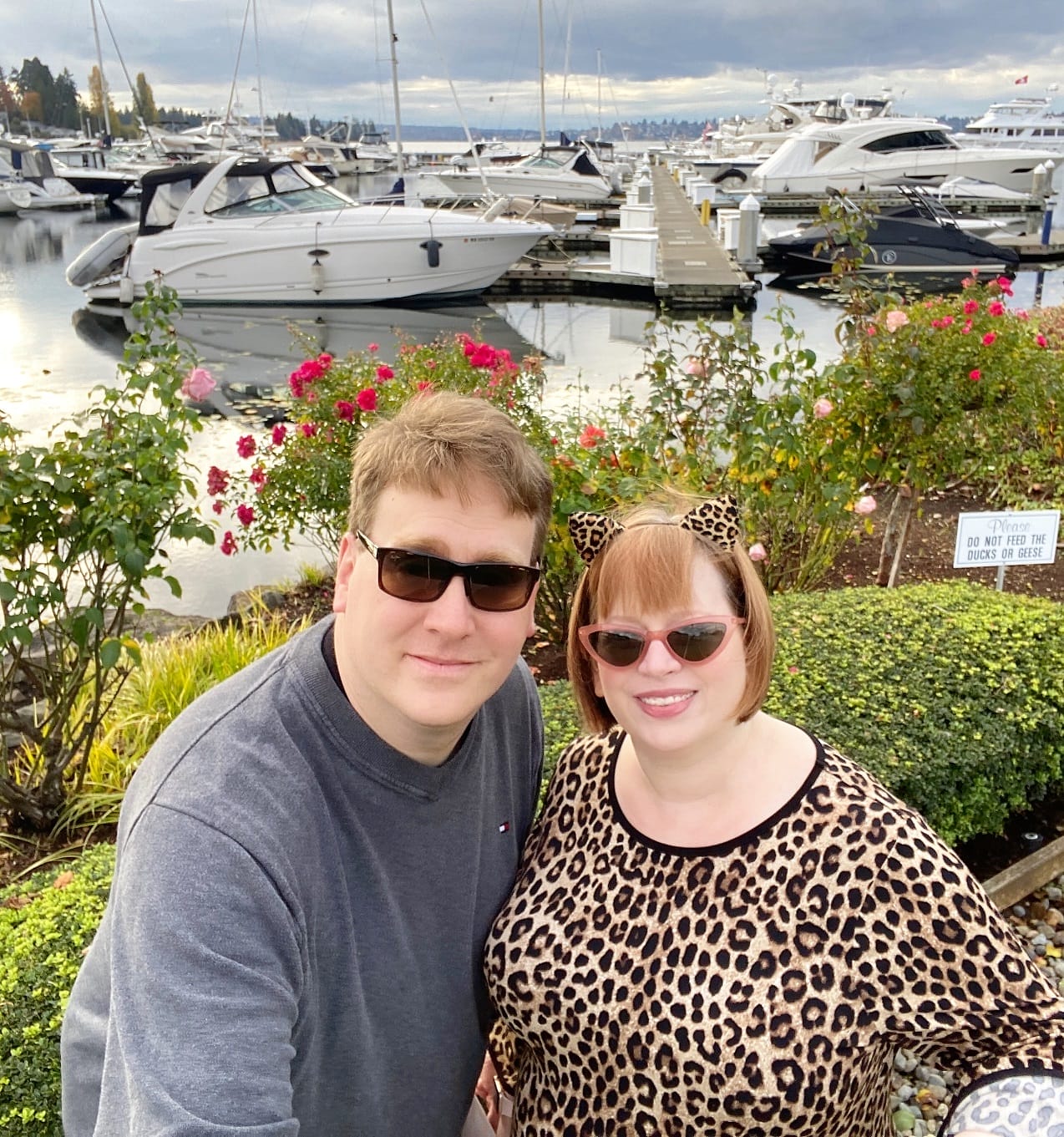
Below you can see me in cheetah ears and cat’s eye sunglasses in Kirkland, a spooky waning Harvest moon, and a Towhee dressed perfectly for Halloween in black and orange (with red eyessss…so spooky!)
-

- Glenn and I (in cheetah ears) in Kirland
-

- Spooky waning Harvest Moon

-

- Towhee dressed for Hallwoeen


Me in sunglasses, fall colors in my yard
Introducing Selma Blair and Talking About Living with MS
This week I watched the moving documentary, “Introducing Selma Blair,” on Discovery+.

Glenn and I with pumpkin display at JB’s pumpkin patch, in sunglasses
In case you’re wondering, one of the reasons so many pics feature me in sunglasses is because they help limit stressful brain stimulus. Yes, I walk with a cane, and sometimes, for distances, a wheelchair. I try to stay as active as possible, despite vertigo, some memory issues and foot drop.
Finally, a Spooky Poem, as Promised!
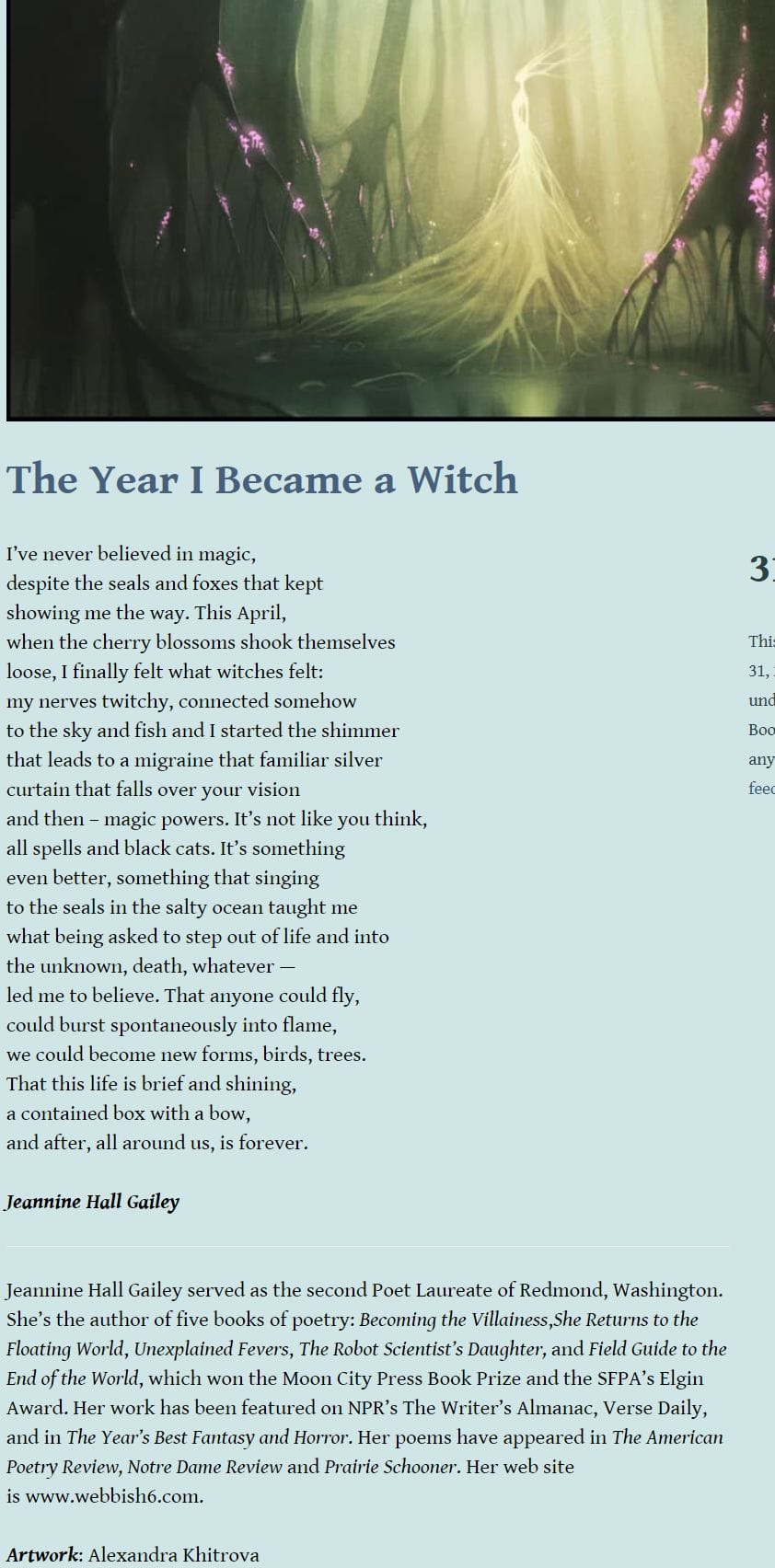
“The Year I Became a Witch,” in Gingerbread Lit

Glenn and I in the sun at a pumpkin patch
Turning Dark
Though all the pictures we took today were in the bright sunshine, the truth is our days of sunshine are going to be limited – especially after this month, especially after the time change, which robs us of desperately needed afternoon sunlight time.
I try to embrace the darkness rather than fight it; see it as an opportunity to change some habits, get to sleep earlier, rest more, take my vitamins, cultivate indoor activities and of course, as a writer, read and write more. For some delicious fall reading, I recommend two books I’m in the middle of: Louise Gluck’s perfectly seasonal and melancholy Winter Recipes from the Collective, which I think is her best book in years, and the art-world mystery which I picked up because it’s loosely based on Daphne du Maurier’s Rebecca, Fake Like Me by Barbara Bourland. If you haven’t read Rebecca, definitely read that first. A very haunting classic.
What do you do to get through the dark times? (Yes, I realize we are literally going through a dark time because the economy, pandemic, etc. as well as literally getting into darker, colder months.) Do you have any tips for not totally ruining your internal clock with the time change? I am wishing you all kindness, health, and happiness as we turn towards a new season and the end of a difficult year.
A Blustery Week, Ferry Foibles, Visiting Friends and Family Over the Water
- At October 24, 2021
- By Jeannine Gailey
- In Blog
- 3

Glenn and I at Pumpkin Patch (McMurtrey’s Farm)
A Blustery Week
It’s been a blustery week – the Pacific Northwest hit with “bomb cyclone” weather patterns – right now, I’m typing as my power is flickering on and off. We tried to make the best of the brief mornings and afternoons of slightly better weather whenever we could.
Blustery weather cannot be a surprise to us in the Pacific Northwest – we often get a windstorm so fierce it blows down the leaves before they even get a chance to turn. The one good thing about cold wet weather is it keeps you inside, so you get more writing, editing, and submitting work done. I was, however, darting out whenever there was sun to plant bulbs, even visiting pumpkin farms and farmer’s stands during relatively calm warm intervals between rain, cold, and wind. The hummingbirds and woodpeckers are still as active as ever. We only got to see the fuzzy waning Harvest moon one night, as the others were too cloudy to see anything, but we can feel the time change coming, and the temperatures dropping, and the days getting shorter – yes, fall has definitely arrived. We are eating more than our share of the beautiful apples out here, as well – favorite varieties include Cosmic Crisp, Candytime, and Pazazz.
-

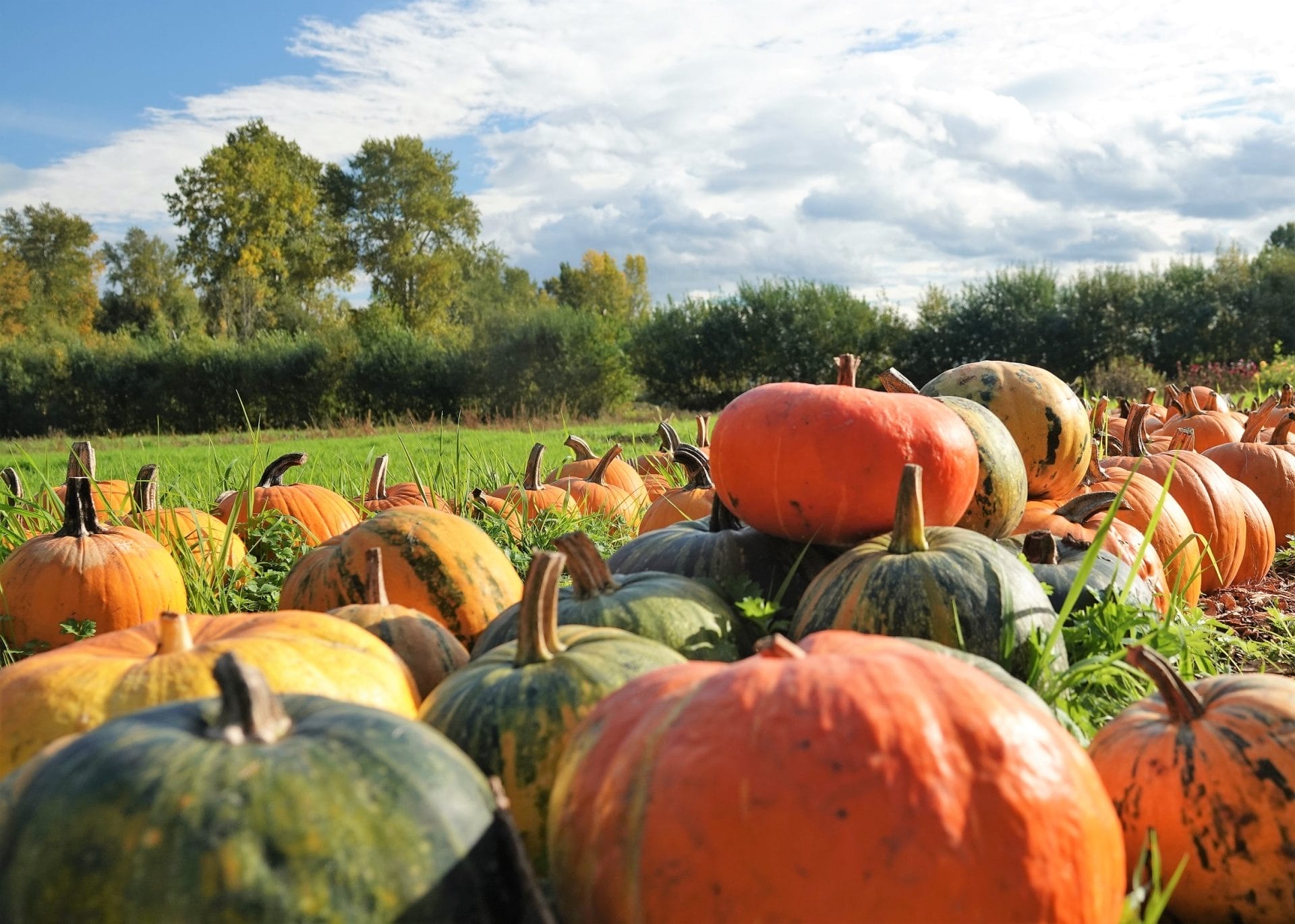
- Pumpkins at Tonnemaker Farm in Woodinville
-
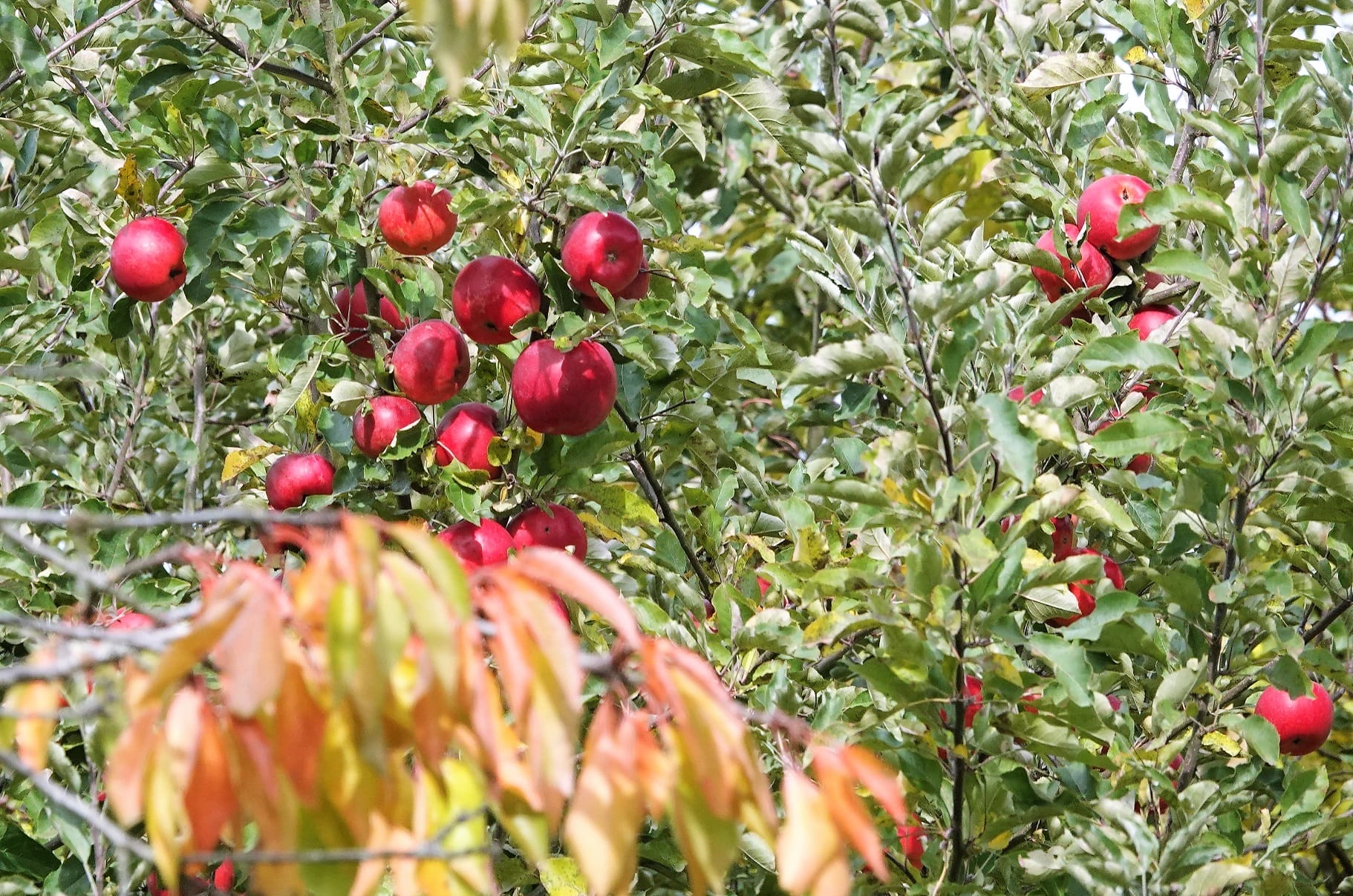
- Local apple tree
-

- Glenn and I in our yard with fall color

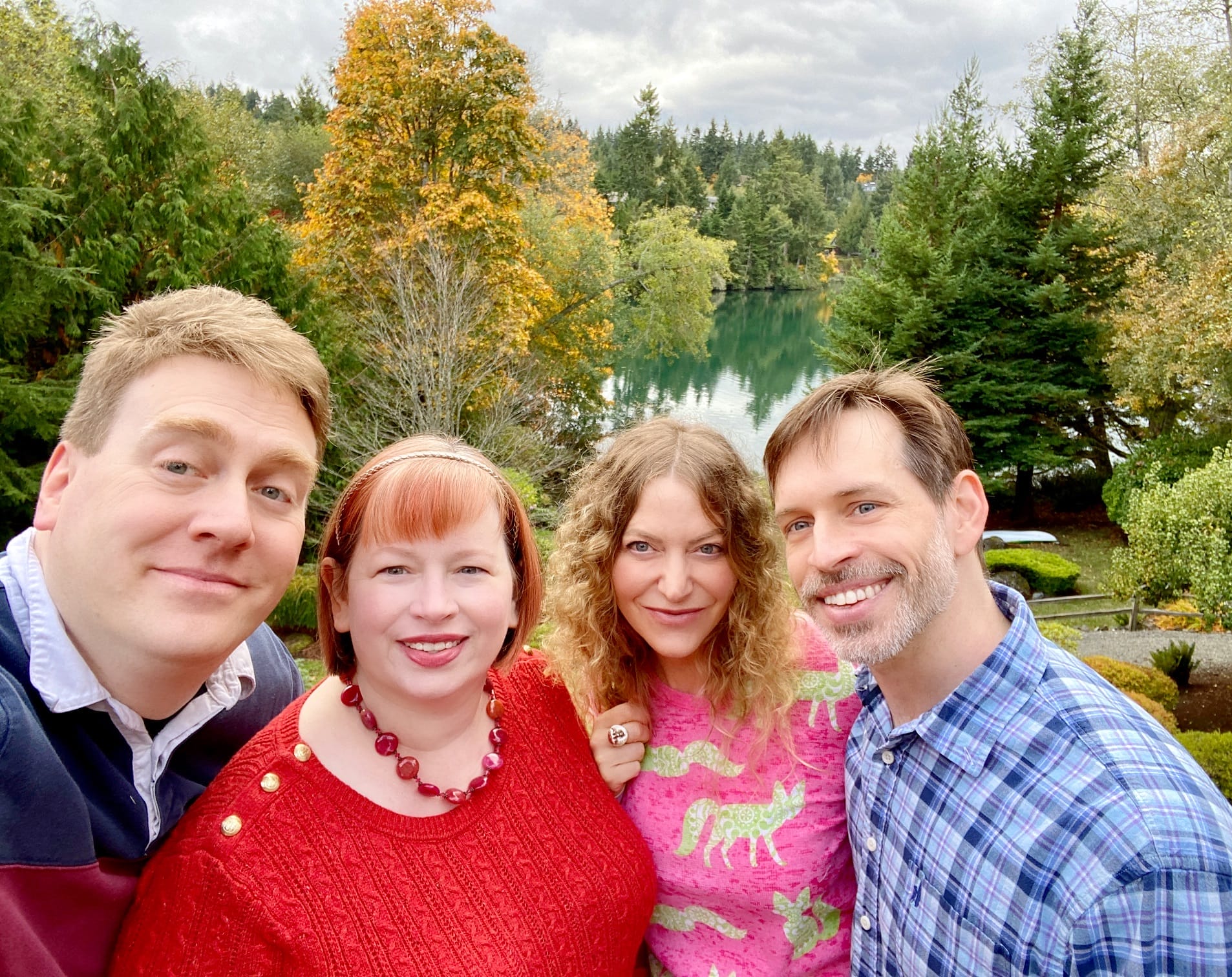
Glenn and I with little brother Mike and sister-in-law Loree at their back deck
Ferry Troubles and Visiting Friends and Family Over the Water
We did finally make it across the water for our visit to see friends and family, despite the ferry foibles (sickouts, vaccine protests, staffing problems, etc., cutting service down to one boat on all the usual ferry routes) it just took a little longer and felt a little more stressful.
It reminded me that living across the water, thought beautiful and more affordable, was so stressful for me because you are always at the mercy of the ferry (and sometimes bridge) schedules. Never could be sure you’d make a doctor’s appointment or a friend’s reading on time. You have to cultivate more Zen than I think I have in me to live out there permanently.
The trip, though hampered by the aforementioned foibles, was worth it! As with all great journeys, this one took some careful planning and plotting, but we had some grand adventures, too.

Kelli and I in the gazebo overlooking the Puget Sound
First, we got a chance to visit with my poet friends (and Two Sylvias Press editors) Kelli Russell Agodon and Annette Spaulding-Convy, who came and met me at the ferry arrival area. We shared carrot apple ginger cupcakes in a gazebo overlooking the water and got caught up on writing news in the brisk outdoors. I also picked up a pack of the Two Sylvias Poet Tarot set. It was great seeing friends IN PERSON again. I forgot how great it is socializing in real life, especially with other writers!
Then we traveled on to see my little brother Mike and sister-in-law Loree at the new house they’re renting on the Hood Canal, stopping along the way at a local park to unpack a thermos of hot cider and snap a pic – only to see a sea lion fighting with seagulls right behind us. We had a good visit, sat out on their beautiful deck overlooking the Hood Canal, had a little dinner, then made the long trek back to Woodinville. Once again, great to see actual family in human form, instead of just over the phone or over a screen.
During our trek, we did see at least one heron, about ten otters, seals and sea lions, and lots of other things we don’t get as much of a chance to see in Woodinville, and mercifully, it was a little chilly out, but didn’t rain on us the whole trip! Some more pics from the trip, including the park where we saw the sea lion/seagull fight. I think if I lived where my brother does, I’d try to get out and paint that view of the water every day. It was so tranquil, except for the otters occasionally scurrying by. I was entranced by the cloud formations on the water. Anyway, a wonderful chance to see friends and family we haven’t gotten to see often enough over the past two years.
-

- Glenn and I with Hood Canal (sea lion fight happened right behind us!)

-

- Clouds on the water, view from my brother’s place

-

- Sea Lion fighting Seagulls


Me at Chateau Ste Michelle’s gates
Last Few Pictures of October in Seattle
So, before I go, a few more pictures of October around our neighborhood: wineries with fall decor, fairy tale mushrooms, and even more pumpkins. Those beautiful poisonous mushrooms were on the grounds of Columbia Winery, believe it or not. You never know when magical things will pop up around here. Fall can be a beautiful time here in the Northwest, if you know where to look (and don’t let the weather daunt you too much!)
-

- Fairy Tale Mushrooms

-
- More Pumpkin Patches

-

- Glenn and I with pumpkins

A Week of Harvests (with Record Cold and Rain,) A Poem in Bellevue Literary Review, A Meditation on Boosters, Ferry Snafus and Shortages
- At October 17, 2021
- By Jeannine Gailey
- In Blog
- 2
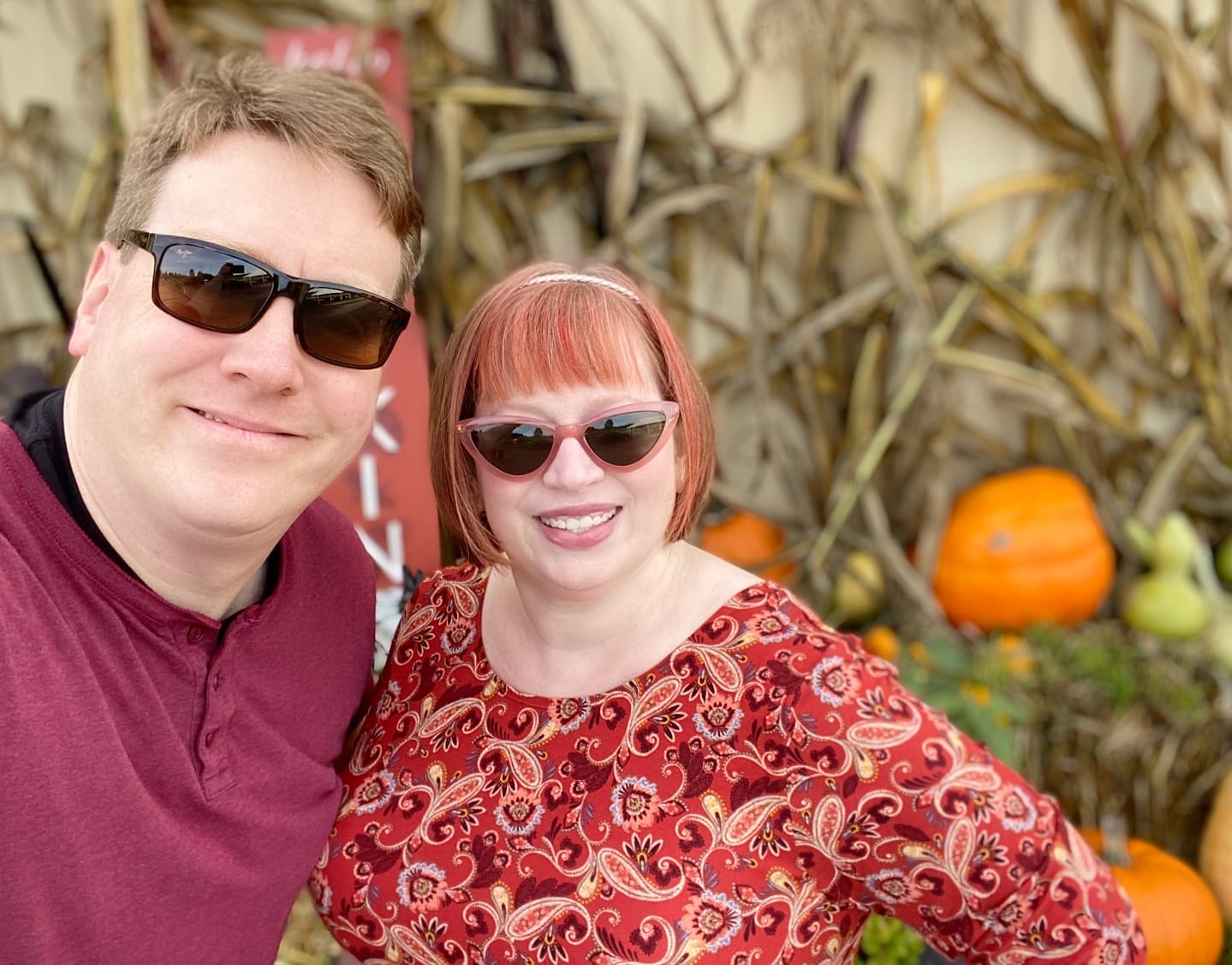
Glenn and I at JB’s Pumpkin Farm, Redmond
A Week of Harvests (with Record Cold and Rain)
It’s been a dreary week with record cold days (with the records of cold going back to the 1800’s!) and record rain. To cheer ourselves up, we visited the local farm stands, so we had fresh corn to make salads with and sweet baby peppers and apples and squashes of all sorts. We made pear soup (don’t know if I’d recommend) and baked cranberry apple bread and generally tried to stay warm. Glenn also had a physical on Monday and his third Pfizer booster shot. By the end of the week, not just Pfizer, but all the boosters had been approved.
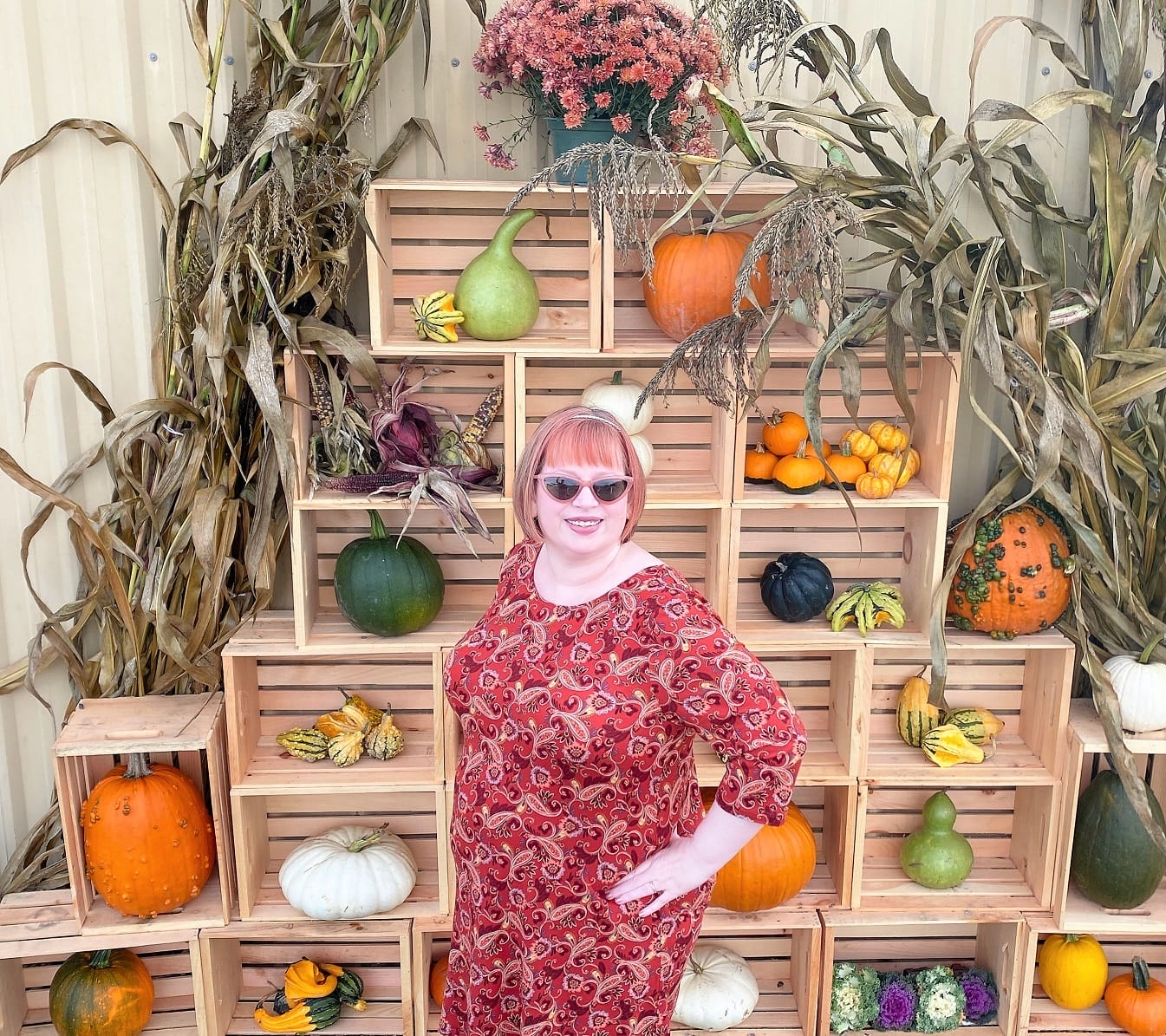
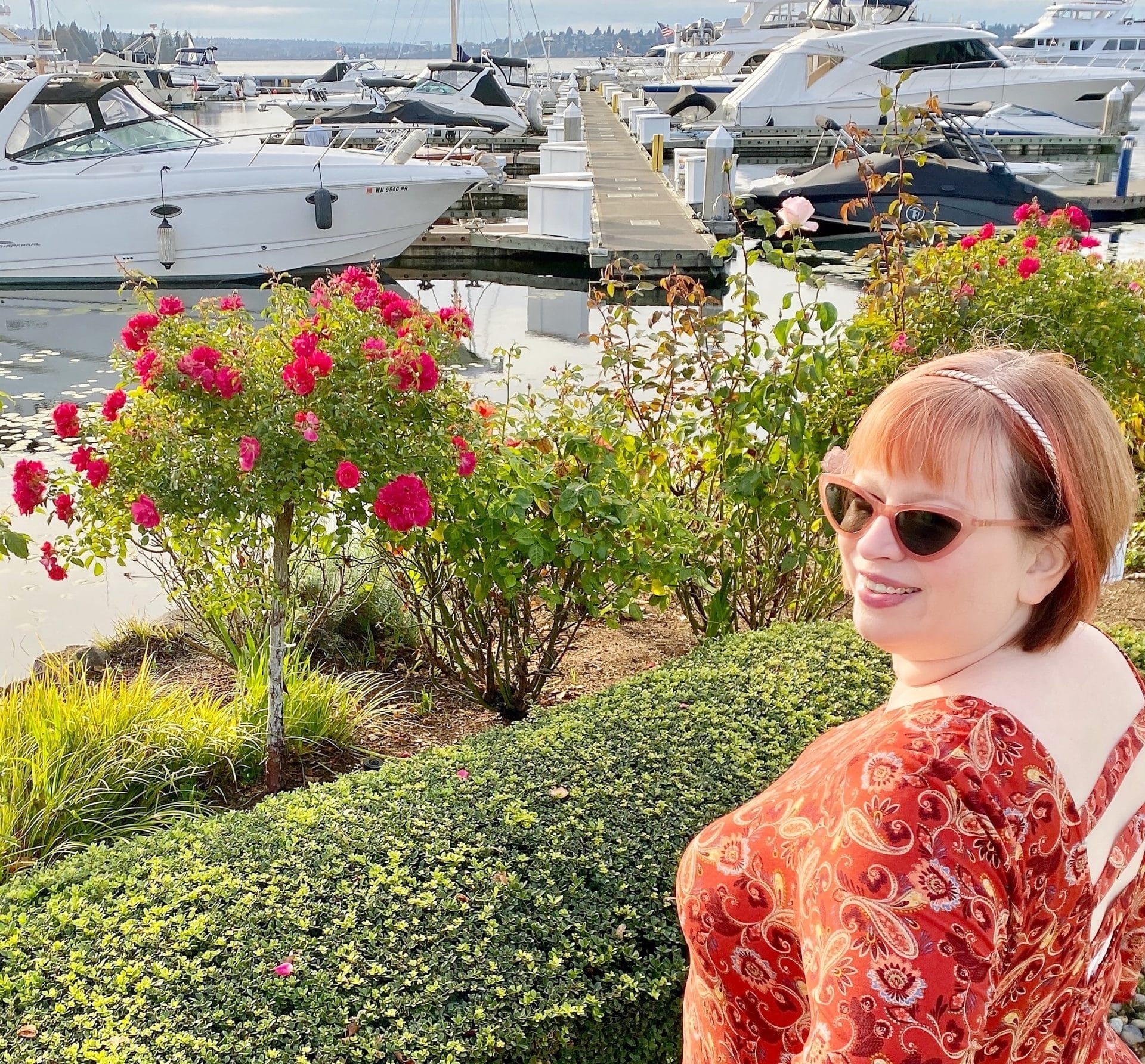
After our weekend plans to visit my little brother and a friend over the water were ruined by problems with the ferries, we decided to make the most of the warmer day and partial sunlight and visited a brand new but beautiful pumpkin farm near our house, JB’s Pumpkins in Redmond, and Kirkland’s Carillon Point to find roses on the water still blooming, and went grocery shopping in person (something we rarely do) at Metropolitan Market. Plentiful produce and flowers, but other shelves – frozen aisle, dry goods, paper goods – were empty. A little unnerving, like we were having a hurricane that we didn’t know about. But everyone was in a kind mood – even friendly – which seems like people responding to lowering covid levels and, of course, the nicer weather after a very dark cold week. Below is a trio of pics Glenn snapped of me frolicking in the Harvest scenery and sixty-degree day with pumpkin-colored hair and a pumpkin-hued dress. (I do not have a pumpkin-hued cane yet.)
-

- Me at JB’s Pumpkins with a beautiful box display
-

- In Kirkland, with roses
-

- with Pumpkins At Metro Market


Sylvia with Bellevue Literary review, a glass pumpkin, and a pink pillow
A New Poem, “Some Nerve: a Nocturne” in Bellevue Literary Review
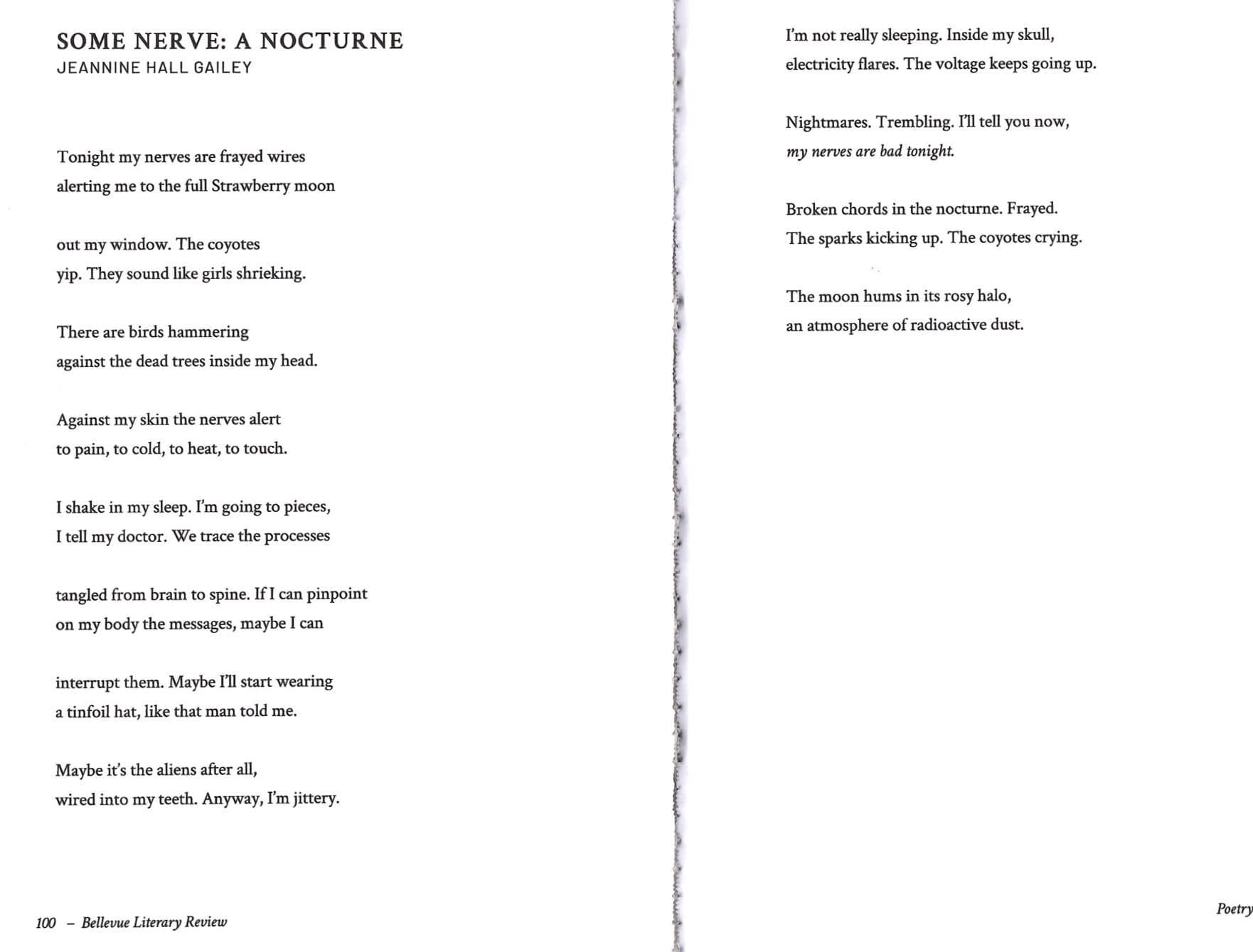
Another piece of good news this week was receiving my contributor’s copy of Bellevue Literary Review’s 20th Anniversary Issue, which contained my poem about MS, “Some Nerve: A Nocturne.” This is a journal, like Image last week, that I have been sending to for over a dozen years, so the publication was definitely celebratory for me. You can see the whole issue here.
You can see a sneak peek of my poem here. (Click on it to enlarge.)

Pink mums from my yard
A Meditation on Boosters, Empty Shelves, and Ferry Troubles
So along with the wet, cold days this week, we had an onslaught of news about the vaccine boosters – which were approved, who was approved to get them, how long should we wait to get them. For Glenn, who already got his third Pfizer and his report (no big deal), it was easy. For me, it’s a little more complicated, with a bleeding disorder and a history of anaphylaxis from different kinds of shots, and since I got the J&J the first time, I’m going to have to hear from a couple of my specialists to help me decide what to do. The good news is we know I still have antibodies from my first dose of J&J, which makes it feel like less of an emergency. (None of my doctors expected me to even have antibodies this long after, so good news.) For Americans, it is a privilege to have access to third shots when people is some countries still don’t have their first one.

Wheelbarrow full of pumpkins – an image of abundance in the harvest
Since we’ve been shopping at Instacart and local farm stands, we’ve mostly missed what people have been telling us for a while: shelves are empty. Certain things that are pretty normal are in short supply, or just ungettable. My dentist cancelled my crown appointment because they couldn’t get their usual dental drugs at all. Americans are not used to doing without. The ugly scene of backed up shipping container ships is obvious if you get near Tacoma or downtown Seattle’s ports – which are strained to the point of failure. Not only that, the ferries are all understaffed, so four of the most common ferry runs – including the ones I’d used to get to my little brother or any of my Bainbridge, Kingston, or Hood Canal friends, the Bainbridge and Edmunds – were cut in half. That’s like blocking half the interstate for people who live over the water. We had been planning to visit, but Saturday morning, there were multiple hour backups on all the ferries we’d take. It was so frustrating after carefully making plans way in advance to see them ruined – but lots of people are feeling that this week, with cancelled flights, cancelled ferries, and other travel snafus. (Mercury is of course, still in Retrograde ’til tomorrow.)

Hot air balloons, October sky (rare sunshine)
It made me think about how isolated we could have been when we lived on Bainbridge or In Port Townsend – it’s the reason we don’t live there now. Because as beautiful (and more affordable) as those places were, if you can’t get to your specialist, or you want to visit friends or do some shopping off-island – it makes your quality of life less. I never liked being dependent on a drawbridge (Hood Canal) that could close at any time AND a ferry that might be unreliable even in better times. Shortages of workers – at the docks, at the ferries, at grocery stores – are visible. We don’t really go to restaurants, but I did notice a twenty-car line at our local McDonald’s for takeout and a huge “Help Wanted” poster wafting in front of the place. So the impacts of covid go beyond the deaths of people we know and love, wrecking the economy…now we’re seeing long-term problems with the supply chain, with employment, with the basics of how we used to do things. I say “used to” because clearly some things need to change. Workers are burned out and mostly underpaid. The “just-in-time” inventory models that worked pre-covid – show the dangers of running of margins of profit and supply. This really impacts people who take medicines that are hard to find – doctors in hospitals who can’t get their hands on common anti-nausea or pain drugs, and of course everyone who just can’t find their cereal/cat litter/cleanser/paper goods at the store.
On the poetry front, more literary magazines are closing for good (just heard from Foundry this week) and publishers are pushing back open submissions periods until 2022. (Oh yeah, books are also going to be in short supply – paper shortages, getting printings from overseas – all causing book supply chain problems.) And everything’s more expensive for publishers right now.
 So things aren’t quite over yet. Will we need even more boosters before covid is officially considered “over?” How safe will the holidays be? Shipping container/warehouse/truck driver shortages according to the news may be backed up definitely until Christmas, and maybe for an entire year. When will I be able to get dental work or visit my brother? If you’re feeling stress and anxiety, you are probably not alone. Humans don’t operate that well with a ton of uncertainty. So I hope you’re doing your best to take care of yourselves and those around you. Get a pumpkin, take a walk on a sunny day, bake something with apples and ginger. If things are not going back to “normal” or as CNN put it this week, “the before times” any time soon, we need to practice our deep breathing, make our plans flexible and appreciate any little joys we can find.
Book Announcement, Bad and Good Art Friends, a New Poem in Image, and a Rough Week (with Fall Colors!)
- At October 10, 2021
- By Jeannine Gailey
- In Blog
- 4

Pumpkins at McMurtrey’s Farm
A Book Announcement!!
Yes, finally, some good news! I’m happy to announce that my sixth poetry book, Fireproof, will be coming out next year with Alternating Current Press!
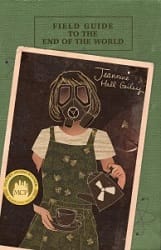
I’m nervous of course about setting up readings, since we still don’t know where things will be next year, but I’m hoping the pandemic will be on the wane and I can visit bookstores and see friends! I’ll post more information when I have it. It has been five years since Field Guide to the End of the World came out, so I am ready to have another book out there!
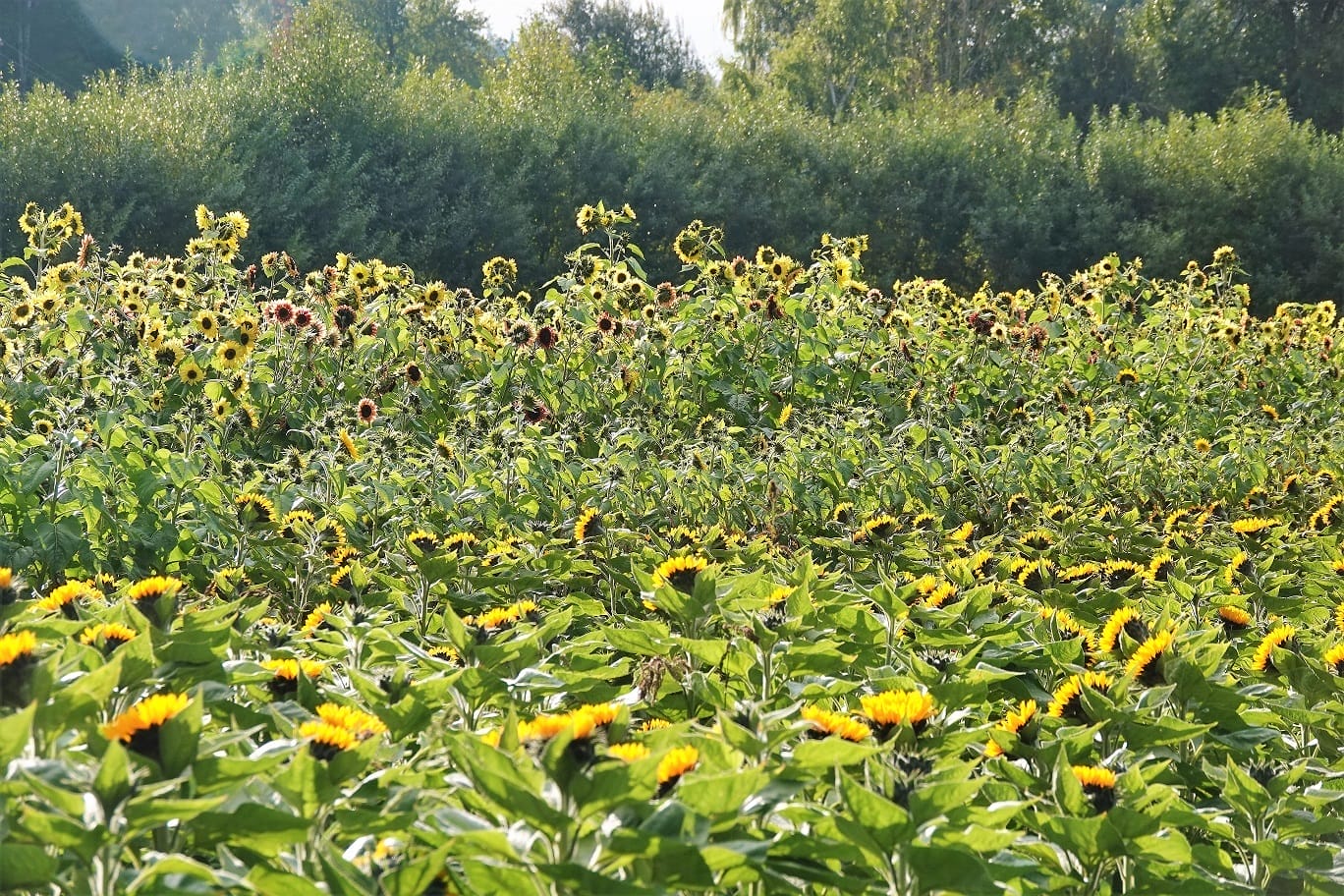
This has nothing to do with pumpkins, but I liked the cheery sunny mood of the pumpkin farm picture.

Glenn and I at the pumpkin farm
Good and Bad Art Friends
There was an article in the New York Times that had everyone buzzing, a mean-spirited article about writers being bad to each other. (If you want to read it, just google “bad art friend.” You’ll probably also get some hot takes on the article.)
But what I want to say is that in twenty years as a reviewer, volunteer, writer, editor, MFA student, and MFA instructor, I have experienced and witnessed so much kindness and generosity among writers. Maybe good art friends make for less scintillating reading, but I feel if you’re going to shine a light on a community in the art world, it should be on the wonderful, supportive, encouraging things they do for each other. I include artists and musicians in this because we all make so little money and work so hard but still what I’ve seen is artists helping each other, letting each other know about opportunities, writing blurbs, recommendations, giving each other advice…this, in my experience, has been more the norm than the opposite.
Are there mean, terrible, miserably-hearted people in the art world? Of course, like everywhere else. But I am so happy to say that most of the community supports each other. When a writer or artist gets sick, they send a care package or note; when they’re looking for work, people try to steer them towards open positions; when they’re feeling depressed about a rejection, they get encouragement; when they get good news, friends celebrate. Maybe I’m not cynical enough, or I’ve been surrounded by a lot of super-nice people by accident, but I think that good art friends are more the rule than bad art friends.
Field of sunflowers
A New Poem in Image Journal
I’m so happy to have a new poem in the latest issue 110 of Image Journal, “Rose Petals Burned”. The whole issue is terrific. I love the image they chose of the plague doctor mask at the top of the page.

Rose Petals Burned, Image Journal

Kubota Gardens, fall color
A Rough Week with Fall Colors
This week was kind of rough. I woke up sick on Sunday (lost six pounds in two days,) then woke up to identity fraud on Tuesday, which I had to report to the police and the small business association and all three credit reporting agencies, had to handle multiple problems with my cable (which provides my internet and phone too,) I also had a specialist appointment downtown and got stuck in an hour and a half of terrible traffic, missed the appointment because of the traffic, then ended up going with Glenn to a beautiful garden we never had a chance to visit before, Kubota Gardens, which is a sprawling, free Japanese garden near Renton which is open til 10 PM (a miracle in a town where everything closes early.)
We also stopped into a pumpkin farm in Redmond, called McMurtrey farm, and stopped by our favorite farm stand in Woodinville, Tonnemaker, to take in pumpkins and wildflowers.
So that’s how I deal with the bad days – I try to find the good to balance it. And sometimes that leads to new experiences that I would never have without the bad. I’m very thankful for a husband, family, and friends that try to cheer me up when I’m down. And I’m very grateful to be having a new book out soon, and for all my good art friends!
-

- Tea House and water feature

-

- Glenn with stone altar

-

- Pumpkins with wildflowers, Woodinville

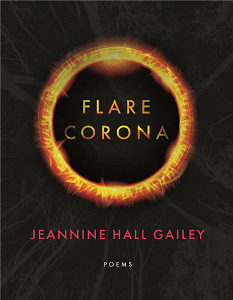
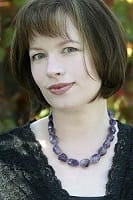 Jeannine Hall Gailey served as the second Poet Laureate of Redmond, Washington and the author of Becoming the Villainess, She Returns to the Floating World, Unexplained Fevers, The Robot Scientist’s Daughter, and winner of the Moon City Press Book Prize and SFPA’s Elgin Award, Field Guide to the End of the World. Her latest, Flare, Corona from BOA Editions, was a finalist for the Washington State Book Award. She’s also the author of PR for Poets, a Guidebook to Publicity and Marketing. Her work has been featured on NPR’s The Writer’s Almanac, Verse Daily and The Year’s Best Fantasy and Horror. Her poems have appeared in The American Poetry Review, Poetry, and JAMA.