When Wishes Come True, Holiday Celebrations with Friends, and Looking to 2020
- At December 07, 2019
- By Jeannine Gailey
- In Blog
 2
2


Kelli Russell Agodon and I
Holiday Celebrations with Poet Friends
The holidays are here, and we have started celebrating early. My poet friend Kelli and her husband Rose came over for an early Christmas celebration, and we got a chance to catch up. I think writer friendships are very important so even though we live about two hours apart (give or take a ferry,) and my health sometimes throws a wrench in our plans, we try to see each other to catch up a couple of times a year.
My brother and his wife are coming over this Sunday for an early Christmas as well. So we’ll be really tired of the holiday once the real day rolls around. Just kidding! I mean, seriously, I could do a party every day in December. Which is good, because there’s another party around the corner! This is the reason I have so many sparkly things in my closet – you never know when you’re going to need to throw on a fancy dress and look presentable in public during the holiday season.
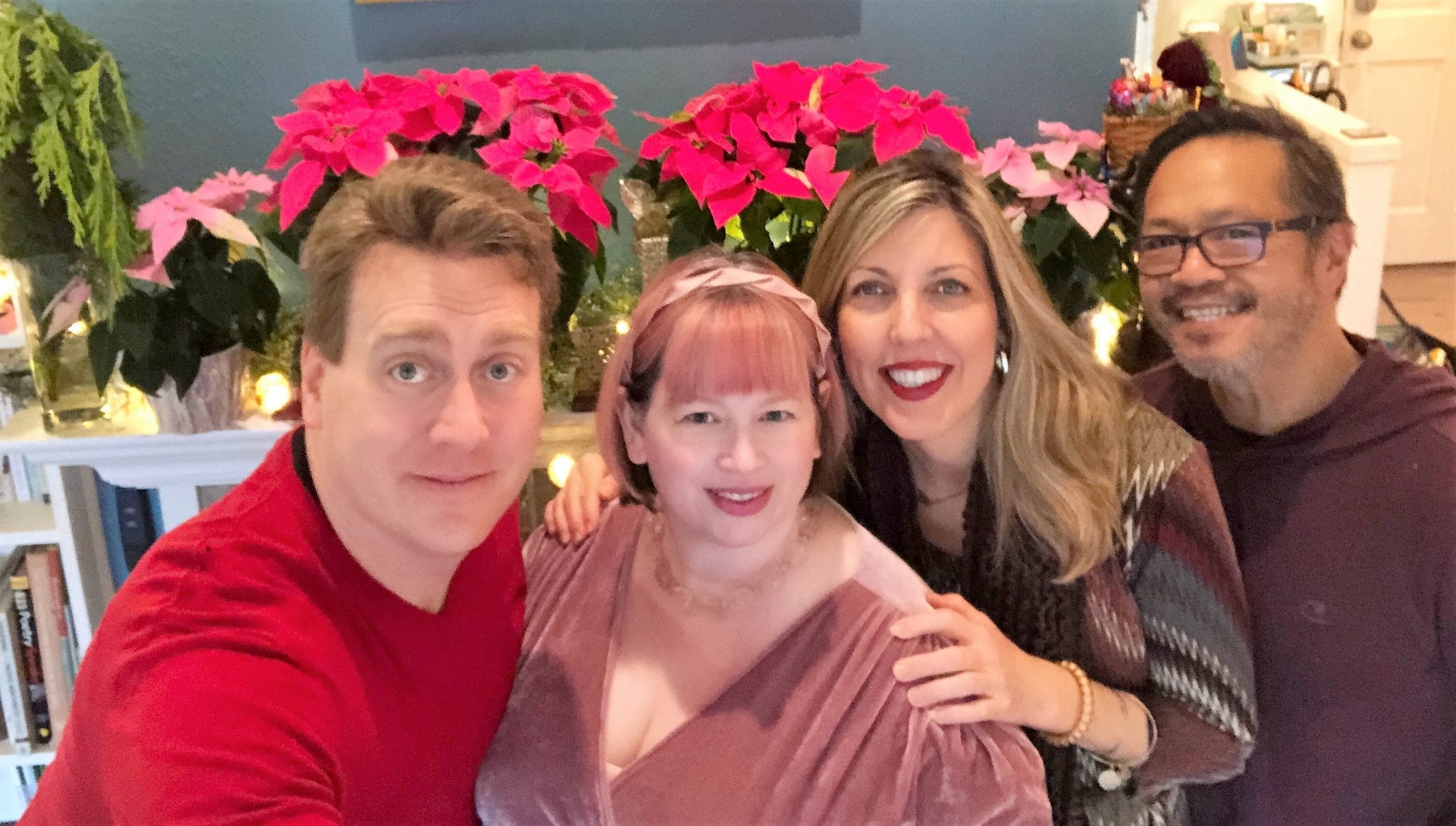
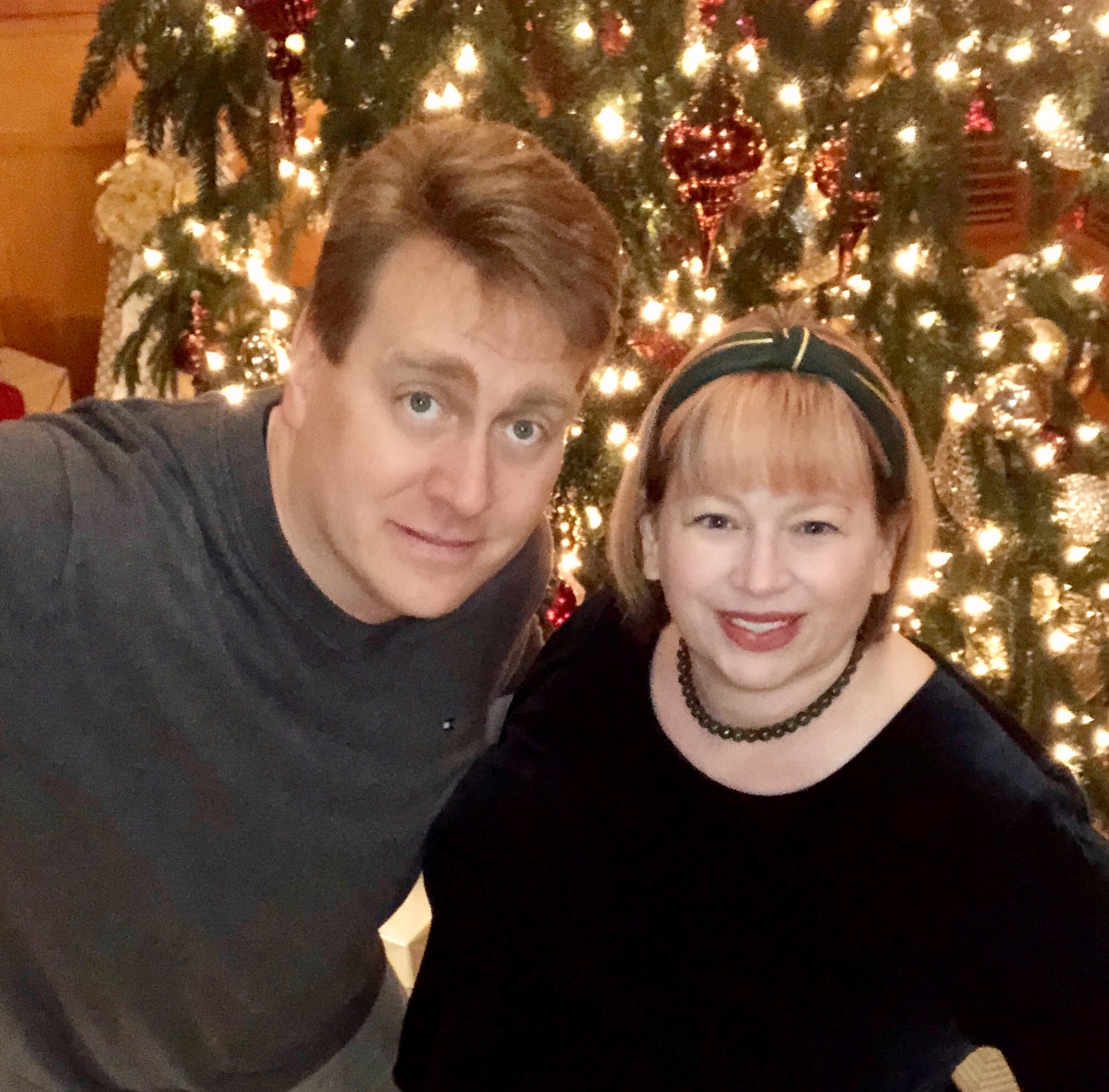
Glenn, me, Kelli, and Rose
Magic in Gathering
There’s a little bit of magic in gathering with friends, isn’t there? It isn’t just the wine and cupcakes and sparkles (though those don’t hurt,) it’s the sharing of dreams and disappointments, hopes and doubts.
Kelli brought me a lovely ornament – a white fox in a white forest, in a little light-up snow globe. Foxes have been my favorite animal since I was very little, because, I think, they also have a little magic to them. I had a fox kit come up to me when I was a very young kid, in a field, and make extended eye contact, close enough to touch the tip of its nose. I’ve had other fox encounters since then, and they always seem to presage something good.
Even better than the ornament, Kelli took the time to look over my newest manuscript and make thoughtful suggestions. That is a real gift!
-

- Kelli and I celebrate with cupcakes and port

-

- Fox Snow Globe Ornament

-

- Kelli and I in our winter wonderland


Glenn and I at the Fireside Lounge, Willows Lodge, Celebrating
Celebrating Wishes Come True
So, in last week’s post I was talking about wishing. And interestingly, some of the wishes had to do with poetry. Even more interestingly, though I am still shopping around my two poetry manuscripts to various publishers, I had really good news from two separate “dream” journals taking my work. The first, which I can share because I have signed the contract, was an e-mail from one of my poetry heroes, Tracy K. Smith, who took a poem of mine for an upcoming issue of Ploughshares. I have been submitting to Ploughshares, my records say, since 2003. Pretty exciting!
And then the second, is almost shockingly good, a place that is my top “dream” journal that published the likes of Sylvia Plath and T.S. Eliot, that I am deliriously happy about, took two poems. This is a journal I have been submitting to since the age of 19 – that is, 26 years! (I will share the name as soon as I am able.) Glenn and I went out that night to celebrate, because taking the time to celebrate wishes come true seems important. I want to feel grateful right now.
One thing I was noticing in the history of Hans Christian Anderson I was reading and in Sylvia Plath’s letters, is in all their ambition and well-placed confidence in their talents, they almost never felt satisfied with any individual prize, or publication. Nothing was ever good enough. Driven, ambitious people tend to be more successful, but also, perhaps, more unhappy. I wanted to be sure to try to feel the happiness in the moment, to put off the worries or discouragements that almost always follow good news for at least a little bit. And besides the holidays, the solstice is coming, which brings its own energy, and deserves to be noted and celebrated.
And speaking of good magic…Another thing I like to do this time of year is give things away. Giving to charity, giving to friends, even writing cards to loved ones all these things increase, I don’t know, what I think of as good magic energy. This time of year can be tough for so many for different reasons, so anything we can do to cheer up our fellow human beings, even if it’s just looking someone in the eye when they’re talking to you or asking someone when we’re checking out at the coffee shop how they’re doing, it’s probably a good idea. It can be easy to focus on yourself and your problems, and for me, it’s definitely something I struggle with – how to keep myself looking outward as well as inward.
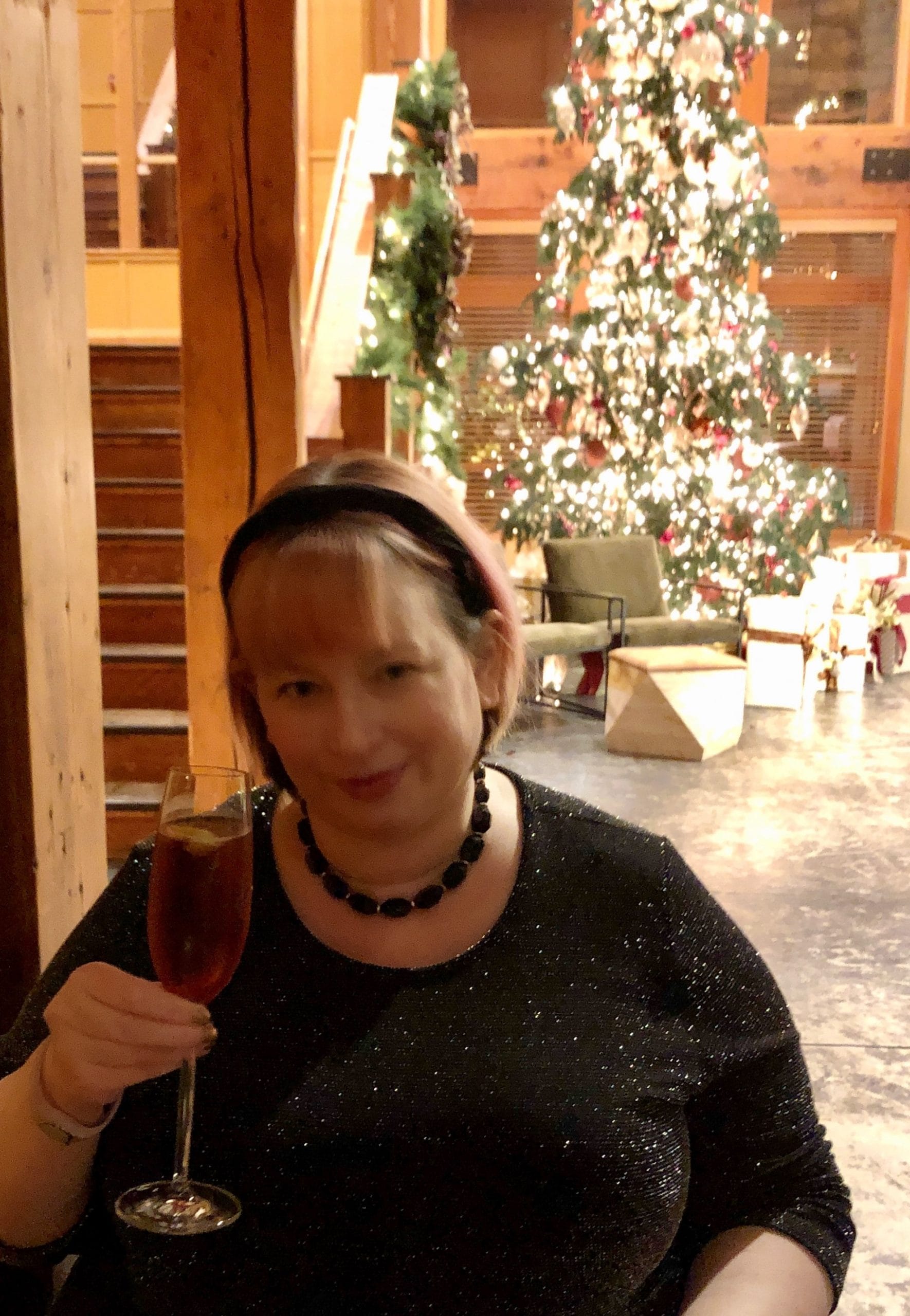
Wishing you all a great 2020! Cheers!
Looking to 2020
So what are you looking forward to next year? It can be so easy to see the bleak, bad news, the disasters and the flaws in the foundations. When I think of the next year, I know there will be things I cannot control, hard things, but that I can also set an intention towards positive things.
For me, I want to spend more time in the coming year on things that build peace, like photographing nature, and writing, and hopefully less time in doctors and dentists offices. I hope to continue to improve my health as much as I can, to find wonderful homes for my two books, for my husband and family to remain healthy. I can’t believe we’re entering a new decade.
I was born in 1973, right before the impeachment proceedings of President Nixon. There was a lot of anxiety the year of my birth, about how America would be going forward, about ending the Vietnam war, about oil prices and alternative energy sources, about scary environmental challenges like acid rain or nuclear pollution. And this next year will have so many parallels – a President again under investigation, anxiety about the environment, about how people can live together, not just in our country but all over the world, with peace and love and tolerance.
I’m hoping 2020 is a year of more kindness, of more peace, of more people valuing empathy and trees than war and profit. Eh, I’m a poet, I’m allowed to have big, unrealistic dreams, right? Here’s wishing us all a better 2020! May all your wishes come true and may you all see a little magic!
What Are You Wishing For? A Quiet Holiday Weekend, and Welcome to December!
- At December 01, 2019
- By Jeannine Gailey
- In Blog
- 0

Glenn and I on Thanksgiving, enjoying the local color
A Quiet Holiday Weekend
It’s almost the end of the holiday weekend, and it was the quietest Thanksgiving holiday weekend we’ve had in years. We had a small, normal-portioned dinner on Thanksgiving itself (delicious though! All our favorite dishes from Thanksgiving, no turkey, and duck legs!), didn’t really go shopping on Black Friday, choosing instead to visit various festively decorated venues around Woodinville, including listening to live music from the gigantic fireplace at Willows Lodge, and picking up two bottles of wine at Chateau Ste Michelle for when our friends and my family come over during the holiday. (We only really keep wine in the house when we have company! Even though we live in a neighborhood that holds a record for the most wine tasting rooms per square foot or something!)
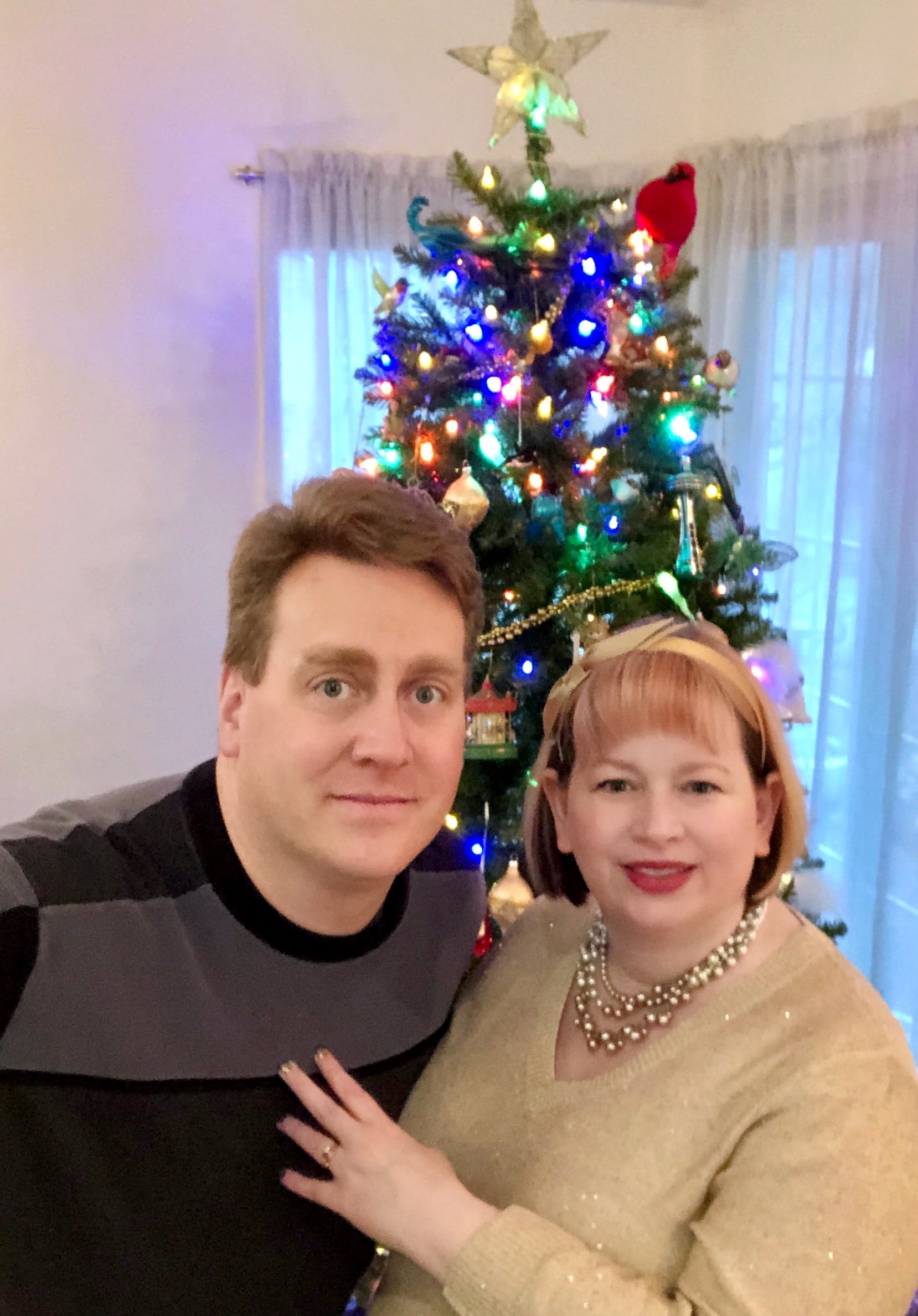
Glenn and I with our big Christmas tree
So, we watched all the holiday favorite movies and specials, decorated two trees (my new tradition of having a winter Snow Queen tree, and the regular one which is full of foxes and hedgehogs and peacocks) and tried not to eat at all the day after Thanksgiving—except Glenn did do a wine tasting! I even wrote a couple of poems.
I appreciate that I live in a beautiful place, with apples hanging off the leafless trees in November, where we can stop at three different places less than a mile away that offer parties and live music and wine tastings and gorgeous landscaping. I actually appreciated a quiet, no-stress holiday. I missed the hustle and bustle and company, but on the other hand, there are benefits, especially with MS, to taking it easy when you can, and trying to enjoy the little things.
-

- at Chateau Ste Michelle

-

- Glenn and I at Willows Lodge
-

- The Fireplace at Willows Lodge


Snow Queen Tree
What Are You Wishing For?
I am getting to the age where I think of the holidays with not as much anticipation as nostalgia. Do you remember when you used to make lists for Christmas, when you looked forward to that one toy or a pony or you wished to become a cat? (That last one was me.)
As adults, we wish for different kinds of things. Good health, good friends, world peace. The car and house not breaking down at important moments. It’s all quotidian. One of the good things about being a poet is the idea that we can still have our dreams come true – we might win that one book prize, the MacArthur Genius Grant, whatever. One of my dream journals sent me an acceptance and it was from one of my dream poetry people. I applied for one of those big things I always felt too insignificant to apply for and I am really trying not to get my hopes up (but if you want to send some good energy my way, you are welcome)! I just found out I had a poem from my newest manuscript – “Self-Portrait as Pretty Monster” – nominated for a Pushcart – thanks to Vince Gotera and Star*Line! I’ve been nominated for the Pushcart before, but again, I try not to be cynical – hey, it could be my year?
I try not to stress out about my health which is so up and down but I want to get these two poetry books out while I can still walk with a cane and think reasonably. MS is so unpredictable. I’m pretty proactive about trying to do the best for my health, but not everything’s under my control (a fact that makes me somewhat anxious as a person who likes to be in control of things). Poetry and Health – both are out of my control, actually. The health of myself or my husband or my loved ones – we don’t really get to control the timing of when bad things happen. We don’t control when good things happen, either. It’s enough to wish, I guess.
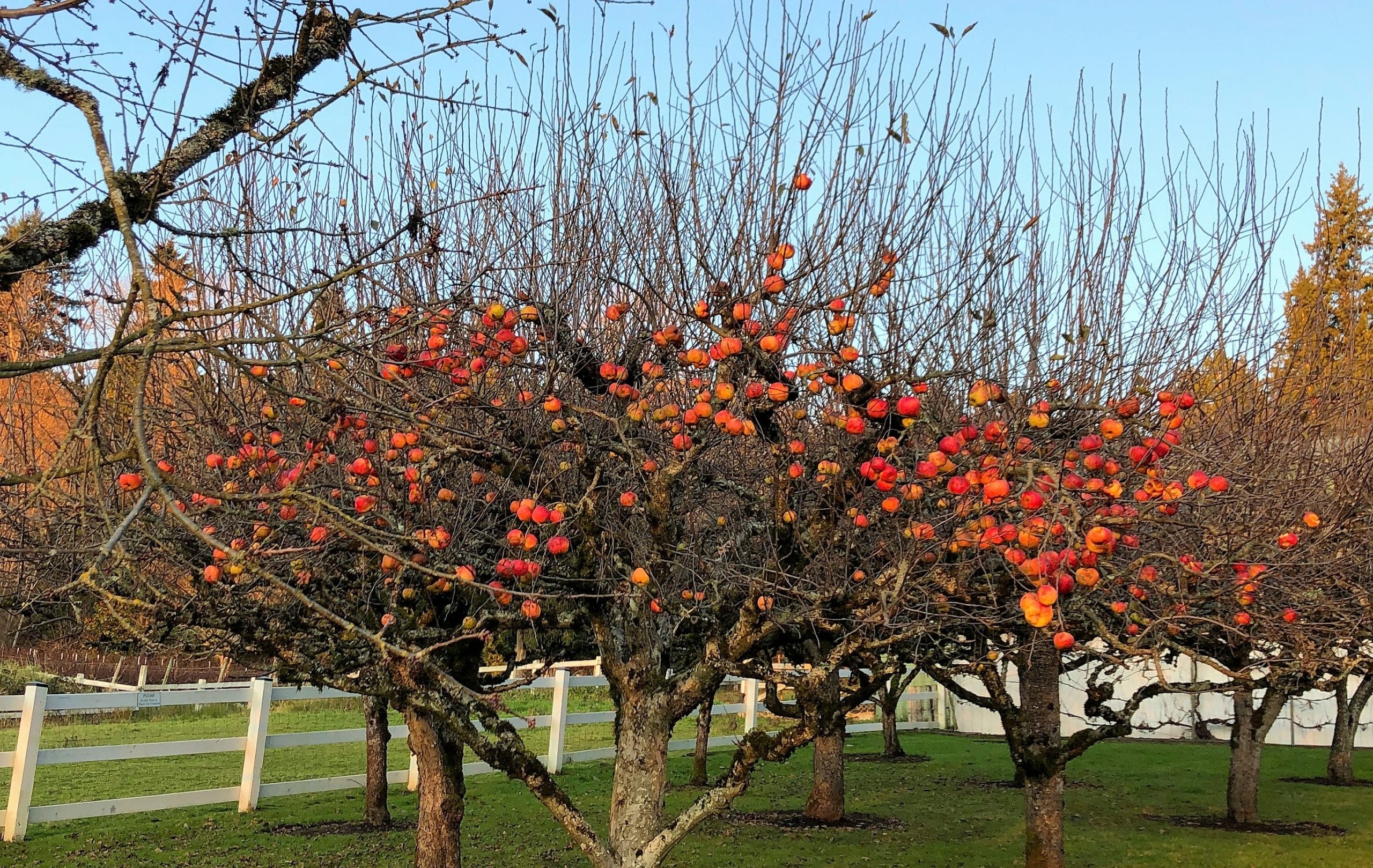
Apples on leafless trees
Welcome to December!
Winter seems to have arrived early here, frost on the porch early in the morning, frozen hummingbird feeders, and legitimately cold temperatures that require an honest-to-goodness sweater-and-coat combo. It seems like this year went too fast, didn’t it? I made up a collage of pictures of this year – AWP in Portland in March, my 25th Anniversary trip to Snoqualmie Falls and then the Oregon Coast, get-togethers with friends and family. Not as many adventures as I would have liked, but also slightly fewer hospital trips than the previous two years, too, thank goodness. We have one last month to make good memories in 2019.

Anna’s hummingbird
And what is on tap for next year, 2020? A new decade? New wishes, new dreams? Hummingbirds always seem like good luck, don’t they? I like the do some positive meditations this time of year – different than my more achievement-oriented New Year’s resolutions – about the things I’m hoping will happen in the year to come. I’m wishing you a happy December, wishing you light, peace, love, and as many books by the fireplace as you want.
—
Welcome to the Holidays, Mary Ruefle, Lizzo, and Another Round of Revision and Thinking of Poets and Charisma
- At November 23, 2019
- By Jeannine Gailey
- In Blog
- 3

Glenn and I among gold stars at Molbaks
Welcome to the Holidays!
Yes, I can’t believe it’s almost the end of 2019 already. Thanksgiving is almost upon us. This year we are spending it alone for the first time in years, and since I’m still recovering from a bad ankle sprain and a sinus/bronchitis thing, it’s just as well. We’ll spend the day in bed watching Thanksgiving shows and only making the foods we actually like.
The holidays can be stressful, so I like to find unconventional ways to celebrate. I love going to see the holiday lights at Bellevue Botanical Gardens, or imagining a winter snow queen themed Christmas tree. (Lots of owls, arctic foxes, and icicles?) I like trying new spins on regular recipes (gluten-free, of course.) This year, we’ve already done a practice run on pumpkin flan with maple caramel (thanks Ina Garten) and green beans and snap peas in a mustard vinaigrette, as well as a cornbread bread pudding with cranberries, apple, figs, chicken liver, and fennel. Poached pears have become a favorite breakfast item since the fall rolled in. Since I’m a little anemic this year (see: chicken liver,) I’m thinking of doing a drumstick only Thanksgiving (they have more iron than the breast.)
It can also be a great time to catch up on down time – music, movies and yes, reading and writing. What have you been putting off? For me, it’s another round of revision on my two circulating poetry book manuscripts, and I’m reading a book on writing memoir. I’ve also had a chance to listen to some new music and watch a few movies I missed in the theater.
Mary Ruefle is a Bad Kisser?
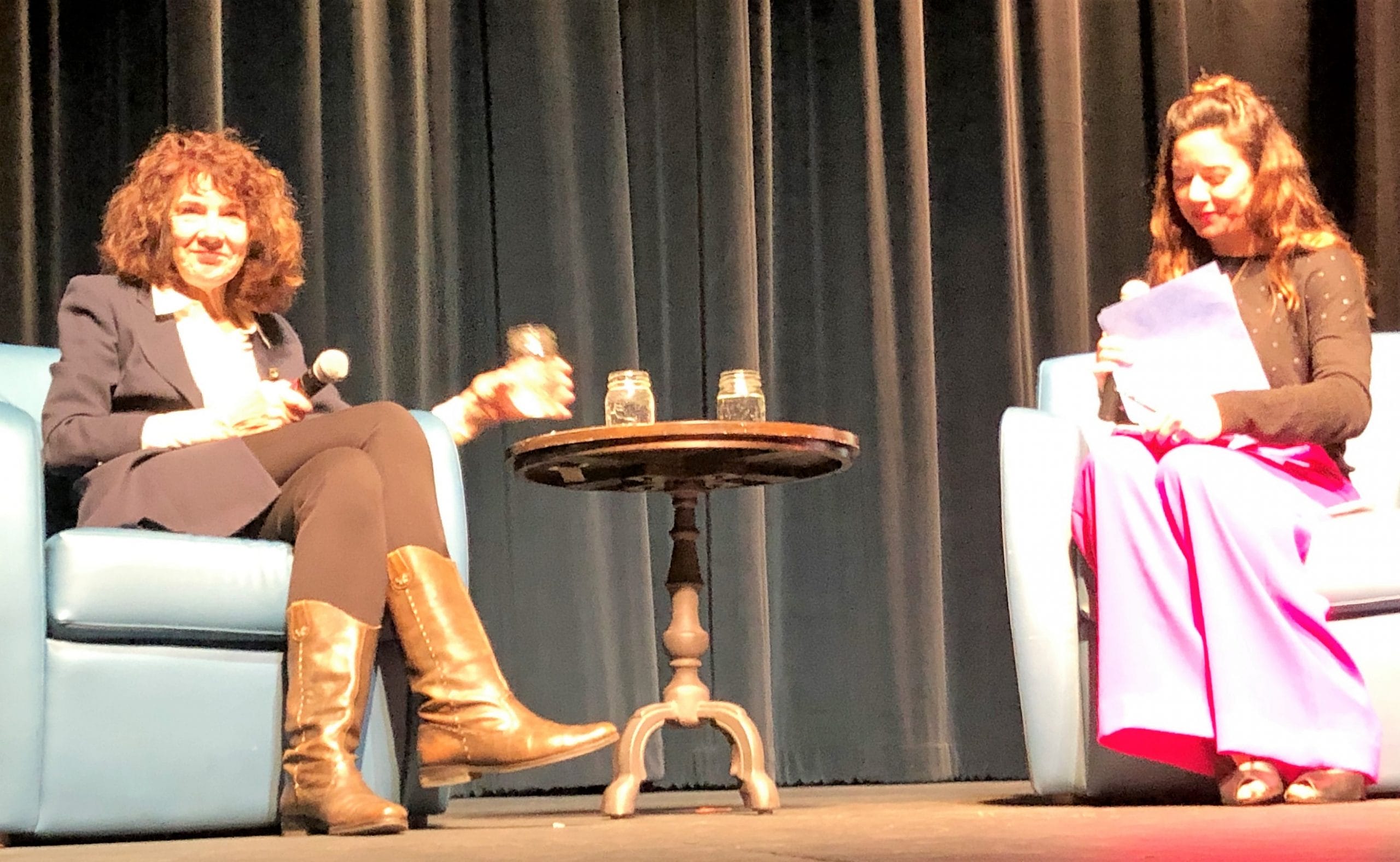
Mary Ruefle and Rebecca Hoogs, SAL
I got a chance to see Mary Ruefle read some poetry and prose and do a Q&A at SAL this week. Getting downtown was a nightmare, which reminded me why we don’t go downtown very often, and the building didn’t have any handicapped parking and was a million miles from any kind of parking, and getting to the hall the reading was in the required using an elevator that tried to kill me with crazed hard-slamming doors, but I was happy I made it. Mary Ruefle was very funny and I liked her prose work on friendship almost as much as I liked her poetry.
During the Q&A, someone asked her why she was a bad kisser (a reference to one of her poems.) She said “I find it boring. There are just so many better ways to spend your time. I’d much rather be reading and writing.” Well, there you go then.

Glenn and I pose at the candy shoppe theme at Molbaks
Music, Lizzo, and Movies
One thing that the downtime of the holidays allows is listening to some new music. I had heard Lizzo in the background of things – the radio, movies, commercials – but I had never taken the time to listen to her whole album or research anything about her. She got a degree in music, studying classical flute, after which she spent a year homeless, living out of her car. Eventually she got to work with Prince and made a lot of good impressions in the music industry, with her bubbly personality (charisma!) and such upbeat, pop-soul-funk songs. I love nearly every song on Cuz I Love You, her latest album, and recommend everyone listen to it every morning. It’s very empowering, amusing, and fun.
I’m also looking forward to seeing some movies I missed in the theater, like The Goldfinch and Downtown Abbey. I already watched Where’d You Go Bernadette in the theater, but the second viewing really drove home the strong relationship it depicted between a slightly “different” daughter and her anxious architect mother. In the theaters, Frozen 2 and the last Star Wars Rise of Skywalker are bound to be big hits. I’ll also keep my eye out for interesting art pics that often come out this time of year. I feel like I watch more movies between Thanksgiving and Christmas than I do the whole rest of the year – darkness and rain tend to encourage this, along with more reading and writing. (And maybe, more kissing. Hey, I’m no Mary Ruefle – I like kissing at least as much as reading and writing, I will admit.)

New (prescription) sunglasses with fall leaves, sun
Another Round of Revision
This shot of Glenn and I in sunlight is probably the last we’ll see of the sun – it was taken this week, and for the Thanksgiving holiday, we are looking forward to (brrr) snow! Glenn and I both realized that our prescriptions were seven years old (!) and needed to update our old frames as well. I wanted to have some fun with our glasses. Hey, did you know Seattle sells more sunglasses than almost any other city?
So, what do we do in the dark? Do we wallow in our rejections? No. We get moving on another project. In my case, it’s the decision to really tighten both manuscripts that are circulating right now, one about being diagnosed with cancer, then MS, and solar weather, and the other about politics, witches, feminism, and monsters. I really believe these two books represent the best work I’ve done thus far, but I’m getting lots of “close” responses but not a lot of “yes.” Usually this means I still need to write some poems, get rid of others, and streamline the manuscripts.
It’s tough to be looking at my sixth and seventh books, and still feel like I haven’t quite “made” it. Like I still need to reach a little bigger audience, land a little more prestigious (and promotion-and-distribution friendly) press, I joked on social media this week that I wish we, like fiction and non-fiction writers, could approach big-deal publishers with just an elevator pitch instead of a $30 check and a 6-12 month wait to hear whether we are winners or losers. The whole process is so debilitatingly depressing, dehumanizing, etc. I wish more of the big publishers would just read poetry book samples with no fee. FSG? Graywolf? Norton? I wish more poetry publishers would actually promote the books in their catalogue. I’ve got a lot of wishes…

Sylvia with PR for Poets
Poets and Charisma
I did have some little pieces of good news this week, including a personal note from Tracy K. Smith, one of my poetry heroes, and some other secret news I can’t share but was surprising. And I had a great bracing talk with another poet friend about shaping a poetry manuscript and how we think we need to unravel the story of the book versus what we really do need to reveal.
We also talked about selling 10,000 poetry books – a feat I mention in my book PR for Poets that at least three poets (all male) I’ve known have accomplished. All three of those poets had – not perfect looks, or a lot of insider connections – but amazing personal charisma. When you talk to them, you feel a burst of light, as if all their energy is focused on you for that moment. We discussed whether I knew any women who had sold that many books that had that kind of charisma. I think the first woman I thought of was Dorianne Laux – you can barely move through a crowd when Dorianne shows up. Everyone loves her. People’s poetry can reflect that inner personality but having personal charisma will never hurt your poetry sales at a reading, or in general. What woman poets (besides the Instapoets) do you think have “10,000” book charisma? I was thinking…Ada Limon, maybe? Carolyn Forche? Marie Howe? Tracy K. Smith?
One problem is that, unlike men, a lot of women with charisma get penalized as being “slutty” or “crazy” – I’ve heard male poets, especially, using these terms disparagingly about big name female poets, which is disappointing (and this conversation seems strangely, depressingly familiar to the one we’re having about Presidents – one poll said 50 percent (!) of men “felt uncomfortable” with any woman as President. Ugh.) To avoid this, a woman has to avoid being overly sexy, overly emotional, or even being perceived in those ways. Way more work for us than it should be.
Anyway, here’s to revision, finding a great poetry press home for our manuscripts, and becoming charismatic poets! Cozy up with a good book, maybe buy a few for your friends and family (ahem, see here and here,) and have a happy holiday!
Notes from November, How to Cheer Yourself Up and Stave Off SAD, and Surviving Being an Idiosyncratic Woman Writer
- At November 17, 2019
- By Jeannine Gailey
- In Blog
- 0
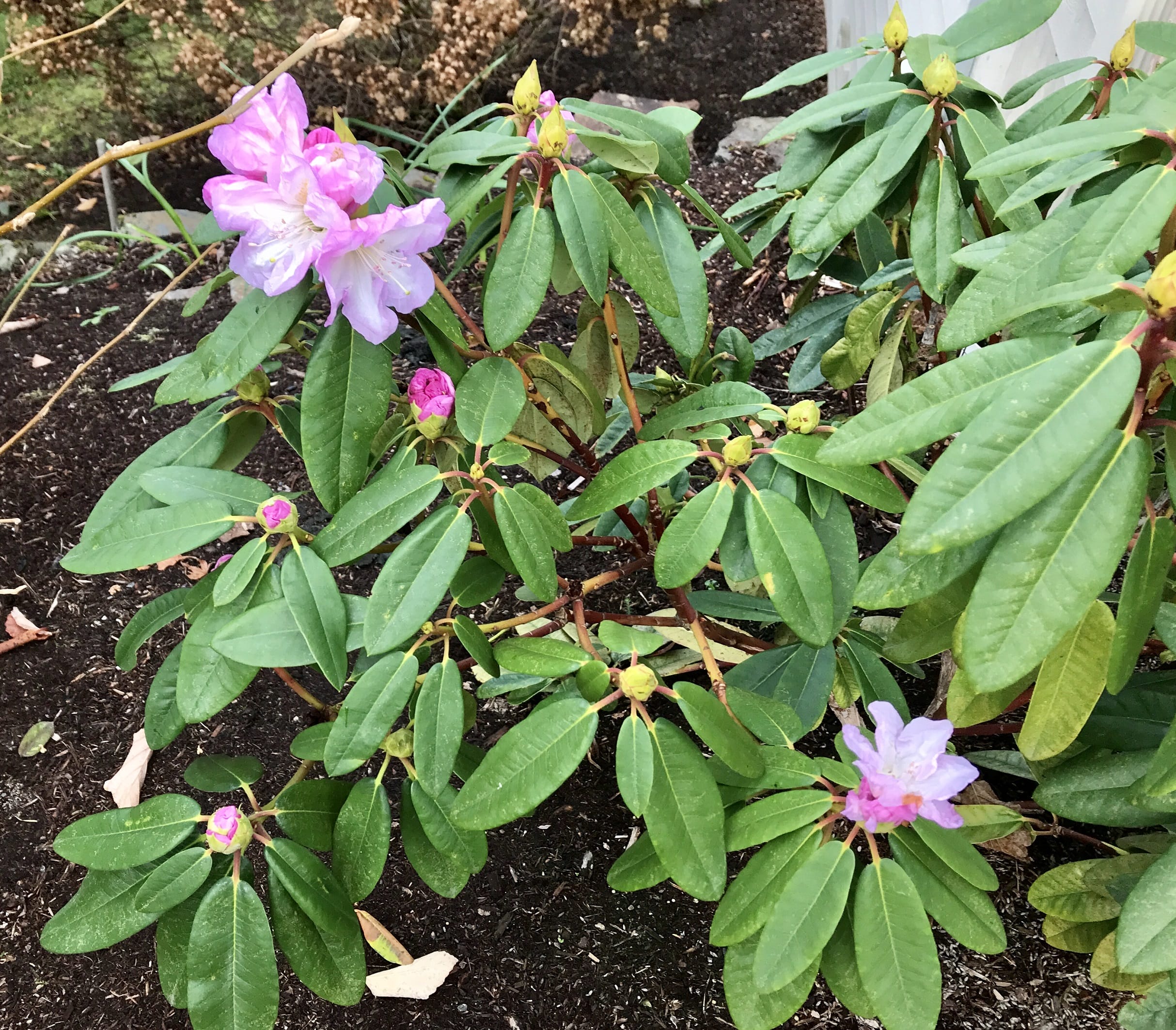
Pink Rhododendron Confusion in November
Notes from November – Confused Flowers, Impeachments, etc.
Hey everyone! How’s your November going? Me, I’ve been in the grip of an evil cough/sore throat/fever thing and a pretty bad sprained ankle, which has left me chilling at home with soup and tea when I’d rather be out and about, going to readings, visiting with friends, or, you know, anything besides being stuck at home with my foot up.
On the plus side, my pink rhododendron thinks it’s spring, despite several frosts proving the contrary. The season seems confused. We’ve had less rain this November than we did in September – but the month will still throw a surprise lightning or hail storm at you, and it’s easy to feel gloomy when it gets dark at 4 PM. Damn time change.

Mt Rainier sunset
This picture of the sun setting over Mt. Rainier in my neighborhood was taken right before 4 PM. I’ve been watching a little bit of the impeachment hearings every day – not hours of them, but little slivers. I realized this is the third impeachment of my lifetime – Nixon resigned about a year after I was born, the Clinton impeachment happened in my early twenties when I was too busy with work and school to notice it, so this is the first time I’ve really had the opportunity to pay attention to how the American system works. However, the whole process seems pretty depressing. Besides that I’m reading about Russian gulags in the book I’m reading on Cold War women spies – in the really fun (otherwise) tale of the birth of the book/movie Dr. Zhivago, The Secrets We Kept – it occurred to me that I am not doing enough to protect myself from the evils of seasonal depression (or writer depression, or MS-related depression.) All the magazines I’m reading right now are all about celebrating “Hygge” – the Danish idea of keeping yourself sane during the long winters by cultivating an atmosphere of coziness – and talk about how to cheer yourself up this time of year. There is a reason there are so many traditional holidays in almost all cultures at this time of year – drinking and eating and spending time and lights with loved ones can help keep you from feeling the blues.

Glenn and I clowning around at Molbaks
How to Cheer Yourself Up – A Guide to Avoiding SAD in Seattle
Just kidding, I don’t really have all the answers for this. I know it involves getting outside and getting fresh air whenever possible – a little harder when it’s cold and rainy and one is fighting off an evil germ and sprained ankle. I know that trying to eat nutritious seasonal food is part of it – poaching pearrs, making butternut squash soup, drinking hot chocolate and cider, etc. I’m going to a therapist monthly these days – it’s supposed to help the anxiety I’ve developed since the whole cancer/liver tumor/MS nightmare thing, and also keep me from constantly bombarding the people in my social circle with medical stories, and in general it’s recommended for people who feel depressed and anxious.

Glenn and I pose at Molbaks in their winter owl wonderland
I am including these pictures of another of my methods for cheering myself up – a trip to a brightly decorated for the holidays (these two tableaux – snowy arctic owl and patisserie – may not be traditional for the Christmas holidays, but they are really fun ideas) neighborhood gardening store called Molbaks and enjoying their displays. (I always come home with a new plant and a present for someone. This time it was poinsettias and ornaments for my mom.) It’s a wonderful source of inspiration during the gardening time of year – since I’m not really a Seattle native, I’m still learning what plants and trees grow well around here.
Another is watching Christmas episodes of my favorite comedies, like Community and 30 Rock, and enjoying holiday-themed movies. And reading books of poetry that make you feel happy – even if the poetry itself is kind of depressing – is a really good coping mechanism, in my opinion. Hygge is all about blankets and candles and eating (candy) and enjoying things like board games. Does it work? I don’t know. But it probably can’t hurt. Also cats. Snuggling floofy animals certainly can’t hurt.
On Being an Idiosyncratic Woman Writer
I posted a post on Facebook about coming to the realization, as I was doing poetry submissions of my poems and books, that perhaps my poetry is not going to be for everyone. Here’s what I wrote:
“Sometimes when I’m doing poetry submissions I get insight into why not everyone wants to publish my poetry: it’s funny, but in a dark way; the worldview is pretty depressing; it’s environmental, but not in a warm-and-fuzzy way, more in a mother-nature-is-a-scary-avenging angel way. It’s feminist, but also not in an easy, “dancing in a circle celebrating menses” way. I mean, I write love poems, but not a ton. Anyway, I recognize I’m not an easy, feel-good poet. I’m not a Netflix holiday romantic comedy. I get it. I’m the indie movie your film friend recommended and then you’re like “Why did she make me see that?” But still, I’ll probably try knocking at your door, poetry editors…”
When Sylvia Plath complained in her letters and journals about not getting publishing enough or not getting recognition, she doesn’t seem to realize her writing might be off-putting to the conservative patriarchal poetry world that was on the rise in her lifetime – her husband was being actively encouraged by T.S. Eliot for goodness’ sake, while she could barely get a mentor. Virginia Woolf, before Sylvia, suffered because she lacked getting enough critical attention for her ground-breaking fiction – but her style is just now being recognized as genius and ground-breaking. I just read in a British magazine that Daphne du Maurier – one of my favorite gothic fiction writers from my childhood – is regaining a reputation as a fine literary writer after years as being denigrated as a writer of trashy horror/romances and PhD students are newly studying her archives. I read an article about Margaret Atwood where she talked about self-publishing her first book of poetry and hand-selling it to bookstores; she didn’t write The Handmaid’s Tale, which shot her to fame, until she was in her forties – my age, in fact. I mean, my writer heroines – such as they are, a motley crew – have never really had an easy time of it, especially early, even if they had more success than I’ve had in my lifetime yet. So I’ve got to remember that my writer heroines struggled and suffered and continued to write and send out their work even in an unfriendly hour, at an unfriendly time. I will continue to write what I write and send it out into the world, hoping it will find its audience.
New Poems in Sycorax Review, November Gloom, and Waiting for Magic
- At November 07, 2019
- By Jeannine Gailey
- In Blog
- 2

November Sunset
November Gloom
Hello from the other side of the time change! We’ve been strangely dry and cold here in Seattle, with beautiful sunsets. November can be tough, as it tends to get dark here around 4 PM. We Seattle-types get out our cardigans and our coffee, and huddle up.
It’s a good time for writing and reading, and I’ve been reading the Cold War novel The Secrets We Kept, about three women involved with the story Dr. Zhivago, as well as some new poetry books. I’ve been listening to new music and watching old movies, a good combination for poetry writing.

Sylvia on Sylvia Plath
I was also remembering that I received my copy of Sylvia Plath’s complete letters on this day last year, and I’m finally finishing it! I tried to read the whole thing at once, but it’s a bit overwhelming for the mood, so I’ve been delving in bits. Sylvia the kitten is helping me finish the book, as you can see to the left. Sylvia’s letters remind me that the feeling of needing to “make it” by a certain age is a certain kind of tyranny. I wrote in my last post about her extreme anxiety about having an expiration date, about never meeting the standards she held herself to, of no amount of success being enough. And also her difficulties being taken seriously as a woman writer. She was ahead of her time, born too early for her to find her real audiences, but unable to settle in comfortably to a life she found frustrating and constricting. It was hard to “make it” as a woman poet then, and it still is today. How to stay vigilant against despair?

Red Leaves with statues at Bellevue Botanical Gardens
Two New Poems in Sycorax Review
One piece of good poetry news this month is that I had two poems published in the latest issue of Sycorax Review: “Self-Portrait as Magician” and “When She Goes Dark.” A big thank you to Sandi Leibowitz for including my work in the issue.
Here’s a sneak peek at the poem “Self-Portrait as Magician:”

from Sycorax Review
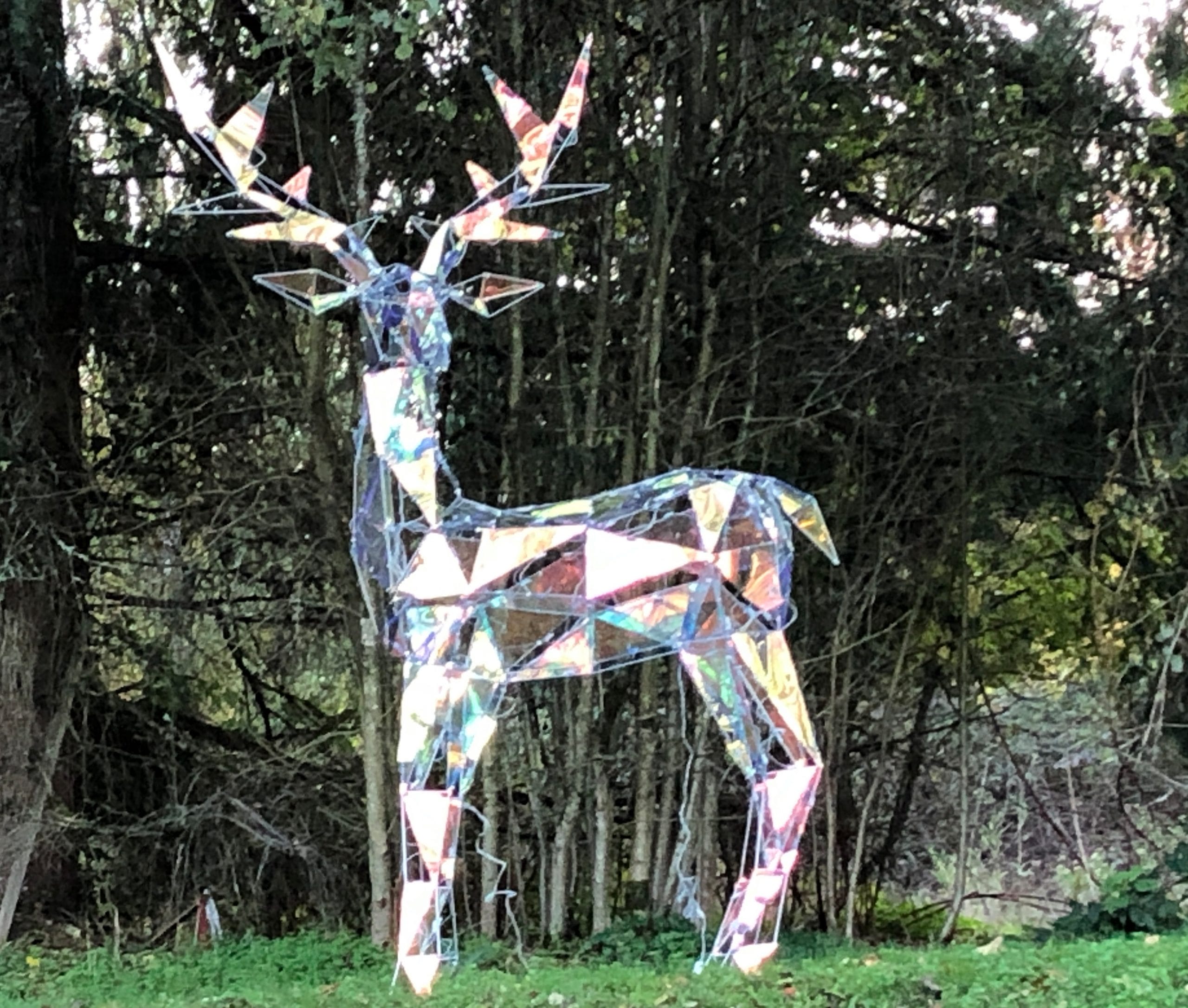
Mysterious deer, by daylight
Waiting for Magic
Despite the November gloom, and a persistent cold, I woke this morning feeling unaccountable optimistic. A few days ago, I twittered about being up late at night, watching my e-mails for unexpected good news. In some ways, we writers are all waiting for a little magic.
This mysterious deer figure showed up in the area around my neighborhood has week, and this week, I discovered its real function: it sparkles!
This reminded me of the magic we can find all around us if we just pay attention. Or, hope springs eternal, even in November.

Mysterious deer, at night
After a bit of a pause, I’ve started sending out my two book manuscripts again. I’ve been sort of picky about which publishers I’m sending it to so it’s been a slow process. It’s been almost exactly three years since my last poetry book came out, and I’m ready for the next one to be in the world again. I just need to find a publisher. It’s always hard, the sending out and the waiting, the months of fretting and alternating getting hopeful and depressed. You need a good support system to stay balanced, being a writer, especially being a poet, which few people in America take seriously and even fewer really values. Sylvia lacked this support system – she married an unreliable man, and moved away from family and friends. I’m lucky to have good friends and a terrific husband, in a city that’s no London but tries to, at least, make an effort to value art and poetry and music.
We’re heading towards the holidays. I heard Christmas music somewhere today and saw racks of food magazines specifically marketing pumpkin recipes. The holidays can be both utterly delightful and utterly depressing. The pressure! The obligations! The pumpkin recipes! (I actually like a good pumpkin recipe, but I’m still baffled by the number of magazines offering new takes on pumpkin recipes!)

Hummingbird on late roses
The hummingbirds have gotten very flutterly lately, in the cold, dancing around the last flowers and available hummingbird feeders. The hummingbirds stubbornly see out the cold season here and in a way we manage the same way. I am writing, editing, and sending out work trying to stay warm in a cold season, drinking cider and listening to my sad music and reading novels into the night (I have terrible insomnia during time-change season). What drives us to survive? To try to create beauty, or even just to notice beauty, in a world that often seems to try to trample it, or ignore it? We wait for magic. We might even create our own.
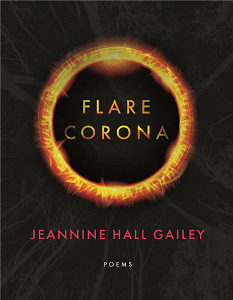
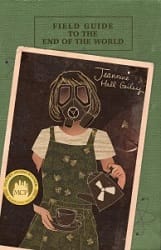
 Jeannine Hall Gailey served as the second Poet Laureate of Redmond, Washington and the author of Becoming the Villainess, She Returns to the Floating World, Unexplained Fevers, The Robot Scientist’s Daughter, and winner of the Moon City Press Book Prize and SFPA’s Elgin Award, Field Guide to the End of the World. Her latest, Flare, Corona from BOA Editions, was a finalist for the Washington State Book Award. She’s also the author of PR for Poets, a Guidebook to Publicity and Marketing. Her work has been featured on NPR’s The Writer’s Almanac, Verse Daily and The Year’s Best Fantasy and Horror. Her poems have appeared in The American Poetry Review, Poetry, and JAMA.