Upcoming Events – Pine Box and LitCrawl Seattle
- At October 02, 2014
- By Jeannine Gailey
- In Blog
 0
0

So, you think you’d like to see me read some poems in person? You’re in luck! I’ve got two big public readings in the next few weeks! As the weather gets darker and rainier, for some reason, we do more poetry readings! Right now, for instance, I’m off to an informal closing event for VALA’s Voices in the Corridor (5:30-7:30 PM at VALA in Redmond Town Center.)
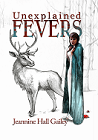
This Sunday, I’m reading with Seattle medical student Natasha Moni and San Francisco sensation Hollie Hardy at Seattle cool-spot bar The Pine Box at 7:30 PM. You can either call us “Poets on the Edge” or “Girls Who Stop Your Heart” (a little joke since Natasha’s new book is called The Cardiologist’s Daughter and Hollie’s is How to Take a Bullet, while mine is Unexplained Fevers.) More info here: http://www.pineboxbar.com/events#poetry.
Later in the month, I’ll be part of this year’s LitCrawl Seattle on October 23. I’m part of dueling poetry reading, Superheroes Versus Fairy Tales. Yes, I’m reading as part of the superheroes, but I could sneak in a fairy tale poem! I’ll be reading as part of the reading from 8:00 PM to 8:45 PM at the Project Room. Here’s the full lineup: Angela Jane Fountas, Jeannine Hall Gailey, Michael Schmeltzer, and Maya Sonenberg, with Evan J. Peterson. And, for the full schedule, see here: http://litcrawl.org/seattle/2014-schedule. There’s an after party directly after our reading at Hugo House that sounds like it will be fun, and you can also grab me and get me to sign (or sell you) a book!
Sneak Peek at The Robot Scientist’s Daughter front and back cover – with blurbs!
- At September 27, 2014
- By Jeannine Gailey
- In Blog
- 11
I spent a week recovering with the serum sickness brought on by the Xolair, but don’t worry, I haven’t been just lazing around! I’ve been working on the final copyedits of “The Robot Scientist’s Daughter” with Mayapple Editor Judith Kerman and we’ve been finalizing the cover, front and back. You can read the blurbs now, kindly given by Ilya Kaminsky, Denise Duhamel, Stephen Burt, and Aimee Nezhukumatathil. Would you like to take a peek? We’ll have the pre-order page up soon, but for now…

Update: Mayapple Press now has a pre-order page for The Robot Scientist’s Daughter, and special pricing for those who order early!
Believing the Fairy Tale – Jobs After the MFA
- At September 22, 2014
- By Jeannine Gailey
- In Blog
- 1
There have been a LOT of articles around lately about the difficulty of acquiring work after your MFA. As if those students needed more to panic about, what with student loan debt, record high unemployment rates, shrinking tenure job pools, etc. Here is a link to just one of them from the Chronicle of Higher Education: https://www.insidehighered.com/blogs/just-visiting/potential-mfa-students-there-are-no-academic-jobs
Here’s another one, at my local alternative paper, The Stranger, about making ends meet while studying – FYI, in case you’re wondering about my way to doing that, I spent my MA in full-time work as a manager at AT&T, and my MFA doing freelance tech writing: http://www.thestranger.com/seattle/how-i-supported-myself-while-getting-a-graduate-degree-in-poetry/Content?oid=20607991
So, I’m not telling MFA students (or recently graduated MFA-ers) to believe any fairy tales. Adjuncting does pay less than most fast food jobs, and you’ll work a lot harder – and those are, by some estimates, about 75 percent of the teaching work force at universities right now. One of my friends posted that the job pool for tenure-track jobs had shrunk so much since getting his pHd that he’s thinking of opening a food truck. That got me thinking: what are other jobs that MFA grads can get to pay off those student loans in a tight academic job market?
If you’re read my blog for any length of time, you know I’ve had a variety of jobs. I have a BS in biology, so I worked temp jobs in labs, for instance. I also ran a high-end perfume and makeup store for a while. I worked a dozen years as a technical writer and then as a tech writing manager, and also tried my hand at advertising copyediting, copywriting, PR, and various freelance-type gigs. I worked as an adjunct professor for MFA students for several years at National University. Freelance journalism, which I also did, is a shrinking field, which I kept in mind (and kept off the following list for that reason.) It used to be a good way to make a living for a writer, though!
So here are my suggestions, despairing MFA students!
–Go for the Mad Men approach. Advertising copywriting had to my one of my all-time favorite jobs. I lucked into a temp job copyediting at a cool slick Seattle advertising company, and they hired me as a part-time copywriter as soon as I had proven competent at writing as well as editing. This was fun work – I got to write about going on fancy train dinners, Microsoft stuff, some sports team rigamarole. I liked it, it paid well, the people I worked with were fun, and the company atmosphere was light and energetic.
–If you’re even a little geeky, consider technical writing. It is definitely where the money is. I made more money in this field than any other. I’m not a high-end coder, either, but I knew enough code to get by – a little XML, a little Visual Basic and ASP, a bunch of HTML. This kind of work will not only pay well, it is usually accompanied by excellent benefits. I loved working with smart programmers and engineers (my dad and my husband are both engineers, which attests to the fact that I get along quite well with that type) and I loved being paid well for relatively non-taxing work. Managing teams of tech writers, web designers and dev-types was a bit more strenuous, required a lot of hours and travel, so if you’re not up for that, be warned.
–If you’re an energetic cheerleader type, consider PR. I found it a bit exhausting (you can probably tell that by the way I write about trying to do PR for poetry books) but if you have the right personality type and a go-getting attitude, it can be fun work. You get invited out to drinks and parties a lot. You may or may not wind up with some cool swag. I’ll also just say here, apropos of nothing, a lot of the people in PR are young, very attractive and wear very short skirts. No judgement, just an observation. A newer version of this may be “social media consultant.” I’m not young enough to have had this job, and also, they may have a less-miniskirt oriented dress code.
–Teaching outside of the college arena. Some of my friends from my MA and MFA programs became high-school teachers. The ones that do it seem to love it, as the pay’s not terrible, they have a love of teaching kids, and they like having the summers off. Some of my friends are ESL teachers. They also really love the kids. Some of my friends took off for foreign countries to teach English overseas, which enabled them to visit some weird places and have lots of good stories to write later on. There are opportunities outside of slaving away for pennies as an adjunct, or fighting the fight for the several tenure track jobs that may or may not be pulled after they’ve collected several thousand CVs.
–Grant-writing. No personal experience with this one, but have several friends who have found this to pay well, be personally fulfilling, and use their writing skills! You can do this for non-profit foundations, which is nice if you have a “helping out the world” mentality!
So, you can point your spouse, parents, etc at this post when they ask what you’re going to do with a graduate English or creative writing degree. Of course, these are just a few of your possibilities; I also know English and CW grads who are programmers, engineers, doctors, life coaches, HR workers, nurses, chefs, and poet laureates of states.
Of course, I am still clinging to the dream: winning a Pulitzer prize, having several job offers of part-time low-residency MFA work, getting $10,000 a reading. Hey, it could happen. I still do believe in fairy tales, but I also believe in the bottom line. So don’t wait for the dream, prepare yourself while you’re still in school for a good job that uses your skill set!
This is my pumpkin coach. It’s my ticket out of here!
Serum Sickness, Good News and Bad News, When to Close the Screen
- At September 18, 2014
- By Jeannine Gailey
- In Blog
- 6
So, the last few days have been a bit of a daze, as I had a reaction – specifically, a kind of reaction called “serum sickness,” to the Xolair shot, which sounds wonderfully poetic, but you know, comes with things like a high fever, prickly rashes on your face that make you look like you dived head-first into poison ivy and some serious stomach aches and weird faint-yness. I was a little upset, seeing as how this shot was supposed to help the autoimmune problems, that I had an autoimmune type reaction to it, you know, sort of an ironic, terrible joke.
But then I thought about the things we let into our lives, our bodies, and the things we keep out. While I was woozy with antibiotics and steroids, I noticed the news being even more terrible than usual – terrorism and ebola and etc – and I thought – why is this always in our faces, this bad news, this terribly frightening and depressing set of things. But we can shut it off – we can turn the channel, close the internet explorer window, turn the radio off.
I mean, health care is sort of the same – it can be very frightening, like, weird reactions to weird shots, doctors want to run tests all of the time. But while we don’t necessarily have control over everything about our own bodies – I certainly find mine hilarious on occasion – we can take risks, but we can also shut down things we don’t want, add in things we do want. Even when I was in a wheelchair for a while a couple of years ago, we’d still go the zoo, go through the park, find the bluebirds hiding in the trees. Even when my diet shrank to about four foods, my husband Glenn tried to make the most of out of the limited ingredients. If we get sick – and I just got over a six week respiratory illness – we can stay in bed, and see it as a trial, or we can stay in bed, and see it as an opportunity to catch up on classic movies and novels. This is not Pollyanna-ing – it’s just that I’m frustrated with the bad news taking over the screen, including my own. I remember thinking while my fever was going up and up yesterday, that I felt resentful of the demands of the screen, the angry and resentful Facebook posts, e-mail, news stories. I thought – I have the power to turn these things off. This is one of those things you realize during high fevers – epiphanies like “Hey, I don’t have to respond to every e-mail or twitter the minute it comes in.” We can embrace the things we love, the people that make us happy, open the windows and let in fresh air, the changing seasons.
This is a set of sunflowers about five minutes from my doctor’s office.

Are you Burned Out? Or Just Tired?
- At September 14, 2014
- By Jeannine Gailey
- In Blog
- 0
Sometimes it’s hard to tell the difference between mental, emotional, and physical states, and I’ve found this to be particularly true of poets. If we let ourselves go too long without sleep, or we (ahem) have been suffering from some kind of upper respiratory crap for a month or so, or we’ve just been pushing ourselves too hard – book tour, caretaking, job responsibilities –it can be hard to find that call to send out your work, apply for a grant, or write anything that feels (key word, feels) worthwhile.
Fall – and September in particular – is usually my energetic, submitting-full, writing-y zone – but this year, I’ve just been staring blankly, evening after evening, at my Excel spreadsheet. I know that usually this time of year I’m excited to get back to sending out work. But – maybe do to the fact that coughing spasms have been waking me up in the middle of the night, several times a night, for oh, five weeks, sometimes requiring an inhaler – I just feel “blah” about the whole thing. And I haven’t been writing much really, either. Reading, I can handle – this summer I’ve caught up on all the fiction reading I didn’t do the rest of the year, plus some non-fiction.
Someone was telling me that there is an energy of fall around change, a decrease in sunlight, in the length of days, and sometimes, a fall in mood and energy, too. Change of seasons, change in mood, change of creativity, too.
I think a little self-care (appropriate bedtimes, good nutrition, maybe a vitamin – in my case, resting as per doctor’s orders) can go a long way towards determining whether you’re going through a temporary confluence of sleep-deprivation, energy lowering and maybe a lot of recent rejections, or whether you are seriously feeling burned out, in a way that means you need to look again at your reasons for writing and trying to publish, maybe try to talk to people that help encourage you, and give yourself a break for a little while. Like me, maybe you need some time to rest and read, give yourself space to breathe and not always “produce.” Diane Lockward has a good post about downtime, and discusses Louise Gluck’s discoveries about downtime in her recent P&W interview. (It’s worth it to go pick up a copy of Poets & Writers in print!) I’m also really enjoying a new book of essays by women writers over 50 called A Story Larger Than My Own, including pieces by Alicia Ostriker, Maxine Kumin, and Margaret Atwood. There was a great piece in there too about writerly ambition – like I was talking about a few weeks ago – by Linda Pastan.
Tomorrow I’m off to my “experimental” first shot of Xolair, to see if it will help the asthma/allergies/inflammation issues, without debilitating side effects, hopefully! Wish me luck!
Elgin Award Winners and Book Soundtracks
- At September 10, 2014
- By Jeannine Gailey
- In Blog
- 0
Hey, a little good news that I had to post – Unexplained Fevers won second place in this year’s Elgin Awards for full-length poetry books! Here’s a list of all the Elgin Award Winners: http://sfpoetry.com/el/14elgin.html
Thanks to all the Sci-Fi Poetry Association members who voted! (And for those of you who didn’t know, yes, there is such a thing as a sci-fi poetry association!)
And, thanks to Sharon Suzuki-Martinez for featuring me on her Poet’s Playlist Tumblr. This playlist is for The Robot Scientist’s Daughter…upcoming in 2015 from Mayapple Press. Check it out to find out my weird (and admittedly schizophrenic) listening preferences while I was writing the book!
Update: Thanks to Lesley Wheeler for her discussion on her blog of what was cut from her Eliot-Waste Land essay in this month’s Poetry Magazine, where she discusses poems by Daisy Fried and my own persona-poem-as-Vivienne-Eliot, “Her Nerves,” from Becoming the Villainess. In fact, there are a ton of Eliot-inspired poems in the book, as I started investigating Philomel, and Ovid’s Metamorphoses, because of “The Waste Land,” as well as the theory of the abject, Baudelaire, and Swinburne. Here’s the poem in its entirety:
Her Nerves
“My nerves are bad tonight. Yes, bad.” – T.S. Eliot, The Waste Land
I surrounded myself with the safe, with the sane.
“You know there’s a history of mental illness in my family.”
I devoted myself to botany, to mazes, to the infinitesimal.
I married you to challenge my inevitable end –
my human tranquilizer.
You like my “little poems” but
I scare you when I rock myself over and over
saying I dreamed I killed you again,
I dreamed you killed me again,
and you couldn’t stop the nightmares.
You liked it when I laughed at Plath,
sketched repeating uneven branches of starfish arms.
You are afraid–not just of me,
but what I see and hear that you don’t –
the crusts of blood, slippery dirt-gorged voices.
You like it when I curse creatively,
hate it when paper piles like excrement around me.
Afraid our sloppy physicality
will tear at your maintained monastic cubes,
our “Siren Song,” our red hair flaming into points.
You name our extremities as if decayed already,
the translucent hand,
the ankle frail as a twig.
The Poet Does an Art Walk – Some Poetry and Visual Art Collaboration News
- At September 08, 2014
- By Jeannine Gailey
- In Blog
- 0
All poetry book marketing talk and no fun make this blog too dull, right? So, onto a post on art for poets!
First of all, speaking of poet and artist collaborations: If you live in Redmond, be sure to come by this Friday afternoon between 5:30 and 7 PM for the VALA Voices in the Corridor Reception. Besides seeing some fantastic local art which interprets what “home” means in the Redmond corridor, I’ll be reading a bit of Redmond-oriented poetry, there will be music, and also a yoga demo. Read more about it here. This is the culmination of six months of poet (Kelly Davio and myself) and artists Jacqui Calladine, Jessica Lambert, Anna Macrae and Flora Ramirez Bustamante collaborating on this project, which is supposed to reflect the “voices” in the Redmond area.
So, I met up with some terrific artists in Pioneer Square this week (Mary Coss and Carol Milne) about doing a collaborative art-poetry piece for a January exhibition at METHOD. It was an inspiring time and both artists were full of fun ideas. (Can’t wait to see what Carol comes up with!)
Afterwards it happened to be the once-a-month Pioneer Square art walk. I’ve been on and off sick for the last month, so I had a lot of pent-up art energy built up! We must have visited at least twenty galleries. For an idea of what we saw, let me include a few images…
The image at the top of the post is Paul McKee’s new show at the METHOD Gallery. Terrific, right? I told him this is how I’d decorate my house…
Next, I fell in love with the work of Justin Gibbens, whose show at the Punch Gallery demonstrated his love of traditional Japanese art and training as a scientific illustrator. Here’s one of my favorites, “Egret as Berunda:”
Next, a trip to Roq la Rue, where the work of Casey Weldon and Femke Hemstra were featured. Roq la Rue never disappoints!
It’s a reminder that there are so many talented artists out there, each piece a wonderful inspiration for writing! I’m excited for my next artist collaboration – my first with a glass artist – and to work with METHOD, that gallery was so funky-gothic-cool and right in my art-wheelhouse.
A Writer’s Ambition – What Kind Do You Have?
- At September 05, 2014
- By Jeannine Gailey
- In Blog
- 3
A Writer’s Ambition – What Kind Do You Have?
This is a fair question to ask yourself, and me, after two straight posts about book promotion and sales. Why even write about book sales and promotion? Why is that a worthwhile thing for an artist to think about? What kind of ambition do you have for yourself and you writing?
There is no right answer. You can write for the joy of it, and then never publish anything. You can try to write the best work you can, and never show it to anyone, or only show it to a few, or secretly collect it in your desk. You can try to write the best work you can, work your butt off to publish and get your work seen by as many readers as possible. You can write and try to make it on the slam scene. You can try to write for a commercial audience (although, frankly, there’s not much of a commercial audience for poetry – your Billy Collins poems – easy to understand, funny, sort of self-congratulatory – and your Mary Oliver poems – accessible, vaguely spiritual, every one designed to leave the reader mildly uplifted – notwithstanding). You can write and try to sell as many books as possible, or you can write and try to get critical acclaim for your book – these are usually two distinct types of ambition, although you can try to do both. You can write for an audience of one – yourself – or an audience of millions (if you’re very lucky).
I’ve been thinking about this, about why I write, what I want from the experience, what I want to accomplish with each particular book. I have to confess that I feel like a failure if I don’t sell a particular number of books, if I don’t get the right reviews in the right places, if I don’t win any prizes. Of course many writers go through these same throes, one-part thwarted ambition, one-part dented ego and ragged insecurity. I want each of my books to reach as big an audience as possible – maybe as big as I can without, you know, betraying myself, any integrity I have and my own artistic goals – and part of this means I have a willingness to do what I can to help launch each book into the world in the best way I know. (See the last two posts.)
But even more than book sales, I’d really like to know that the book meant something to people – critics, yes, that’s fantastic, especially smart critics who read your book really intelligently and empathetically – but also, high school and college kids, people in other countries, people I don’t know. I have the demented hope that perhaps each book might live a life beyond me, a life longer than mine.
So whatever ambitions you have for yourselves and your writing, I say, go for it. Life is short and uncertain and you kind of have to go after what you love, what you, at the end of the day, really care about. The writer’s life is usually cobbled together from a series of gigs – teaching, freelance writing, copyediting, insurance company Vice President, doctor – and whatever spare time and energy a person can afford to give. If you’re going to spend time writing, write the best work you can, and then give it your best effort to launch, in whatever way you’re most passionate about. Books, tumblr, twitter, slams – you can deliver your poetry in many ways, to many audiences.
The Magic Formula for Poetry Book Sales
- At September 01, 2014
- By Jeannine Gailey
- In Blog
- 2
The Magic Formula for Poetry Book Sales
So, after the somewhat discouraging information in the last blog post, let’s talk about something slightly more positive – the magic formula for poetry book sales!
And a quick apology – it turns out the “contact” and book purchase forms on my web site have not been working for about four months and because of that, I’ve missed some requests, orders and feedback. For now, there are Paypal links to buy signed copies of my books to replace the forms, and if you need to get in touch with me about anything, just contact me at jeannine dot gailey at live dot com. I hope to have the forms back and working sometime soon. Sorry for the inconvenience!
And, you ask, is there, in fact, a magic formula to selling poetry books? Does it have to do with cults of personality, quality of the book, and how much does the publisher have to do with it? What the hell is a platform? Well, I’ll posit that for a book to succeed, sales-wise, you have to have at least two of the following:
–A publisher with a PR presence and good distribution. I love indie, one-or-two person publisher teams, I do. They have pluck, they care about the work, and they’re lovely to work with, in my experience. But great distribution helps sell books, because if a bookstore can’t order your book for whatever reason, it can’t sell your book, unless it takes consignment, and who has the time going around the country to bookstores consigning your own copies of your books? That’s right, no one. If your publisher can’t get your books on Amazon, whatever you think about Amazon, that’s going to mean lost sales. If your publisher doesn’t have an easy way to purchase books from their web site, that’s going to mean lost sales. Anyway, even in these days of dwindling bookstores, distribution matters. So, look for your publisher’s distribution channels: Ingram, SPD, and Consortium, in that order. Also, does your publisher have a social media presence? Someone dedicated to PR work? After you get an offer on your book, ask about how they plan to help promote it. This only makes sense, as it benefits both parties to sell the most possible copies.
–There are three poets I know personally that have sold over 10,000 books. All three of them, though they are fairly diverse individuals, have a couple of things in common. They each radiate good energy, a kind of open charisma that leaves people, if not slightly in love with them, then at least like they’ve had a nice warm hug. They’re not necessarily better looking than the rest of us, they just have a sense of genuinely caring about you, the other person. If you’ve never met anyone like that, I’m sorry. I don’t think I personally have this kind of charisma, but I think it’s a big plus for book sales.
–Yes, a platform helps. One of my poet friends sold a lot of books at, of all things, medical conferences, where he gave talks about writing in the context of his medical practice. That’s not the kind of thing everyone thinks they have access to, but if you think about it, we all kind of have a space where we’re an expert, a part of a larger community. I have a couple of poetry friends who have had good luck selling their books, for instance, at places like WonderCon. Platforms can come in a lot of shapes and sizes – your job, your hobbies, and even your alumni associations can all be resources for building your audience.
–You were probably going to guess this one LUCK and BUZZ. Luck is: Someone hears your poem on the radio, which you happened to be on because you were in the right place at the right time, and writes your book up in a major newspaper. Someone sees you read and decides to give you two-book contact at Norton or FSG. Your book wins a major award it was a long-shot for. Somehow, you get the all-important BUZZ going, and people are reviewing your book, teaching your book, and buying your book. Hooray! You’ve won Candyland! I mean, Poetryland! Now go do something nice for other writers to balance your karma.
Some of these things are not in our control, and some are. How hard you work to put yourself in the places where you might catch “luck” and “buzz” is up to you, because not every effort is going to result in a book contract, prize, or sales. Working with small indie publishers, as I have, means your book may not have the reach that you hoped for, but working with big publishers can be tough as well (or so I’ve heard) and of course they’re a teensy bit harder to attract the attention of. (They don’t need poetry to boost their company’s sales, let’s just say that.) You can’t really change your whole personality in order to sell a book. But I wanted to give some examples so you didn’t think literally no one sells poetry books – I mean, it does happen from time to time, under the right circumstances, given the right phase of the moon, etc.
Next time I’ll talk a little about ambitions for our poetry, and what they mean for our sales. There are all different types of ambitions, and they are all valid and valuable…and success doesn’t just mean book sales. It can mean a lot of things.
What’s Expected of a Poet? About Poetry Book Promotion, what kind of sales numbers to expect, and how much promo is enough?
- At August 28, 2014
- By Jeannine Gailey
- In Blog
- 9
On Facebook today, Rattle editor and poet Tim Green posted the following:
“In five years, Red Hen Press has sold 105 copies of my book. This doesn’t include my own copies that I’ve sold at readings, around 200, but still—105 copies, despite the fact that it’s a fairly good book, and that I have a fairly large “platform” within the poetry community. More people will read this Facebook post in the next 20 minutes than will have read that book. This is why I don’t get all that jazzed about publishing anymore.
To put it another way: When I think about having published a book, my primary emotion is guilt.”
I’m writing this post as I think there is a big bunch of poets out there who feel exactly like Tim. What, exactly, are reasonable sales expectations for a poetry book? What kind of promotion can your publisher reasonably expect you to do, and what is up to the publisher? What kinds of things are out of the author’s hands totally? I’m going to go into what we can and can’t do, and get really honest about my own experiences.
I hope I am not shocking and crushing any new poet’s dreams here, but Tim’s number, around 300 total sales over five years, is fairly normal for poetry book sales. It’s rare for a poetry book to break 1,000 copies, rarer still to get to 10,000, and only people who win the gigantic prizes and former Poet Laureates make it higher than that. Your Mary Olivers, your Billy Collins, and this month’s Poets & Writers poster lady poet, Louise Gluck, they sell poetry books in numbers that make a profit for non-POD printing runs. The rest of us? Well, it’s more normal to struggle than not to struggle.
As I’m gearing up to promote my 4th (!!) book, I’m wondering about what I’ve learned, how I can apply that, and what is the smartest, least expensive in terms of time, energy, and money path for promoting poetry? (I’ve also got an essay on this very topic in the new 2015 Poet’s Market, if I can shill a bit within an article about shilling…) I’m thinking every book has had different successes. My bestselling book, in case you’re curious, is still my first one – not sure why, if it’s more accessible, closer to the zeitgeist, whatever. All three of my publishers have been small, independent presses without a PR department or much funding for things like ads, tours, etc. I think that’s probably the norm for most poets.
So think in advance about what you’re willing to do, what you can afford to do (traveling for readings can get expensive in a hurry, even if you’re lucky enough to snag a few paid readings), and how much energy you have and for how long you plan to promote your book. I noticed that last year, for instance, was the first year for Unexplained Fevers, and the seventh year for Becoming the Villainess, and Becoming the Villainess still outsold Unexplained Fevers, even though I was actively promoting the new book. There’s something “momentum”-y about poetry book sales, once it starts taking off it starts to have its own life. That’s what you want, FYI, that’s what we get when we’re lucky.
If you teach, if you’re an editor, you may have a better “platform” from which to sell books. But it’s not an automatic thing, you still have to send out your e-mail announcements to your e-mail lists, send out your postcards, go sell books at AWP, set up your readings where you’re pretty sure you have an audience like your hometown, etc. You don’t control the critical reception for your book, either, although you can help send out review copies yourself to interested reviewers, or make sure you provide your publisher a list of likely review places. You may not be able to afford – especially in this economy – a cross-country reading tour. The last two books, I sure couldn’t! But the good news is, maybe now, those things aren’t necessary. Maybe social media and online ads are replacing some of the old-fashioned promotion techniques. I don’t know!
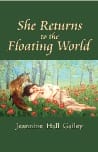
And the bad thing is, the thing that can create the kind of angst Tim talked about, is that no one ever really tells you, “This is enough. You’ve done enough.” Even poets with successful books (or that I consider pretty darn successful) feel that pressure. When do you give yourself a break? In my case, with my second book for instance, She Returns to the Floating World, I was very ill for the main time I should have been promoting the book, like, in the hospital a lot sick, and my publisher, a very sweet and smart woman, also got sick, and passed away very soon after the book came out. It wasn’t my top priority, and it couldn’t be hers, either, quite rightly. So even though I loved that book, and I loved my publisher, I just wasn’t able to do what was necessary to make the book really hit. I feel like I’m still working to get the word out about Unexplained Fevers. I don’t feel like I’ve done enough for that book yet.
I’d love to hear about your experiences and your advice on poetry book sales, promotion, and general feelings of guilt about not doing enough. I was reminded that once, publishers had PR people, they funded tours, they bought ads in big magazines. Now, only the few and far between can afford to do that, and they only do it for a few of their books. So a lot more comes back on us, the writers.
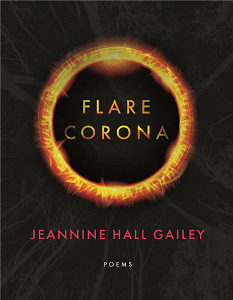
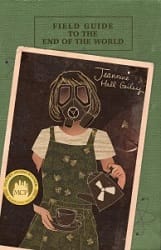
 Jeannine Hall Gailey served as the second Poet Laureate of Redmond, Washington and the author of Becoming the Villainess, She Returns to the Floating World, Unexplained Fevers, The Robot Scientist’s Daughter, and winner of the Moon City Press Book Prize and SFPA’s Elgin Award, Field Guide to the End of the World. Her latest, Flare, Corona from BOA Editions, was a finalist for the Washington State Book Award. She’s also the author of PR for Poets, a Guidebook to Publicity and Marketing. Her work has been featured on NPR’s The Writer’s Almanac, Verse Daily and The Year’s Best Fantasy and Horror. Her poems have appeared in The American Poetry Review, Poetry, and JAMA.