Skagit River Poetry Festival – Where I’ll Be
- At May 15, 2014
- By Jeannine Gailey
- In Blog
 0
0

Off to the Skagit River Poetry Festival in La Conner, WA, on a beautiful sunny afternoon in the Pacific Northwest.
If you want to see me there, you can catch me at:
–Saturday – 1:30-3:00 Festival of Poets reading
–Saturday 3:30- 4:45 Phyllis L. Ennes Poets reading
and I’ll be otherwise hanging around causing mischief! (Doing a high school student panel on grief and healing Friday morning that I hope will be helpful too, so wish me luck on that! And staying healthy for three whole days!)
The tulips won’t be up anymore, but we might get a peek at some iris fields…Hope to see some of you there!

Wisteria, New Genres, Skagit Poetry Festival, Mulling Medical Results
- At May 13, 2014
- By Jeannine Gailey
- In Blog
- 1
 Starting out a post with a picture of blooming wisteria from Seattle’s Japanese garden. It’s been a thoughtful couple of days as I’ve processed the MRI results (the good news – it doesn’t look like MS, and the lesions haven’t spread. The bad news – it looks like an autoimmune disease is attacking my white matter. Which means back to more autoimmune tests…) I’m thinking about just taking a break from tests for a while. You can only take so much testing at a time. (On the plus side, I have a surprisingly healthy spine for a forty-one year old!) The other thing I know for a fact from my twenty years of experience with autoimmune problems: autoimmune problems are made worse by stress, and taking it easy on myself – resting, spending time in nature, eating right, being happy – sometimes causes intractable symptoms to ease up. Hence, the trip to the gardens.
It also made me think about writing some creative non-fiction about all the medical experiences I’ve had, kind of giving them a narrative and an order and a way of weaving them together with my life story to make a memoir-y sort of thing. I’ve read a bunch of medical memoirs (including, most recently, Siri Hustvedt’s The Shaking Woman, which was curiously unsatisfying, as she spends most of the book (spoiler alert!) convinced her seizures are due to, of all things, a kind of hysteria, and it takes until the last chapter for her to go to the neurologist and get her MRI, which reveals nothing.) It’s challenging to tackle a new genre, but you don’t find out what you can do until you try to do it, right? I’ve written a few short stories, so creative non-fiction short pieces can’t be too far behind…
I’m also gearing up for the Skagit River Poetry Festival, starting this Thursday evening and going through Sunday, where I’ll be talking on two panels. It’s a very laid-back poetry event, generally, in the charming small town of LaConner, WA, with lots of nice poet types. I have my handouts ready and books packed up. I’m looking at some bright sides: I’m not in a wheelchair, or even walking with a cane, right now, so the festival should be a little easier for me physically than this type of thing has been in the previous five years. And any three days dedicated to poetry and poets has got to be fun, right?
Leaving you with this peaceful image, another from the Japanese garden:
A New Review of Unexplained Fevers, MRIs, and a new favorite author – Siri Hustvedt
- At May 06, 2014
- By Jeannine Gailey
- In Blog
- 1
Thanks to Julie Brooks Barbour and Barn Owl Review for this excellent new review of Unexplained Fevers: http://www.barnowlreview.com/reviews/gaileyfevers.html.
I have to say, I am grateful for each and every review, because as a reviewer, I know how much time and energy goes into each one. And I’m grateful to journals that still publish reviews!
Had my two-hour brain and spine MRI on Saturday; the tube shook during parts of it, and then the floor of the tube heated up. I asked the tech about it, and she said “Sometimes the coils overheat when we do the whole spine.” Aha! Good to know. Well, that didn’t make my fear of MRIs any better. But now it is done, at least hopefully, for a whole year. I find out my results on Thursday, (more neural lesions or spine lesions would be bad news, anything else is basically good news) but I’ve already been able to look at my MRI on my computer, you can see the outlines of veins and muscles and bones. It’s quite fascinating.
I’ve been reading a book, The Blazing World: A Novel , that has quite taken my breath away, in the manner of a classic A.S. Byatt or Margaret Atwood, all about feminism, female artists in the art world, art world biases towards the young and male, art world hoaxes, phonies, and masks – a faux anthology with different POVs – an academic art critic, the artist’s children and boyfriends, a professor of aesthetics, and the artist’s own hyperbolic (?) journals – and it manages to do everything with a subtle undertone of irony, making direct observations that ring so true to me as a middle-aged female writer but refusing to take away any of the layers around sexism and agism – did the main character, an artist who finds fame after her death, merely take herself out of the game too soon in her mid-fifties, before resorting to her male masks? Did she refuse to step into the limelight because of her father, husband, children? Is she, in fact, the hysterical monster that so many art critics assumed her to be? It’s been a long time since I’ve encountered as complex, unlikable, and intelligent a female character as Harriet Burden in any book at all, but I especially love that the character is so closely aligned the prototype of just my kind of female writer – ambitious, misunderstood, prone to sympathizing with Frankenstein. I fell in love even more with the author when I picked up her memoir, The Shaking Woman or A History of My Nerves,
  about the author’s sudden and disturbing onset of neurological symptoms in middle age. Yes, I would like to have tea with Siri Hustvedt very much. Except her name makes my dyslexia nervous.
After visiting with my oldest brother last week, I was thinking about the things we think make us unique, the things that color our vision. My brother and I are both dyslexic and partially color-blind, for instance, and I wonder about what sorts of colors we’re not seeing. (He jokes that he’s “gray/gray” color blind, a great joke!) For years I wore blue and purple together, thinking they matched, and I’ve never been able to write down a phone number correctly, or a credit card number. My bones and joints are hyperflexible, my collarbone popping in and out of joint at the slightest provocation these days. How, now, with my knowledge about my newly dysfunctional brain – a motor skill dropped here, maybe the ability to read music there – do I proceed? Will I remain myself if I lose my memories, my abilities? This should, after all, be inspiring me to write more – but instead, I remain quiet, waiting, listening. Perhaps I am shoring things up, keeping them to myself, watching them to see if they are changing.
Waterfalls, Recovering from Family Visits, Hot Weather, and Rejection Manifestos
- At May 01, 2014
- By Jeannine Gailey
- In Blog
- 0
Well, that’s it – I’m another year older, my oldest brother and sister-in-law are back home in Tennessee, and we are recovering from the visit – you know, laundry, grocery shopping, sleep – and reveling in the unexpectedly warm weather. Yesterday it was 80; today it was 88. It’s a great time to visit a waterfall – that’s what we did for my birthday, visit Snoqualmie Falls and Ollalie State Park, home to a smaller but still forested and beautiful waterfall. The drive up always makes me feel at home – driving into the snow-covered faces of mountains dotted with pine trees, the roar of the water, the blooming azaleas, rhododendrons and dogwood along the side of the road. (My brother still lives in Tennessee, where I grew up – and he said this waterfall visit was his favorite thing he did the whole eight days he was here. It made him feel at home!) There are the falls, and Salish Lodge in the background (you may recognize it from the credits of Twin Peaks!)

Poetry month is over, my birthday is over, and now I can breathe a sigh of relief and relax, at least until the Skagit Valley Poetry Festival in a couple of weeks! So what to do with this nice bit of downtime? Michael Schmeltzer, friend and editor of River & Sound Review, has a rejection manifesto here. Since rejection is a big part of being a writer (at least, being a published writer) I think it’s worth talking about. Especially when you first start out, it can be really discouraging when you get, say, seventeen rejections for every one acceptance. But the truth is, it happens to everyone. And remember: encouraging rejections, with comments or asking you to send again, mean you should actually send again. (Something I didn’t do when I was starting out.) You can read more of my thoughts on rejection here.
On my birthday, I got a couple of phone calls from friends and family, my brother took us out to a cool Puerto Rican restaurant/dive bar (or the closest thing to a cool dive bar in Redmond) called La Isla, and I sold one book and got invited to be on an AWP panel. All in all, not a bad way to turn a year older! Birthdays! They always make me wonder about what I’m doing, where I’m going, all that existential crap. I don’t have it all figured out yet, which can be frustrating. But maybe I’m on a good path. I hope so.
Writer’s Digest Poem-a-Day Challenge Judge Today – and Playing Tourist at Pike Place Market
- At April 27, 2014
- By Jeannine Gailey
- In Blog
- 0
Today is April 27, which is the day you can go post a poem at the Poetic Asides blog for their PAD challenge and I get to read the poems as the day’s judge! I’m very excited about the project. Check it out here! They have a poetry prompt for the day as well, in case you need it, and it’s very appropriate…Write a monster poem! Dragons, zombies, vampires…my kind of poetry! Here’s my own “Zombie Stripper Clones”-inspired poem, “They Are Not Regenerating:”
They Are Not Regenerating
We are not zombies, thrown into a pool
of dubious origin and coming back beautiful
but decaying
unsure of how to live – pretending to swim,
eat yogurt like regular girls.
We are not clones, despite being drawn to specifications
(36-26-36) and bearing bouffants and bikinis
we might hack each other to pieces
but we are not confused about our identities
(living or not living) we continue
in this shape we were given
our cells cannot regenerate and the scientist
names us “Dead.”
We are not regenerating we cannot reproduce ourselves we cannot be anything
but the fulfillment of your fantasy, flesh-eating or not.
It’s two days from my birthday as well (a birthday this year I’m not anxious to celebrate for some reason.) I’ve had continuous hosting problems eating up all my spare time, which is a drag; on the non-drag side, I’ve had my brother and his wife visiting. Yesterday was a sunny 55-degree spring day and we went around Pike Place market, which I guess I hadn’t visited in a while, because I didn’t remember there being a giant Ferris wheel there…when did they put that up? And I swear there were new vendors, although all my old reliable favorites – the sweet white-haired beekeeping honey lady, the Hmong grandmothers with their spectacular bouquets, the delicious hazelnuts, fruit stand vendors enthusiastically gathering up sweet snap peas and giant Washington apples – were there too. Anyway, having family visit always makes you re-examine your home with new eyes. Yes, I guess it is beautiful here. It’s good to remember. (Below: at Pike Place market with my brother, sister-in-law, some flowers, and a statue of a pig for some reason…)

Happy Poem-a-Day-ing!
It’s National Poetry Month – Do You Know Where Your Poems Are?
- At April 22, 2014
- By Jeannine Gailey
- In Blog
- 3
I admit I’m doing a bit of catching up – my host was down for a few days due to server issues, so I’ve been setting up a new hosting system, I lost a couple of days to just resting after the tulip adventure (detailed in the last post) and I’m also getting ready to host family, so I’ve been cleaning and setting up. And where is the poetry in all of that? Good question! I’ve written a few poems, but nowhere near a poem a day. How about you?
Speaking of poems a day, I’m going to be a guest judge for the April 27 Poem a Day Poetry Challenge via Writer’s Digest. Have you heard of it? If you are picked, you get to be in a real anthology and everything. It’s all very exciting. They have a different judge every day, so if you haven’t entered yet, you should!
I’d also like to give a quick shout out to Serena of Savvy Verse and Wit for mentioning me in her “Poetry Has a Genre For You” post on Book Bloggers International. Poetry really does have something for everyone, she’s right – romance, mystery, science fiction.
And also, thanks to C.A. LaRue for nominating this blog for the Beautiful Blogger awards.  I like all her nominations, so I would add the following:
—Kelly Davio, for her insider information (as the former editor of the LA Review) and her discussions of books and book tours.
—Kelli Russell Agodon, for her cheerful and useful meditations on the writing life
—Rachel Dacus, whose observations on nature and writing have always been inspiring.
—Rebecca Loudon, whose blog posts have inspired more than one poem.
—Kristen Berkey-Abbott, who discusses Christianity, working in an admin role in a university, and poetry in a unique (and frequently updated) blog.
—Karen Weyant, whose own poetry is fantastic and who discusses working-class and Appalachian poetry books.
–OK, it is hard to pick just seven – how about a tie for seventh: Sandra Beasley, who discusses her poetry career in graceful ways, and Sara Tracey, who has been discussing leaving academia after getting her Phd.
Note to Nominees:
If you chose to accept the award, please do the following:
1. Add the Beautiful Blogger Award logo (found above) to your sidebar.
2. Thank the person who nominated you and create a link back to his/her site.
3. Nominate 7 (yes only seven) other bloggers and say a little something about why they inspire you.
Not Tethered to Darkness – How to Survive Hard Times Part II – Tulips, Sunshine, Swan
- At April 15, 2014
- By Jeannine Gailey
- In Blog
- 3

Last year I wrote a little bit about how to survive hard times:
https://webbish6.com/you-are-not-tethered-to-darkness-and-other-advice-on-how-to-survive-hard-times/
2014 has been a tough year for me physically, mentally, emotionally. I’ve been feeling short-tempered, limited and frustrated with my limitations, like my physicality is interfering with my goals (which it does.) This year alone I’ve had pneumonia, a super-long virus that’s spurred more autoimmune neurological problems, two types of stomach flu, broken my arm, and sprained a couple of joints.
Yesterday I was up in La Conner, Washington, for the Tulip Festival, and happened to see something I have never seen before – a huge mass of trumpeter swans in flight. It was noisy, astonishing. The trip hadn’t started out in an auspicious manner – I had fallen on my right wrist and sprained it. I felt prickly and tired. But the persistent sunshine (unusual for this time of year in the Northwest,) the shining faces of many kinds of tulips and apple blossoms and daffodils, and then the unexpected spectacle of the swans made me remember why we should make an effort to embrace the things we love, to let the light in, to refuse to sit around huddled in fear. When we make a conscious effort to find things to be grateful for.
Palm Sunday was this weekend, Passover began, there was a blood red lunar eclipse. I’m no spiritual expert, but it seems like a spirit-moving sort of time. I was sitting in church (for the first time in a while) and thinking of all the good things that have happened to me – the things I might not have been able to focus on because of the looming fears, physical troubles, or other types of darkness. This Thursday I’m having another MRI to check for things – scary neurological things, I’ll admit – and that induces a kind of anxiety that is hard to forget about, even in the midst of flowers and white-winged birds.
I’m turning another year older this month, and it’s National Poetry month (both of which I’ll admit have been pushed into the corners of my mind.) Being a writer is a funny thing – so many ups and downs – mostly downs – and uncertainty is part of the job. Being human makes us vulnerable to fear, depression, anxiety, genetic mutations, rare autoimmune problems that attack our systems. I mean, we are really pretty delicate little creatures, we don’t have infinite time, and we have to learn to operate within the spheres we are given. The swans reminded me again that we are not tethered to the ground – at any time we can rise up, unexpectedly shining, and create something memorable, unanticipated, miraculous.
Poem up on the Rumpus today and The Robot Scientist Daughter cover reveal!
- At April 08, 2014
- By Jeannine Gailey
- In Blog
- 6
Thanks to The Rumpus for featuring my poem “Introduction to the Limits of Metaphor (a Love Story)” on The Rumpus today!
And now, for the big reveal of the cover! Now, Judith Kerman, the editor of Mayapple Press, does her own cover design, and I think what she came up with is pretty great – but let me know what you think in the comments!
The artist we decided to go with is amazing Japanese artist Masaaki Sasamoto, and the piece is called “Cocoro.” I love the combination of the gold, the butterfly, and the apparently sleeping girl/robot.

And here’s the cover with the title, the author name, and an ingenious kind of combination of butterflies and gears coming out from the picture. This is, of course, an early mockup of the cover, but we like it!

Worries, and Cover Art We Could Have Used (Cover art reveal tomorrow!)
- At April 07, 2014
- By Jeannine Gailey
- In Blog
- 0
Hello from a place of worry. My little 13-month-old nephew is in the Children’s hospital since last night with a bad ear infection, so I’m feeling anxious for him and today I’m going to go to the neurologist again to check out some troublesome symptoms like my legs not working occasionally. So you know, spin spin worry worry.
In happier news, it is supposed to be 70 degrees today, like real spring, and I thought I’d talk a little about cover art. I have very strong ideas about cover art for poetry books – no weeping willows over lakes, no dying roses, no blah blah art. I like dramatic, bold covers – as you can probably see from my previous book covers (see links in the right columns of this page), two of which are done by graphic artist Michaela Eaves, and the third by painter Rene Lynch. I actually think of artists as friends – and have collaborated on some different projects when I could – and think art and poetry can work together more closely than they usually do. So I go around art galleries and read art magazines and write fan letters when I like someone’s work. Plus it helps you know what’s out there.
So, today I’ll talk about the cover art that almost was…and the real cover art reveal tomorrow!
This book, The Robot Scientist’s Daughter, was a bit of a challenge, because the subject matter – from Atomic Era nuclear pop culture to robotics to autobiographical poems about growing up in Oak Ridge, Tennessee, was hard to pin down in artistic form. I wanted something with a girl, something that spoke about nature, maybe something threateningly atomic-y/scienc-y/robot-y.
I found this great vintage postcard that we almost used:

There was also some great art that popped up in my searches of “girl robot” like this. Balazs Papay’s picture has both the nature and the girl/robot theme, but not quite human enough:

There was also a collage artist friend who had some cool collage ideas too. I may use that art for other purposes, so I won’t show it yet…
Tomorrow I’ll post the mockup of the cover that we have, and reveal our cover art!
MFA vs NYC Part II – What Else Can I Do?
- At April 03, 2014
- By Jeannine Gailey
- In Blog
- 0
Remember that scene in the movie The Devil Wears Prada where Andie goes to the Art Director (played by Stanley Tucci) and whines to him about her boss being mean to her, she’s doing everything she can, in essence, she asks him: What else can I Do? And he rolls his eyes and gives a great monologue about everything she’s not doing, starting with not caring, not studying the subject matter enough and thinking herself above the job.
I was thinking about this scene in conjunction with reading the essays in MFA vs NYC, discussed here, because there are bits buried in different essays, not straight-up ingredients to success or a list of must-do’s to be successful, but little hints of what people (publicists, agents, editors, publishers, successful authors) are doing to push books. “Etsy that shit out!” commands a publicist about the packages she sends out, story after story about people working odd hours at odd jobs in order to survive as a writer, people who spend hours of every day serving other people’s writing.
I was thinking of the desperation underlying a lot of the essays, the notion of a book “going big” – lots of not only book sales, but maybe movie and translation rights, notions of a book (or author) suddenly transformed into a cultural icon. They are desperate, but also committed. This is not a side project, a hobby – books are their life. People who “get lucky” with their books have often worked on said books for years with no reward, have had dogged agents, editors, and publicists work hard on their behalf after the book is taken, and then…the world does what it wants with the book. Sometimes the books become stars, sometimes little more than dim reflective glimmerings in obscure shadow.
The MFA vs NYC book is really less about the MFA/NYC debate and more about working as a writer/teacher versus working in the book industry. Yes, putting in the time and money to get an MFA or to move to NYC involves sacrifice with maybe only a little gain. I suspect most successful writers must both study and work with their local communities and book industries (not necessarily NYC, though that probably helps re: the literary party scene – but places like Seattle, Portland, Chicago, and Minneapolis, and numerous other great cities all over the country – all have their own robust literary communities, publishers, agents, editors…) to get where they want to go. But most of all, they have to do the hard work of writing, re-writing, submitting work, getting rejected, submitting again…you get the idea.
So this goes beyond the MFA vs NYC issues – if you really want your book to make it, you have to work for it, you have to care about these weird cultural eddies, how people read, what they want to read, what you want to read, how your sentences are crafted, who your target audience is, how will you reach said audience, and before that, how will you reach, say, a book buyer, reviewer or a magazine editor who might then lend a hand to making your book a success? The answer, if you’re a poet and realistic is, even if you do all the right stuff, your book is unlikely to sell more than a thousand copies. Ten thousand is considered super successful in the poetry world, although it’s considered a huge flop in, say, technical publishing or even fiction. Selling even a thousand copies means lots of work on your part: traveling for readings, probably on your own dime, asking people for blurbs and reviews, and still, of course, you must get lucky (say, a feature on a big radio program or a moment in the spotlight of one of the bigger media web sites.) But before you roll your eyes and complain about how hard you’re working and how few books you’ve sold, think: What else can I do?
I want to really do everything I can for The Robot Scientist’s Daughter, because it’s a personal book to me, about my own childhood, the environmental issues I care about, about family, but also I think it’s the best thing I’ve written yet. I want to work for this book to make it the best it can be, so as I finish polishing up the MS for Mayapple I’m already thinking: what else can I do? Snip a poem here, write another line there. Send it to a few trusted friends to look it over. Then, the next steps: reach out to bloggers, contacts at literary magazines, librarians? Spend a bit of my own money on advertising or publicity? Whether it’s making better marketing material (as per the command of the publicist…) or spending more time in advance planning readings, updating your web site or dipping your toes into a new social media network, ask yourself what you’re willing to do, not for yourself or your own career, but in service of your book. Poets, what else can we do? (Suggestions welcome in comments!)
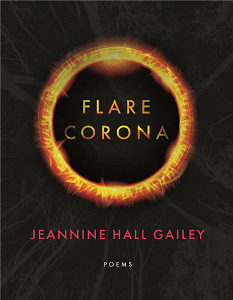
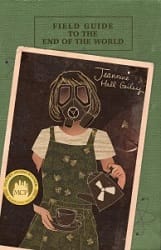
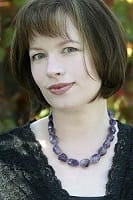 Jeannine Hall Gailey served as the second Poet Laureate of Redmond, Washington and the author of Becoming the Villainess, She Returns to the Floating World, Unexplained Fevers, The Robot Scientist’s Daughter, and winner of the Moon City Press Book Prize and SFPA’s Elgin Award, Field Guide to the End of the World. Her latest, Flare, Corona from BOA Editions, was a finalist for the Washington State Book Award. She’s also the author of PR for Poets, a Guidebook to Publicity and Marketing. Her work has been featured on NPR’s The Writer’s Almanac, Verse Daily and The Year’s Best Fantasy and Horror. Her poems have appeared in The American Poetry Review, Poetry, and JAMA.