Gone Girl, The Cool Girl Speech, Margaret Atwood, Girls in Politics, and Becoming the Villainess
- At November 04, 2014
- By Jeannine Gailey
- In Blog
 2
2

So, I finally read Gone Girl by Gillian Flynn. I know, you’re saying, “You’re way behind on your reading, Jeannine!” Yes, I am!
Anyway, so I’ve been thinking about Flynn’s portrayal of Amy, is it complex, nuanced, is it misogynistic or feminist? I’m thinking about the “Cool Girl” speech, in which the main female character runs down the idea that men want the woman that Cameron Diaz plays in all her films and Flynn’s own interviews and articles.
I’m thinking about Margaret Atwood, all Atwood’s wonderful complex villainesses: Atwood’s murderesses and unkind children, her suddenly violent maids. Atwood’s “bad girls” – and her assertion that to be truly feminist, we have depict women characters as being fully human, capable of both great heroism and great evil. Atwood herself is a little acerbic, a little bit difficult, definitely not giving off the maternal/nice vibe you might expect from a 72-or-so year old woman writer.
So, if you’ve read my first book, Becoming the Villainess, it’s very much about the ideas espoused in the Cool Girl speech. You could argue my “Snow Queen” – probably the most villainess-y villainess in there, unrepentantly eating children and whatnot – has a backstory that includes throwing back shots of whiskey and pastrami sandwiches while remaining perfectly beautiful, pretty much the embodiment of every guy’s fantasy cool girl. The book was inspired by some “bad girls” – Atwood’s villainesses, certainly, Louise Gluck, probably, especially her bad girls in Meadowlands, and the sexed-up villainesses of comic book and mythological fame – evil stepmothers right next to Ovid’s Procne, serving up her son to her husband in revenge for his raping of her sister Philomel.
In my twenties, when I started writing the book, I think, frighteningly, I might also have been playing a cool girl role – I was, after all, the girl who hung out mostly with guys, could quote Star Wars and Fletch, read comic books, and was pretty good at video games, especially first-person shooters. My marriage was still pretty young then. I had started to notice “feminism,” as such, only a few years before I wrote the book – and noting the sad lack of women in power in politics, in comic books, in any and all pop culture – I mean, everywhere. There was one kind of strong woman character allowed – and she was “the villainess.”
This was before movies like Maleficent started reclaiming powerful women’s stories for an alternate treatment, before “Once Upon a Time’s” sympathetic mayor villainess/heroine. That book was my discovery, my way of writing myself out of a seemingly impossible quandry – to remain the princess, the victim, the good girl, or to enter into enemy territory, empowered, maybe sexy, but crazy/dangerous/deadly/evil.
Gone Girl is making me realize that since the time I started writing my first book around 1996 – how much has changed? Shows like “The Good Wife” and “Scandal” have been popular precisely, I think, because they mine this territory of “good girl on the brink of bad.” But is a woman allowed to be sexual, intelligent, powerful – and still a heroine? Look at what happens to women who succeed – at anything – becoming a CEO, or a senator. She’s basically demonized. Look at Gamergate. What is the message that Gone Girl is giving us? Since the “Cool Girl” speech is made by a crazed psychopath, every man with a “perfect” girlfriend’s nightmare of what could go wrong, how are we supposed to take that text?
What is the ultimate message in Becoming the Villainess? (I have high school students write to ask me that all the time. Here’s your secret chance, kids!) I talk about video game heroines trapped in endless rounds of sexualized death (Lara Croft) and princesses trapped in towers becoming dangerous (Cinderella) and Wonder Woman’s secret inner conflict between violence and peace, vigilantism and working for a greater good…but what is the answer for a woman who wants a way out, Buffy when she’s tired of being a Martyr, the superheroine tired of wearing heels and a thong? As a 41-year-old woman today, I don’t want to be playing at being any kind of girl, good girl/bad girl/cool girl/gone girl whatever. I want to be authentic. I want to find a way out of the victim/villainess conundrum.
Halloween Post: Spooky Poems, Horror Writers
- At October 30, 2014
- By Jeannine Gailey
- In Blog
- 0
Happy Halloween! It’s official: I’m now a horror writer! I just joined the Horror Writers Association and wrote an essay for their newsletter that was just sent out on the dark side of science poetry!
Appropriate to the season, here are two spoooooky poems.
“Introduction to the Body in Fairy Tales” appeared first in Phantom Drift and was selected for The Year’s Best Horror, vol. 6!
Introduction to the Body in Fairy Tales
The body is a place of violence. Wolf teeth, amputated hands.
Cover yourself with a cloak of leaves, a coat of a thousand furs,
a paper dress. The dark forest has a code. The witch
sometimes dispenses advice, sometimes eats you for dinner,
sometimes turns your brother to stone.
You will become a canary in a castle, but you’ll learn plenty
of songs. Little girl, watch out for old women and young men.
If you don’t stay in your tower you’re bound for trouble.
This too is code. Your body is the tower you long to escape,
and all the rotted fruit your babies. The bones in the forest
your memories. The little birds bring you berries.
The pebbles on the trail glow ghostly white.
Introduction to Witchcraft first appeared in Atticus Review.
Introduction to Witchcraft
Always these young women in search of power,
their eyes rolled back in their heads, midriffs exposed.
Always some girl with a candle in a dark room –
and poof, her face brightens as she achieves
some moment of bliss. The raindrops around her freeze
in midair, the wolves stop baring their fangs, and for a moment
the young girl marvels at her own invincibility.
But then it’s fire, fire, always someone with a stake or a knife
ready to do her in. She is a spark about to go out.
What’s Really in Your Control (as a small press author)
- At October 28, 2014
- By Jeannine Gailey
- In Blog
- 2
Oh, look at the news these days: you might see something about spying drones, ebola, maybe some random crime spree (or school shooting, as our community had this week.) All of this worrying stuff that is out of our control.
And in our own lives: no matter how we try to follow doctors’ orders, eat right, exercise, medicate as advised, etc., our bodies will still let us down. Sometimes in an annoying way, sometimes in a spectacular way. We can’t control the weather, our friends and family, the way our neighbor looks at us funny. You can be nice to your neighbor, hug your loved one, floss, help some stranger on the street.
You know that old serenity prayer, the one that talks about knowing the difference between things you can control (your eating habits, your time reading books on subjects you want to know more about) and things you can’t control (your genetic propensities, weather, your love of seventies supergroups)?
So how does this apply to poets and small press authors (most poets)?
I’ve been thinking of the things I can do for my next book, The Robot Scientist’s Daughter, and the things I can’t do. I’ve done some of the hard work already: written the best book I could, found the best publisher I could for this particular book, and now…
Things I can do:
- Buy an ad somewhere.
- Send a book out to reviewers, bloggers, media folks.
- Get on social media and post, thoughtfully, weekly.
- Maintain a web site.
- Send my book out to book contests (or select contests for your press to send)
Things I can’t do:
- Make someone actually buy a book.
- Make someone who reads the book like it.
- Determine if the book will win any prizes or recognition.
Realistically, I’m looking at what I can do differently for this book than my last two books. I probably won’t be able to afford, either monetarily or re: physical health, a big gigantic book tour. I may be able to handle a couple of readings in cities I love and have family/friends (Portland, Cincinnati, maybe even Knoxville or NYC.) But I can plan some fun and exciting local events. I’m actually working with a PR person (a blessing in itself, as there are a dearth of PR folks who are excited to work with low-sales, esoteric poetry books) to try to launch the book with a little more forethought and try to reach out to non-poetry audiences a bit more. I know I may not make the money back from this endeavor, but I wanted to try to do something different for this book, instead of just complaining about things I can’t control.
Please feel free to post more examples in the comments of things a poet (or any small press author) can and can’t control, and what you’ve tried that made a difference! (Next post, I promise – more Halloween-type poems! Spoooooky!)
LitCrawl Seattle writeup, an Interview at Geosi reads, and Poison Ivy Poems
- At October 24, 2014
- By Jeannine Gailey
- In Blog
- 0

Readers at the Fairy Tale vs Superheroes event
LitCrawl Seattle last night seemed like a big success, judging by the numbers of attendees (almost every event I saw, including ours, was packed) and the after-party was a great place to see long-lost writer friends, assuming you’d missed them at all the other events, and was also packed. I got a pic of our readers and MC just before the “Superheroes vs Fairy Tales” reading started.
A big thank-you for this interview up with Geosi Gyasi at Geosi Reads (he’s a very thoughtful interviewer:)
http://geosireads.wordpress.com/2014/10/24/interview-with-jeannine-hall-gailey-author-of-unexplained-fevers/
I read my Poison Ivy poem last night and it seemed to be a hit. Since it’s getting close to Halloween and I should be putting up spooky poems anyway:
For the Love of Ivy
(Poison Ivy Leaves a Note for Batman in the Wake of Another Apocalypse Attempt)
You can see, can’t you, the appeal of such a world – lush with growth,
an earth empty of men’s trampling? In college, sitting through botanical medicine
classes, ecotoxicology, experiments in plant poisons – it became clear
that this was my verité – an orchid dressed to seduce wasps, a blooming
parasite wrapped around the trunk of a tree. You might take me home,
beg me for a kiss, but don’t you see the xylem and phloem in my veins
can’t pulse for you? My only offense not-death, regenerating from venom
fed me by my own professor? Feculent, fecund and feral, my power
you couldn’t understand, being born of cave-dwellers, bats and humans,
and your peculiar love of stray cats. My very existence, perhaps, my only crime
against nature. You can’t stem the murmur of voices under soil,
buried against their will – radioactive trees, GMO fruit. Just consider me
another mutant gone wrong, my betrayals in the distant backstory, my tears
now flow a green ooze as I try to heal the land, cesium in the sunflowers,
goat genes welded into innocent corn. Despite drought and denial,
I will continue to grow unharmed, my defense all delicate leaf and toxic petal.
Two new poems and LitCrawl Seattle 2014 – Superheroes vs Fairy Tales
- At October 21, 2014
- By Jeannine Gailey
- In Blog
- 0
Very excited about this Thursday, which is Seattle’s 2014 LitCrawl event, Superheroes vs Fairy Tales, where I’ll be reading at The Project Room at 8 PM. The lineup: Angela Jane Fountas, Jeannine Hall Gailey, Michael Schmeltzer, and Maya Sonenberg, with Evan J. Peterson. Michael and I will be representing the superhero side (plus I might sneak in a fairy tale poem,) so come early and cheer us on! I’m also planning on going to the after-party at Hugo House, which starts around 9 PM. Should be a blast!
I’d also like to thank Spolia Review for publishing a poem of mine, “Heroines at 40, Isabel: I Delight in a Moat” in their issue dedicated to Henry James.
And I’d like to thank The Freeman and Fee.org for publishing my poem, “Introduction to Dermatographia.”
Yesterday I ventured into downtown Seattle for a meeting, and we got towed (for the first time since college!) Downtown Seattle has gotten much more aggressive with its ticketing and towing, just a heads-up for those who visit – even we locals get confused by the signs and rules! But the meeting was lovely, and I also got to visit the office of the press Chin Music, which is a lovely local press that does some amazing books.
Thinking a bit and planning a bit for the next book, The Robot Scientist’s Daughter, including things like marketing, PR, print runs, that kind of thing. That’s because the book is basically complete and going early to get ready for sending out e-galleys soon!
Speaking of robot scientist’s daughters, I watched a bit of the Manhattan series yesterday, which is maybe a bit overwrought (some of the dialogue lands with a thud: example, the teen daughter of one of the nuclear scientists: “Why does everything have to be a secret??”) and I object to all the “important” work being done in New Mexico (as a lot was done at Hanford and Oak Ridge) but it’s definitely a fascinating mini-series about the Manhattan Project. Everyone waves a lot of Geiger counters around a lot. I do like that they have a female botanist/biologist who starts outside the project to notice things going wrong with her backyard flowers, and later medical records indicating problems with the children exposed to the radiation around Los Alamos. It’s a series that helps bring to life some of the “boring science” of the Manhattan Project – and, this being what it is, they fill it with lots of sex and violence to give it more tv-friendliness – of a subject that most people probably don’t know enough about. This first season (it’s just been renewed for a second) focused on the failed “Thin Man” project.
Superheroes, fairy tales, radioactive flowers – I mean, really, what more can you ask for? Hope to see you Thursday!
Is Writing a Team Sport?
- At October 14, 2014
- By Jeannine Gailey
- In Blog
- 3
Most writers are not also known as jocks. They’re not the kind of people you picture shooting hoops, throwing the touchdown pass, kicking a goal. The stereotype of a writer, forgive me: is bookish, introverted, who doesn’t understand the dynamics of cheerleading other players, or being the supporting player in a larger group. And that same introverted, bookish young writer dreams of being the star all the time: alone at his laptop, “creating,” or in front of an audience, accepting a prize or performing work to a rapt crowd. They don’t necessarily dream of the hard work it takes to make those things happen – a lot of which revolves around acting as a supportive team member. So is writing a team sport, or an individual sport?
For instance, what will your connection to your poetry community be if you never show up to anyone else’s reading, but complain when no one shows up to yours? If you ask for reviews from friends, but never write any yourself? (And I’m including Goodreads and Amazon in that – not everyone loves writing long-form critical reviews, but everyone can write a nice Amazon review.) What happens if you go to a writing group where you listen attentively to everyone’s comments on your piece, but never offer any feedback yourself? If you act as an editor, or a publisher, for a literary magazine or poetry series, yes, it will take time and energy, but what will that add to your understanding of rejections, suggested edits, or book promotion?
There’s also the trouble of group dynamics – again, a stereotype of writers is that they’re touchy, sensitive, crying over a rejection or a bad reading, unable to stand a single negative comment at a conference workshop. If you have a group of people who consider themselves sensitive, or stars, how do you interact with each other in a helpful, non-painful way? I mean, if you’ve been to AWP, you know what I’m talking about: people pushing their books without listening to anyone else, waiting to talk to people they deem “more important” while ignoring those “less important.” Everyone can’t be the star all the time, everyone can’t be “the sensitive one” in a room of 10,000. That will lead to a lot of crying at the bar.
If you think of yourself, sorry for the basketball metaphor, as someone who not only makes the layups themselves, but also stars in “assists” – that is, passes to people who score the points – then I think you’ll be happier and more successful in the long-haul work of being a writer. (I know it might be a surprise for those of you who know me now, but I used to play three sports – soccer, basketball, and track – and was even offered a couple of college basketball scholarships. Yes, even though I’m five four – I was a point guard, it’s a little bit of a support role rather than a forward/star kind of role.) Back then, before the onset of most of my autoimmune issues, my body was more cooperative, but even more than any physical thing, or learning sports skills and learning how to win and lose, these sports taught me that I don’t have to always be the person in the spotlight, and helping the team to a win sometimes means a little bit of sacrifice individually.
So, yes, we have to spend a certain amount of time locked up alone with our notebooks/laptops/typewriters, but we also have to go into the world and find fellowship, encouragement, find your audiences and like-minded friends, find people we can be cheerleaders for, find people we can mentor and be mentored by, find opportunities to pitch in to something larger than ourselves.
I’ve thought of a lot of dream jobs: running a bookshop, teaching part-time at a low-res MFA program, being a publisher, working in PR for writers, running a writer’s conference or retreat (if I ever come into unexpected money, a lot of these things are possible!) I’ve realized that I actually thrive more when I’m slightly more social, when I open my arms to more people. There’s also balance necessary there – you don’t want to be a pushover, or encourage people who take advantage of you or are bullies or otherwise toxic – and it seems to me most women writers are often so nice it’s at the expense of their own writing careers. Being a good team player also means standing your ground and taking the shot sometimes.
I’m working at finding my own balance right now. What do you think of the team sports metaphor? Apt? Or not?
New Poet’s Market 2015 and an Oak Ridge Poem in Outside In
- At October 09, 2014
- By Jeannine Gailey
- In Blog
- 2
Thought it’s been a tough month-and-a-half health-wise, I have a lot to be thankful for. (Isn’t the season of Thanksgiving coming up? I keep seeing pumpkins…)
First, thanks to the magazine Outside In Literary and Travel magazine for publishing my poem “Oak Ridge Accepts” – with accompanying 1970’s nostalgic photo – in their final issue.
Here’s the link so you can read it: http://outsideinmagazine.com/issue-eighteen/poetry/oak-ridge-accepts-jeannine-hall-gailey/
So today in the mail I got a copy of Poet’s Market 2015. Here are a few pictures of it. (My mom was very happy she could see the picture of me on the back! So, thanks and here you go, Mom 🙂 I’ve got a poem in there called “Introduction to Girl Detectives” – a tribute to an aging Nancy Drew – (along with fellow Seattle-area poets Joannie Stangeland and Judith Skillman) and two articles, one on promoting poetry books and another on giving readings. It really is a great resource and I love it more every year! It’s particularly nice for inspiration on where to send your work during the busy fall season…


A few words for first-time poetry book authors
- At October 07, 2014
- By Jeannine Gailey
- In Blog
- 5
I have an ambitious, smart, hard-working writer friend who just launched her first poetry book. She is very anxious that it does well, and I remember feeling like that too, when my first book came out. A types especially have this problem. The thing is, that anxiety doesn’t always serve you well in the nerve-wracking ride of first book launches.
So, here are a few words of advice – and please, if you have observations or tips that might make someone’s first-book journey a little easier, leave them in the comments!
—Any reading where you sell books is a good reading. In the course of publishing three books of poetry, I’ve literally done hundreds of readings. Some great, some not as great. Over the years, I’ve learned to be thankful if 1. no one falls asleep or walks out 2. more than six people show up and 3. I sell any books at all. Readings are hard and take a lot of emotional and physical energy, but not every reading pays off. You kind of learn as you go there are good days for reading and bad ones and sometimes you don’t have control over it (one example of a bad one: the day Obama visits your town and all traffic to your reading locale is blocked. That was my second book’s launch. Hooray!) Bars are typically louder than say, a bookstore, and more likely to have rowdy locals not as interested in poetry (but I once did a reading at a wine bar where a completely sauced woman bought everyone’s books and gave us hugs! So, you never know!) Bookstores if they haven’t done promo are more likely to be quiet, but also more likely to be…empty.
—Just like The Hitchhiker’s Guide to the Galaxy told you – Don’t panic. Most books of poetry, I’ve said on the blog before, don’t even sell 1,000 copies. I’ve learned that 98 percent of books don’t sell 1,000 copies, overall. So don’t feel bad if you’re not selling out the hundred books you bought from your publisher right away. It takes time for poetry books to gather steam, along with word of mouth, good reviews, good readings, etc. “Buzz” matters, but for poetry books, it’s more of a slow-but-steady buzz that helps you in the long run. And no one gets rich from their poetry book royalties, not even Billy Collins. (Even he keeps doing readings for golf course time and free wine, I have it on good authority!)
—There are a lot of books out there, and when you’re a new author, making yours stand out is tough. This isn’t meant to discourage people, but there are tons of books being published every year – poets, check out Open Books in Seattle to get a sense of how many poetry books are out there – and it’s hard to make noise when everyone is shouting, so to speak, and some of those people are winning Pulitzer Prizes. The best advice I have for that is to find your target audience and try to communicate with those guys. If you’re got a book about airline pilots, go to airline pilot web sites and events, etc. The problem is, when you’re a new author, no one knows about you yet – it’s sort of the nature of the beast. Yes, I advise people to get a good basic web site, start a blog, get on Facebook and twitter and Tumblr and as many of those things as you personally can stand, but you are still building a presence, an audience, so remember to have patience. The readers will come, eventually. Building an audience is long game, not a short one.
—Do What You’re Best At. Some people are terrific at giving readings and workshops, interacting and glad-handing, but not everyone is. Some people are good at pithy remarks on twitter; I’m not really one of them, but I’m still on twitter. Find the thing you’re best at, and shine there. If this means going and speaking to Chamber of Commerce groups or senior centers or high schools, if this means writing kick-ass articles on the topic your book happens to be about and getting the published, if this means posting YouTube videos about your book…I mean, find and exploit your own talents. Sometimes this means you have to find your talents, but I bet you already know where you’re really blessed.
—Don’t take it personally. Even your friends and family are going to forget about your book, even if you sent them an e-mail and a postcard about it. You and your book aren’t the center of other people’s universes. People will forget about your readings, they’ll write bad reviews of your book on Amazon (yup, my first book, which is my most popular, also has my only one-star Amazon review – and whattya gonna do?) I remember a friend who was angry when her book got four stars instead of five on Goodreads. I mean, that’s going to happen, especially as your book gets picked up by non-friends and family. You kind of have to let it go. You can’t let it personally disappoint you or you’re going to get bitter and you need that energy to write your next book!
—You’re going to write again. So, get on with it. This book will probably not be your one and only, right? So even in the middle of your book tours and promotional work, remember to keep writing and keep sending out your work. Plus, that’ll give you more energy to deal with bad reviews and readings where three people attend, because you’ll be like, “Sure, this is hard, but wait til my next book!” It’s all about the work, your attitude, and your energy. Always be thinking about the next great thing you’re going to write.
When Plans Go Awry, Xolair Diaries Part II with Serum sickness and Immunosuppression
- At October 06, 2014
- By Jeannine Gailey
- In Blog
- 0
It’s a beautiful day outside, but I am stuck inside with the stomach flu. This also prevented me from attending a long-awaited reading with Natasha Moni and Hollie Hardy at the Pine Box last night, which made me very sad. Here we are with all these plans, months in the making, and then something as ignominious as stomach flu can get in the way.
Which leads me to a bit of a side post on Xolair. (You can skip this if you are not interested in genetic-modification-related biologic autoimmune drugs and their side effects.) Now, my immunologist/allergist doctor said it had hardly any side effects, that it was super safe, and then I had a fairly severe serum sickness response to it, which he was completely surprised by. I also asked him about whether or not it would make me “immunosuppressed,” in the way that steroids, for instance, or ciclosporine do. Well, not exactly, he said – but the warnings on the Xolair info state that you will be more susceptible to illness (and, incidentally, cancer,) as well as to more severe reactions to illnesses you might catch. If I had read that packet on Xolair more closely, then maybe I wouldn’t have been so surprised when, after finally feeling recovered from the serum sickness reaction, I came down with 101 fever and severe stomach issues – probably a virus caught at another reading event. See, because, I say to myself, I should have known Xolair would make me more susceptible to whatever germs are wafting around, and that this outstanding fever – like 101 right now – is a sign that my body is not as good as fighting things like flu off as usual.
So, resting, missing the sunshine-y, 75-degree outdoors, readings yesterday and meetings with other writers tonight, could possibly make me a little cranky. Instead, I try to think about the things we can and can’t control. I could have controlled getting the Xolair shot, but several doctors thought it was a good risk for me, and I agreed. I could have just not gone outside for several weeks knowing I’d be more compromised than usual immune-system-wise, but that’s not very practical. So what can you do when your plans go awry? Well, I try to see the positive (not passing flu to my dear friends) and get as much work done as possible (one review written under very high fever and stomach flu conditions, see how such things affect the writing of reviews?) and just try not to see it as yet one more sign that the universe is, as they say, against me. You can control some things, but not all. Being a writer is sometimes about making appearances, and I don’t like letting people down because of my health, but it is out of my control. Being a writer is usually a great gig for the health-challenged because, as I have indicated, you can do it even when you’re stuck inside and feeling like crap. You can create, but the part of your job that is performing that creation, well, that part can be a little trickier. You can blame Mercury, or the full moon, or bad luck, or fancy $1500 genetically-modified immuno-drug shots, but sometimes things won’t go our way. And then we have to say to ourselves, we can only do what we can with what we are given.
Upcoming Events – Pine Box and LitCrawl Seattle
- At October 02, 2014
- By Jeannine Gailey
- In Blog
- 0
So, you think you’d like to see me read some poems in person? You’re in luck! I’ve got two big public readings in the next few weeks! As the weather gets darker and rainier, for some reason, we do more poetry readings! Right now, for instance, I’m off to an informal closing event for VALA’s Voices in the Corridor (5:30-7:30 PM at VALA in Redmond Town Center.)
This Sunday, I’m reading with Seattle medical student Natasha Moni and San Francisco sensation Hollie Hardy at Seattle cool-spot bar The Pine Box at 7:30 PM. You can either call us “Poets on the Edge” or “Girls Who Stop Your Heart” (a little joke since Natasha’s new book is called The Cardiologist’s Daughter and Hollie’s is How to Take a Bullet, while mine is Unexplained Fevers.) More info here: http://www.pineboxbar.com/events#poetry.
Later in the month, I’ll be part of this year’s LitCrawl Seattle on October 23. I’m part of dueling poetry reading, Superheroes Versus Fairy Tales. Yes, I’m reading as part of the superheroes, but I could sneak in a fairy tale poem! I’ll be reading as part of the reading from 8:00 PM to 8:45 PM at the Project Room. Here’s the full lineup: Angela Jane Fountas, Jeannine Hall Gailey, Michael Schmeltzer, and Maya Sonenberg, with Evan J. Peterson. And, for the full schedule, see here: http://litcrawl.org/seattle/2014-schedule. There’s an after party directly after our reading at Hugo House that sounds like it will be fun, and you can also grab me and get me to sign (or sell you) a book!
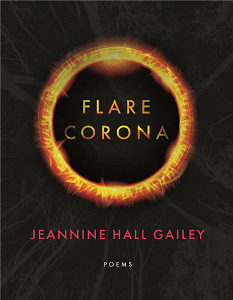
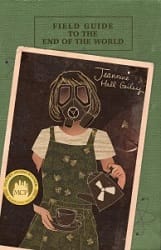
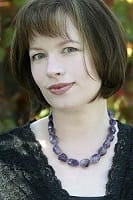 Jeannine Hall Gailey served as the second Poet Laureate of Redmond, Washington and the author of Becoming the Villainess, She Returns to the Floating World, Unexplained Fevers, The Robot Scientist’s Daughter, and winner of the Moon City Press Book Prize and SFPA’s Elgin Award, Field Guide to the End of the World. Her latest, Flare, Corona from BOA Editions, was a finalist for the Washington State Book Award. She’s also the author of PR for Poets, a Guidebook to Publicity and Marketing. Her work has been featured on NPR’s The Writer’s Almanac, Verse Daily and The Year’s Best Fantasy and Horror. Her poems have appeared in The American Poetry Review, Poetry, and JAMA.