Happy 4th! And Apocalypses, Prose Poems, and the Power of The Company of Others
- At July 04, 2014
- By Jeannine Gailey
- In Blog
 2
2

It’s another fourth of July, and G. and I are celebrating by watching the fireworks tonight in Kirkland, making a gluten-free holiday feast-type thing, appropriately-colored red-white-and-blue potato salad, dairy-free corn chowder with fennel and potatoes, grilled watermelon and cherry salsa, fresh picked blueberries and peas from our backyard garden, and yes, maybe some traditional American grilled steak. Hmm, it sounds like a lot of food! Maybe we’ll take some extra over to a friend!
(PS – Best melancholy 4th of July song ever? Aimee Mann’s “Fourth of July” – Click here if you haven’t heard it…)
I’ve been writing an “apocalyptic” book manuscript for the last couple of years, and so I thought I’d put together a little class on prose poetry and apocalypses, thinking these are the perfect match. I’m reading through old anthologies (not enough apocalypse, but plenty of prose poems, or, plenty of apocalypses, not in prose-poetry form) and am trying to decide what kind of poems to use as examples – postcard poems, dream poems, surreal narratives. It’s sort of funny to be doing this reading on July 4, which makes you think about wars, patriotism, the future…you know, sort of depressing stuff. But Matthea Harvey, for one, can make this subject matter pretty charming! I’m looking into some other poets as well, thanks for suggestions on Facebook (and if you have favorite apocalyptic prose poems, please post them in the comments! Or e-mail me!)
I’m thinking that my discouragement earlier in the week, and the ways that the discouragement has been lifted. I chatted with my regular manicurist and she said something that helped me with a problem I was having with UW genetics, sorting through my B12 deficiency problems. (You never know who is going to point you in the direction you should go if you’re open to it!) Going to a Seattle writer networking event this week not only encouraged me that there are a ton of energetic and positive young women writers out there, making a living with jobs like “SEO consultant” and “social media manager” and “coffee critic.” And the people themselves were so interesting and intelligent. Just talking to them for a mere hour gave me a jolt of energy towards my own writing and job search. This is why I need to force myself to go out and socialize more often! Even for me, a half introverted/half extroverted writer, it takes a lot of energy and often involves a 45 minute commute downtown. I’ve been making more of an effort to connect with my writer friends, and every encounter reminds me why I continue to do this crazy stuff, despite the years of low pay, rejected grants and submissions, dozens of versions of each book edited and re-edited…In the end, maybe it’s worth it. When you read a poem that inspires you to write your own, when you hear about an opportunity that might be perfect for you, when you can help someone else solve a problem or be more encouraged about her own work…when you realize the world, generically, from a distance, may seem to be dark and violent and antagonistic, but when you examine it up close, your own circles and coincidences, maybe it isn’t as hopeless as it seems. Maybe it’s designed to help you survive and thrive, after all. Maybe this stuff you’re writing isn’t as ignored and forgotten as you fear.
Over 90 degree days…is it the dog days already?
- At July 01, 2014
- By Jeannine Gailey
- In Blog
- 2
It’s over 90 degrees today here in Seattle, announcing that yes, July (and summertime) are here! We made watermelon popsicles yesterday in preparation, as eating (cooking) anything seems impossible and unlikely.
I’m trying to be responsible and positive and productive today. Yesterday I was a mess – just the bad news, lack of sleep, stress, rejections – I listened to Smashing Pumpkins’ “Bullet with Butterfly Wings” about ten times in a row, which the cats found curious, anyway; I woke up at four in the morning full of despair. Last night, the bunnies wouldn’t even come out, it was so hot, and all I saw was my osprey wheeling in the bright blue sky. The animals stayed wisely undercover and in the shade. It is truly the “dog days” of summer, even though it’s still early (we don’t usually get true summer weather here til after July 4.)
So what to do besides shut off the computer, shut off the television set, and try to do some good in the world? We’re visiting a sick friend, trying to get together some materials from my writing past for a library project (rejections from 2002? Early versions of Becoming the Villainess with six different titles and notes scribbled all over by unnamed friends? Back journals where my first poems were published?) both of which made me reflect on how our perspectives impact our moods. Sometimes not allowing the bad news (whatever it is) to become immediate – to take the long view, the bigger perspective, to try not to let heat, or idiots, make us lose hope. Bad news looms so large – the impersonal note in the e-mail, the tiny slip of paper, the casual no’s, the world’s simmering spin towards destruction, and every single television show obsessed with the end of the world – that it seems impossible to crowd it out with beauty, or peace, or love, at all. So what do you do? Unplug, observe the beauty around you, connect with people you love and trust, maybe work on that one project that makes you happy.
. 


Seeing Your Own City Through New Eyes
- At June 25, 2014
- By Jeannine Gailey
- In Blog
- 0
When you help someone find a place to live in their new city – which happens to be the city you’ve lived in for over a decade – it helps you see your own city through someone else’s eyes. This week, my sister-in-law Loree has been touring neighborhoods in search of a home – at least, a temporary rental home – and it’s been fascinating to take her to my own favorite secret parks, show the best shops and grocery stores, the prettiest views, the most rewarding hiking spots. Of course, on top of the opportunity to rediscover the neighborhoods we fell in love with years ago, we are also really excited about having Loree and my little brother back from Thailand, and that they’ll be living close enough to actually visit! Without a plane flight! PS My fave neighborhood picks for living near Seattle include: Wallingford, Madison Park, Kirkland, Woodinville, Bainbridge Island, Redmond (obviously) and I also love Snoqualmie Ridge, though it is perhaps not a practical place to live. We’ve lived in a lot of these neighborhoods, though not all. Yet.
(Below: a view from Queen Anne, and a backdrop worthy of Twin Peaks credit: Snoqualmie Falls.)


And it helped me remember why we chose to live in this particular city – in this particular neighborhood. Because we love being close to a large forest, densely populated with trees – but we also didn’t want to deal with 45 minute traffic every day. Because we loved its walkability, the nice neighbors, the little baby bunnies that hop through the park at sunset when no one else is looking. When the sun shines, there are some fantastic views here – mountains, sunsets over water, forests that filter the light, gentle hills with wineries. I guess it is pretty spectacular, even if we all start feeling a little grumpy around February, when it’s cold and damp and no one can prove the mountains are even there, they’ve been behind clouds for so long. This is why Pacific Northwest folks, by the way, might be missing from their usual social media hangouts – when the sun shines, there are too many beautiful places to be, that we need to store in our memory for the long winter.
Speaking of seeing your neighborhood through new eyes, I encourage East siders – and anyone who wants to be more familiar with the arts and culture “scene” in Redmond, Washington – to come out to VALA’s launch event for “Voices in the Corridor.” There will be art by multiple talented artists representing what they “see” in Redmond – and poetry on the same topic by myself and Kelly Davio. I’ll be doing a little reading. There will probably be wine. What more can you want on a Friday afternoon? (This Friday,June 27, 5:30 PM, VALA in the Redmond Town Center, next to Z Gallery.)
Through the Autoimmune Looking Glass, Lavender Cures All, Reading The Signature of All Things and Boy Snow Bird
- At June 21, 2014
- By Jeannine Gailey
- In Blog
- 0
I spent at least five hours of the last week in doctor’s offices. Sometimes this is because of “specialist bounce:” one specialist gets an idea that your symptoms exist because of another system’s (outside that specialist’s purview) errors, and sends you away to be someone else’s problem. It happens a lot. But this week, both meetings were on my autoimmune issues, with a rheumatologist and immunologist. We talked options and genetic testing and, yes, finally, a treatment path. I’ll be starting a kind of monthly shot that targets your immune system called Xolair (it’s sort of new in treating things like food allergies and autoimmune urticaria; it was developed for children’s asthma, but apparently is doing gangbusters in adults with various autoimmune problems involving IgE…) in August and see if it gets rid of at least some of the symptoms; after that, we’ll talk some of the other autoimmune generalist drugs, like Plaquenil (not a heavy hitter, but not high risk) or Cyclosporine (higher risk, but higher benefit.) I can’t help thinking, what if, what if, what if: what if this shot fixes so many of my problems that I can eat at a restaurant without fear of anaphylaxis just touching something with wheat; what if I can travel more widely; what if my life becomes, gasp, almost normal again? (Both doctors did warn me that the shot would only eliminate some of my problems; the neuro and joint problems will probably remain unchanged. So I have to come down off my optimistic cloud a bit…)
Going and sitting in doctor’s offices for five hours a week and talking about how many things are wrong with you might generally get you down. (The rheumatologist asked: how do you stay so cheerful through all of this? And my standard answer to this is: what are my other options?) So I took some efforts to counteract this with outdoor activity, doing things I love. This week, I visited some local East side lovely areas: The Woodinville Lavender Farm, Marymoor Park: 

 We saw our first yellow swallowtail of the season, and bought some sachets for the laundry. It’s hard to think sad thoughts in the middle of warm sunshine and a field of lavender. It explains why Provence real estate costs so much! I walked around the lake at the Chateau Ste Michelle winery and counted the ducklings and watched the swallows. I watched for new baby rabbits at my local park.
I’ve also had lots of time for reading. I highly recommend Elizabeth Gilbert’s (yes, the Eat Pray Love girl) The Signature of All Things. The sweeping narrative, told in a standard Victorian-era omniscient narrator voice, covers over a hundred years, and a lot of history of 1700-1800’s botany, which I found fascinating – especially medical botany, which I loved studying in college. I also started Boy Snow Bird, a retake on the Snow White story set in a 1950’s story of class and race, which started off so unappealingly I almost put it down. But I hung in there. The texture of the writing is strange, as if the writer can’t decide which diction her characters should have, and the sentence structures leap from plain to complex. But I’m continuing because fragments of the story are lovely and striking, including a story of a magician who encounters a beautiful woman whose heart is a snake.
I got some work done; I’m almost finished with the author’s note I’m including at the beginning of “The Robot Scientist’s Daughter,” and I researched and wrote down some of my bibliography, which included a lot of tricky government sites that tend to move around a lot. I’ve started my review of Matthea Harvey’s upcoming book, If the Tabloids are True What Are You?
Today my little brother’s wife is coming to stay with us for a week to do some apartment-hunting – in three weeks they are moving out here to stay! My little brother is still in Thailand for the moment, but not for much longer, which makes me happy. It’s hard to stay close to someone on another continent! I think he and his wife will love it here – there’s Shaolin, and yoga, and lots of computer jobs. They may fit in here better than Glenn and I do! So good things on the horizon…
The Importance of Your Writing Community – More Lessons from the Hunger Games, Catching Fire
- At June 11, 2014
- By Jeannine Gailey
- In Blog
- 1
It was just last night while reading some of the final letters of Flannery O’Connor (so sad to think about, that we see the end is coming and she keeps saying “I’m in no hurry to publish, I’ve got plenty of time…” and contemplating the Hunger Games (specifically, Catching Fire) that I was thinking about the importance of writing community to, yes, our survival in a (sometimes) cold and barren landscape of writing. (My first post, in case you are interested, on writing and lessons from The Hunger Games can be found here.)
Katniss’s support system – including her fellow players, her stylist, and her love interests – all play a key part in helping Katniss become a hero and surviving a set of games designed specifically to destroy her. Cinna’s magic wedding-dress-becoming-a-mockingjay represents a fantastic PR move that Katniss probably would never have thought of on her own, making her a rebel icon. Everyone in the Catching Fire games was trying to help Katniss, though often she didn’t recognize or appreciate the help she was getting, and didn’t actually like or trust at least half of the people helping her. Katniss becoming a hero to the masses was actually orchestrated by a group of people she didn’t even know behind the scenes. Isn’t that the way it is with writing success as well? If we’re going to succeed as writers, we need help from beyond our own small minds and reach – friends who watch out for us, critics who champion us, publishers who back our work – a network that will catch us when we fall, when we fail, when we flame out. Like it or not, though writing may seem like the quintessential loner’s quest, it is actually quite often an activity that requires building and hanging onto a community in order to succeed.
Flannery O’Connor’s gigantic amount of correspondence with other writers represented her 1. isolation in a small town in Georgia where she remained often due to her lupus 2. her desire to reach out and communicate with the writing world despite that isolation. Her shares her good news and her struggles, her grumpy reactions to her reviews, her uncertainty about aspects of her work. She argues with people, encourages them, and keeps strenuously in touch with writers living thousands of miles away. She reviews and recommends books, offers congratulations, sends gifts. In this web of correspondence, we see her efforts to stay connected.
The writer’s life involves a lot of plain old rejection, being turned down for jobs and grants in ways that seem intensely personally hurtful, and those rare moments of celebrating good news – which are always less fun celebrating alone, or with people who don’t understand why an acceptance from one magazine is more exciting than an acceptance from another. It is important for us to reach out to other writers in our community – whether it’s meeting for coffee, favoriting a tweet, or reviewing a book of a writer we’ve never met but admire the work of. It’s important for us, like Katniss, to get over ourselves and maybe our personal prejudices and see that we are all in this together, that survival is only certain if we accept the help from those around us.
So go ahead – plan a meeting, a party, a get-together. Make a phone call, send an e-mail. Let others know how you are doing, or what you might need. Let them know you’ll support them too. Someday soon, you never know, you might need to be helicoptered to safety, and the people willing to do it might be around you right now, waiting for the signal.
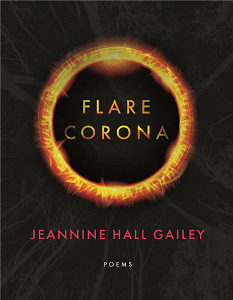
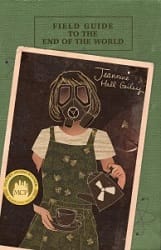
 Jeannine Hall Gailey served as the second Poet Laureate of Redmond, Washington and the author of Becoming the Villainess, She Returns to the Floating World, Unexplained Fevers, The Robot Scientist’s Daughter, and winner of the Moon City Press Book Prize and SFPA’s Elgin Award, Field Guide to the End of the World. Her latest, Flare, Corona from BOA Editions, was a finalist for the Washington State Book Award. She’s also the author of PR for Poets, a Guidebook to Publicity and Marketing. Her work has been featured on NPR’s The Writer’s Almanac, Verse Daily and The Year’s Best Fantasy and Horror. Her poems have appeared in The American Poetry Review, Poetry, and JAMA.