Windstorms, a Jack Straw Seattle Library Reading, the new Redactions and a Reddit Interview
- At November 03, 2013
- By Jeannine Gailey
- In Blog
 2
2

Yesterday was the (almost final) Jack Straw reading – the entire crowd of us, 12 writers of poetry and prose, read in this giant auditorium at the intimidatingly large downtown Seattle Library. The only drawback was that we had a windstorm so extreme it left 150,000 people out of power (ours was flickering most of the morning) and the bridge we use to go to Seattle was closed (because of waves and wind?) until…just before we rolled onto it at 1:15. So we got there safely. When Glenn dropped me off at the downtown corner where the library is located, the wind was blowing so hard I couldn’t see in any direction and it was pretty tough walking even a short distance – I mean, some serious wind, not like usual when they say “Windstorm” and it’s like, 20-30 miles an hour. This was, you know, Virginia-post-hurricane wind, or Ohio pre-tornado wind. Serious.
So, this slightly blurry footage is from that reading. The lights made recording difficult, but I think the library will have a podcast of it eventually as well.
Also, my contributor AND subscriber copy of Redactions came in the mail. Besides Redactions being a reliable favorite of mine for some years, I have several friends in there (Susan Rich, Michael Meyerhofer, Mary Biddinger) and my poem “Epilogue (a Story for After)” is, well, it’s one of my favorites from my new apocalypse manuscript. And a bonus surprise – on the last page of the journal was an ad for Unexplained Fevers! It made me feel like the book was real all over again.
In other social media, I’m appearing on Reddit for an interview! I’ve never done this before, and I’m grateful to Ryan Tullis and his gang there for their invitation. It’s happening on November 5. Here’s the link if you’d like to ask a question, I’ll do my best to answer it! I haven’t done much with Reddit yet but it seems like an interesting forum.
http://www.reddit.com/r/Poetry/comments/1pi1z5/jeannine_hall_gailey_poet_laureate_of_redmond_wa/
Spooky Halloween Poems About Supervillains and Scary Computer Shutdowns…
- At October 30, 2013
- By Jeannine Gailey
- In Blog
- 0
It’s the day before Halloween, so I thought I’d post my yearly spoooooky poem.(For previous years’ spooky poems about zombies and monsters, click here.)
This year’s is about one of my favorite supervillains, Poison Ivy. This poem first appeared at Barrelhouse online. 
For the Love of Ivy
(Poison Ivy Leaves a Note for Batman in the Wake of Another Apocalypse Attempt)
You can see, can’t you, the appeal of such a world – lush with growth,
an earth empty of men’s trampling? In college, sitting through botanical medicine
classes, ecotoxicology, experiments in plant poisons – it became clear
that this was my verité – an orchid dressed to seduce wasps, a blooming
parasite wrapped around the trunk of a tree. You might take me home,
beg me for a kiss, but don’t you see the xylem and phloem in my veins
can’t pulse for you? My only offense not-death, regenerating from venom
fed me by my own professor? Feculent, fecund and feral, my power
you couldn’t understand, being born of cave-dwellers, bats and humans,
and your peculiar love of stray cats. My very existence, perhaps, my only crime
against nature. You can’t stem the murmur of voices under soil,
buried against their will – radioactive trees, GMO fruit. Just consider me
another mutant gone wrong, my betrayals in the distant backstory, my tears
now flow a green ooze as I try to heal the land, cesium in the sunflowers,
goat genes welded into innocent corn. Despite drought and denial,
I will continue to grow unharmed, my defense all delicate leaf and toxic petal.
On another note, you know what else is spooky? All the dang blue screens of death, hard re-boots, and jiggling noises coming out of my almost dead 18-month-old Lenovo Ultrabook. I’m having to replace a laptop before it’s even two years old, and I haven’t dropped it or anything crazy that would account for its general lousiness. Sigh. It must be the season for dying laptops, right in the middle of a bunch of applications and work and such….Scary stuff!
Three Things I’ve Learned From Being a Jack Straw Writer
- At October 27, 2013
- By Jeannine Gailey
- In Blog
- 0
Today I roused myself out of bed with a sore throat, cough, and runny nose (I know, a glamorous picture!) to go to Seattle’s U District for voice coaching at Jack Straw, a great part of the experience of being a 2013 Jack Straw Writer. Along with the end of my tenure as Redmond’s Poet Laureate, I’m also coming to the end of my time as a Jack Straw Writer (by the way, applications are due soon, check it out! Even if you’re in Portland or environs! It’s worth the drive.)
In case you’re wondering, Jack Straw is this cool Seattle non-profit whose secret mission is to help artists of all types perform more effectively – coaching us for radio interviews and readings is just part of their work. And I thought I would share some of the best lessons I learned from my time.
1. Even if you think you’re a pretty good reader, there’s always something to learn. Live readings in a crowd – totally different than reading for radio, for instance – you can’t communicate via hand motion or face expression, so you really have to put more into your voice inflections, careful to enunciate or inject humor into a pause. And there’s nothing as humbling as listening to your own work recorded in your own voice in a professional studio to make you think about what you can improve.
2. Being in a group of writers who have nothing in common but wanting to support each other can be pretty powerful. I think this is part of the Jack Straw Writer magic, that you get together with writers of various ages, genres, levels of experience, schools of writing – writers you might never have met other than being “Jack Straw writers” together, and try to help and encourage each other. I certainly learned a lot from the other writers and their work. To be honest, I would probably have benefited more from this aspect if I’d been less busy with Poet Laureate stuff, but even the limited number of times I was able to hang out with my group, there was I think a spirit of generosity and goodwill that sometimes you can forget exists in the somewhat competitive and snarky world of writers (witness the latest ‘kill list’ unpleasantness or, you know, hang out at the bar at AWP).
3. Part of the job of any artist is to be able to take their work public. Dancers, visual artists, writers – we’re not always great about talking to an audience about our inspirations, our reasons and motives and visions of creation. We all have, of course, motives that might be hidden even from ourselves – but it’s part of our job to be able to communicate reasonably well the reasons we create, our goals for the creation, and maybe something that inspires the audience too, if we can. Part of this is performance – putting our work in front of different audiences and learning how to become comfortable with say, radio interview questions. Part of it is learning to articulate our real reasons for creating, which might be more difficult and probably, let’s face it, maybe more interesting to an audience that the creations themselves. If you’re serious about your art, you should put some time and effort into communicating with others about it.
A bonus? Today I got to get a sneak peek at fellow Jack Straw Writer Judith Skillman’s book, Broken Lines: The Art and Craft of Poetry, with chapters on handy things like writer’s block, putting together a poetry manuscript, collaborating with other artists, and maintaining motivation. There aren’t enough practical guides like this out there for poets, so I encourage you to get your own copy here! Broken Lines – The Art & Craft of Poetry
Scary Stories: Horror Narrative (about publicity) and Fears (of Failure)
- At October 24, 2013
- By Jeannine Gailey
- In Blog
- 0
It’s almost Halloween, and that means it’s time for some scary stories!
If you picked up this latest issue of Poets & Writers, the one with the sunny visage of Ms. Elizabeth Gilbert on the cover, you may run across an article that is kind of a horror story: a young writer spends $10,000, her entire advance, on the publicity services of two independent book publicists who basically take her money and do nothing. She does not name these two publicists, which might have been a public service, unfortunately. (There is also a somewhat flimsy rebuttal by a publicist, who doesn’t actually address the issue of dishonest publicists, but makes a case that “our job is hard.” Which, no doubt, it is. But it doesn’t justify charging someone $5K and never contacting them again!)
Now some people might have limited sympathy for the writer who spent her money thus. After all, she explains that she did vet them but spending that kind of money on publicity services seems at best very optimistic…I felt really racy/crazy spending $99 on the “Premium” package at YouDoPR for my last book and felt I got a much better deal than this woman in the article did! (Also, that “Everyday Book Marketing” book by Midge Raymond has plenty of good tips for much less than 10K.) Of course, I’m a poet and we get limited publicity no matter how much money we might throw at the problem, because so few media outlets are interested in poetry in the first place. But it was interesting to think about how many writers might unwittingly be throwing money after this kind of problem (a commenter on Facebook pointed out a Goodreads banner ad runs $5K!!!) I mean, I don’t know how many small press writers are making upwards of 10K on their royalties in the first place to kind of have this money to play with, but yikes!
My other story has to do with fears. Specifically, my fears of failure (among other fears.) A few posts ago, I mentioned I have been “looking for a sign” – in vain, I must admit – in the days after that post, I received three regular rejections and a grant “no.” So is that my sign that I should quit, that I should give up writing?
Those of you who remember this post (What to do when life rains on your parade) will know that I have been dealing with some straight up frightening health news – specifically, about developing neural lesions, which threaten things like motor skills, memory, and the like. It’s been a dark time for me, not just physically but mentally and emotionally, worrying that dropping a pumpkin on my foot at the grocery store is a sign of worsening neural problems, or that being unable to place a face with a name (which happened a couple of times at Geek Girl Con) is a sign my ability to place faces with names at all might be disappearing.
What specifically am I hoping for, these days, as a forty-year old with a few poetry books to my name, and not much else? I have always been one of those annoying types who fears failure – what if I never become a success at what I want to do, I worried when I was 22 (although then, I was not quite as sure what I wanted to do – like Barbie, I thought I could be anything – President! Astronaut! Figure Skater!) Now, I may be looking at a compressed time frame – with the time and ability I have left, what can I realistically hope for? I want to be realistic. Maybe poetry is not a good game for realists. What can I expect with my next book? Obviously I have more realistic, less ambitious goals than I did when I was younger. But I can still hope for good things to come out of the blue. Maybe my “sign” just hasn’t come yet.
Hobble Creek Review, Geek Girl Aftermath, and Thoughts on Launching A Book
- At October 21, 2013
- By Jeannine Gailey
- In Blog
- 0
First of all, let me thank Collin Kelly and Justin Evans, because this latest, pop-culture-focused issue of Hobble Creek Review – in which my poem “Teen Girl Vampires” appears – is a great one. There’s a lot of sharp humor in the issue, and it’s just plain enjoyable.
I’m suffering from a little post Geek-Girl-Con fallout – a bad cough that keeps waking me up at night (the string of cold, foggy days here hasn’t been helping) and a serious need to catch up on sleep before I can catch up on work. I genuinely still get thrilled meeting people excited about Star Wars and Buffy and video games and such. Then yesterday I saw Sarah Michelle Gellar – several years younger than I am – on the cover of “More Magazine” – which used to be reserved for the over-40 set – and realized hey, if she’s on the cover of More, I really am getting older! I can’t party like a 22-year-old anymore! But, on the other hand, if people are looking to Buffy as a model of graceful aging, I guess that’s kind of cool.
I was talking to a friend of mine, who has a book coming out next year, and we were talking about book tours, and I was telling her a little bit about how launching a book is really a never-ending endeavor – I remember for my first book, I really pushed traveling all over to readings, and even the second year, I was still visiting universities across the country (and I told her the book sold better in its second year than its first – probably not uncommon for poetry books, when reviews trickle in after eight months and word of mouth is usually slow burning rather than wildfire-like.) When you’re launching a not-your-first book, you start looking at strategy – like, I might want to visit Florida, because a surprising amount of copies of my books are down there, and I might want to visit old-hometowns, like Cincinnati or Knoxville, because I’m more likely to have a friendly crowd in those areas. I definitely want to send review copies of my book to places that reviewed one of my first three books. Those kinds of things. It doesn’t feel as scary, because you know what you’re getting into, but these days, we have to be savvy about promoting across more kinds of platforms – reddit and tumblr are still new to me, for instance, and think about things like paper versus e-publishing rights when we look at our contracts. It’s really a different kind of thing than it was back in spring of 2006, when poet blogs were still sort of a new phenomenon, Borders was still going strong, and there was really no such thing as reading a book on your mobile phone. What do you guys think is the most important thing for an author publishing a book to think about these days? Put your thoughts in the comments!
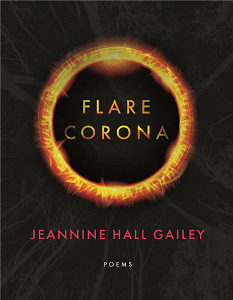
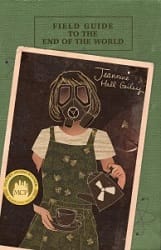
 Jeannine Hall Gailey served as the second Poet Laureate of Redmond, Washington and the author of Becoming the Villainess, She Returns to the Floating World, Unexplained Fevers, The Robot Scientist’s Daughter, and winner of the Moon City Press Book Prize and SFPA’s Elgin Award, Field Guide to the End of the World. Her latest, Flare, Corona from BOA Editions, was a finalist for the Washington State Book Award. She’s also the author of PR for Poets, a Guidebook to Publicity and Marketing. Her work has been featured on NPR’s The Writer’s Almanac, Verse Daily and The Year’s Best Fantasy and Horror. Her poems have appeared in The American Poetry Review, Poetry, and JAMA.