Advice for Post-MFA grads: How to Pay for Student Loans and Fancy Shoes
- At June 10, 2013
- By Jeannine Gailey
- In Blog, MFA advice
 1
1

This post began with a dream I had, probably in anxiety over talking at my old MFA program Pacific, on an Alumni panel in a couple of weeks. The dream involved two petulant girls complaining to me, asking me how they were expected to pay for their fancy shoes and their student loans if they couldn’t get jobs as librarians and didn’t want to go to the temp agencies. In the dream, I was flummoxed on what to tell them. Kind of a funny, obvious dream, right? But one I think about a lot, especially given years of a down economy and increasing college prices. I got my first degree for free – with a National Merit Scholarship and an Honors scholarship on top of the free tuition because my father worked at the university – but my two graduate degrees I had to pay for – though I mostly had a grant cover the costs of my MA in English, and I worked full-time at AT&T as a technical writer the entire time I went to school – the MFA was pretty pricey, and I didn’t have a full-time job to offset the costs, just off-and-on contract and freelance writing.
When I got my MFA degree, it was after quitting work as a mid-level technical manager at the “world’s largest software company” and a mutual decision that my husband and I made after some severe health crises that I was going to become serious about my writing and really go for it rather than trying to sneak it into 90-hour-work weeks and very few vacation days. We’ve never been well off enough to not worry about money, so for us, this meant knowing we’d have to put off buying a house or going on vacations for a few years (I got my MFA in 2007 – and we finally put a down-payment on a townhouse last year, in 2012, and of course we’re broke again because of it! No fancy vacations for us again, I guess.) We decided also to make some adjustments to our style of living – we thought the sacrifice would be worth it. The MFA was a symbolic change, yes, but I also put very real expectations on myself about what I would be trying to accomplish (to write a publishable book and build up a CV of published poems and reviews) My vision of getting an MFA meant really putting myself out into the world as a writer – taking my work seriously, treating it like a job, writing and submitting and reviewing and later, doing readings and promotions for my first book – over 40 hours a week, every week. I did not expect to get a teaching job or any job directly as a result of getting an MFA. My only expectation was time and space to write, and maybe some friendships with encouraging other writers, and maybe some mentors/advisors who would give me direction and advice as I went through those two years. Half-way through the MFA program, which was low-residency, I got sick and had to take a semester off – but this resulted in spending a lot of time sending out the MS of my first book (at the time called “A Thousand Tongues,” then I made a last minute switch to “Becoming the Villainess”) which I had been working on for five years and finished in the first semester of my program, and then getting the happy news that it would be published. I finished up the second year of the program with a good draft of my second book. Could it have happened differently? Of course. But to me, the MFA was both a motivator and an encouragement to strict discipline and practice of reading, revising, writing – in general, making space in my life for my work as a writer, which I had never really done in a dozen years of (somewhat lackadaisical, I see now) poem-writing and sending out.
But what to tell today’s MFA-about-to-be-or-recent graduates about how to make money after the MFA? Certainly I’ve had some luck after my MFA – some adjunct teaching work, a few paying writing assignments, a few decent monetary literary prizes, and my work as Poet Laureate of Redmond among them – but all that put together wouldn’t cover my student loans I took out for my final degree. And today’s economy is worse than it was in 2007. Tenure-track teaching jobs – something I’ve had in the back of my head since I was a child, what with my father being a tenured professor and my husband’s father the same – are disappearing and I don’t think that model is going to suddenly rise up and reassert itself in academia, somehow – though that would be lovely. Freelance writing jobs – paying writing assignments of any type – are harder to find as newspapers and magazines have folded. The publishing industry has been collapsing and consolidating so much I can’t keep track of it (thank goodness for the small but hearty independents.) It’s hard for any sensible person emerging with a graduate degree in the liberal arts not to feel a little anxious!
On Facebook, a ton of folks piped up – anxious MFA students among them – and offered advice, solace, and opinions. Neil Aitken, who left his job in the programming world to write, publish, and pursue a PhD, offers this: “Unfortunately there’s a glut of qualified would-be instructors out there, so not everyone ends up in a teaching gig (and some that do, probably shouldn’t). However, there are ways to make the transition into a non-teaching position. Think of your skills not as being creative writing specific, but rather a set of tools and skills that can be adapted to many situations and fields. Writing is done in many fields, for instance — if you have a knack for condensing and clarifying, you might make a good technical writer. If you’re good at thinking outside the box and arriving at creative solutions, sell your creativity as an asset — and find ways to demonstrate how you have used it to create new solutions for existing problems. If you’ve worked on a literary journal, you’ve become familiar with certain aspects of office work and the division of labor — depending on your specific roles, you may have gained experience in desktop publishing, web publishing, advertising, public relations, administration, marketing, sales, management, etc.” Professor (and magician!) Jim Brock makes some interesting points about advising students, which should start even before the MFA: “The advising of MFA students should begin well before they even apply to MFA programs. I tell my students that if they think of pursuing an MFA is about getting a job or about even becoming a “real” writer that they are entering it for the wrong reason. All an MFA is, at its best, is an artificial and often expensive opportunity to join a ready-made community of writers–and even then, there’s no guarantee that it’ll be a healthy community–and to have an opportunity to devote oneself to writing. I routinely point out that there are other ways to have that community, and I remind them that if they are devoted to writing, they don’t need that degree. Now, for some students, this artificial community and its often cool opportunities are worth it and are rewarding for their own sake, and for others, no, there are better and more sane ways to pursue their writerly aspirations. I think this kind of advising is paramount so that you have fewer individuals who end up feeling betrayed. My responsibility is to advise students for their interests, not for my self-serving or self-confirming interests. My own MFA experience was a most happy, fortunate one, but I have to remember the cases where it wasn’t so good at all for some really good writers and friends. I also have to look honestly at some of the phoniness that attends academia in general and the MFA degree in particular. Let’s be honest to some of its pretensions and limitations, as well as its difficult rewards, be candid with our students, and not be so naïve when we advise them ourselves, just because we’ve had a little good fortune come our way and believe that others should follow our paths, just to affirm what we’ve done.” My friend, poet and publisher Kelli Russell Agodon, says “Tell them life or their degree doesn’t owe them anything. And fancy shoes will give them blisters. That will quiet down those imaginary students. 😉 (Or your kind self may say– buy your fancy shoes from a consignment shop, write well, and focus on what you *have* instead of what you don’t.) ” Jennifer Greshem, fellow Steel Toe Books author and founder or “Everyday Bright,” suggests an alternate path: “Start a business, that’s what you should tell them. Poets have HUGE advantages as entrepreneurs: they are good at observing the world around them, they have empathy, they can make brilliant use of metaphor (great for marketing).”
Anyway, whatever path you choose, to MFA or not, or whatever means you find to pay off those student loans and buy shoes, I say good luck to you. And drop any advice in the comments!
Sometimes Writers Need Friends
- At June 08, 2013
- By Jeannine Gailey
- In Blog
- 0
S o, after my last post about the important of guarding your writing and not being too nice, this is a balancing post about the importance for writers of having friends. Friends give you perspective, give you support when you’re feeling discouraged, help you celebrate when you’re feeling encouraged. If you’re mean and petty and insist on seeing the worst in everyone, it will be hard to have or keep many friends – I’ve been reading a couple of biographies of Plath, and I think it was one of the main things that kept her so dangerously isolated – not only did she see the worst in herself, she saw the worst in her girlfriends and dates, the occasions around her – the world was full of shadows, and very little illumination, except in her beautiful words. Think how much happier she might have been if she’d given herself – along with some other people – a break and let them into her life a little more.
Having friends who are also writers is really helpful, because when they complain about how to hard it is to book a reading, or how nervous they’ve been about reviews, or how excited they were about a particular acceptance or bummed about a particular rejection, they will be reflecting back your own struggles – and remind you you’re not alone in your crazy ambitions and adventures. Like these girls flying into the great unknown future, most of the time we will be out on our own, piloting rickety craft across uncertain seas – so to get together and talk and laugh and share secrets of the trade is a great gift. Writing isn’t a competition, though it can feel like one – often, the most talented people you encounter – the one that make you bite your lip out of nervousness or even jealousy – are the ones that will help lift you out of yourself and help you see the next adventure on the horizon. Meet on a regular basis, talk about what you want to do next, exchange information about grants and contests and your wish lists. Talking about something doesn’t necessarily make it concrete – but putting things out “in the universe” in a group is often a huge motivator.
And let me say a word here about interesting misfits…sometimes your best friends will look just like you…but often they will not. They will be outliers, maybe a little awkward, maybe you can have friends with whom you discuss lipstick and others with whom you discuss particle physics. I have been surprised over and over throughout the years how the people who seemed like the biggest risks often have the most to offer, people who look, talk, and act in a completely surprising way. Diversity isn’t just a buzzword for the workplace, it’s something we should strive for in our own lives of family and friends, because there’s a danger in surrounding yourself with people who are too comfortable, too much like you – because those who cause you to push yourself will ultimately open some doorways in your mind and heart. Which is ultimately really good for your writing.
I’m grateful that I’ve come across so many interesting, entertaining people in my life that I can call friends, and that while I never feel I have enough time to socialize, I’m always happy when I come back from a writing group or a coffee trip with an old friend, I always feel less bitter/anxious/caught in my own head. This is also a thank you note to all my friends, across the country, old and new. You have all added tremendously to the sparkle in the world. There’s a verse in the Bible that I think applies to both marriage and friendship – yeah, I know, surprise, a Bible quote at the end! But it really applies especially to poets, who can feel lonely and isolated and slapped in the face by life, and I imagine that in the original language, it was probably pretty good poetry once: “Two are better than one, because they have a good return for their labor: If either of them falls down, one can help the other up. But pity anyone who falls and has no one to help them up. Also, if two lie down together, they will keep warm. But how can one keep warm alone? Though one may be overpowered, two can defend themselves. A cord of three strands is not quickly broken.” Ecclesiastes 4. (PS If you only read one book in the Bible, that may be the one to read. I have always loved it.)
When to Be Nice – the Writer-Girl-Type Edition
- At June 05, 2013
- By Jeannine Gailey
- In Blog
- 3
 You wouldn’t think a writer who wrote a book called “Becoming the Villainess” might struggle as much as I do with what I call “nice girl syndrome.” But I do. I don’t like to bother people or let them down, so at doctor’s offices, I don’t insist on one kind of treatment because I don’t want to assert myself, or in the writing world, I have trouble turning down offers to do things for others. (As you can imagine, this makes jobs like teaching – no, I can’t write a 23rd letter of recommendation for you – or a local city’s Poet Laureate job – sure, I can show up at blank event with five minutes notice and do anything you want – a little bit of a struggle, because without clearly defined boundaries – yes, I will do this, but no, I can’t do that – these jobs will take up your entire life.)
I started thinking about the problem of the “nice girl syndrome” a bit after this discussion, which includes a bit of argument – not from me – about whether or not it’s worthwhile for a writer/editor to prioritize being, in Mary Biddinger’s words, “kind.” (See interesting discussion between four writers here: http://www.writersdigest.com/whats-new/four-poets-read-poems-and-talk-poetry) Kindness comes up somewhere in the middle and sparks a debate. I am looking on silently in this debate, because honestly, I am wrestling with own feelings of how to balance “nice” with “self-preservation/success.” I actually think Mary does a model job with this balance – gracious but committed to her own work, too. So when does a writer put her own work second, to her teaching, to her spouse’s/children’s/family’s needs, to her four adopted rescue dogs, to the needs of everyone but herself?
I think kindness enormously expands our writing world when done in the right way – a thank you note to a writer who moved you or an editor who was especially helpful, blurbing or reviewing other writers, inviting someone you admire to come do a reading with you or teach a class or whatever – and that it is part of our writing community’s well-being that hangs in the balance between doing what’s kind and doing what’s in our own self-interest. Remember when we were writers just starting out, when a kind word or act made all the difference to us, and we should strive to include and encourage others in the same way. There’s an old saying to “whom much has been given, much will be expected” – so the more gifts we receive from the universe, the more we should give back.
On the other hand, there’s a terminal kind of niceness – the “can’t say no” kind – that will get in the way of your writing and publishing. One thing I’ve noted while reading these multiple biographies and memoirs of famous dead successful writers – besides the lack of happy endings – is that they were none of them known for being particularly nice. Egotistical to the point of delusion, sometimes – always aiming high and believing their own work had merit and deserved recognition – the women writers whose names we now know we know partially because they didn’t put up with a lot of crap, they took risks, they did what they pleased most of the time. They made a scene, they switched publishers because they weren’t happy with one editor or publisher’s treatment of them, they withdrew stories and revised til the last minute and went with the best-paying and most prestigious offers every time. Especially in the cases of Sylvia Plath and Flannery O’Connor, this may have been because, for two different reasons, they both knew they had limited time.
Those of you who read this blog on a regular basis know I struggle with various health stuff, that usually rears its ugly head at inconvenient times. At those times, I am forced to acknowledge I cannot, actually, do it all – and maybe no one can. (To illustrate – I was in the hospital on oxygen with two IVs in my arms with double pneumonia when I was writing to my students about being a day late to turn in grades…and I still felt so bad about it I actually finished grading in the hospital bed.) So if I’m going to stick to priorities, what are mine? What comes first? When do I need to face conflict, assert myself, say no? When do I need to say “It’s time to write” instead of one of the six-thousand other things I could be doing? I know I don’t like to let anyone down. It literally hurts me physically sometimes – stomachaches, migraines – to do it. But if I don’t, what opportunities drop away – the chance to write, to submit, to offer up an idea or start a memoir or take a risk – that might make the difference between a writer who makes history, and a writer who does not?
Representations of Women Writers in Film, Fiction, Memoirs
- At June 01, 2013
- By Jeannine Gailey
- In Blog
- 4
Okay, I thought I would do a post on how marriage was like The Hunger Games. But I’ll save that for another day, because yesterday there was a sneaky snake attack by my little lake full of ducklings – a four-and-a-half foot black snake charged me out of nowhere, which has never happend to me before – and I was on a wet grassy bank, so I jumped, fell, sprained my ankle, pulled my knee and bruised my spine. (Ouch – sleeping last night wasn’t pleasant! But thank goodness I had an appointment with my physical therapist, who was able to check my injuries and tape up my knee and ankle. Anyway, this all leads to the fact that I’ve been reading and listening to books non-stop.
So, we watched “The Squid and The Whale” – which critics just loved, but I just felt “meh” about – I kind of hated the representation of the tarty, successful writer/mother character and I thought the kids were awfully whiny – I mean, those writers/parents weren’t winning any parenting contests, but then, I think I know a lot of x-er childhoods that were a lot more traumatic (including my own, almost all of my friends and most of those closest to me.) Then I was reading “Z – a Novel of Zelda Fitzgerald” – I just saw the new Gatsby movie, which I loved, but I conflated – I think incorrectly – Zelda and Daisy from Gatsby, so I had Fitzgeralds on the brain – and doing some research on her life, discovered she died, rather pathetically, in a sanatorium fire at the age of 48 with eight other women. And you know I’ve been reading Flannery’s letters, yes, funny and tough, but who died at 39 of complications from lupus – and I’m reading two books on Sylvia Plath, Pain, parties, work : Sylvia Plath in New York, summer 1953 and Mad Girl’s Love Song, which are both about Sylvia life as a young woman. And we all knew what happened to her. Sigh.
I just wish there were some representations of happy, balanced women writers somewhere – in fiction, film, memoir….I was thinking that maybe the closest I come to healthy role models are Margaret Atwood and AS Byatt – both well known for their grumpiness but also fairly old and not that tragic! Can you think of some positive fictional or memoir representations of women writers? How about films? I think every film I’ve ever seen in which a woman writer appeared, the writer was a. tragic/pathetic b. deeply neurotic or c. a love interest, not a main character. How am I supposed to do this woman-writer thing with everyone dying young or going crazy? Help me out! I’m stuck inside and need something cheerful to watch/read to inspire me!
Happy Memorial Day! And thoughts on Writing Priorities and True Success
- At May 26, 2013
- By Jeannine Gailey
- In Blog
- 2
Happy Memorial Day Weekend Everyone! And thanks to all our troops who have serve or are currently serving!
This weekend, after scanning with some dismay the number of poems I’ve written and/or sent out in the past twelve months, I decided to make this weekend profoundly unscheduled – no parties, no readings – and just devote myself to getting back my brain’s space, writing, and trying to send out some work and revise some of my manuscripts. It’s been tough – I’ve been easily distracted – but I’m getting back into my old habits after a day or two – staying up late to write poems, starting in the morning before I get out of bed to go over XL spreadsheets and deciding where to send out or researching publishers and magazines. I want to have some sort of higher ambitions – I’ve been reading, a little bit every night, Flannery O’Connor’s Habits of Being , and have been really struck noting both her tough ambitions, her constant revisions and aiming high in her publications. (I have some other literary memoir-type things calling my name to read as well – Pain, Parties Work on Sylvia Plath, and Z A Novel of Zelda Fitzgerald when I’m done with Flannery.) Note that things didn’t really end well for any of these writers. Oh well. I’m taking note of their good habits and ignoring the bad. After all, that’s what we do in real life with friends and mentors, right?
I have been thinking about notions of “success” for a poet/writer (as you may have notice from previous posts) and have come to an odd conclusion: you cannot compromise or let your writing become commercialized or fall victim to trends or else, like the tragic example of the brainy teen girl whose high school crush finally comes around when she puts on a short skirt and makeup – she’ll find the shiny object of her affections sadly tarnished. As a writer, what I really mean when I say “Success” is that someone (or someones – hopefully a larger number rather than a smaller number) – appreciates what is unique and special about your writing in particular, not your writing as part of a trend, or your writing for what it represents, but what is unique to you in terms of ideas, styles, slant, POV…you know, without the short skirt and makeup, with your hair in a ponytail and your glasses on. We worry about how to make our writing pretty and popular. But inside, you want your audience to love your writing in the same way you want a loved one to love you – that is, to embrace not just the exterior, but the true nature of you. Of course it would also be nice to sell, say, 7599 copies of your new book! But really, what is the use of “success” with money or numbers if your work has ceased to represent the real you? In other words, don’t worry about sending your poems to that Reality Makeover Program. Editors and readers – the ones your writing is meant for – will like you just the way you are. (This is advice, by the way, that you cannot give a teenage girl. Do not try. They’ll figure it out for themselves.)
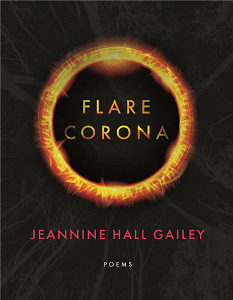
 Jeannine Hall Gailey served as the second Poet Laureate of Redmond, Washington and the author of Becoming the Villainess, She Returns to the Floating World, Unexplained Fevers, The Robot Scientist’s Daughter, and winner of the Moon City Press Book Prize and SFPA’s Elgin Award, Field Guide to the End of the World. Her latest, Flare, Corona from BOA Editions, was a finalist for the Washington State Book Award. She’s also the author of PR for Poets, a Guidebook to Publicity and Marketing. Her work has been featured on NPR’s The Writer’s Almanac, Verse Daily and The Year’s Best Fantasy and Horror. Her poems have appeared in The American Poetry Review, Poetry, and JAMA.