
Some quick notes:
I’ll be reading poems (along with Neil Aiken and fellow Pacific alum Michelle Bitting) on the radio show the Moe Green Poetry Hour (I believe the podcast should be available here:
http://www.blogtalkradio.com/onword)
at 6 PM Pacific time on March 16.
I’ve got a featured poem up (“Aware for the Woman Who Disappears in Silence”) at the Mythic Delirium web site, and you can hear me read the poem out loud there, plus there’s a cool piece of art illustrating the Bush-Warbler Japanese folk tale that the poem talks about!
http://www.mythicdelirium.com/
And I just received my copies of Many Mountains Moving, which features a bunch of really good poetry, and two reviews I wrote (of Dorianne Laux’s Facts About the Moon and Margaret Atwood’s The Door.)
A big thank you to everyone for their kind comments about the Poetry Foundation interview with Matthea Harvey.
It’s up! My interview with the awesome Matthea Harvey is up at the Poetry Foundation web site! Yay!
Go to the Poetry Foundation web site’s front page, or click here to go straight to the interview:
http://www.poetryfoundation.org/journal/feature.html?id=181239
And please, give Matthea Harvey (and me) some comment-field love at the PF site!
First of all, check out Aimee Nez’s interview (in which she may do a bit of blog namedropping…) about being a poet who blogs here!
Second of all, a pleasant reading surprise – I picked up a copy of Poet’s Work, Poet’s Play: Essays on the practice and the art (a bunch of essays by people who’ve taught at the Warren Wilson program) and just loved Elinor Wilner’s piece called “The Closeness of Distance, or Narcissus as Seen by the Lake.” It’s practically a love song to persona poetry, or, as she describes it, “aesthetic distance” – poems in which the speaker cannot be assumed to be the poet, and poems in which the writer is explicitly not “writing what she knows.” She uses Daisy Fried as one example. She champions – what a novel idea – imagination as a real asset to poets.
There’s also a very decent essay by Larry Levis on elegies, and that Tony Hoagland piece about non-narrative/experimental poetry that appeared in – what? APR or Writer’s Chronicle a little while back? So, to those of you who like to read essays about poetry, it’s a good buy.
I leave the blog on Sunday to teach two weeks of a junior high creative arts camp – sponsored by Centrum – and boy, is it ever intensive: starting at 8:30 AM every day and ending at 9 PM at night. I usually don’t even wake up before 9:30! I will be teaching the kids about the connections between comic books, mythology, and poetry; I will bring in illustrated guides to mythology, and comic books, and hopefully inspire them to write in a new way. If I get ambitious, I may even talk about Carl Jung. I mean, junior high kids can grok archetypes, right? But I may not have much time or energy to blog during that time. So, I’ll miss you, and think good thoughts for me staying phsyically healthy and mentally un-crazy during those two weeks.
Thanks to The Magazine of Speculative Poetry for nominating my poem “Chaos Theory” for a Rhysling Award. It’s a poem about my Dad’s work investigating how to cleanup the Fernald Superfund site – wow, doesn’t that sound riveting 😉 The Magazine of Speculative Poetry is a really fun read, by the way, for those of you who didn’t know there was such a thing as “speculative poetry.”
One note: you may want to check out the Poetry Foundation’s features section in the next few days. In case, you know, a certain poetry supervillainess gets to interview a certain poetry superheroine therein. About comic books and anime and robots and other cool subject matter. I’m just saying.
- At March 02, 2008
- By Jeannine Gailey
- In 6 word memoir, brain fog, MFA advice
 1
1
I was double-tagged (Thanks Cati, Deb) for that 6-word memoir meme thing going around, so here it is (though I usually resist memes:)
Note: I’m stealing mine from an essay I wrote for Ecotone’s blog:
Fearfully made, yes. Wonderfully made? Wondering.
Do you ever have times when your brain isn’t working? I’m having one of those times. Reviews and blurb requests have stacked up, and yet…stalled. It’s been a couple of months since I’ve written a new poem I’m happy with. It could be related to health stuff, or moving, or the wintertime. In any event, I’m waiting for this fog to clear…maybe I’ll do some submissions? I’ve been kind of lazy about those for the last few months.
Real-life advice on MFA programs I would give to my own family! Free!
My little brother, a successful web guy, is considering an MFA program. I gave him a lot of the same advice I give people who e-mail me for help on these matters all the time, advice I wish I’d had when I first started thinking about the MFA thing:
Research the MFA program’s faculties. Make sure the people you like are actually going to be there while you’re planning to study there. Sabbaticals happen.
Apply to more than one program. You never know who is going to be drawn to your work, and it may or may not be the program that’s your first choice.
Be sure it fits the program fits your lifestyle (in his case, low-res was my recommendation. I just think you get better one-on-one attention from your advisors that you would at most residential programs (at least that was true for me) and for most people over 25 – esp. those who have a house, a spouse, and a job – it’s going to be a better fit. It’s also going to cost money.
Read literary magazines and start submitting. Get to know what kind of writer you are, which magazines might be open to your work, which magazines you like and why.
Work on your sample. And then work on it some more.
Yes, you have to take the GREs. No big deal. Prepare if you want but your scores are probably not going to keep you out of a good program if you’re a good writer.
Start reading The Writer’s Market, Poets & Writers, etc.
Check out this blog, their handbook, and these articles from the Atlantic Monthly (http://www.theatlantic.com/doc/200707u/writing-programs, http://www.theatlantic.com/doc/200708/mfa-programs)
If you write genre work, be it sci-fi/fantasy, children’s lit, etc, look for faculty that work in your genre. Consider contacting writers you really like to see if they might work with you one-on-one before the program.
Attend a writing conference or two in preparation for the MFA program. It’ll help you get a feel for workshops, hanging out with writers, maybe even meet some of your faculty there.
Sort out your schedule – even a low-res program takes up a lot of time. Plan to cut back on your work schedule, hobbies, and time with spouse/children/pets/robots. It’s just a fact – you can’t do everything, and it’s going to be more intense than you think.
You don’t have to get an MFA to be a writer. But it’s a good opportunity to give yourself space and time to write, and get some feedback on your work from people you (hopefully) trust.
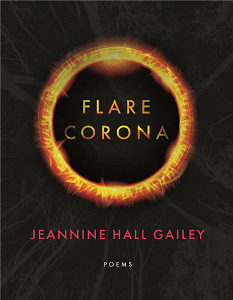
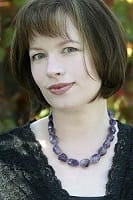 Jeannine Hall Gailey served as the second Poet Laureate of Redmond, Washington and the author of Becoming the Villainess, She Returns to the Floating World, Unexplained Fevers, The Robot Scientist’s Daughter, and winner of the Moon City Press Book Prize and SFPA’s Elgin Award, Field Guide to the End of the World. Her latest, Flare, Corona from BOA Editions, was a finalist for the Washington State Book Award. She’s also the author of PR for Poets, a Guidebook to Publicity and Marketing. Her work has been featured on NPR’s The Writer’s Almanac, Verse Daily and The Year’s Best Fantasy and Horror. Her poems have appeared in The American Poetry Review, Poetry, and JAMA.